

The family of Joshua Loitu Mollel, an agricultural intern from Tanzania, has reportedly sued the State of Israel for publishing without their permission footage of his brutal capture and murder on October 7, 2023, by Hamas terrorists.
The bodycam footage from terrorists was uploaded on December 17 of that year by a Telegram account whose owner’s identity is unknown, and posted shortly afterward by the Israeli Foreign Ministry on X — before it was seen by the family — according to the lawsuit.
The family is claiming NIS 270,000 ($84,000) in damages and is being represented by Justice Ministry legal aid lawyers Galit Lobitsky and Michal Pomerantz, the Haaretz news outlet reported Tuesday. The report did not cite a date for a court hearing on the matter.
In one clip, Mollel, who appeared bloodied but on his feet, was seen being manhandled by a gang of armed terrorists who were shouting at him as he was kidnapped from Kibbutz Nahal Oz. Another clip, apparently from later the same day, showed gunmen repeatedly firing at his prone body.
His remains were taken to Gaza and returned last month as part of a ceasefire-hostage deal with Hamas.
Get The Times of Israel’s Daily Edition
by email and never miss our top stories
By signing up, you agree to the terms
According to the report, state officials notified Mollel’s father, Loitu, in a Zoom call on December 13, 2023, that his son had been murdered; however, he did not believe the news and initially kept the information from the rest of the family.
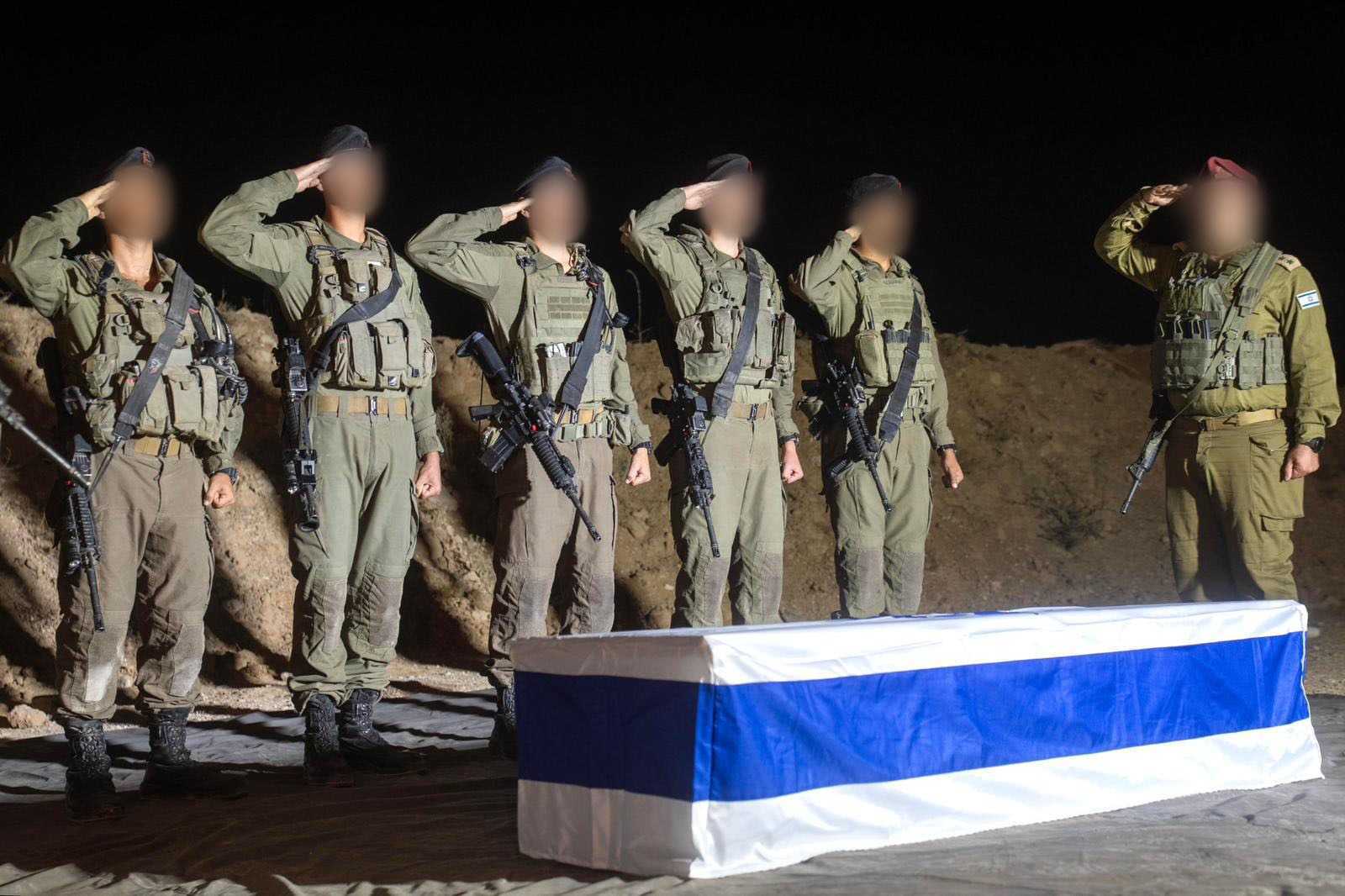
IDF troops salute over the casket containing the body of hostage Joshua Mollel after it was returned by Hamas, during a short ceremony in the Gaza Strip, late November 5, 2025. (Israel Defense Forces)
The officials reportedly invited him to Israel to view “secret information” to confirm the death. Four days after the call, the videos were uploaded.
The Foreign Ministry page shared the video without blurring Mollel’s face — as they had done in brutal footage shared of other victims of atrocities committed on October 7 — and before the family had seen the video or was informed by Mollel’s father that he had been murdered.
“They filmed his final moments, before brutally stabbing him, standing on his chest and spraying his body with bullets. Barbaric monsters,” the ministry’s English-language caption read.
“For a nerve-wracking day, the father managed to avoid watching the video, but throughout that day, he struggled not only with difficult thoughts about the video’s content but also with the question of how he would manage to prevent family members, especially the deceased’s mother and brother, from being exposed to it,” the lawsuit reads according to Haaretz.
“Unfortunately, avoiding watching the video did not prevent the information from reaching the father, including graphic details and harsh descriptions, some of which were also written in a tweet by the Israeli Foreign Ministry,” it added.
According to the report, representatives of a migrants’ center and the Hostages and Missing Families Forum asked Israel’s ambassador to Kenya — whose embassy’s consular department also serves Tanzania — and the Foreign Ministry directly to take down the post.
The video was eventually deleted several days later, after racking up 140,000 views, and was replaced with a photo of Mollel, with the same caption, the lawsuit said.
Responding in May to a notice of claim sent three months prior, the government said that the video was shared “as part of the State of Israel’s war front against the terrorist organization,” without prejudice to other material uploaded from the massacre — despite Mollel’s being the only video without a victim’s face blurred.
Responding to the Haaretz report, the Foreign Ministry said it worked with “sensitivity” for the families of the October 7 victims, and “worked tirelessly to assist” the Mollel family to return Joshua’s body.
“Out of respect for the family’s privacy and in consideration of the fact that the case is in legal proceedings, we cannot provide further details at this stage,” the response said.
Mollel arrived in Israel as an agricultural intern at Nahal Oz just 19 days before the massacre. It was his first time traveling out of Tanzania. He was excited to learn more about farming, according to AP, and wanted to open his own agricultural business.
When the Hamas-led attack began, Mollel was working in the kibbutz’s barn. He was seized alive, but later murdered, and his body was taken to Gaza.
You appreciate our journalism

You clearly find our careful reporting valuable, in a time when facts are often distorted and news coverage often lacks context.
Your support is essential to continue our work. We want to continue delivering the professional journalism you value, even as the demands on our newsroom have grown dramatically since October 7.
So today, please consider joining our reader support group, The Times of Israel Community. For as little as $6 a month you’ll become our partners while enjoying The Times of Israel AD-FREE, as well as accessing exclusive content available only to Times of Israel Community members.
Thank you,
David Horovitz, Founding Editor of The Times of Israel