
“We know the issue caused a lot of concern among parents and students at the school, so we considered it important to provide accurate and independent information about the likely cause,” Arbuckle said.
Haeata Community Campus principal Dr Peggy Burrows.
“After carefully examining all the possible causes, we are able to reassure parents that there is not a wider, or ongoing, food safety risk with the School Lunch Collective.
“The most plausible explanation is that lunches intended to be served to students the previous week were accidentally mixed in with that day’s lunches.”
Haeata Community Campus principal Peggy Burrows previously told the Herald the findings of its internal investigation were with the board and the school’s lawyers and were due to be released on Friday.
Burrows earlier maintained that none of its “robust” systems failed between Thursday and Monday, when the food was served.
Arbuckle said New Zealand Food Safety’s food compliance officers considered the possibility that the error was made by the distributor.
They found it was unlikely that the distributor delivered lunches from the previous week because several other schools received the same lunch on the same day with no reported issues.
Arbuckle said another reason was that the Compass Christchurch Kitchen (Central Production Kitchen) only receives the number of meals required for the following school day because of the minimal capacity of available chillers.
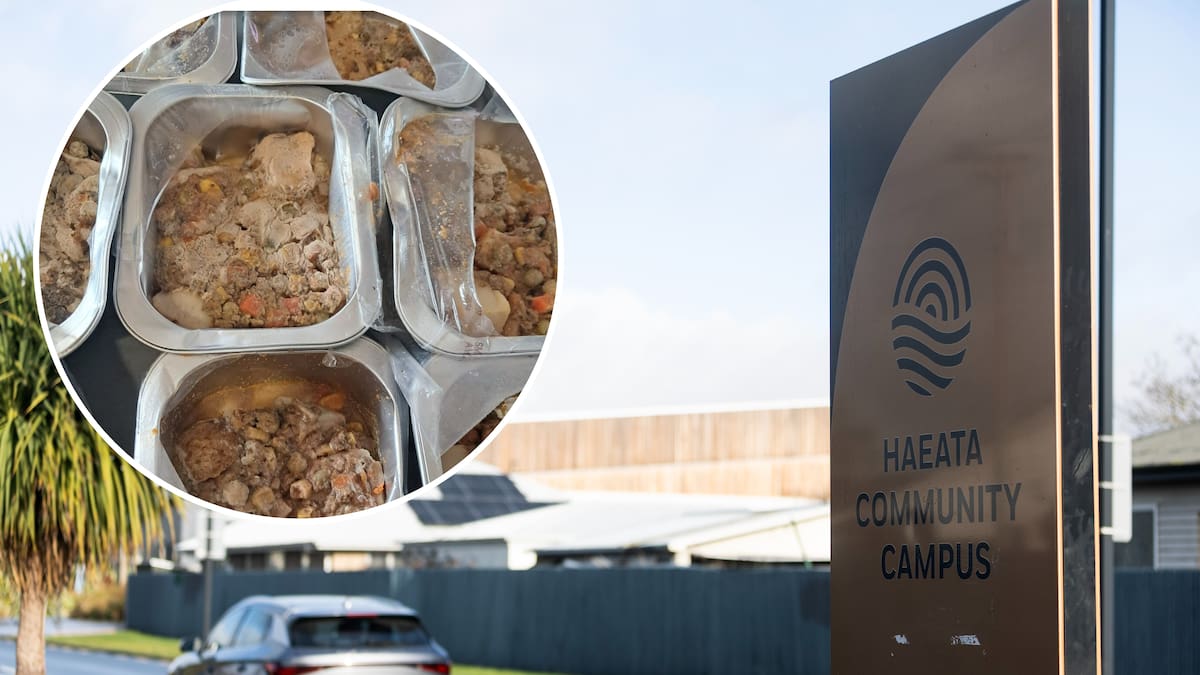
The lunches served at Haeata Community Campus were covered in a thick layer of mould.
“Haeata Community Campus did not receive any meals on the Friday prior to the issue arising on Monday, as it had a ‘teachers only’ day,” Arbuckle said.
“That Friday, the same delivery truck was used to deliver a different meal to a number of other schools.
“It is therefore unlikely that the delivery to Haeata Community Campus on Monday could have included leftover meals from the previous week.”
When looking for other possible causes, he said officers discovered that the school routinely kept an unknown number of Cambro containers onsite.
“These are used to deliver lunches to primary school students in their classrooms. Leftovers are taken to Cambro containers in the cafeteria so that older students and teachers can help themselves,” he said.
The investigation concluded that meals intended for the previous week were inadvertently left in these cafeteria Cambro containers and made available to students.
Arbuckle said this incident may have happened because the school did not track the number or contents of Cambro containers onsite.
There were 20 mouldy meals discovered, all from the cafeteria Cambro container.
Sign up to The Daily H, a free newsletter curated by our editors and delivered straight to your inbox every weekday.