
The number of police forces in England and Wales could be reduced to as few as 12 under “generational” reforms being considered by the home secretary.
Shabana Mahmood has delayed the publication of a long-awaited blueprint for police reform until the new year because she wants to make bolder changes than previously planned, sources have told The Times.
The merging of forces is part of wider structural reforms designed to make the police more efficient and cost-effective.
Mahmood delayed the publication of the policing white paper after she held a series of meetings with police chiefs over the past fortnight in which she discussed reducing the number of territorial forces in England and Wales from the 43 at present.
The goal of the reforms is to make police forces more effective and consistent at fighting crime and save money by pooling technology, procurement and expertise. A modernisation of policing practices across England and Wales is planned.
A range of options is being considered, the most drastic being a proposal to create 12 regional mega-forces, The Times understands.
The changes could mirror other areas of the criminal justice system such as the 12 probation regions or the local government changes giving new powers to mayors, which will replace police and crime commissioners (PCCs) from 2028.
It would be the largest shake-up of policing in the UK since the 1960s, when the number of forces was reduced from 117.

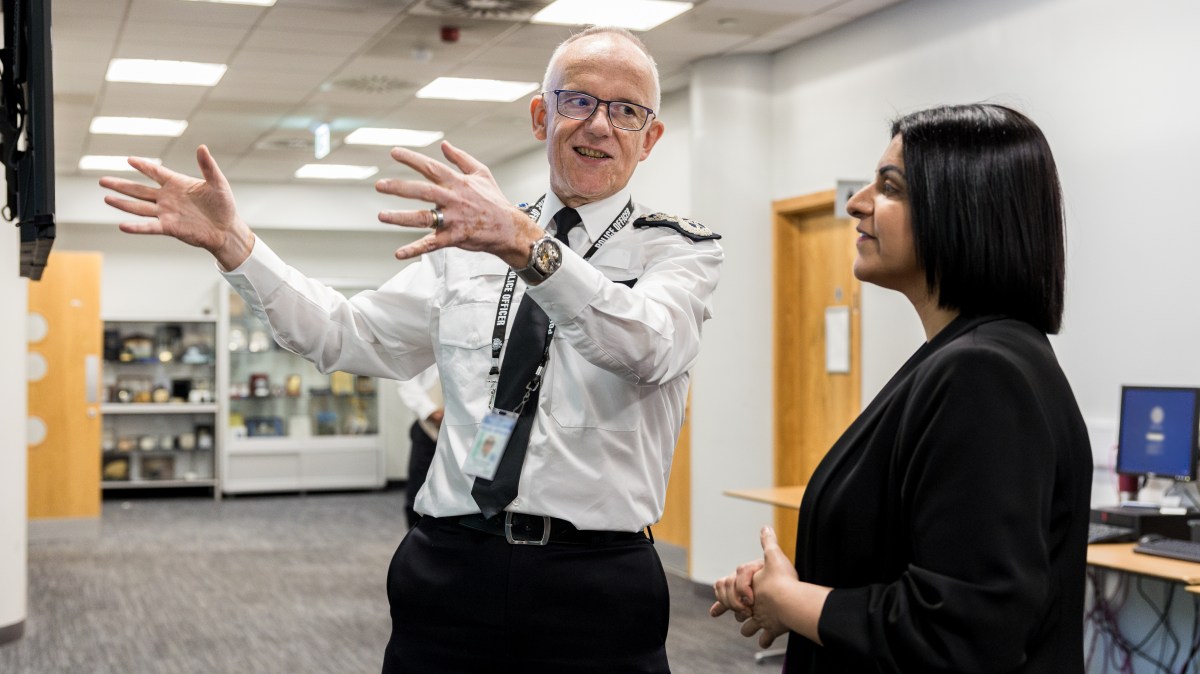
Mahmood’s plans are designed to make policing more efficient and cost-effective
CHRISTOPHER FURLONG/GETTY IMAGES
A more minor reduction would result in mergers of smaller forces such as Norfolk and Suffolk, Gloucestershire and Wiltshire, and the four forces that cover Yorkshire and the Humber.
The Home Office had been planning to publish a white paper setting out a moderate series of policing reforms before Christmas, but this has been delayed until early next year to consider “generational reform that will have a real impact on efficiencies,” a government source said.
A source involved with the policing reforms said: “Shabana is minded to be pretty bold. She is pushing in the direction of reducing the number of forces. The mood music is certainly in that direction.”
Another source said: “The white paper has been delayed because there’s been a sense of a change in direction.”
A senior police source said the government’s decision last month to abolish PCCs “paves the way for long overdue change”.
Police chiefs viewed PCCs as a block to more extensive reforms because they had a vested interest in keeping the status quo in order to retain their jobs.
Other structural reforms understood to be under consideration include giving greater powers to national bodies focusing on specific areas of crime.
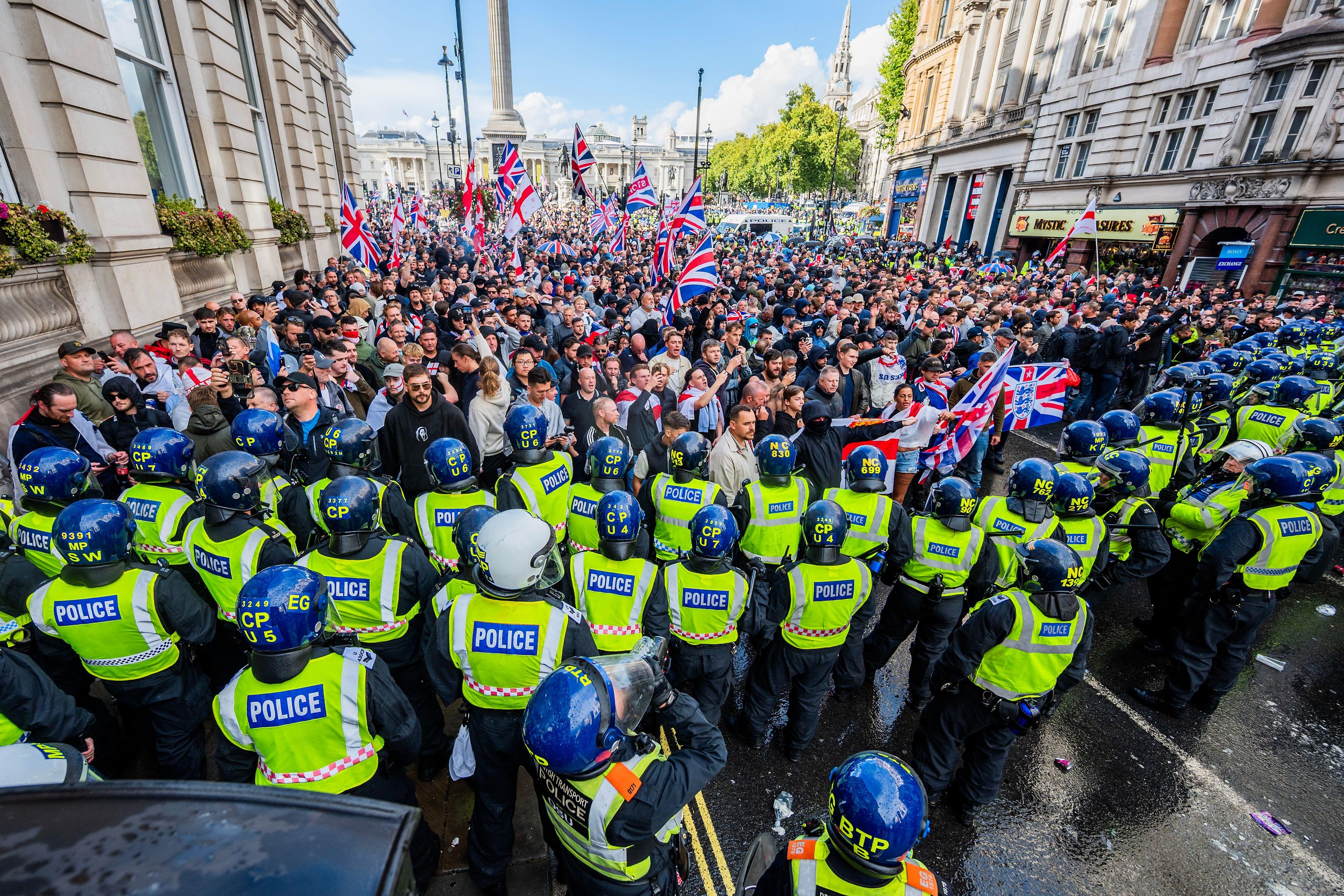
If approved, the plans would be the largest shake-up of policing in the UK since the 1960s
GUY BELL/ALAMY
This could lead to a beefed-up role for the National Crime Agency to tackle serious organised crime, and an overhaul of the Serious Fraud Office. There could also be a new national focus on tackling violence against women and girls.
Mahmood hinted at the reforms at a policing conference last month when she described the structure of police forces in England and Wales as “irrational” and causing inconsistencies.
She said: “We have 43 forces tackling criminal gangs who cross borders, and the disparities in performance in forces across the country have grown far too wide, giving truth to the old saw that policing in this country is a postcode lottery.”
As well as abolishing PCCs, the white paper will also include reforms that were announced under Yvette Cooper, the former home secretary, such as the new national centre of policing that will support police forces with specialist functions such as forensics, drone technology and artificial intelligence, and a new national procurement body to tackle huge disparities between police forces on how much they pay for vital kit.
Proposals to reduce the number of forces would be welcomed by Britain’s most senior police officers, who have increasingly spoken out about the need for radical reform.
Sir Mark Rowley, the Metropolitan Police commissioner, wrote in the Sunday Times earlier this year that the model of 43 county-based forces had not “been fit for purpose for at least two decades” and suggested they should be replaced by 12 to 15 mega-forces.
He said “bigger and fully capable” forces would be able to make better use of modern technology and the “limited funding” available for policing, and reduce the replication of back office services such as human resources.
Rowley said regional forces could be supported by new national policing bodies responsible for “key capabilities” such as police helicopters and intelligence.

The Home Office had been planning to publish a white paper setting out a moderate series of policing reforms before Christmas
AARON CHOWN/PA
Gavin Stephens, the chair of the National Police Chiefs’ Council, told The Guardian earlier this year that a smaller number of forces, supported by a national policing organisation, would enable police leaders to make decisions “far quicker and maximise funding to invest in technology and our workforce”.
He added: “Making improvements to our service once and for all, instead of in 43 different ways, would help to end the postcode lottery victims face when reporting crime.”
A report on police productivity by the National Audit Office last month said the 43-force structure means forces cannot benefit from economies of scale and are in a weaker commercial position with suppliers, which has led to soaring levels of borrowing because of a lack of capital investment.
However, Blair Gibbs, director of the Police Foundation think tank and a former Downing Street policy adviser, said focusing on the number of forces would only distract from more pressing policing needs.
He said: “I have never found the case for mergers very compelling — and many of the advocates [are] a bit disingenuous. Logically, the bigger the better: if you support a 12-force model of regional super-forces, why not a single national force?
“The big structural challenges for policing are not really about form at all, they are all about funding and function.”
The Home Office declined to comment.
Reduction in forces ‘would make it easier to set priorities’
The current policing model of 43 territorial forces is increasingly irrelevant to modern forms of threat and harm (Matt Dathan writes). That was the view set out in a report by Harvey Redgrave in July 2023, less than a year before he was recruited by Sir Keir Starmer as a senior adviser on home affairs.
It has therefore surprised some in policing why it has taken so long for the government to adopt a much bolder appetite for policing reform.
Two things have changed, according to insiders.
One is Redgrave’s promotion to head up the No 10 policy unit in September, and the second is the appointment of Shabana Mahmood as home secretary, someone who does not shy away from radical reform.
Their desire to at least consider much bolder reforms has delayed the government white paper on the issue until early next year.
To the delight of senior police officers whose calls for reform have become more frequent and louder in recent months, their appetite for reform includes looking at a drastic reduction to the 43 police forces in England and Wales.
As Gavin Stephens, head of the National Police Chiefs’ Council, said last month, there has been no deliberate design of policing since the 1960s, when the current model of 43 police forces was formed out of 117 across the country, which itself was reduced from 243 constabularies in 1946.
Yet the threat posed by crime is unrecognisable compared with the 1960s. As Redgrave’s report for the Tony Blair Institute for Global Change noted, modern forms of crime are borderless. Serious organised crime — from terrorism to county lines drug gangs, cyber-enabled fraud and grooming gangs — crosses geographical boundaries.
Police chiefs argue that a smaller number of forces covering larger areas would make it easier to set priorities and focus on the greatest-harm, biggest-impact issues.
Government sources say that the recruitment of neighbourhood police officers would still enable a stronger focus on community policing but at the same time as the higher-harm crimes are tackled at a broader and more strategic level.
It is not just crime that has changed unrecognisably since the 1960s but technology too. The changing nature of crime increasingly requires the police to be able to access specialist capabilities, such as surveillance, digital forensics and firearms. Redgrave’s report argued that such capabilities required significant investment and training and are therefore more likely to be effective if they are developed at scale.
Digital forensics was another area that could benefit from pooled resources where investment is fragmented across the 43 forces. “This means standards of investigation vary hugely across the country,” Redgrave’s report said.
Police chiefs are growing increasingly confident that in Mahmood they now also have a minister committed to taking a more radical approach to police reform. They point to her comments at last month’s NPCC conference in which she described the current model of policing as “irrational” that produced a “postcode lottery” for policing in this country.
But there are warning signs from others who have been involved in bold police reforms in the past.
Blair Gibbs, director of the Police Foundation think tank and a former Downing Street policy adviser, said: “My big concern is that it is already quite late in the parliament to be launching a huge new set of policies which will invariably take most of the next three years to actually get delivered — so voters now might not see much of any improvement before the next election, despite crime and policing rising up their list of priority concerns.
“There is an urgent need for police reform because our current model is no longer meeting public needs, but arguing the case and actually legislating to deliver it are quite different.”