
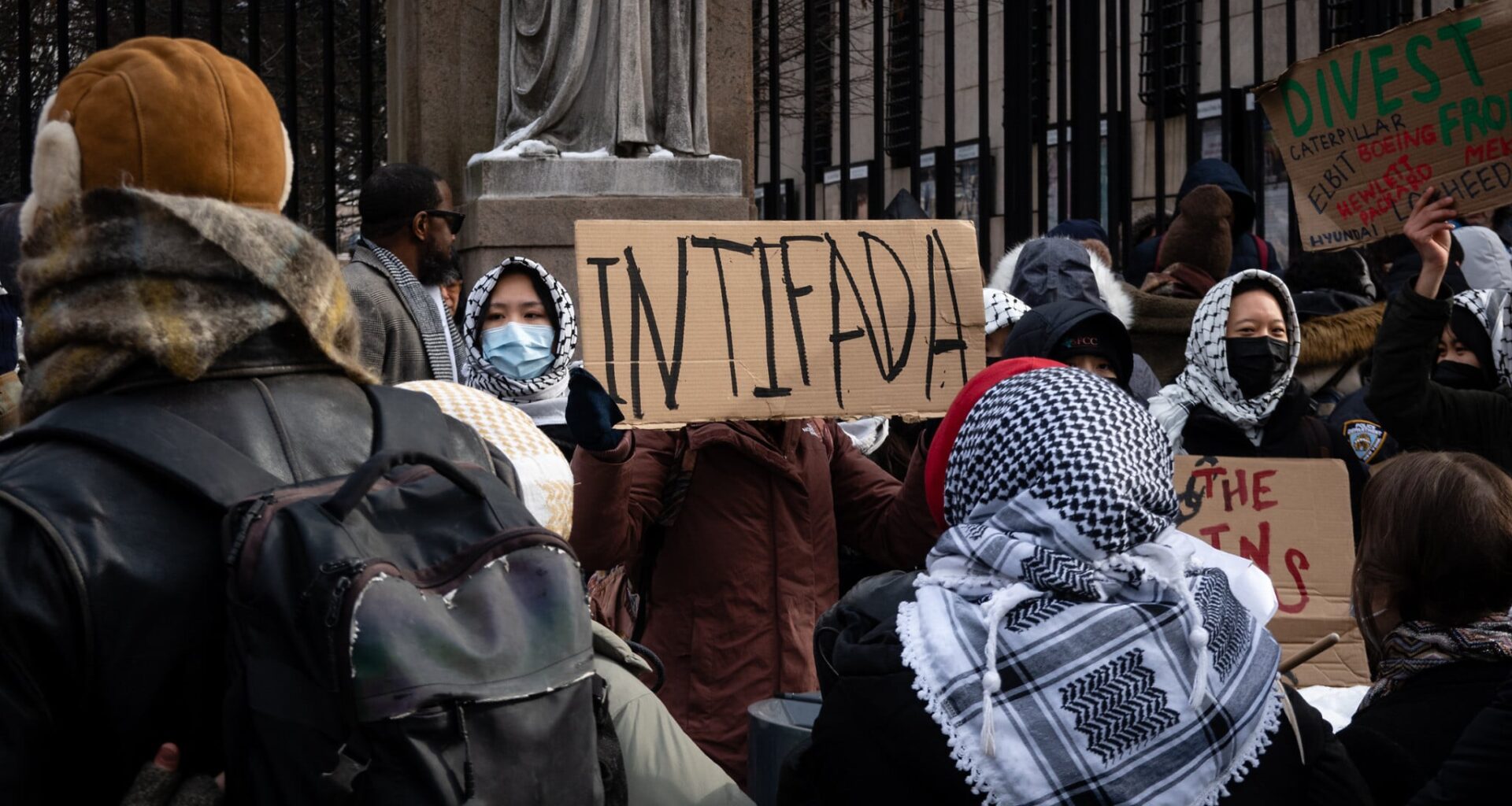
NEW YORK — Columbia University’s antisemitism task force released its fourth and final report on Tuesday, saying that Jewish and Israeli students had been singled out and scapegoated in classrooms, and that the university lacked faculty in Middle East studies who were not anti-Zionist.
The task force interviewed Jewish and Israeli students and reported on some of the “disturbing incidents” the students had undergone, with a focus on classroom experiences. The report sought to balance academic freedom and free speech with concerns about discrimination against Jews.
“We urge the University to protect freedom of expression to the maximum extent possible while also complying with antidiscrimination laws. Censorship has no place at Columbia. Neither does discrimination,” the report said.
Columbia’s Task Force on Antisemitism is an investigative body made up of faculty that was established amid the campus turmoil sparked by the October 2023 Hamas invasion of Israel and the ensuing war in Gaza.
The “most flagrant” incident, the 70-page report said, was the disruption of a class taught by an Israeli professor at the beginning of the spring 2025 semester. The report noted that the class was one of only a few available to students “who did not want to study the Middle East only from an anti-Zionist perspective,” and that activists targeted the class because it was “designed to study Zionism, rather than merely condemn it.”
Get The Times of Israel’s Daily Edition
by email and never miss our top stories
By signing up, you agree to the terms
The university denounced the protest and disciplined the students involved. Shortly after, activists protested against the university’s response by occupying a campus building and a library, causing the disruption or cancellation of classes. At least one professor canceled a class so students could join the protest, the report said.
The task force also reported that university instructors singled out Jews and Israelis for “personal scapegoating” during classes, noting that the practice violated federal Department of Education guidelines.
An instructor told an Israeli student, “You must know a lot about settler colonialism. How do you feel about that?” Another Israeli was called an occupier. An Israeli IDF veteran attended a class about the conflict, saying that the IDF was presented as an “army of murderers.” The instructor pointed at the student in front of the rest of the class and said she should be considered one of the murderers, the report said.
A Jewish, non-Israeli student was told, “It’s such a shame that your people survived in order to commit mass genocide.” Other students avoided identifying as Jewish or Israeli in class.
During a required introductory course for more than 400 students at the Mailman School of Public Health, a teacher told students that three Jewish donors to the school were “laundering blood money” and called Israel “so-called Israel.” The teacher later dismissed complaints as coming from “privileged white students.”
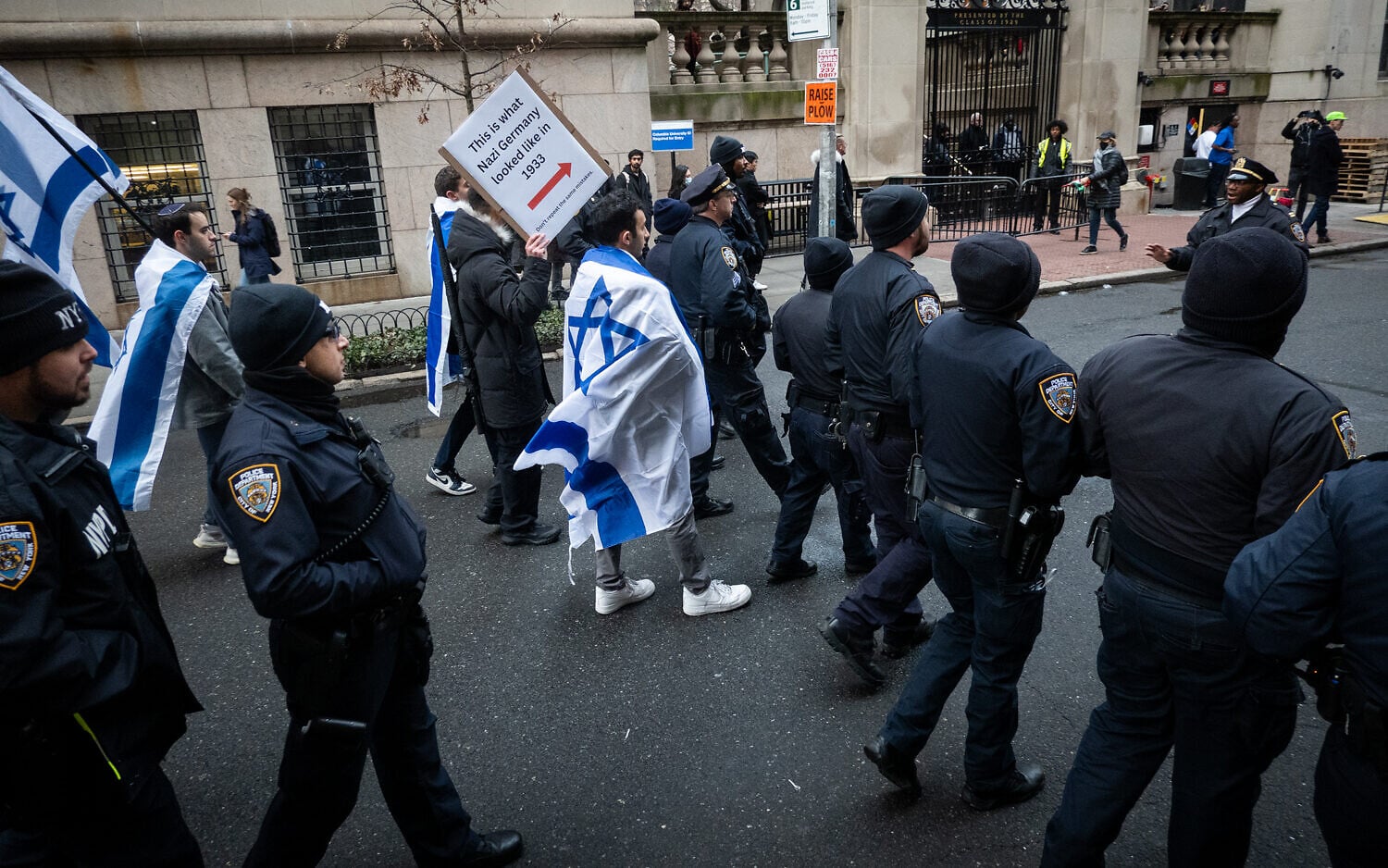
Illustrative: Police protect Jewish students during an anti-Israel protest outside Columbia University in New York City, February 2, 2024. (Luke Tress/Times of Israel)
Some instructors encouraged students during class to attend anti-Israel protests, canceled classes for the protests, moved classes off campus to use the classes as “political organizing sessions,” and held classes in the protest encampment, where “Zionists” were not welcome.
Many students told the task force that teachers issued moral condemnations of Israel in unrelated classes. An introductory astronomy class started with a discussion of the “genocide” in Gaza, and in an introductory Arabic class, a teacher taught students the sentence, “The Zionist lobby is the most supportive of Joe Biden.” Another instructor told her students in a class on advocacy that reports of sexual violence by Hamas were exaggerated or fabricated.
Graduate students told each other to “teach for Palestine,” regardless of subject, and anti-Zionist content was a “central element” in classes on feminism, photography, architecture, music and nonprofit management.
Classes on the Middle East were saturated with condemnations of Israel and included falsehoods. An instructor said Theodor Herzl was an antisemite and that Eastern European Jews were not actually Jewish.
Jewish and Israeli students who wanted to study the Middle East at Columbia said they were unable to because almost all classes treated Zionism and Israel as “fundamentally illegitimate.”
“Columbia lacks full-time tenure line faculty expertise in Middle East history, politics, political economy and policy that is not explicitly anti-Zionist,” the report said, urging the university to “work quickly to add more intellectual diversity to these offerings.”
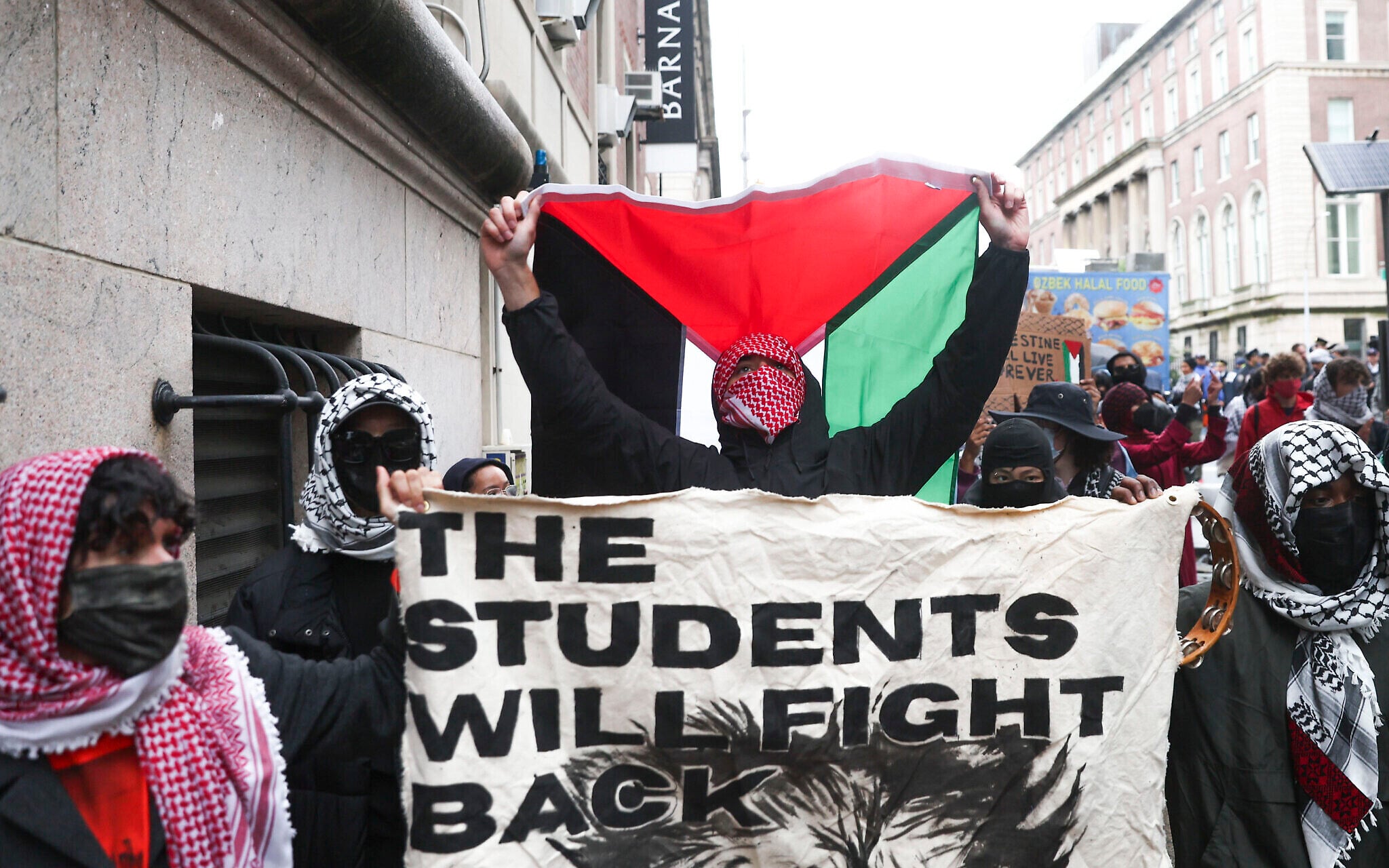
A group of pro-Palestinian protesters march away from Columbia University on May 21, 2025, in New York. (AP Photo/Heather Khalifa)
The report noted that Jews are a protected class under federal law, and that referring to Jews or Israelis as “Zionists” does not negate discrimination against Jews.
The report called for safeguards in the classroom, such as preventing classroom disruptions, harassment, pressure to join protests, using stereotypes, and introducing fraught subjects into unrelated courses.
The task force denounced the boycotting of Israeli universities, a central demand of anti-Zionist protesters, who have urged Columbia to sever ties with Tel Aviv University.
Seeking to balance “vitally important” free speech protections, the report warned against faculty speaking out in the media and on social media to express views “on which they are not academic experts.” The report noted that students were outraged that statements from faculty appeared to “condone (or even celebrate) terrorist atrocities, deploy antisemitic tropes, and peddle bigoted stereotypes.”
A Jewish student, Elisha Baker, wrote in the campus newspaper, the Columbia Spectator, that he was grateful for the measures the university has taken to address antisemitism, but he believed that faculty who “supported, affiliated with, and physically enforced the exclusionary [protest] encampment” had escaped any consequences.
“The unresolved question of faculty responsibility remains an open wound,” Baker wrote. “The University’s silence on the issue of faculty behavior suggests that it is still treating it as a delicate matter at best. That instinct is understandable given the backlash that would likely follow any faculty sanctions, but it is not morally defensible.”
The task force’s previous three reports have focused on rules for protests, the antisemitism that Jewish students experienced, and the campus climate.
“While we know there is more work to do, we’re very grateful to be in a new and much better place today,” Columbia’s acting president Claire Shipman said in a Tuesday statement, thanking the task force. “The work of this task force has been an essential part of the University’s efforts to address the challenges faced by our Jewish students, faculty, and staff. I have been heartened by the thoughtful and effective changes we have made over the course of the last two years.”
You appreciate our journalism

You clearly find our careful reporting valuable, in a time when facts are often distorted and news coverage often lacks context.
Your support is essential to continue our work. We want to continue delivering the professional journalism you value, even as the demands on our newsroom have grown dramatically since October 7.
So today, please consider joining our reader support group, The Times of Israel Community. For as little as $6 a month you’ll become our partners while enjoying The Times of Israel AD-FREE, as well as accessing exclusive content available only to Times of Israel Community members.
Thank you,
David Horovitz, Founding Editor of The Times of Israel