
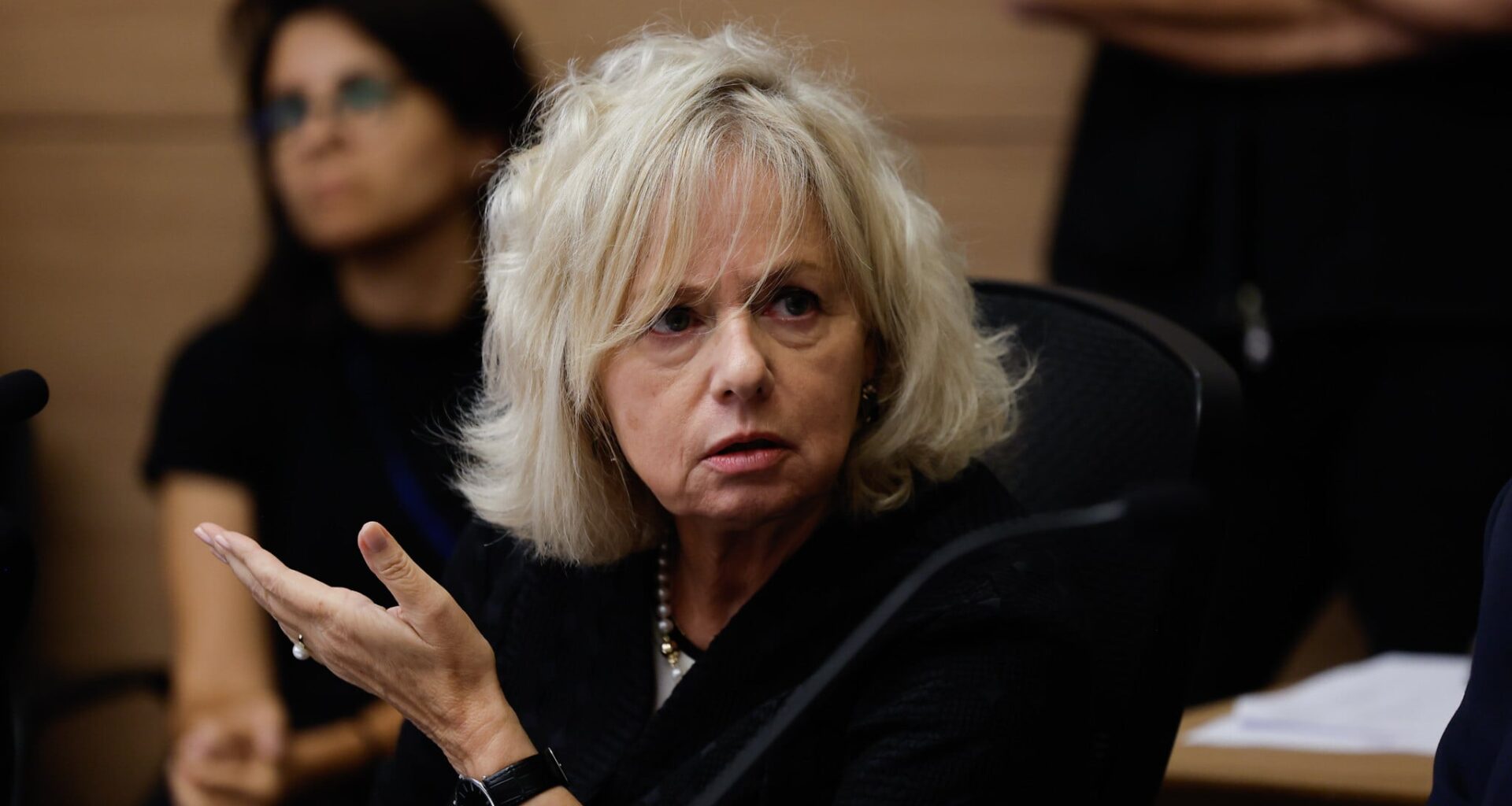
Attorney General Gali Baharav-Miara stated in a position paper on Wednesday that controversial legislation to regulate ultra-Orthodox enlistment to the military would actually disincentivize recruitment, and provide for the needs of yeshivas and their draft-shunning students rather than for the manpower needs of the military.
The bill, which is currently being legislated in the Knesset, would not alleviate the critical shortage of manpower facing the Israel Defense Forces or the burden of service on reservists, but would deny the army effective tools to enforce conscription, she maintained.
“Not only does it fail to promote the enlistment of members of the Haredi community for military service, but it also contains a negative incentive for recruitment and even anchors in the long term the inequality between the communities that perform [military] service and the communities that do not,” wrote the attorney general.
“In practice, the bill rolls back the tools currently available to the government and the army [to increase ultra-Orthodox enlistment], compared to the existing legal situation,” she added.
Baharav-Miara said that the bill would immediately provide “direct and indirect support funds” for yeshivas; restore benefits enjoyed by yeshiva students before the High Court ruled they were no longer valid; and cancel the tens of thousands of drafting orders issued to young Haredi men this year, as well as the personal enforcement measures currently available against draft evaders.
Get The Times of Israel’s Daily Edition
by email and never miss our top stories
By signing up, you agree to the terms
“On the other hand, the bill does not include arrangements that would advance urgent security needs as presented by the army, or reduce the burden on the reserve force, and it does not provide state and military bodies with effective tools to immediately enforce the draft obligation,” she added.
“Adjusting the law to constitutional standards requires profound and comprehensive changes, including the establishment of personal, effective, and immediate sanctions to enforce the conscription obligation in an equitable manner,” she noted.

MK Boaz Bismuth, chair of the Foreign Affairs and Defense Committee, leads a committee meeting at the Knesset, September 17, 2025. (Yonatan Sindel/Flash90)
In response, the Likud lawmaker behind the draft law and allied Haredi politicians slammed Baharav-Miara, accusing her of trying to divert public attention from her alleged involvement in a scandal in which the former military advocate general leaked a video of alleged abuse of a Palestinian detainee by IDF soldiers.
“Nice try, but not this time,” said Boaz Bismuth, the head of the Knesset Foreign Affairs and Defense Committee, who wrote up the bill, in a post to X.
The Shas party called Baharav-Miara’s legal opinion “a transparent and embarrassing trick,” arguing that it is an attempt “to deal a blow to the Torah world to divert attention from one of the biggest scandals in the state’s history.”
“Her legal opinion is detached and doesn’t reflect the position of the army,” Shas claimed. “The blatant political tone in her letter reveals her goal of toppling the right-wing government and preventing her dismissal.”
Baharav-Miara has consistently clashed with the current government, leading the cabinet to attempt to fire her — a move frozen by the High Court of Justice.
MK Moshe Gafni, the leader of the Degal HaTorah faction of the ultra-Orthodox party United Torah Judaism, argued that the attorney general is voicing her opinion on a bill that isn’t yet finalized, out of a “clear goal to prevent Torah studies” and make sure the state doesn’t fund Haredi yeshivas.

Ultra-Orthodox men block Route 4 during a protest against the jailing of yeshiva students who failed to comply with an IDF draft order, Bnei Brak, December 8, 2025. (David Cohen/Flash90)
Earlier Wednesday, Finance Minister Bezalel Smotrich’s far-right Religious Zionism party denied media reports that it agreed to support the law. After the reports sparked criticism from figures in the religious Zionist community, the party declared that it will “vote only for a law that will bring about real and rapid enlistment of Haredim into the IDF.”
Prime Minister Benjamin Netanyahu defended the bill for the first time on Monday, telling the Knesset it would mark “the beginning of a historic process to integrate Haredim into the IDF,” and accusing the opposition of having pushed an “evasion bill,” an epithet used by critics to describe his government’s proposal.
For the past year, the Haredi leadership has been pushing for the passage of a law that would largely keep its constituency out of the IDF, after the High Court ruled that decades-long blanket exemptions from army duty informally afforded to full-time Haredi yeshiva students were illegal.
Some 80,000 ultra-Orthodox men aged between 18 and 24 are currently believed to be eligible for military service, but have not enlisted. The IDF has said it urgently needs 12,000 recruits due to the strain on standing and reserve forces caused by the war in Gaza and other military challenges.
The proposed legislation stipulates that full-time yeshiva students who do not engage in any other vocation can be granted yearly deferments from enlistment, but it removed various provisions from a previous version that were intended to ensure that those registered for yeshiva study are actually doing so.
Several coalition members, in addition to the opposition, have criticized the bill, saying it contains loopholes and ineffective sanctions that fail to encourage enlistment.
You appreciate our journalism

You clearly find our careful reporting valuable, in a time when facts are often distorted and news coverage often lacks context.
Your support is essential to continue our work. We want to continue delivering the professional journalism you value, even as the demands on our newsroom have grown dramatically since October 7.
So today, please consider joining our reader support group, The Times of Israel Community. For as little as $6 a month you’ll become our partners while enjoying The Times of Israel AD-FREE, as well as accessing exclusive content available only to Times of Israel Community members.
Thank you,
David Horovitz, Founding Editor of The Times of Israel