
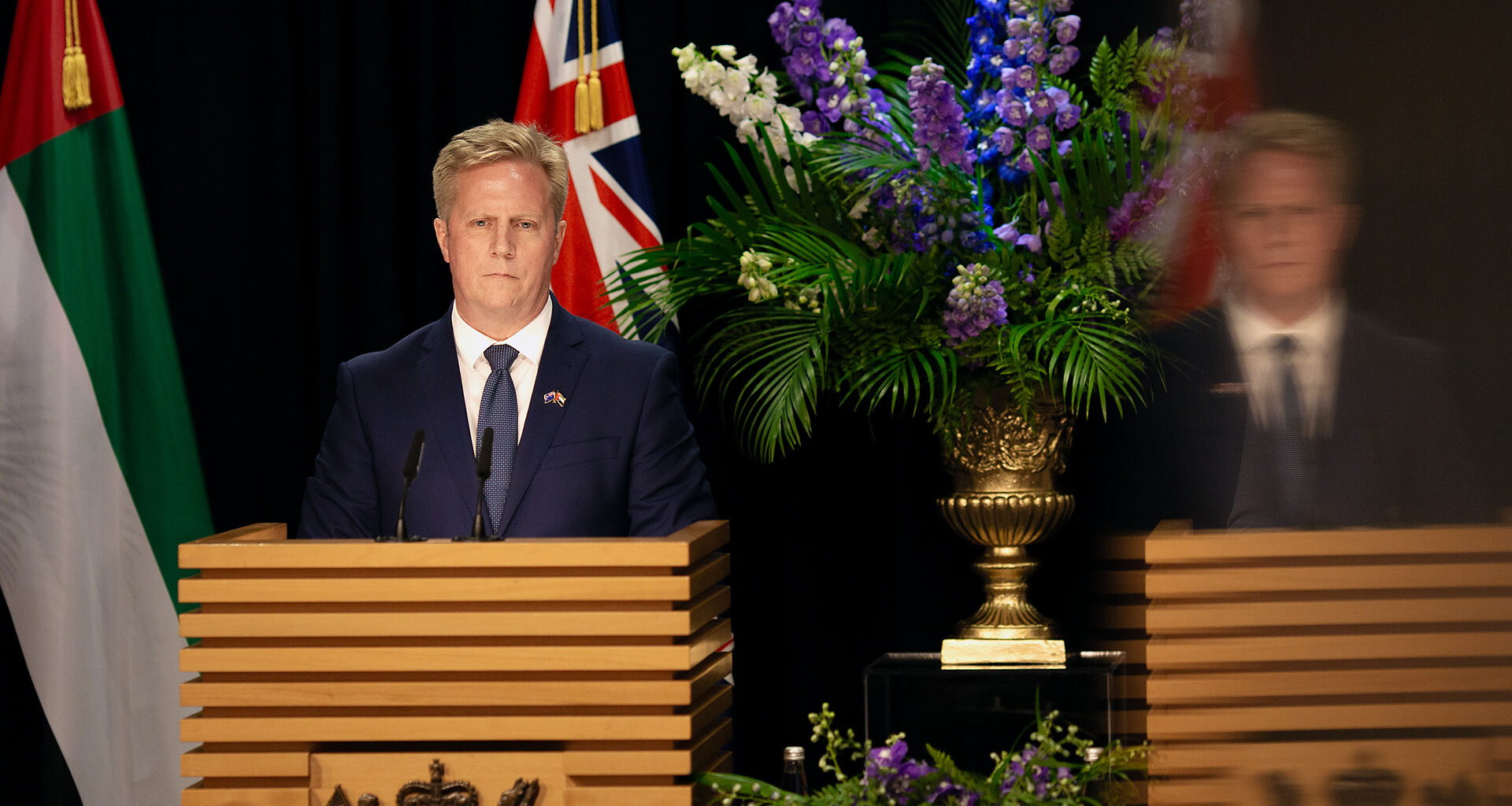
Trade Minister Todd McClay says the United States tariff on Kiwi products could rise to 15% from Friday, though this has not been confirmed through official channels.
Since 5 April, American importers of New Zealand products have been paying a 10% universal tariff on all goods, plus a 25% rate on steel and aluminium.
US President Donald Trump has also threatened—and briefly imposed—much higher “reciprocal” tariff rates on some countries. These were paused to allow negotiations but are due to return on 1 August.
Countries which have negotiated deals to avoid these targeted rates, such as the European Union and Japan, have mostly agreed to a 15% baseline as part of their tailored frameworks.
At a press conference on Monday, Trump told reporters the universal tariff would likely increase to 15% or 20% for those countries which had not struck deals.
It’s common for the US president to make such threats as a negotiating tactic, and he often doesn’t follow through. In May, for example, he instructed officials to impose a 100% tariff on foreign films but it never happened.
McClay said trade officials in Washington had told New Zealand diplomats the 10% rate was still the base rate, but it was possible it could change without notice.
“The President is the final decision maker, and he has been saying for some weeks that the lower tariff rate may be going up for everybody,” he told reporters.
“If the tariff rate for New Zealand and other countries goes to 15% tomorrow, whilst it won’t be welcome, our exporters have adjusted well, and they tell me, we’ll be able to deal with it.”
As long as Kiwi products face the lowest available tariff, they’re not disadvantaged relative to other countries. But a higher tariff still hurts as it pushes up prices for consumers which can reduce demand.
McClay said many large exporters had passed on the full 10% tariff without cutting prices or volumes. Others had shifted more product to markets offering better returns.
He noted that exports to the European Union had risen by $1 billion in the 12 months since the free trade agreement took effect.
Still, the uncertainty surrounding trade policy was a major problem for exporters and their customers, making it hard to set prices or forecast demand.
But some businesses were reporting stronger demand for their products, as importers saw the NZ–US trade relationship as more stable and the tariff lower than competitors.
“We are [also] hearing that in some cases, requests or inquiries out of China or the European Union have increased quite significantly,” McClay said.
“I don’t think anybody’s a net beneficiary of tariff rates increasing, but certainly there is some evidence that there is demand for New Zealand products. It’s high quality, it’s safe and it is reliable.”
Reserve Bank research predicted that weaker global growth due to tariffs would reduce demand for Kiwi exports and lower the price of imports into New Zealand.
However, it was occurring against a backdrop of already strong export prices, especially for dairy and beef, and would allow for interest rates to be lower than otherwise.