
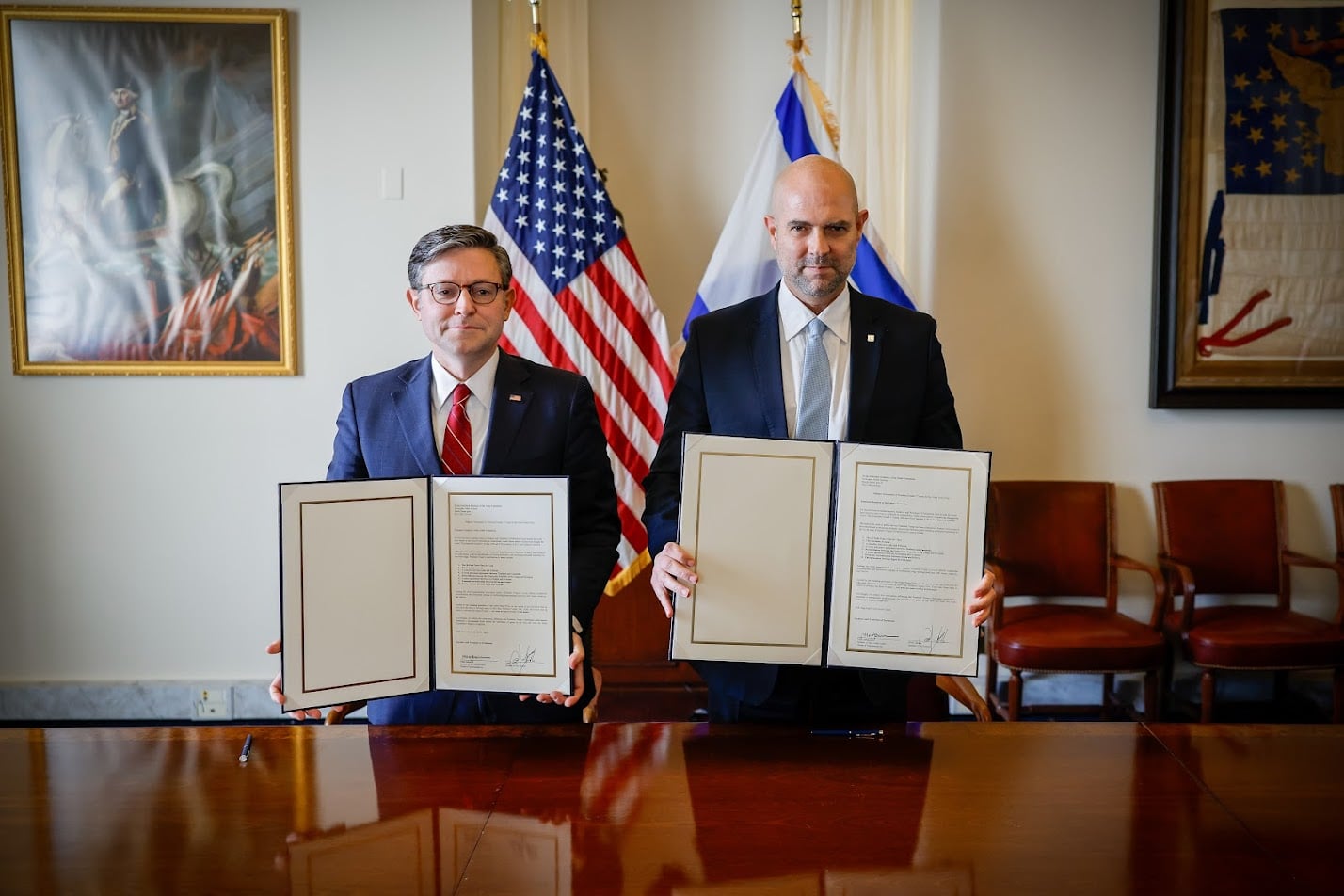
Knesset Speaker Amir Ohana and US House Speaker Mike Johnson announced a joint initiative Tuesday to mobilize their counterparts worldwide to nominate US President Donald Trump for a Nobel Peace Prize.
The initiative was announced following Ohana’s meeting with Johnson in Washington, and ahead of Wednesday’s Nobel Peace Prize ceremony, when the award will be given in absentia to Venezuelan opposition leader María Corina Machado.
The announcement in October that Machado had been selected to win the award disappointed some who had hoped Trump would be the winning candidate due to his efforts to end the war between Israel and the Hamas terror group in Gaza.
Ohana and Johnson on Tuesday presented a letter addressed to the prize’s nominating committee that they said they plan to circulate among speakers and presidents of parliaments around the world to sign. The pair met in the US Capitol to sign the letter, according to Johnson’s office.
The letter argued that Trump deserves to be nominated for next year’s peace prize, as “throughout his years of public service, President Trump has carried the banner for peace, has been steadfast in his commitment to promoting dialogue, fostering dialogue, and has set an example of leadership on the international stage.”
Get The Times of Israel’s Daily Edition
by email and never miss our top stories
By signing up, you agree to the terms
“In accordance with the founding principles of the Nobel Peace Prize, we are united in our beliefs that nobody has advanced peace in 2025 more than President Trump,” it continued, adding that “few, if any, have done more throughout history to advance the cause of peace” than Trump has.
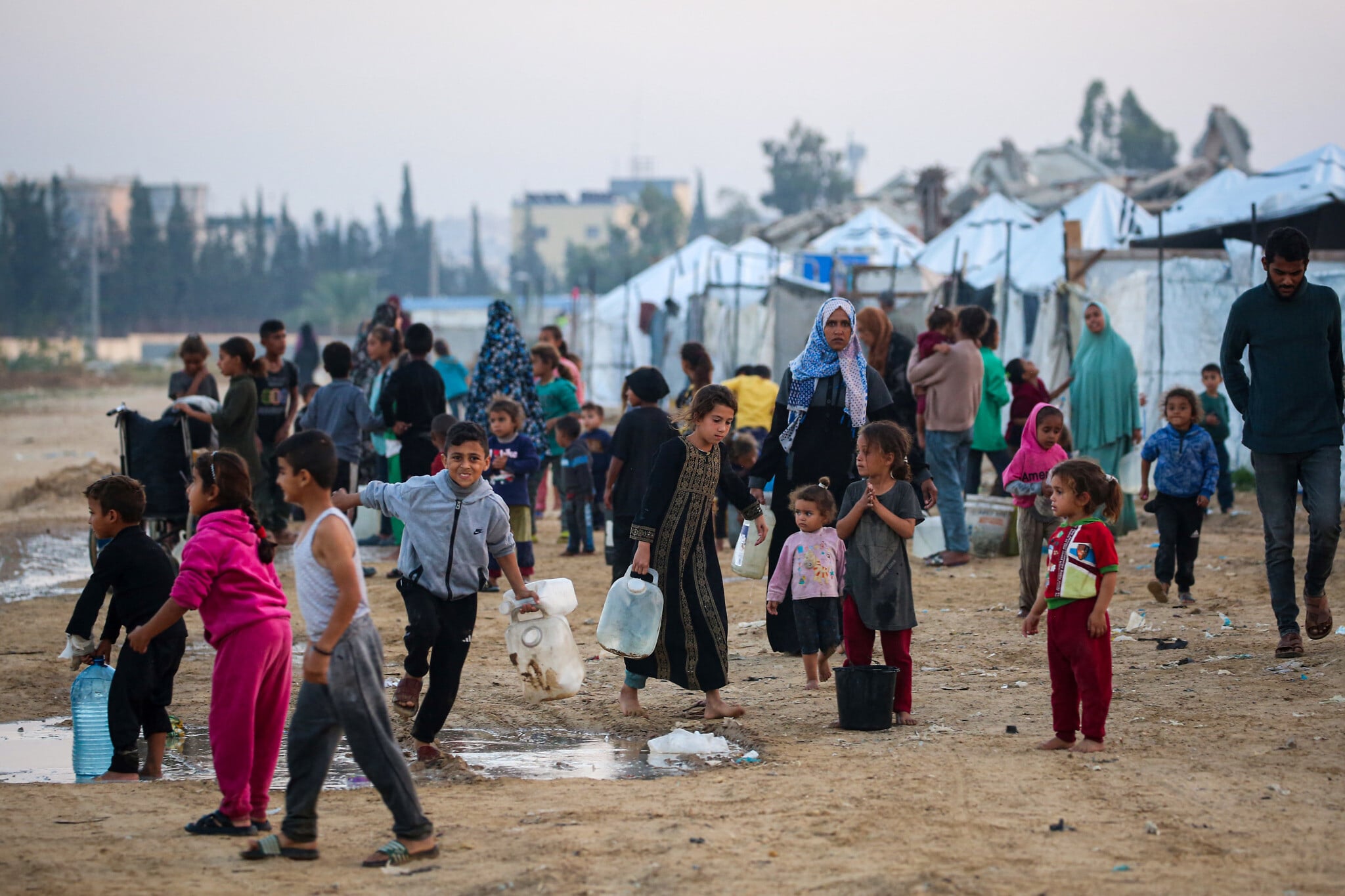
People fill their containers with water at the Nuseirat camp for displaced Palestinians in the central Gaza Strip on December 4, 2025. (Eyad Baba / AFP)
Trump has repeatedly said that he deserves the prize for what he states has been his role in settling seven conflicts, not including the Gaza war: Israel-Iran, Cambodia-Thailand, Kosovo-Serbia, Congo-Rwanda, Pakistan-India, Egypt-Ethiopia and Armenia-Azerbaijan.
Ohana and Johnson cited all of these but Israel-Iran, in addition to Trump’s 20-point plan for Gaza, to prove the US president’s eligibility for the award. They included the 2020 Abraham Accords, which normalized relations between Israel and four Arab nations.
Since 2018, Trump has been nominated several times for the Nobel Peace Prize by individuals in the United States and politicians abroad, including for his part in brokering the Abraham Accords.
In his second term, he has made no secret of his desire for the prize, and various world leaders, foreign politicians, and international organizations have nominated him or declared him deserving of it, including both Prime Minister Benjamin Netanyahu and Opposition Leader Yair Lapid.
In July, shortly after Israel’s 12-day war with Iran, Netanyahu presented Trump with a letter nominating him for the honor.
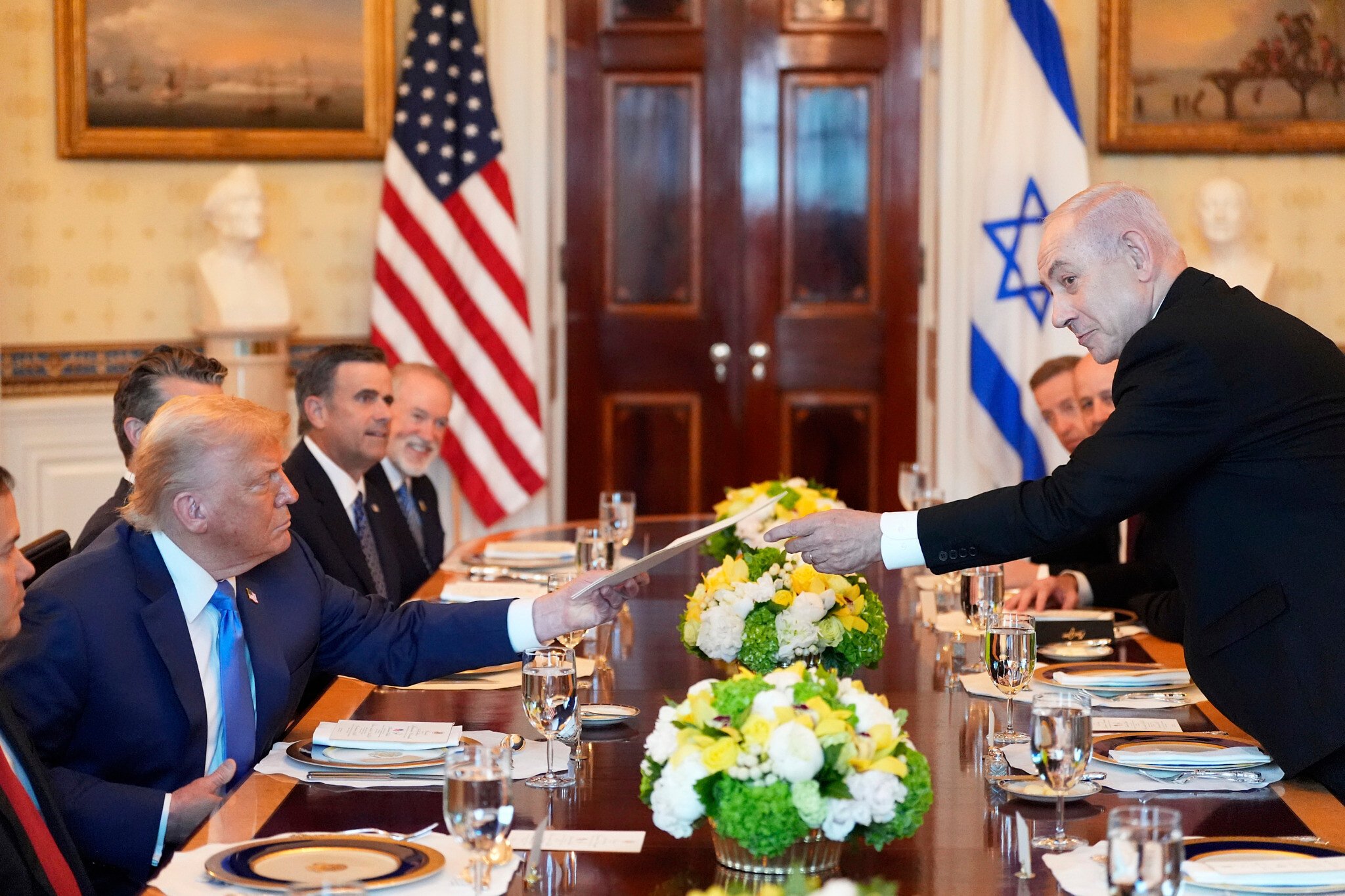
Prime Minister Benjamin Netanyahu, right, hands US President Donald Trump a folder with a letter nominating Trump for the Nobel Peace Prize, during a meeting in the Blue Room of the White House, Washington, July 7, 2025. (Alex Brandon/AP)
When the Nobel committee, shortly after the US-brokered ceasefire in Gaza was reached in October, didn’t award it to him, Netanyahu joined the White House in assailing the judges for their decision, even though the prize was meant to honor accomplishments the previous year, not this one.
The 2025 winner, Venezuela’s Machado, was not present to accept the award on Wednesday, the Nobel Institute announced just hours ahead of the ceremony. Machado, 58, lives in hiding and it was not known ahead of time whether she had managed to leave Venezuela. Her daughter Ana Corina Machado was set to appear at the ceremony instead, and to read a speech her mother had written.
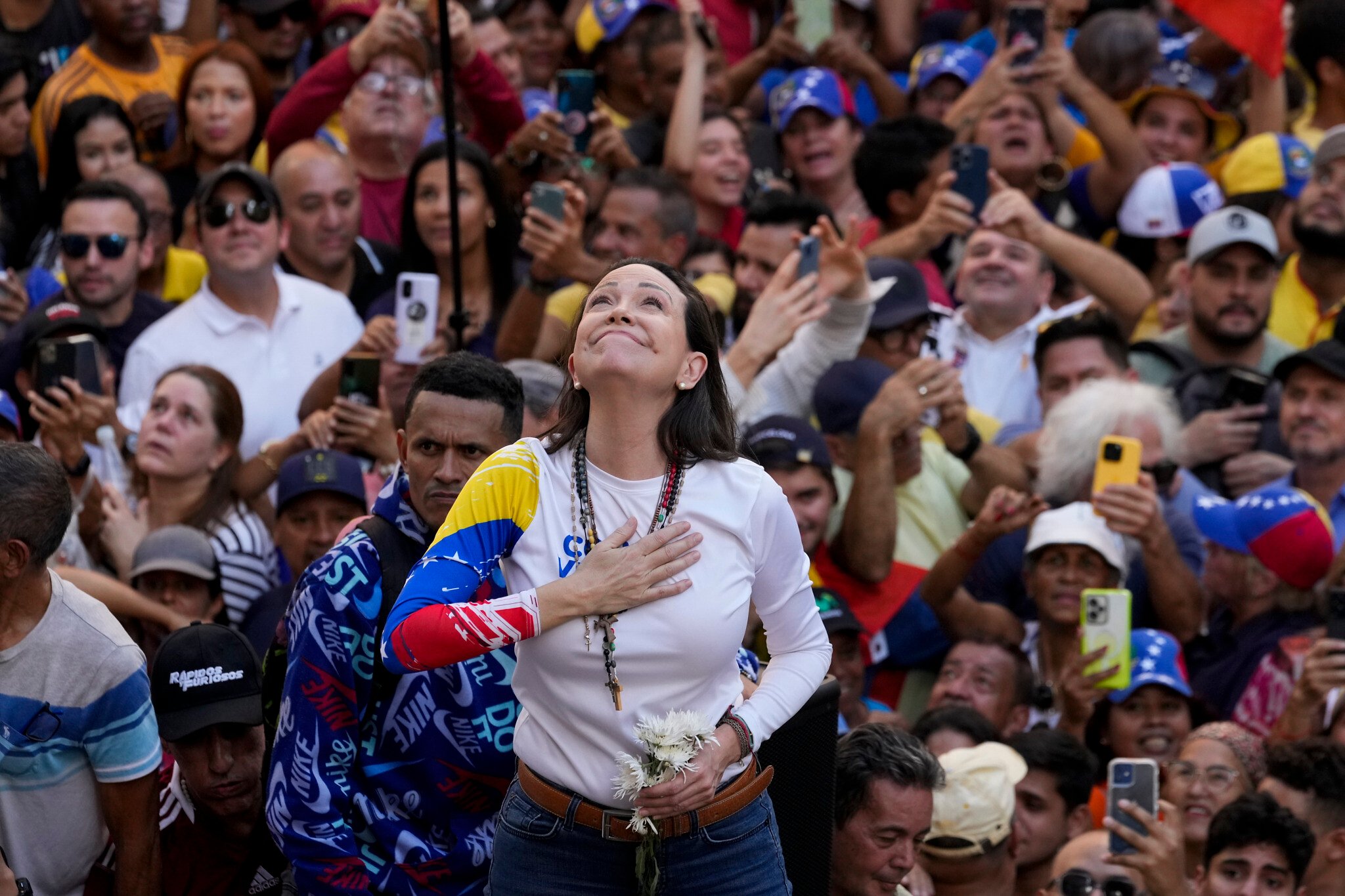
Venezuelan opposition leader Maria Corina Machado addresses supporters at a protest against President Nicolas Maduro in Caracas, Venezuela, January 9, 2025, the day before his inauguration for a third term. (AP/Ariana Cubillos)
The US-brokered Gaza ceasefire deal — which also mandated the return of all Hamas’s remaining hostages in the Strip, living and dead — was signed in isolation, but was envisioned as part of a larger, 20-point plan to end the two-year-old war that started with Hamas’s October 7, 2023, attack on Israel.
The UN Security Council officially backed the US plan in November. Its second stage is supposed to include Hamas disarming, a technocratic Palestinian committee taking the reins of government in Gaza, and the IDF withdrawing as a multinational peacekeeping force takes its place. Hamas, however, has rebuffed calls to disarm, and it remains unclear whose troops will deploy to the Strip.
Additionally, the terror group continues to hold the body of one Israeli hostage – the whereabouts of which it purports not to know – and there have been regular attacks on Israeli troops, and subsequent Israeli airstrikes, as well as bouts of violence along the Gaza truce line, since the ceasefire went into effect.
You appreciate our journalism

You clearly find our careful reporting valuable, in a time when facts are often distorted and news coverage often lacks context.
Your support is essential to continue our work. We want to continue delivering the professional journalism you value, even as the demands on our newsroom have grown dramatically since October 7.
So today, please consider joining our reader support group, The Times of Israel Community. For as little as $6 a month you’ll become our partners while enjoying The Times of Israel AD-FREE, as well as accessing exclusive content available only to Times of Israel Community members.
Thank you,
David Horovitz, Founding Editor of The Times of Israel