
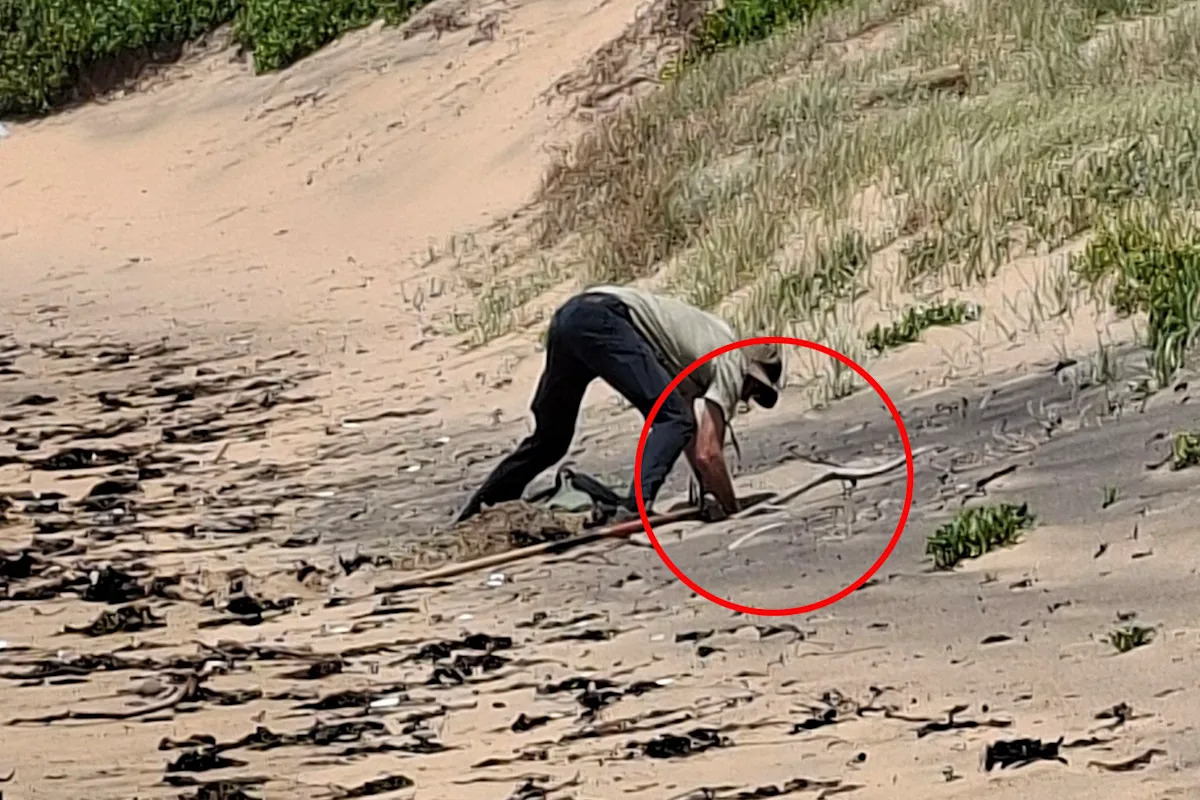
Aussies are being warned to steer clear of deceased wildlife on beaches and to always contact professionals before attempting to bury or remove them on their own. The plea comes after a concerned beachgoer gave a penguin a “respectful burial” this week, an admirable but risky move, experts say.
After a little penguin washed ashore at Long Reef on Sydney’s Northern Beaches on Monday, a local buried it in the sand, sharing a post to the community.
While well-intentioned, the act raised concern because wild animals may be infected with pathogens, including Highly Pathogenic Avian Influenza (HPAI).
Though some strains of bird flu have made their way to Australia, the particularly worrisome H5N1 strain is not currently known to be established on the mainland.
It’s for this reason, authorities encourage the public to practise extreme caution around dead birds, which are flowing onto shores at increasing rates.
After the Long Reef resident received advice, they confirmed that the NSW National Parks and Wildlife Service (NPWS) was contacted to remove the bird.
Related: Public plea after disturbing little penguin discovery on Aussie beach
It was later taken to Taronga Zoo for a necropsy and analysis.
A Taronga Zoo spokesperson told Yahoo News that due to the decomposed state of the bird, it was difficult to determine a definitive cause of death.
They said it’s not believed that the penguin carried the H5N1 strain, but test results are pending.
“The sub-adult, female little penguin was in poor body/nutritional condition and was highly decomposed,” they said.
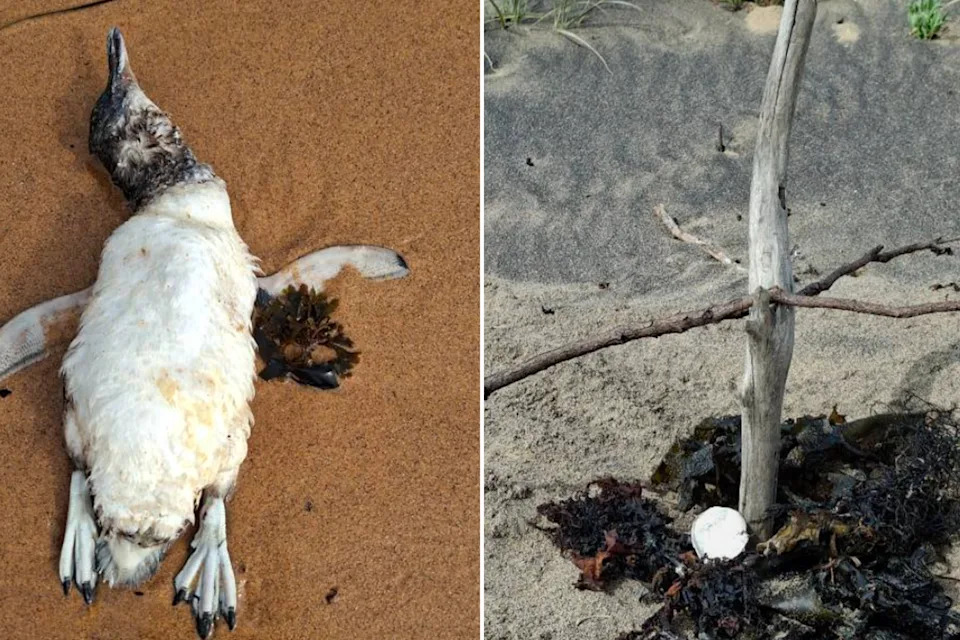
The penguin was buried at Long Reef in Sydney, but later taken for testing amid bird flu fears. Source: Kim Marsh
Why is it best to avoid dead wildlife?
There were no fractures, punctures, signs of trauma or predation.
“For this individual case, there is not a high risk of suspicion, but routine tests are pending to test for HPAI surveillance,” the spokesperson added.
They advised the public to report any sick or injured wildlife to local authorities, and deceased wildlife to the Emergency Animal Disease (EAD) Hotline.
“All sick or deceased birds that meet state-wide criteria for screening for HPAI are tested,” they said.
A spokesperson for the Department of Climate Change, Energy, the Environment and Water (DCCEEW) echoed the Taronga spokesperson’s advice.
“If you see a penguin, please stay at least five metres away and do not open any nest boxes,” they said.
“People who find an injured, distressed or deceased animal should seek advice from a trained wildlife rescuer or vet via the IFAW Wildlife Rescue app.”
They warned that responding to wildlife injuries or emergencies can be “a dangerous activity”, and untrained responders “may cause harm to themselves or the animal”.
“People can help protect penguins by keeping pets away from their habitat, always keeping dogs on leashes and ensuring watercraft users slow down around North Harbour [near Manly Wharf],” they added.
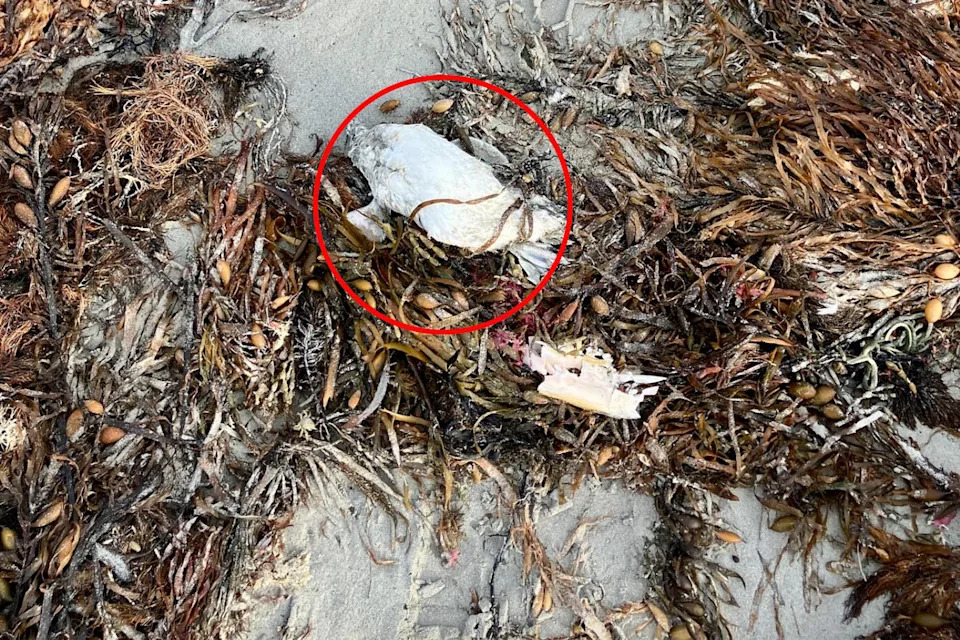
Seven deceased little penguins were found in a single day at Warrnambool Beach in Victoria. Source: Adrift Lab/Facebook
Deceased birds on beaches ‘not always natural’
Conservationists are growing increasingly concerned about an alarmingly high number of dead birds that continue to wash ashore.
Experts believe this phenomenon exceeds the usual amount expected from natural causes and are urging the public to photograph any such sightings to help record and study these incidents.
Earlier this year in Victoria, a woman found seven dead little penguins on Warrnambool Beach.
In 2024, hundreds of dead shearwaters were found along the coastline between the two states.
While this is partly due to normal migratory patterns, experts say environmental changes — including climate change and warming sea temperatures — have contributed to an unusual spike in fatalities.
Marine scientist Jennifer Laver said while some little penguin deaths, especially among chicks struggling with harsh sea conditions, are expected, the recent “pulses” in specific areas are unusual.
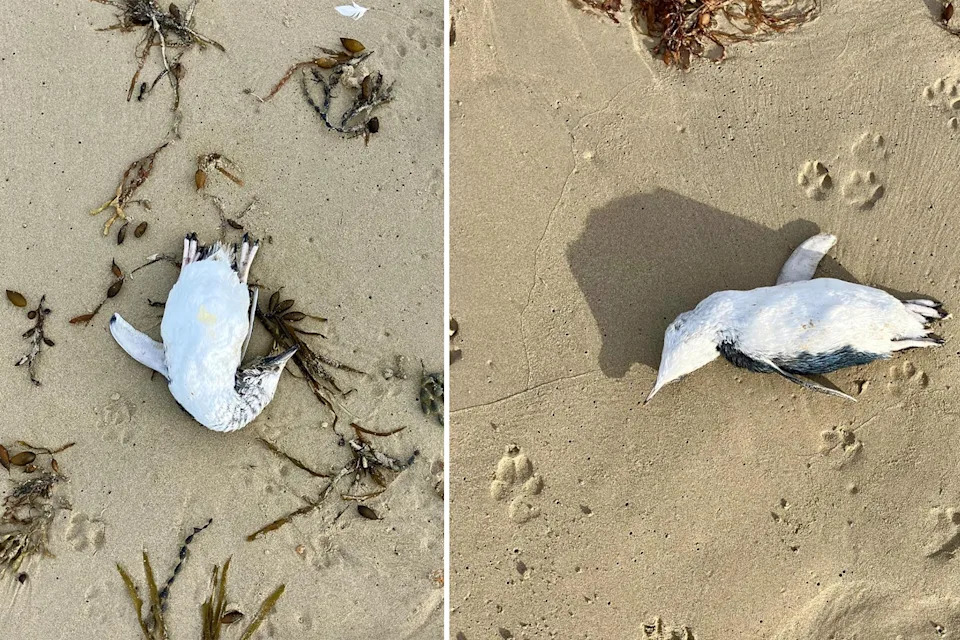
Conservationists are becoming increasingly concerned about mass mortality events among seabirds in the country’s south. Source: Adrift Lab/Facebook
“What I suspect is that there’s a localised lack of prey, or perhaps a warming event,” she said.
“Something has changed”.
Research group Adrift Lab earlier expressed frustration that “reputable organisations” repeatedly attributed the deaths to long-distance migration, dismissing them as simply “normal” or “natural.”
“This has almost nothing to do with migration, we can’t stress that enough,” Laver said.
“If it was natural, if it was just exhaustion due to migration, then we should actually see this as a widespread annual phenomenon and in thousands of other highly migratory species,” she said.
Laver says warmer-than-average waters are wiping out their food source, and by the time the birds get to Australia, they are starving.
Love Australia’s weird and wonderful environment? 🐊🦘😳 Get our new newsletter showcasing the week’s best stories.
