
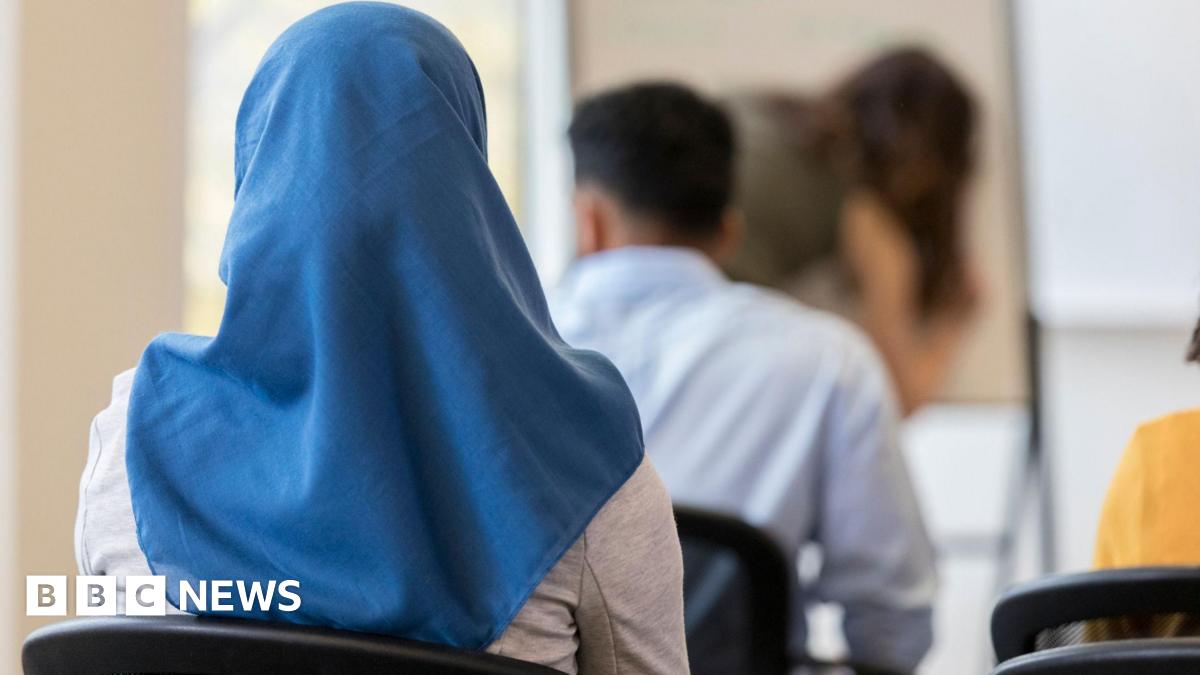
The opposition far-right Freedom Party of Austria, the FPÖ, which voted in favour of the ban, said it did not go far enough.
It described the ban as “a first step”, which should be widened to include all pupils and school staff.
“There needs to be a general ban on headscarves in schools; political Islam has no place here”, the FPÖ’s spokesperson on families Ricarda Berger said.
Sigrid Maurer from the opposition Greens called the new law “clearly unconstitutional”.
The official Islamic Community in Austria, the IGGÖ, said the ban violated fundamental rights and would split society.
In a statement on its website, it said “instead of empowering children, they will be stigmatised and marginalised.”
The IGGÖ said it would review “the constitutionality of the law and take all necessary steps.”
“The Constitutional Court already ruled unequivocally in 2020 that such a ban is unconstitutional, as it specifically targets a religious minority and violates the principle of equality,” the IGGÖ said.
The government says it has tried to avoid that.
“Will it pass muster with the Constitutional Court? I don’t know. We have done our best,” Shetty said.
An awareness-raising trial period will start in February 2026, with the ban fully going into force next September – the beginning of the new school year.