
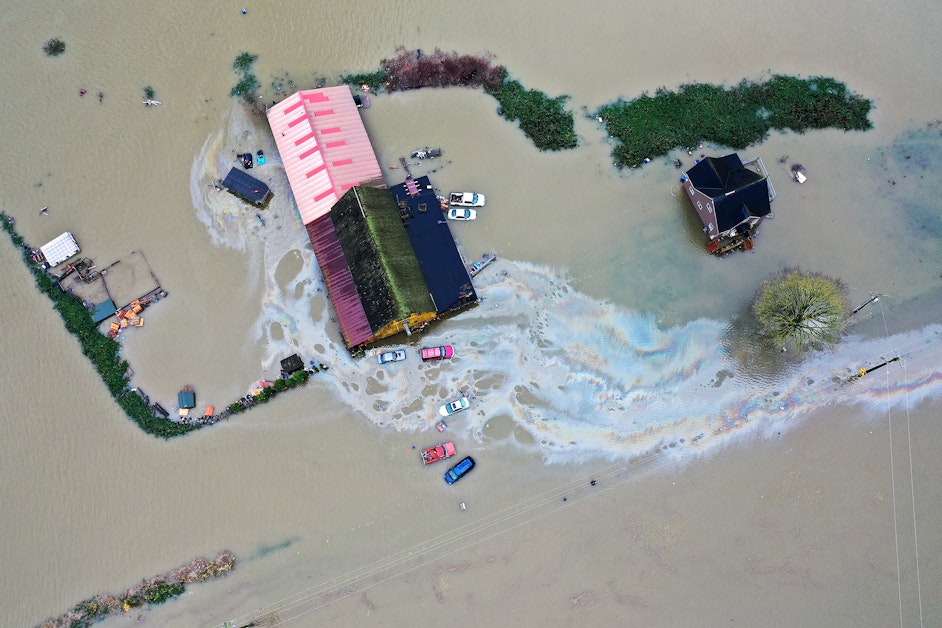
“Catastrophic” conditions continue to threaten Western Washington as an atmospheric river sweeps through the Pacific Northwest.100,000 people have been evacuated from their homes in the Skagit Valley, a densely populated agricultural hub an hour north of Seattle, and told to move to higher ground.The National Weather Service said rainfall was expected to peak Wednesday night, while some parts of Skagit County to the north may not see the worst of the flooding until Thursday or Friday.Flooding is expected to surpass a record set in 1990, when floods caused two human fatalities, over 2,000 evacuations, and more than $100 million in damage, according to a Natural Disaster Survey Report.Gov. Bob Ferguson declared a statewide emergency in response to the intense flooding. Several impacted counties also issued evacuation orders Wednesday afternoon.
11:29 a.m.
WA National Guard members sandbagging
Hundreds of Washington National Guard members are in or headed to Skagit County for “various sandbagging missions,” or installing temporary barriers to help mitigate floodwater damage.
Another 200 members are processing in Kent and should be in Skagit by Thursday afternoon, according to Washington State Military Department spokesperson Karina Shagren. Their mission hasn’t yet been determined, but they’ll potentially help monitor road closures, Shagren said.
— Amy Radil
10:28 a.m.
Scenes from an emergency shelter in Mount Vernon
After Skagit County residents received evacuation orders Wednesday night, an emergency shelter set up in Mount Vernon quickly filled up — leading the Red Cross to open a second, larger one at Bethany Covenant Church.
The shelter signed in around 100 people, who showed up in their cars and minivans. Some were dressed in pajamas. Others were still in their work clothes. A lot of people came with their pets.
Red Cross volunteer Kristi Dunn was helping manage intake there. She and other volunteers made sure clients got registered, something to eat, something hot to drink, a cot and blankets, and whatever else they might need through the night.
Above all, the volunteers tried to help people feel calm and supported.
“A lot of it is being able to offer people a place to come in and sometimes just take a breath and know they’re OK, and then try to put their thoughts together of what their next steps are,” Dunn said.
One couple, Dennis and Leslie Schleusner, came from a trailer park in Burlington. They said the river had never threatened their home before. But the river is so high this year, they’re afraid they could lose everything — their food, their clothes, their knick-knacks.
But what they care about most is their cats. They had a hard time getting out of their house, because one of their cats was hiding under the bed.
And on Wednesday night, those cats were complicating things for them at the shelter.
“We got three cats in the car,” Dennis said, “and I don’t know what we’re going to do with them.”
“They’re used to sleeping with us, [but] we can’t have them in the same room because of the allergies that other people have,” Leslie added. “So I don’t know how they’re going to handle it.”
Volunteers also struggled to get pet food to the shelter because a lot of stores closed early.
It was also a challenge getting dinner for the humans to the shelter.
Carol Jenssens is a Red Cross volunteer who drove all the way from Birch Bay, near Canada, to help coordinate the disaster response. She said dinner was delayed because of the flooding.
“We ordered pizza to be delivered,” she said. “[We] thought it was going to come and they couldn’t get here because of the flooded roads. So now we went out and brought food that we had and we’ve got to go get more food, so nobody goes hungry.”
It turned out Walmart — and most other grocery stores — were closed. Finally, they found a Haggen grocery store that was open.
Generally, volunteers said the first night of an emergency shelter operation is always a little chaotic, but it usually calms down by the end of the second day.
— Joshua McNichols
8:17 a.m.
Skagit residents told to ‘GO NOW’
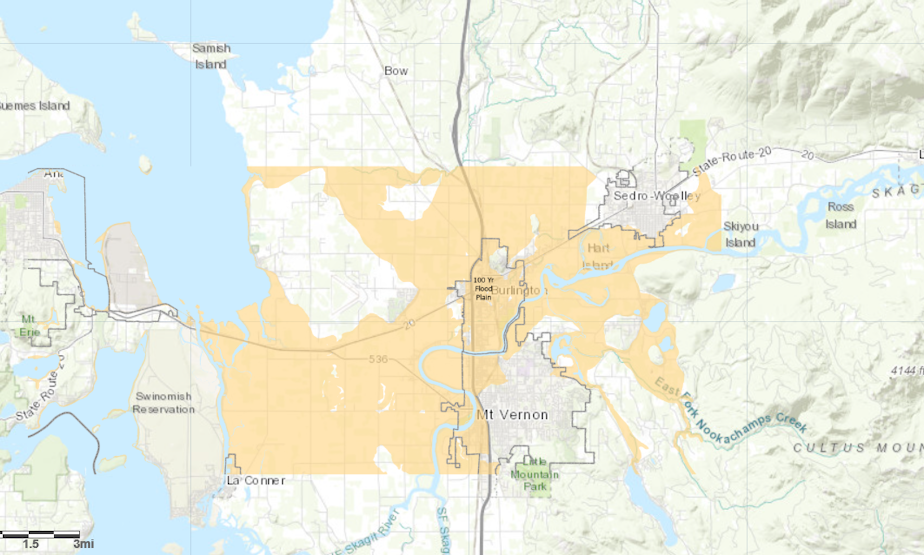
“GO NOW.” That’s the message from Skagit County to 100,000 residents who live in the valley’s floodplains. Parts of Mount Vernon and Sedro-Woolley are under mandatory evacuation orders because of the swollen Skagit River.
“This is a flood that we haven’t seen before,” Mount Vernon Mayor Peter Donovan said. “The potential for catastrophic flooding is real … and so we need to encourage people to heed that warning and to move on to higher ground.”
The Skagit River is expected to rise at least two feet above record levels near Mount Vernon on Friday — after it’s expected to break the record near Concrete on Thursday.
The National Weather Service has also issued a flash flood watch for western Skagit and northwestern Snohomish Counties because it is worried some levees and dikes along the Skagit River could fail.

—Angela King
8:17 a.m.
‘Catastrophic’ conditions
Western Washington braced for what the National Weather Service in Seattle called “catastrophic” conditions Wednesday as an atmospheric river drenched the state.
The NWS forecasted major flooding for 17 rivers as rain persisted across the region. Parts of Northwest Oregon were also affected, with flood warnings in place for several rivers.
Gov. Bob Ferguson declared a statewide emergency in response to the intense flooding. Several impacted counties also issued evacuation orders Wednesday afternoon.
The ocean-crossing storms known as atmospheric rivers are nothing new: They’re a major source of moisture up and down the West Coast every winter. But climate scientists expect them to grow more powerful, arrive more frequently, and last longer as Earth’s climate keeps warming.