
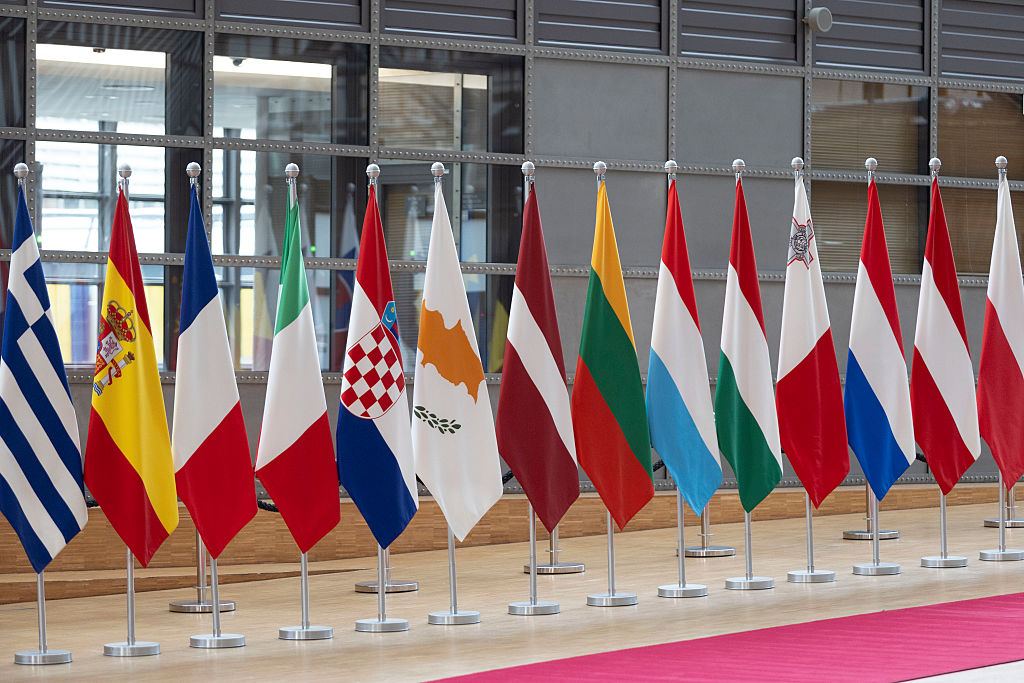
EU countries agreed to indefinitely immobilise Russian sovereign assets on Thursday, removing a major obstacle to providing a €210 billion “reparations loan” to Ukraine.
The decision by EU envoys came the day after Belgian Prime Minister Bart De Wever openly questioned the legality of the European Commission’s proposal to permanently freeze Moscow’s funds based on an emergency provision of the EU treaties.
Use of “Article 122“, formally floated by the Commission last week, is critical to avoid the assets being returned to Russia if sanctions on the Kremlin are lifted, which could leave Belgium on the hook to repay hundreds of billions of euros to Moscow if the loan goes ahead. The vast majority of the assets are based at Euroclear, a Brussels-based clearing house.
Currently, sanctions on the assets must be rolled over unanimously by EU capitals every six months. Hungary’s pro-Moscow leader, Viktor Orbán, has repeatedly threatened to block the extension of the sanctions, but has ultimately always backed down.
One EU diplomat said the vast majority of EU countries supported Thursday’s move. Another said that Hungary and Slovakia – another pro-Moscow member state – will likely vote against the proposal when EU countries formally decide on Friday. Belgium will likely abstain, they added.
In a statement published later on social media, the Hungarian government denounced the “unfortunate precedent” set by Thursday’s vote.
The move marks “a symbolic and substantial shift from the Treaty-based EU legal order to an unchartered territory,” Budapest said, adding that it also “carries the risk of derailing ongoing negotiations” to end the war in Ukraine.
A third diplomat said that Belgium had not yet disclosed their position on the asset immobilisation to EU countries.
EU ambassadors will discuss the loan further on Friday and Sunday. The formal vote to immobilise the funds will take place around 5 pm on Friday, a spokesperson for the Danish Council presidency said.
Belgian PM De Wever pushes back on EU efforts to indefinitely freeze Russian assets
Belgian Prime Minister Bart De Wever has poured cold water on the EU’s push to…
3 minutes

Despite Thursday’s decision, Belgium remains staunchly opposed to the loan scheme, which is backed by the vast majority of other member states.
On Wednesday, De Wever told the Belgian federal parliament that there are “many legitimate objections regarding the legality” of the Commission’s use of Article 122.
“This article is about a state of emergency,” he said. “Where is the emergency? There is an emergency in Ukraine. But Ukraine is not in the EU.”
Asked later on Thursday about Belgium’s legal concerns about invoking Article 122, EU Economy Commissioner Valdis Dombrovskis said: “We are confident that the justification for economic damages to trigger this provision of the treaty has been met above and beyond what is required.”
A Belgian government spokesperson declined to comment.
(mm, aw)
The story has been updated.