
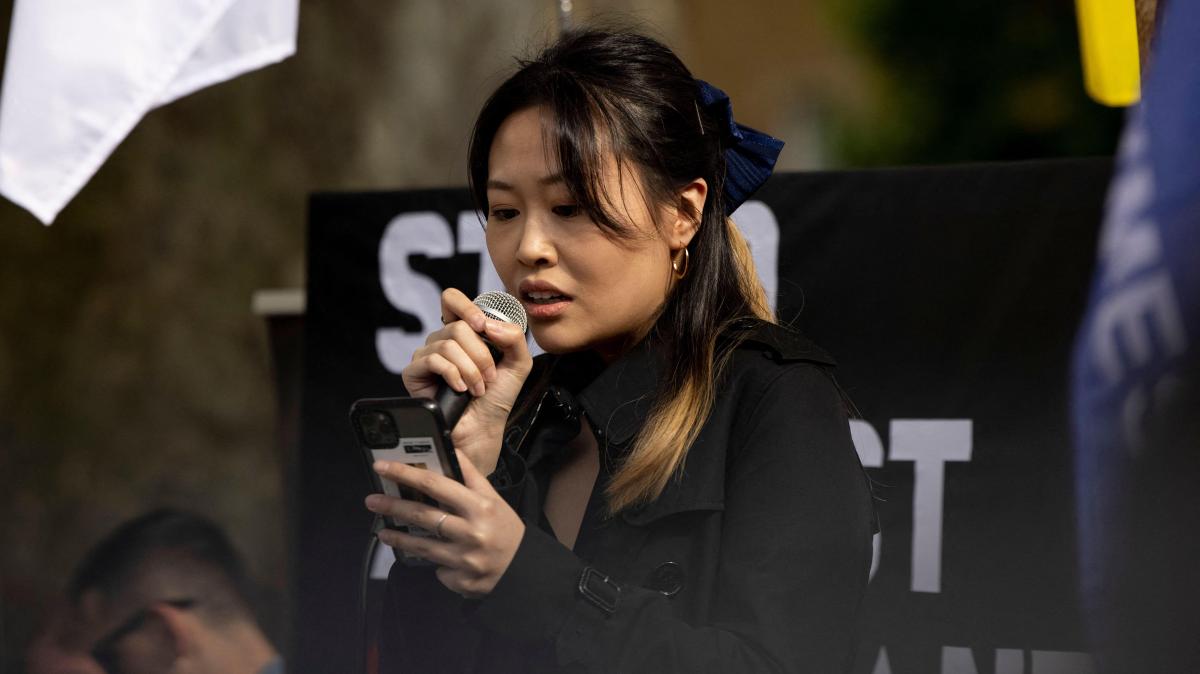
China is using deepfake pornography and widespread sexual harassment to silence female democracy activists, Hong Kongers in Britain have claimed.
Women around the world who speak out against the Chinese Communist Party are accused of being sex workers and “slut-shamed” with misogynistic abuse, pro-democracy activists have warned, after a prominent campaigner was subjected to a campaign of deepfaked pornographic letters sent from a Chinese territory.
Carmen Lau, a pro-democracy activist and former councillor in Hong Kong, who fled to the UK amid escalating repression, revealed this week that her former neighbours in Maidenhead were sent letters with digitally faked sexualised images of her.
• Protesters descend on site of China’s planned London ‘super embassy’
The letters, which were posted from Macau, a semiautonomous Chinese territory near Hong Kong, featured Lau’s face superimposed on to bodies that were naked or in underwear, and in one case a faked image of her performing a sex act.
The letters, which were revealed by The Guardian, included her former home address in full and said neighbours were “welcome to visit me”.
Lau said: “These images go beyond harassment. They are designed to destroy my credibility and to coerce my withdrawal from public life through humiliation and degradation.
“Gendered disinformation has long been used to silence women who challenge authoritarian power. This attack follows the same pattern, using humiliation as a tool of political punishment and a warning to others who might speak out against authoritarian regimes.”
At least three other pro-democracy activists have had deepfaked images spread about them, including a Chinese dissident YouTuber in Canada. Faked pornographic images of Yao Zhang were even shared under official Canadian state accounts, such as that of Justin Trudeau, the prime minister, to discredit her.
“If you are a woman, they have one more way to target you,” said Chloe Cheung, 20, who had barely finished her A-levels in Britain when the Chinese government placed a £100,000 bounty on her head.
“I’ve been receiving sexual harassment messages on my Twitter, on my Instagram, saying that I’m a sex worker or that I am on TV because I have sex with British white men. It’s a systematic way of targeting women activists.”
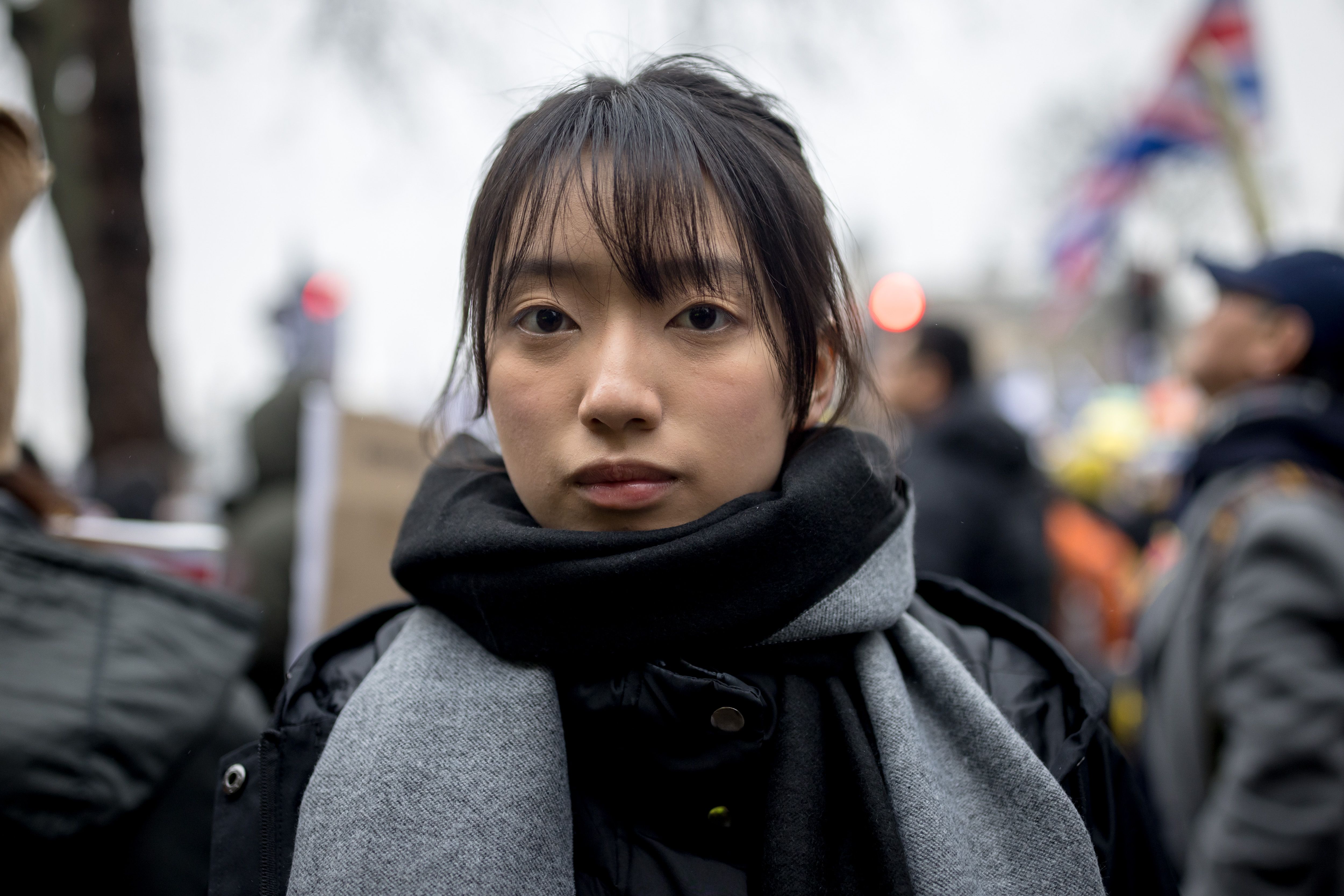
Chloe Cheung
JACK TAYLOR FOR THE TIMES
Cheung said had been followed in the UK by two Chinese men and had to look over her shoulder constantly. “They followed me all the way from an event venue to a restaurant 15 minutes away,” she said. “I was with a couple of my friends and we sat down at a restaurant and tried to have some food. Those two men kept walking around me and tried to listen to our conversation, and they didn’t order any food.”
When she made eye contact with one man, they both left. She and her friend tried to follow them to work out where they had come from, but they ran into a nearby hotel where she lost them. A police investigation went nowhere.
The incident “completely changed” how she behaved in public, she said. “I have to change my schedule regularly, I have to look over my shoulder to make sure no one is following me. I look at reflections and mirrors on the street to make sure no one is following me before I go to any important place.”
Chung Ching Kwong, a senior analyst at the Inter-Parliamentary Alliance on China, said Beijing and pro-Beijing groups viewed attacking women as an easy tactic.
“It has always been the case, even within Hong Kong. Women activists are subjected to a bit more slut-shaming than men. Being a woman is always a point of attack for Beijing and pro-Beijing people,” she said.
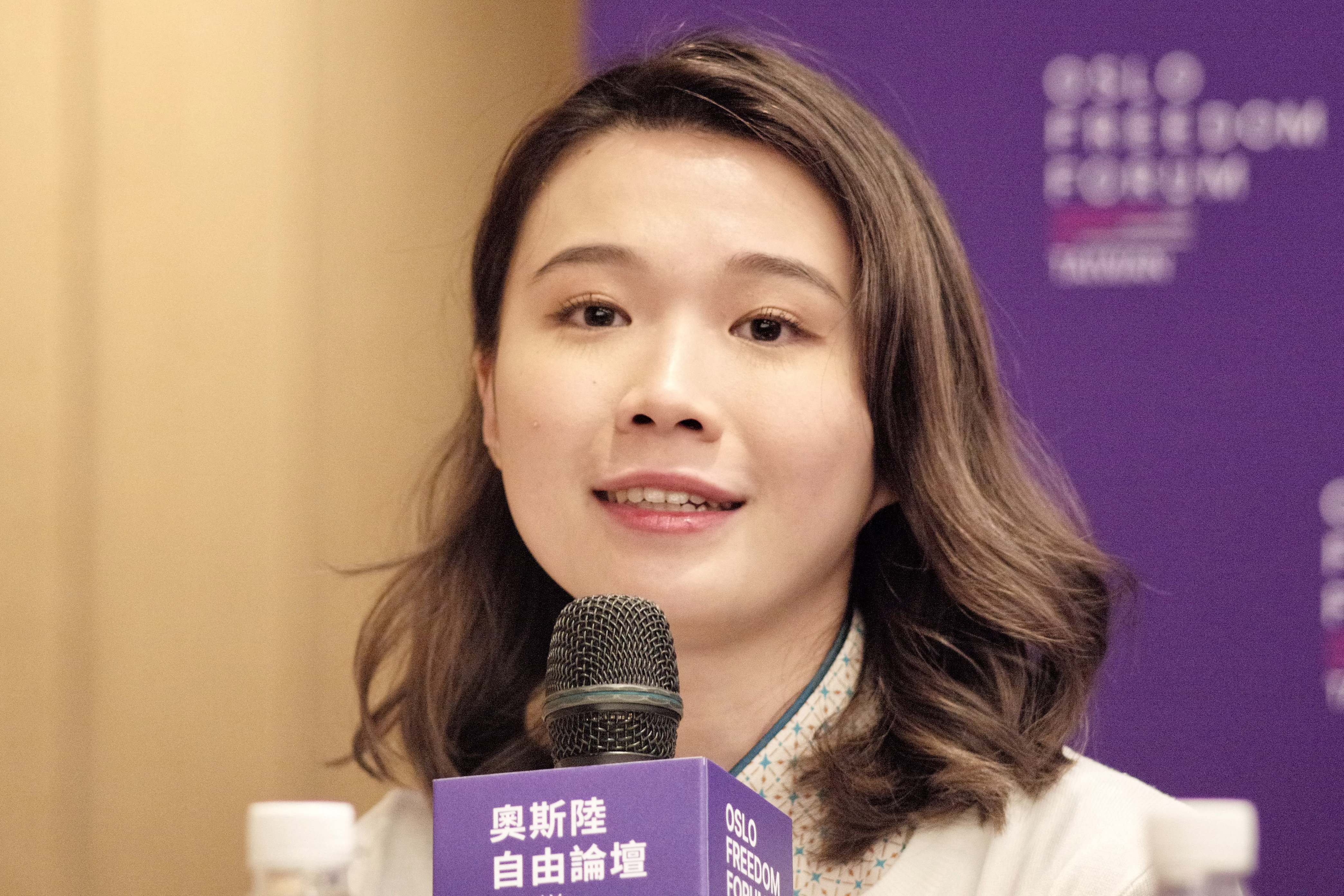
Chung Ching Kwong
SAM YEH/AFP/GETTY IMAGES
“After I moved to the UK, there have been comments about those things, saying that I’m a race traitor, I’m obsessed with white men and that’s why I’m an activist.”
• Hong Kong issues arrest warrants for overseas activists
She received online abuse, including accusations of being a sex worker and other sexualised remarks. She said: “It’s uncomfortable, not just for me, but for the people around me. Imagine my parents having to read those comments about me online.”
Kwong and Cheung urged the British government to do more to protect activists from transnational repression. Earlier this year, the Home Office rejected calls to set up a dedicated hotline to support those harassed by foreign states and to track the number of incidents.
China’s proposed “super-embassy” could make Hong Kongers more vulnerable, Cheung added. “After everything that happened to Hong Kong activists, the Labour government still wanted to approve the mega-embassy.
“We are an example of how the Chinese authorities can go after you if you speak against them, and the message they are sending to the Chinese authorities is that you can do whatever you want. We don’t care.”
The Home Office and Foreign Office have been contacted for comment.