
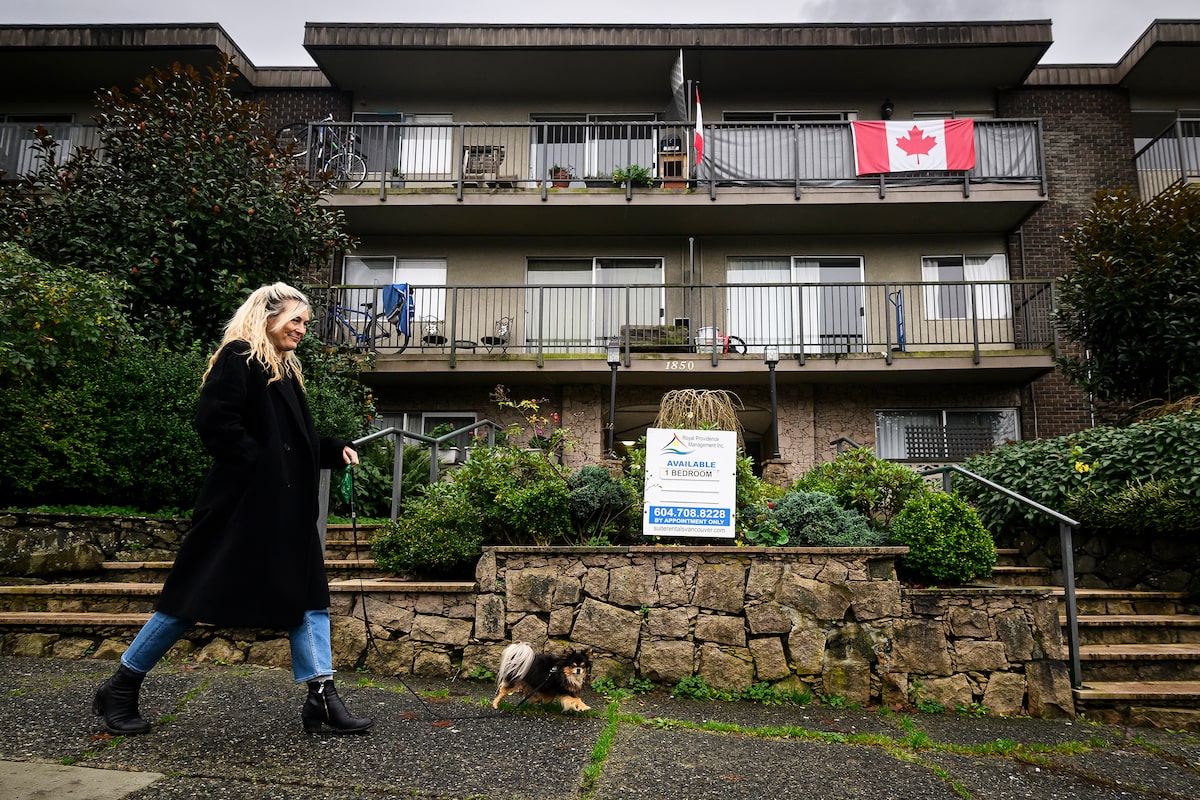
A vacancy sign is seen outside of a rental apartment in Vancouver on Thursday. Vacancies have reached 3.7 per cent in the city this year – ‘the highest level seen in 30 years,’ according to CMHC.Jennifer Gauthier/The Globe and Mail
Canada’s rental market is softening, but not nearly enough to make housing feel affordable for many tenants, according to the Canada Mortgage and Housing Corporation.
The national vacancy rate for purpose-built rentals has jumped to more than 3 per cent in 2025 compared with 1.5 per cent just two years prior, according to the report released on Thursday. CMHC said that while rent prices continue trending upwards overall – often among larger, more livable units – the pace of increases has slowed, even as landlords dangle more incentives.
Nationally, rents rose just above 5 per cent on average to $1,550 for a two-bedroom unit, compared with the record 8 per cent in 2023, the crown corporation found.
In Vancouver, vacancies reached 3.7 per cent – “the highest level seen in 30 years,” CMHC deputy chief economist, Tania Bourassa-Ocho said.
New purpose-built rentals, completed since 2022, in Toronto had vacancy rates as high as 7 per cent, reflecting intense rental competition between new buildings and a large stock of investor-owned condos. A majority of those rentals offered at least one incentive such as one to two months of free rent.
“Are tenants really getting some relief? Yes and no,” Ms. Bourassa-Ocho said. While prices have fallen, relief is more limited when you’re looking at units for lower-income levels geared at younger people, where the need is more important.”
Weaker demand caused by slower population growth and immigration cuts has partly led to record levels of new supply and driven a softer market. In addition, more young people are delaying moving out or continue living with roommates amid higher youth unemployment.
Some of the same factors have strained affordability.
This summer, unemployment for those aged 15 to 24 reached the highest level since 2010 (excluding the first years of the pandemic). And while vacancy is rising across the entire spectrum of rental inventory, including the cheapest units for the first time in a decade, the more affordable apartments still have the lowest vacancy rate overall, said Ms. Bourassa-Ocho. Bigger, more livable units are also generally hard to find.
Rents for two-bedroom units, for example, grew more than 7 per cent in Montreal to $1,346, and 6.7 per cent in Halifax to $1,826, about double the growth rate the previous year. While some of the increases were driven by landlords maximizing allowable rent caps, worsening rent-to-income ratios were also a prime driver in places such as Halifax and Montreal, said Ms. Bourassa-Ocho.
Outside of purpose-built rentals, the rental condo market has been dominated by “dog crate condos,” driving down rent prices, said Ron Butler, the founder of Butler Mortgage in Toronto. “The two bedrooms are still very expensive and harder to come by.”
Canada’s rental market has gotten cheaper, but that won’t last
Between 28,000 to 30,000 condo units are expected to be completed in 2026 in the GTA with a majority in the 600-square-foot or smaller range, said Mr. Butler. Purpose-built rentals do include more two-bedroom stock, with about 6,000 such units scheduled to complete in Toronto over the next two years, but supply of these larger units remains far below demand.
When 25-year-old Aditi Lohtia recently began hunting for a two-bedroom condo that she could share with a roommate, everyone was talking about how much rents were falling, she said. But when she actually started her search, “everything was the same as in 2023 in downtown.”
She eventually landed on a unit well above $3,000. “Nothing has gone up significantly, but also nothing has really gone down significantly,” she said.
“There’s very few buildings in Toronto that actually have good two-bedroom layouts,” said Toronto realtor Jenelle Tremblett. Though she has seen deals under $3,000 for those types of units further out of the downtown core and across older stock, in the city centre, “you’re looking at $3,500 to $3,700.”
For condos that have been sitting vacant for 30 days or more, Ms. Tremblett said she regularly drafts offers $100 to $150 lower than the listing price for the monthly rent, and renters do have more leverage to negotiate.
Many renters might also be relieved to see that landlords aren’t tacking on rent increases when their lease is up for renewal. “We’ve certainly heard of an uptick in landlords offering to forgo rent increases throughout the middle and end of the year as they seek to incentivize current renters to remain in place,” Rentals.ca product manager David Aizikov said in an email. With depressed demand set to continue in 2026, he expects a continuation of this trend.
Ms. Tremblett said renters definitely have more room to negotiate than a couple of years ago but prices haven’t fallen to anywhere near COVID-era levels.
“We’re still far away from a context where the rental market is affordable,” said Ms. Bourassa-Ocho. “Tenants that are moving are still paying more than tenants that are sitting in their apartments … but they’re not paying as much as they were last year.”