
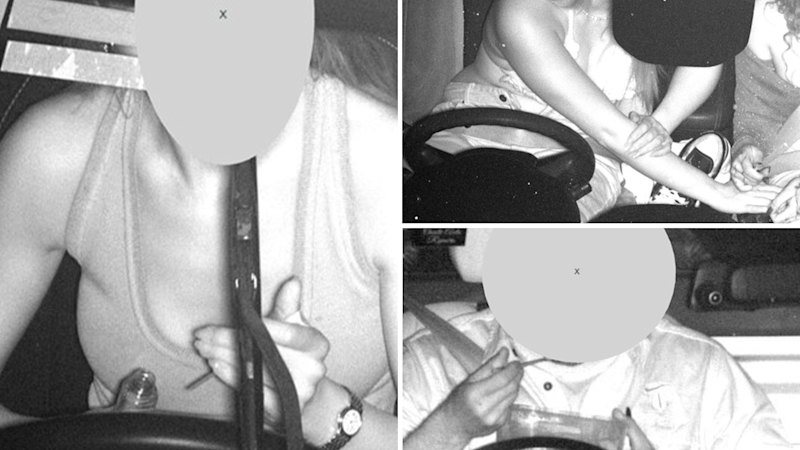
“It’s also mind-boggling to see people you know eating bowls of cereal or working on an iPad or having a toddler on their lap unprotected.”
Whitby said the cameras were not introduced to raise revenue.
“My answer to people who say this is revenue collecting is this: this is entirely voluntary. If you don’t want to pay the fine, don’t do the crime,” he said.
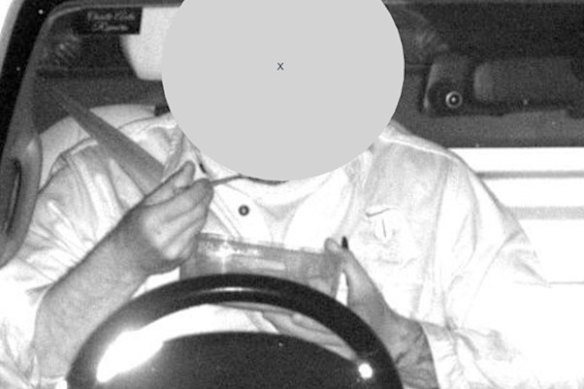
The cameras have alos taken photos of people eating at the wheel.
The $13 million in fines will go to the Road Trauma Trust Account, which is used for road upgrades across the state.
When asked about the grey areas of laws when it comes to consuming food or drink behind the wheel, Whitby said it came down to common sense.
“I think inherently we know when we don’t have proper control of the car, when we don’t have our hands on the wheel,” he said.
“Clearly, balancing a cereal bowl and feeding yourself with a spoon with no hands on the wheel, common sense tells you that’s not appropriate.”
Despite the cameras’ operation this year, WA has recorded a shocking number of deaths on the roads, with the tally already sitting at 176 ahead of the Christmas period.
That places this year at equal-second worst in a decade with 2024, behind 184 deaths in 2016.
Whitby said the education campaign earlier this year had worked, with the monthly rate of offences dropping from 47,500 in the first month of the cameras’ operation to 31,000 between October and November.
“31,000 a month is still too high. $13 million in revenue, which we will put to good use, it will all go back on to road safety. But we’d rather not have that money. We’d rather you doing the right thing behind the wheel,” he said.
Minister Assisting the Minister for Transport Jessica Stojkovski said the cameras were detecting offences that previously went undetected.
“The message is: the technology is now out there, unsafe behaviours will get you fined and you’ll incur demerit points,” she said.