
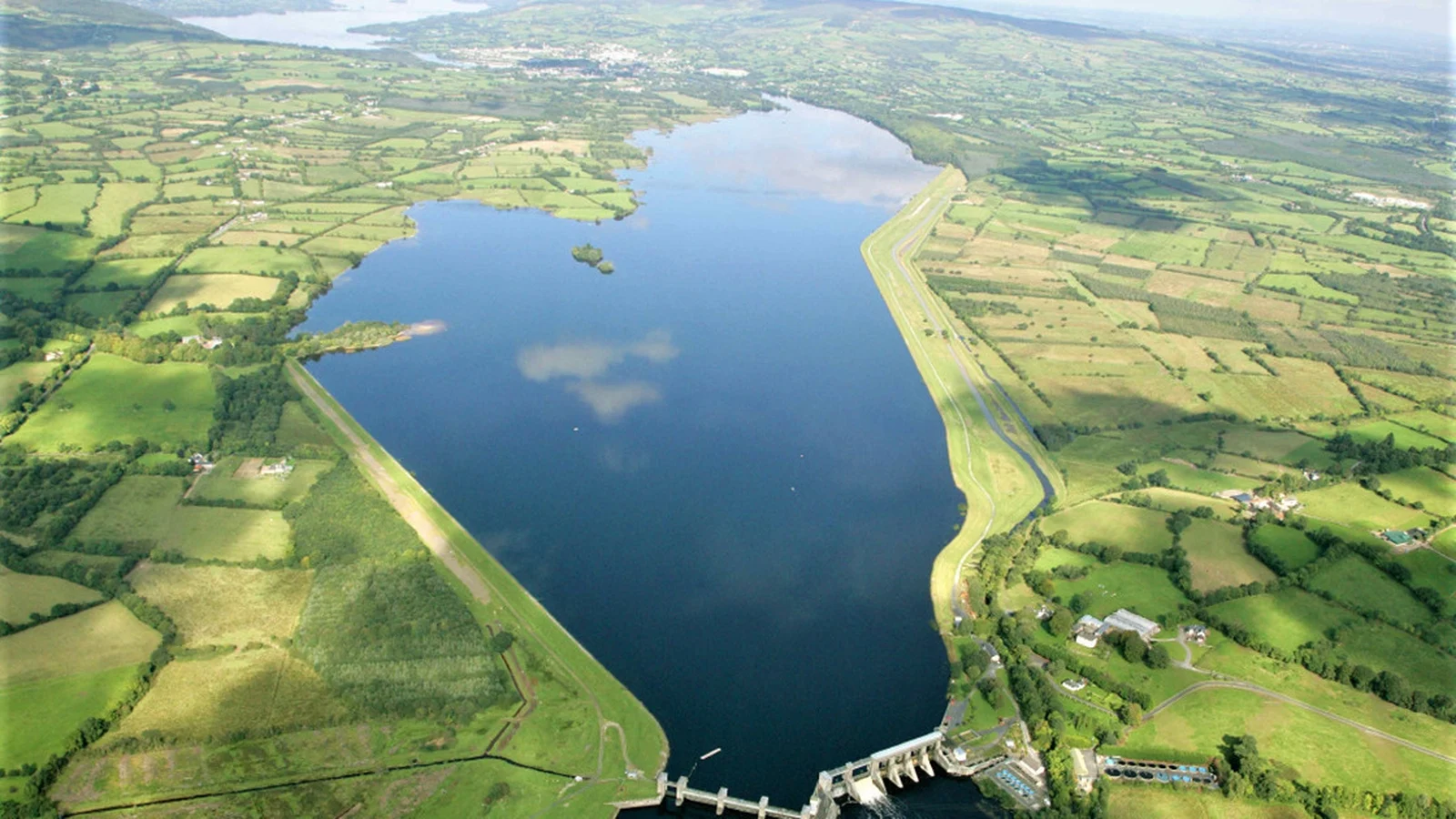
Uisce Éireann has announced that it will submit a planning application next week for the largest-ever water project in Irish history.
The application is for permission to begin constructing the major water project that will pipe drinking water from the River Shannon at the Parteen Basin below Lough Derg on to the Midlands Eastern and Greater Dublin area.
It is a Strategic Infrastructure Development planning application as well as a Compulsory Purchase Order application for some land access.
The application involves more than 500 documents containing 30,000 pages.
An Comisiúin Pleanála will commence a seven-week statutory public consultation on 6 January next year and will be required to decide on the matter within 48 weeks.
If planning permission is granted Uisce Éireann proposes to start construction in 2028 and complete it within five years.
The estimated cost is between €4.58bn and €5.96bn.
The official name for the project is the Water Supply Project Eastern and Midlands Region.
The proposed pipeline will have capacity to support the water supply needs of up to 50% of the State’s population including 1.7 million people in the Greater Dublin Aaea where the drinking water supply is currently on a knife edge.
Water supplies to another 800,00 people in towns in the midlands and east of the country will also benefit.
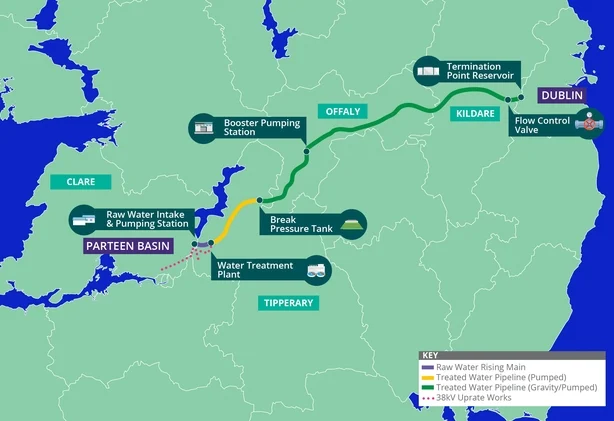
The project will pipe drinking water from the River Shannon at the Parteen Basin on to the Midlands Eastern and Greater Dublin area
Uisce Éireann says when delivered, this “once-in-a-generation” project will ensure a sustainable, secure and resilient supply of drinking water to the Greater Dublin Area and wider Eastern and Midlands region, “necessary to support our growing population and economy, including the increased demand for housing”.
In addition, by diversifying the sources of water supply, it will provide greater resilience in the face of climate change.
The public utility company says the project is essential.
It will provide Dublin, Meath, Kildare and Wicklow with a resilient, safe, secure water supply, it says.
It will also create a treated water supply ‘spine’ across the country, providing infrastructure with the capacity for future offtakes to serve communities along the route in Tipperary, Offaly, and Westmeath.
In addition, the project will enable supplies currently serving Dublin to be redirected back to Louth, Meath, Kildare, Carlow and Wicklow, providing security of supply to homes and businesses, which will support growth and promote regional development.
At peak construction, the project will employ more than 1,000 people directly, with a significant associated spend on local supplier goods and services.
Uisce Éireann is proposing a bespoke Community Benefit Scheme as part of the Water Supply Project, to support communities that will host construction activities and permanent infrastructure.
This includes a multi-million euro Community Gain Investment Fund, which has been developed in collaboration with local authorities along the route, and will directly support economic, environmental and educational community development initiatives throughout the construction of the project.
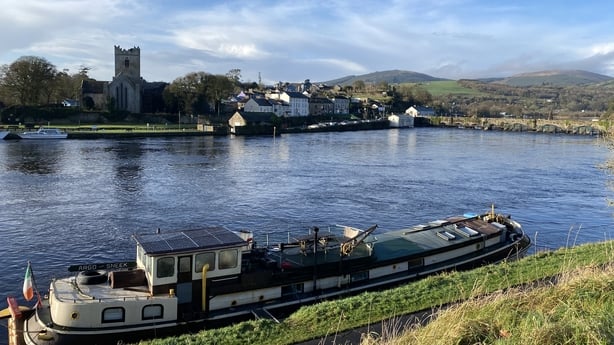
A group advocating for the protection of the River Shannon is opposed to the plan
Disappointment in Mid West over Uisce Éireann plans
There is disappointment in the Mid West that Uisce Éireann is set to apply for planning permission for the project.
The River Shannon Protection Alliance had lobbied the Government to review the plan before it got to this stage in the planning process.
The alliance is opposed to the project on economic, social and environmental grounds.
“Economically it doesn’t make sense,” said Kay Mullane, spokesperson for the River Shannon Protection Alliance.
“There is a price estimate on it of around €10.4 billion. We would say it’s the most expensive solution that Uisce Éireann came up with, the only solution that they came up with.”
She said it is not necessary to take 330 million litres, pipe it 172 kilometres to Dublin, while ploughing 500 farms in the process.
She said the project requires water to be taken from the Parteen Basin which is designated by Europe as a special area of conservation, and Lough Derg which is designated a national heritage area.
The group advocates for Uisce Éireann to consider an alternative solution on the east of the country.
“The rivers of the east can be used in conjunction with the Poulaphouca Reservoir in Dublin,” Ms Mullane said.
“The Poulaphouca Reservoir is mostly used for electricity generation. It was originally built and paid for by the taxpayer for water storage for Dublin, and if this was used correctly, we advocate, there would be no need for a pipeline.”