
Central bank says it’s suing Euroclear in Moscow courtEU plans to use seized Russian assets to help UkraineCentral bank’s Russian lawsuit seen as symbolicRussia could also act to seize EU private assets
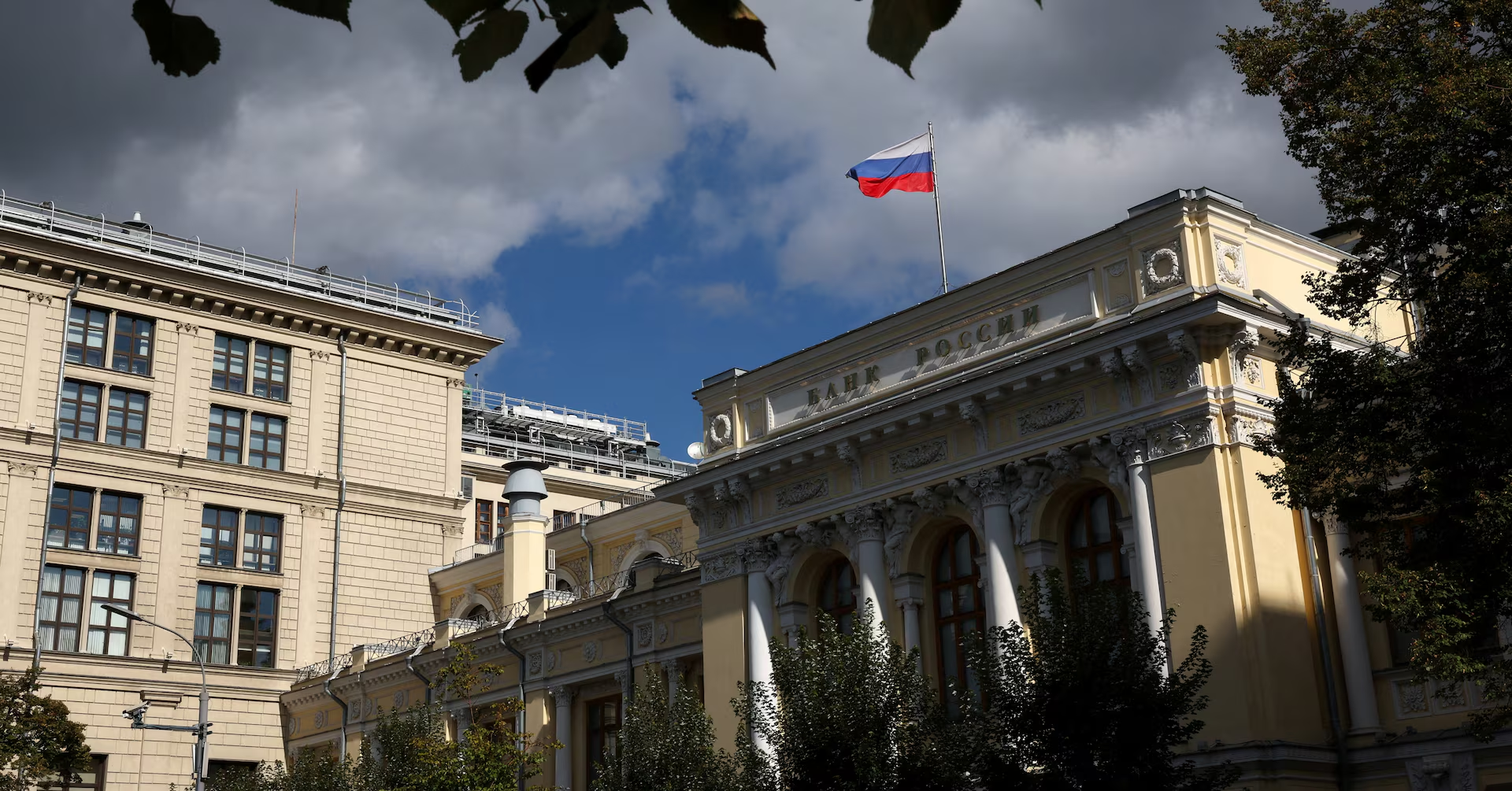
MOSCOW, Dec 12 (Reuters) – Russia’s central bank said on Friday European Union plans to use its assets were illegal and it reserved the right to employ all available means to protect its interests.
It said separately it was suing Brussels-based financial institution Euroclear – which holds many of the assets – in a Moscow court over what it said were damaging actions, affecting its ability to dispose of its funds and securities.
Sign up here.
The EU looked set later on Friday to indefinitely freeze Russian central bank assets held in Europe, removing a big obstacle to using the cash to help Ukraine.
“Mechanisms of direct or indirect use of the assets of the Bank of Russia, as well as any other forms of unauthorized use of the assets of the Bank of Russia, are illegal and contrary to international law, including violating the principles of sovereign immunity of assets,” the Russian central bank said.
Euroclear, Belgium’s government and the European Commission did not immediately respond to requests for comment.
Evgeny Kovalyov of Russian law firm Delcredere said the lawsuit in a Russian court was “symbolic” and would be hard to execute in the EU.
“So, they will choose either the Russian jurisdiction or the jurisdictions of friendly countries where there are assets of European companies and, primarily, Euroclear,” Kovalyov said.
The central bank referred to a December 3 Commission press release outlining two solutions to support Ukraine’s financing needs in 2026 and 2027.
‘HARSHEST REACTION’
Under one of those solutions, the Commission would be able to borrow cash balances from EU financial institutions holding frozen Russian central bank assets to issue a reparations loan for Ukraine.
Russian officials have said such action would meet “the harshest reaction“.
The central bank said implementation of such plans would be challenged in “national courts, judicial authorities of foreign states and international organizations, arbitral tribunals and other international judicial instances, followed by the enforcement of judicial decisions in the territories of U.N. member states”.
Kovalyov said Russian authorities could also use a mechanism for confiscating EU citizens’ private assets.
According to former President Dmitry Medvedev, Russia has about $300 billion of frozen foreign assets in “C-type” accounts created in response to Western sanctions over the war in Ukraine.
Such assets include Russian securities owned by investors from “unfriendly” countries, including stock in Russian companies and corporate and sovereign bonds, and cash and proceeds from these securities.
Reporting by Anton Kolodyazhny and Gleb Bryanski, Additional reporting by Evgeniy Matveev in Moscow and Inti Landauro in Brussels, Editing by Christopher Cushing and Mark Potter
Our Standards: The Thomson Reuters Trust Principles., opens new tab