
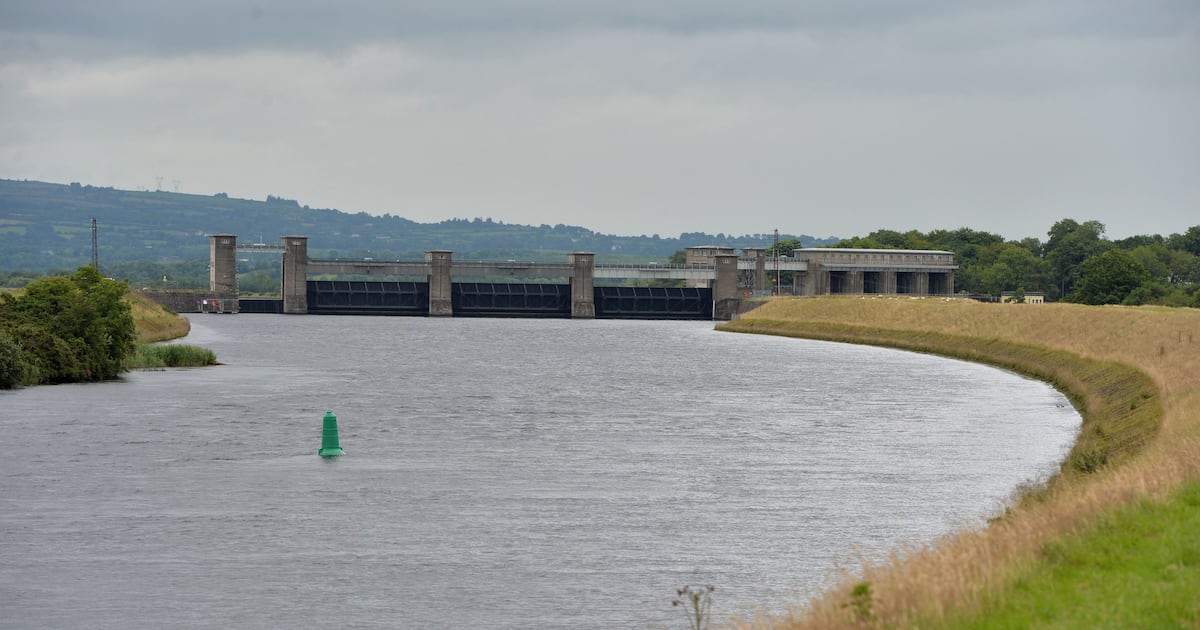
Uisce Éireann is to lodge a planning application next week for a 170km pipeline to bring water from the river Shannon to Dublin and surrounding counties.
The €6 billion project, the largest water scheme ever proposed in the country, would run an underground pipe through four counties, crossing lands belonging to 500 separate owners.
A water treatment plant would be built close to the extraction point at the Parteen Basin in Co Tipperary and a major new reservoir would be constructed at the end point near Peamount in Dublin.
Along the way, numerous spurs would allow for future bolstering of water supplies in Offaly, Westmeath, Kildare, Meath, Wicklow, Carlow and Louth.
The extensive planning application, which comprises more than 500 documents, will be lodged with An Coimisiún Pleanála on Friday, December 19th, and will be available online on a dedicated website from that date.
A seven-week public consultation will begin on January 6th and Uisce Éireann says if planning permission is received without delay, construction will begin in 2028 and take five years to complete.
Minister for Public Expenditure Jack Chambers welcomed the move as a vital piece of infrastructure and said it was a “major milestone that will unlock housing in the eastern and midlands region”.
Maria O’Dwyer, infrastructure delivery director at Uisce Éireann said the need for the scheme was clear.
“The growing water supply deficit and lack of supply resilience in the eastern and midlands region is simply not sustainable,” she said.
“It is estimated that 34 per cent more water will be needed by 2044 in the greater Dublin area.”
Piping water from the Shannon to Dublin has been discussed for almost 20 years but the idea continues to attract controversy because of concerns over the impact on the ecology of the Shannon.
Critics also argue that insufficient effort has been made to address water shortages caused by leaks.
More than a third of the 1.7 billion litres of drinking water Uisce Éireann pipes to homes and businesses each day is lost through leaks.
Farmers and landowners along the route also raised objections but a deal was struck recently to pay them on average €100,000 each in compensation.
Uisce Éireann said it was also proposing a multimillion euro community benefit scheme to support communities affected by the construction.
Similar schemes are required to be operated by the wind energy industry in communities where they erect turbines.
At the height of construction, 1,000 people are expected to be employed on the project.
The cost was estimated at €1.2 billion when initial plans were drawn up 10 years ago but Uisce Éireann now puts it at €4.58-€5.96 billion, although it emerged earlier this year that a Department of Housing assessment believed it could run to €10 billion in a worst-case scenario.