
More than 400 Harvard affiliates signed a petition to reinstate the director of the François-Xavier Bagnoud Center for Health and Human Rights in a withering rebuke of the University’s decision to dismiss her earlier this week.
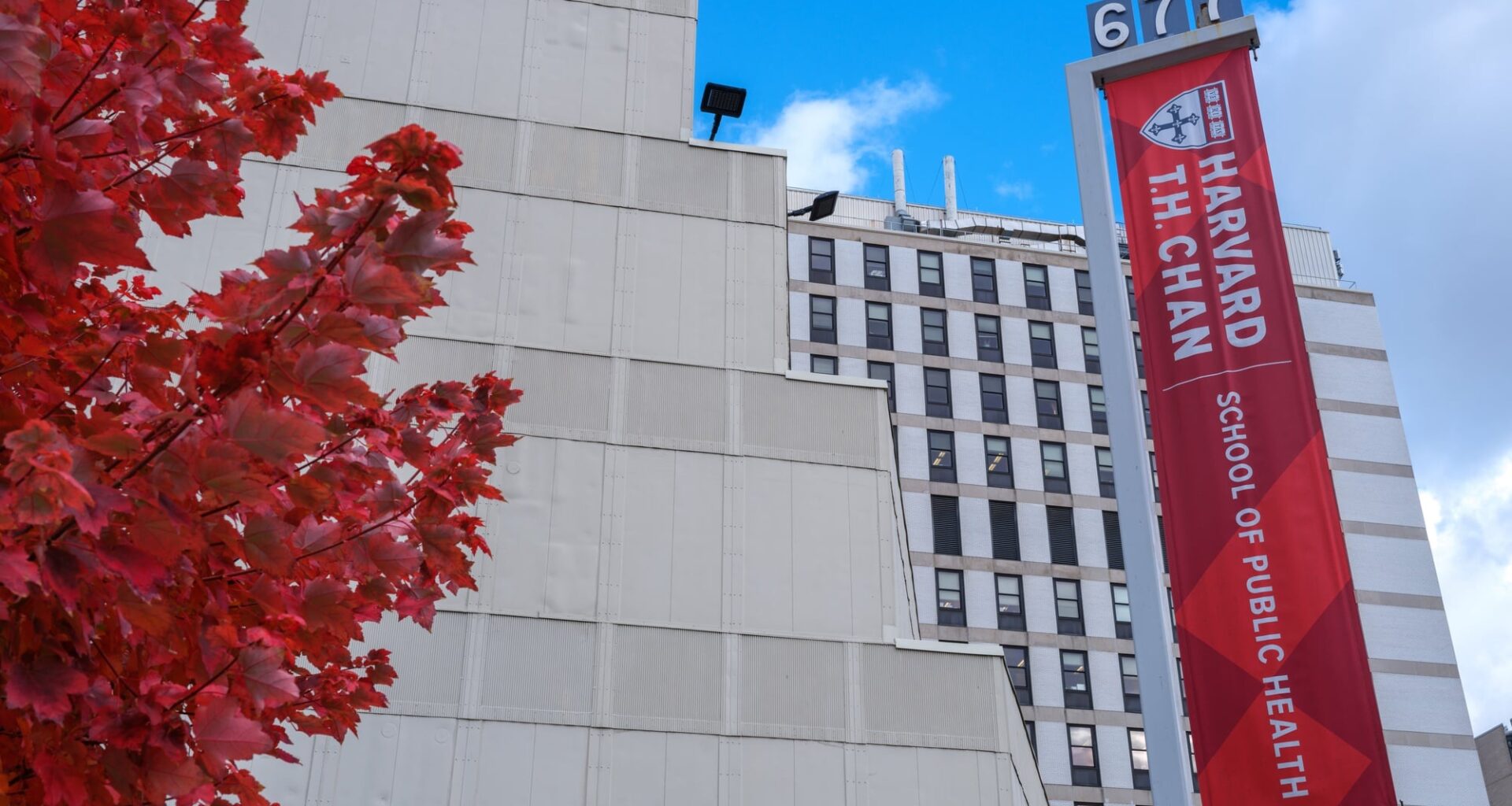
Harvard School of Public Health Dean Andrea A. Baccarelli announced that professor of the practice Mary T. Bassett ’74 would step down from her position as director of the FXB Center on Tuesday, the latest in a series of abrupt shakeups in centers with programming on the Israel-Palestine conflict.
Bassett was told hours before Baccarelli’s announcement that she would be expected to move out of her office by the end of the year, The Crimson reported this week. Her departure will take effect Jan. 9.
The petition’s signatories — numbering more than 1,000 — also included public health and medical faculty from schools including Columbia University, Brown University, and the University of Chicago.
“This targeted dismissal follows a series of politically motivated terminations of leaders at Harvard’s scholarly centers that include programming on Palestine,” they wrote. Harvard dismissed the faculty directors of its Center for Middle Eastern Studies earlier this year and declined to renew the contract of the leader of the Religion, Conflict, and Peace Initiative, a Divinity School program that had focused for years on the Israel-Palestine conflict.
The petition also suggested that Harvard’s removal of Bassett, who is Black, “signals that both Black leadership and principled human rights scholarship are expendable when they challenge institutional comfort,” it read.
Spokespeople for Harvard and HSPH did not immediately respond to a request for comment Thursday night.
Baccarelli also announced in his email on Tuesday that the FXB Center would shift its focus toward children’s health and early development, writing that the center could “accomplish more, and have greater impact, if we go deeper in a primary area of focus.”
The petition blasted the change in focus as a decision that ignored the center’s own track record and threatened to impede its future work.
“FXB’s programming focuses extensively on children’s health from an interdisciplinary and structural perspective,” the petition reads. “Taking away focus from structural racism and oppression hinders the center’s ability to champion children’s health. Doing so precisely at a time when decades of progress towards equity is being undone is shameful.”
Harvard’s chapter of the American Association of University Professors released a statement Thursday night that levied similar claims against the University, arguing that Bassett’s dismissal had “grave implications for academic freedom.”
“The University’s lack of forthrightness about the basis for these actions, as well as its disrespectful treatment of the affected faculty and staff, directly undermines the culture of intellectual vitality and viewpoint diversity Harvard says it seeks to promote,” they wrote in a press release.
Harvard’s AAUP chapter wrote that the circumstances of Bassett’s termination “echo” the removals at CMES, as well as the suspension of the FXB Center’s partnership with Birzeit University in the West Bank and the dismantling of Harvard Divinity School’s Religion and Public Life program, which houses the RCPI.
“Especially in this moment of concentrated external attacks on our university’s fundamental values, our university’s scholars should be defended by Harvard’s leaders, not treated as collateral damage or sacrificial offerings,” the AAUP chapter wrote.
An April report by an internal Harvard task force on antisemitism called for greater supervision of the FXB Center and Palestine Program by tenured or tenure-track faculty, accusing it of “demonization” of Israel. Students cited anonymously in the report said the center’s scholarship was one-sided and sometimes inaccurate.
The task force report also took aim at articles from FXB Center affiliates, including one that argued centers for the study of health and human rights should not be politically neutral.
The FXB Center has also come under intense external pressure — particularly from the Trump administration, which demanded in an April letter that Harvard subject it to an external review.
Harvard refused to comply with the demands, and the Trump administration froze billions of dollars in multiyear federal funding in response. The funds were restored after a judge struck down the freeze in September.
—Staff writer Abigail S. Gerstein can be reached at [email protected]. Follow her on X @abbysgerstein.
—Staff writer Amann S. Mahajan can be reached at [email protected]. Follow her on X @amannmahajan.