
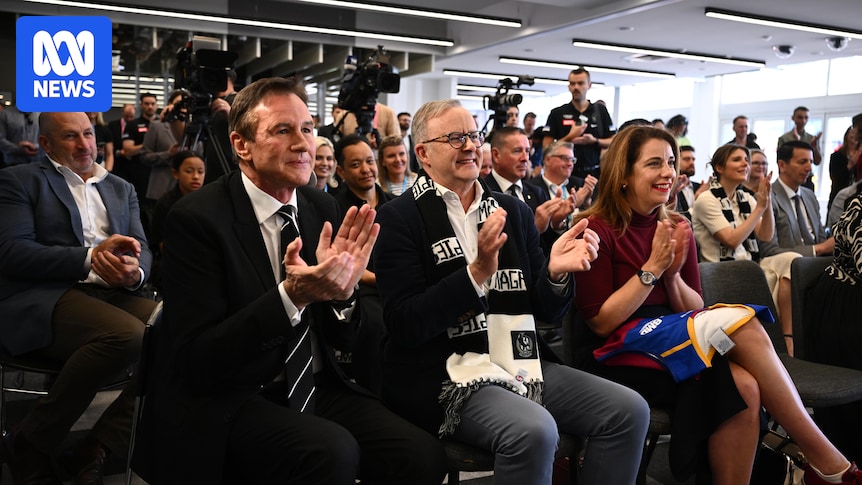
A media flurry this week has put the spotlight on politicians who bill taxpayers to travel to box office events and political fundraisers, and to fly loved ones around the country in business class.
Sports minister Anika Wells has received the most scrutiny for a long list of expenses, including a family trip to Thredbo, flights to attend birthday parties, and large Comcar bills to ferry her to big-ticket events in her portfolio.
Wells has submitted her spending to be audited by the expenses watchdog. But she is not alone in charging the taxpayer-funded “company card” in eyebrow-raising circumstances.
Attorney-General Michelle Rowland has also referred herself for an audit over a family trip to WA.
And Trade Minister Don Farrell, the Nationals’ Andrew Willcox and the Greens’ Sarah Hanson-Young have accumulated considerable air miles for their own loved ones.
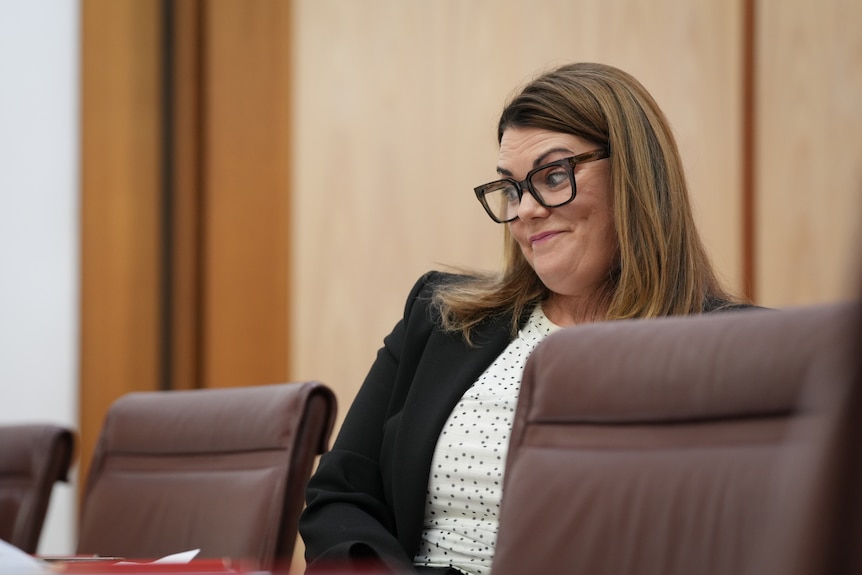
Sarah Hanson-Young has booked a large number of flights for a family member to travel between Adelaide and Canberra, where her husband works as a lobbyist. (ABC News: Matt Roberts)
Ms Hanson-Young, who has yet to publicly defend her spending, has booked more than 100 family flights since 2022, most between Adelaide and Canberra, where her husband Ben Oquist works as a lobbyist for a firm with clients including Rio Tinto and Uber.
When politicians do respond, they usually say the same thing: “It was within the rules.” But what exactly are those rules, and how much do we pay for politicians to go to the tennis, the ballet or on family holidays?
Self-imposed rules
Like any law or regulation, the rules about when politicians can use taxpayer money are a matter for the parliament. In other words, the rules for politicians are written by the politicians.
Prior to 2017, this was mostly the domain of the powerful “privileges committee”, comprised of politicians from across the political spectrum. But a series of reviews of that system found it to be convoluted and not transparent enough.
After a series of high-profile expenses scandals during the Abbott and Turnbull governments, including Sussan Ley’s resignation from the cabinet over a trip to a home she was purchasing on the Gold Coast, a new process was established.
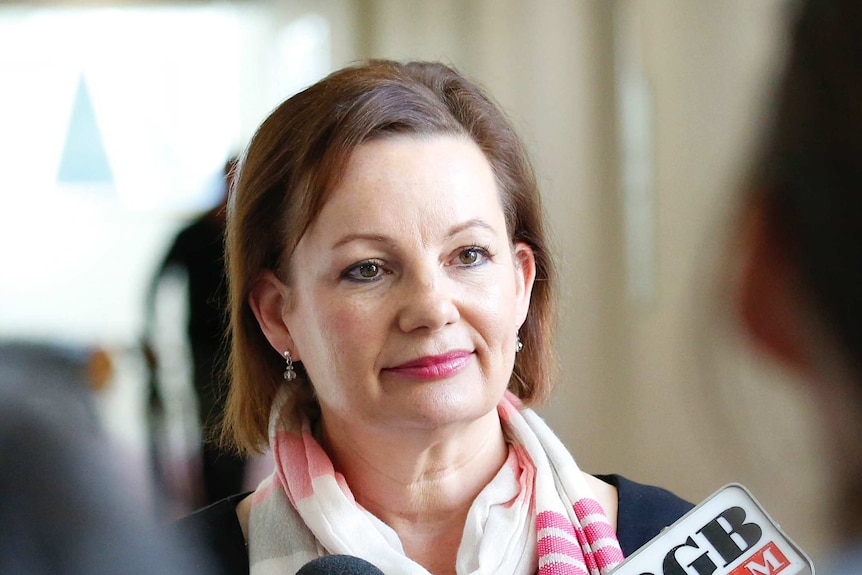
Sussan Ley resigned from the cabinet under the Turnbull government over her own expenses scandal. (ABC News: Matt Roberts)
The new Parliamentary Business Resources Act set clearer rules and created the Independent Parliamentary Expenses Authority to oversee them, providing advice to politicians and with powers to conduct its own audits and issue invoices for wrongful claims.
The rules had bipartisan support and have remained substantively the same since then. There are many of them, but the broad principles are as follows:
Politicians can bill taxpayers for costs related to work, including travel and office expenses such as printingTo be eligible, a trip must have work as its “dominant purpose”Politicians can fly business class and can even charter flights, but must try to choose the most cost-efficient means of transportPoliticians can fly their families to meet them in Canberra or around the countryFor spouses, this is notionally limited to the value of nine return business flights to Canberra per year, plus three family member flights elsewhere in AustraliaFor ministers and other senior politicians, this limit does not apply
But while Anthony Albanese repeatedly insisted this week that they were up to IPEA, the setting of the rules is in fact up to the special minister of state, currently Don Farrell, who can write changes using regulation at any time.
PM says he has asked independent watchdog for advice on politician perks
After days of pressure over whether the rules met public expectations, Albanese said on Friday he had “asked the head of IPEA for advice” about whether they needed to change.
Exactly what has been asked of IPEA is unclear, but Albanese said on Thursday he acknowledged “issues” had been raised and that “community expectations” were important.
That may be a tacit admission that the rules as they are currently written are broad enough that, even when politicians stay within them, they can sometimes fall afoul of what voters would consider reasonable.
Best seats in the house
Perhaps the most obvious example is that familiar sight of a politician in a suit and a scarf at the footy. The image is as much of a classic photo op as high-vis vests or cute babies.
And at least as far as the price of entry, the appearances are usually free for the taxpayer. Politicians typically attend either on their own dime or paid for by sporting codes or other corporates.
When the latter happens, the politicians must declare their tickets as “gifts” on their register of financial interests.
Take the two major party leaders from the last term. Anthony Albanese’s register shows he was sponsored to attend 18 sporting events and 10 concerts over the course of the last term, as well as an unspecified number of South Sydney Rabbitohs games.
It was a varied itinerary including grand finals and grand slams as well as Taylor Swift, Nick Cave, the Foo Fighters and Midnight Oil.
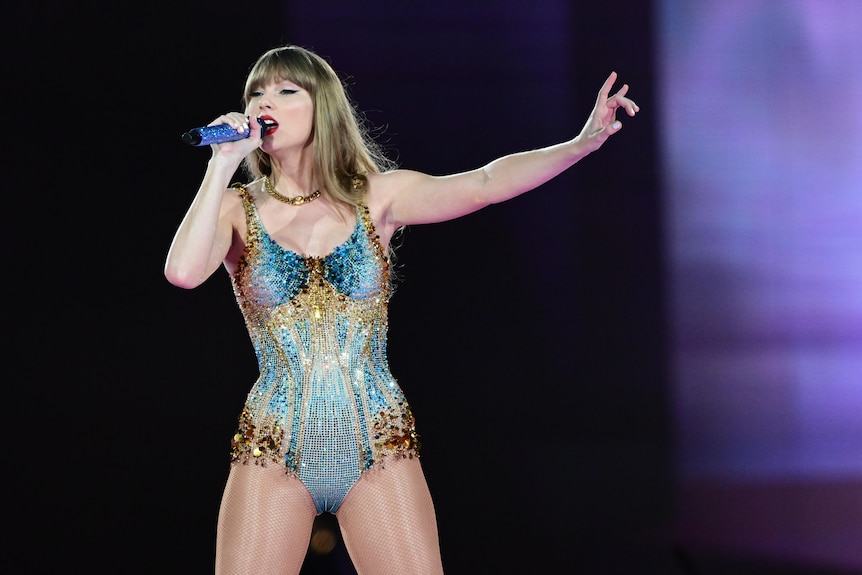
Anthony Albanese attended a Taylor Swift concert in Sydney, but there is no record of Comcar charges under his name on that day. (ABC News: Brendan Esposito)
Peter Dutton scored 24 sporting tickets and 3 concerts, showing a particular preference for cricket and a varied musical taste stretching from Swan Lake to Luke Combs.
Paid for by corporates, there was no direct taxpayer cost to attend any of these events. But the cost of getting there was another story.
Needles in haystacks
To understand how much taxpayers paid for Albanese, Dutton and others to attend sporting events is not straightforward, but a partial picture can be gleaned from the disclosure logs published by the IPEA.
This data set is dizzyingly large — there have been 1.1 million individual disclosures since 2017, covering everything from office printers to business class flights.
It is also incomplete. For example, we can see when a politician flies to a city, and how much they spent on Comcars while they were there, but we can’t see where they went.
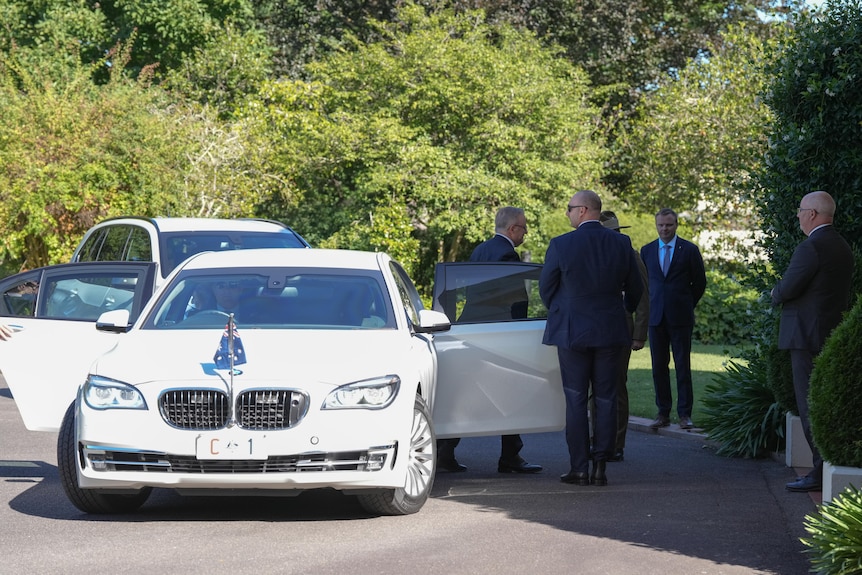
The cost of Comcars, including the PM’s “C1”, are included in the expenses disclosures. (ABC News: Matt Roberts)
For Albanese, we can see even less because the movements of his prime ministerial plane are not included. In Dutton’s case, there are also visibility gaps because he appears to have opted to use (cheaper) private-plated vehicles rather than Comcars.
But line up the dates on which we know they attended events with the information that is available, and a hefty bill emerges.
Albanese spent some $20,000 on Comcars on the days he attended the above events. And Dutton spent just over $20,000 on flights to get to his events.
Loading Instagram content
Some caution is needed in attaching these costs directly to the events, since politicians will often hold multiple engagements in the same city on the same day. But the swiftness of the trip can be revealing.
For example, Dutton flew from Brisbane to Melbourne and back on the same day when he attended the second day of the Boxing Day Test in 2023. And Albanese accrued $1,500 in Comcars in Melbourne on Grand Final Day — more than Wells on the same day.
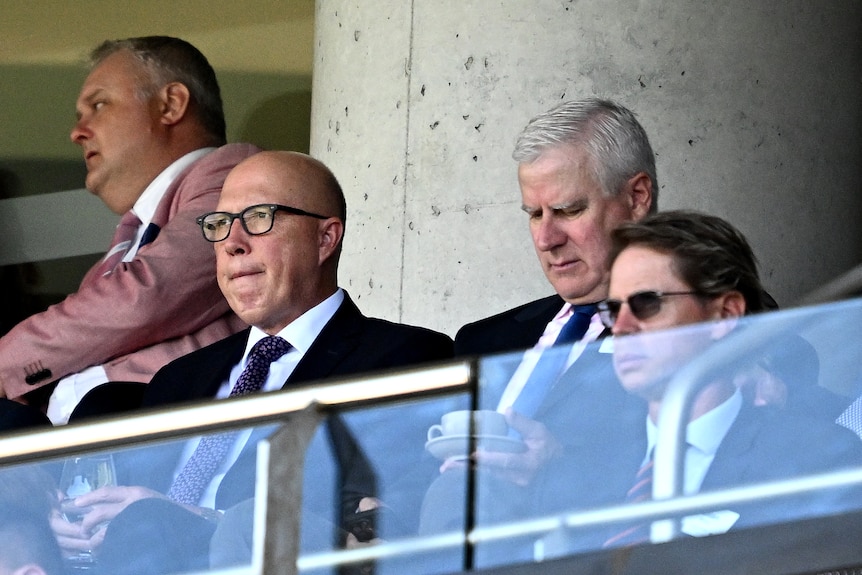
Peter Dutton attended several cricket matches during his time as opposition leader, including two of three tests in Australia’s series against Pakistan in 2023-24.
Factor in the costs of security and staffing for the party leaders, and the taxpayer cost of getting them inside the corporate boxes is substantial, even if the tickets are free.
What constitutes a work trip?
Spot Albanese, Dutton or any politician at the football and one could be mistaken for thinking they were having a good time.
So how do they align with the requirement that the “dominant purpose” of any taxpayer-funded trip be work-related?
The answer lies in the ambiguity of that term, which gives broad scope for a politician to schedule a series of meetings around some entertainment or private event, and then claim that those meetings were the purpose of the trip.
This was the response of a government spokesperson when asked about a Labor Party fundraiser held in Sydney this week, on the same day the cabinet flew to Sydney for a meeting. The spokesperson said the cabinet meeting came first, fundraiser second.
Disentangling timelines can be difficult, but IPEA doesn’t have to rely on politicians’ word. When it conducts audits, which it can do based on referrals, media reports, or its own routine checks, it can ask to see a more definitive timeline.
IPEA does monitor school holidays, “desirable” destinations and other likely sources of non-work-related travel, and has extracted repayments from politicians deemed to breach the rules in the past.
All the world’s a stakeholder
But for sporting events, the answer is even simpler. Politicians can claim an event is work-related if it involves “communication” with “stakeholders” on matters of parliamentary business.
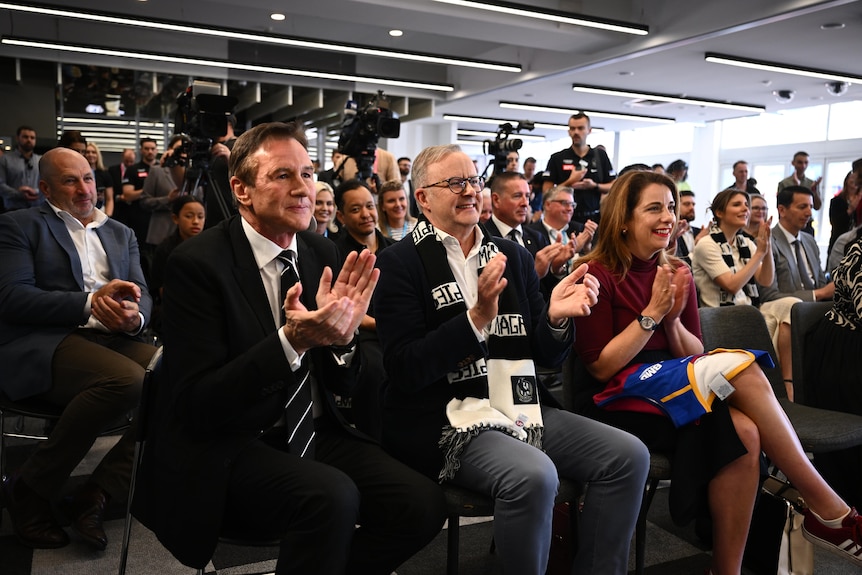
Anthony Albanese and Anika Wells attended an event at the Collingwood Football Club ahead of the 2023 AFL Grand Final. (AAP: Joel Carrett)
Given that sporting codes receive government funding and have an interest in lobbying on a variety of policy issues, they can fit this description. And corporate events at grand finals and other major events can involve any number stakeholders.
On AFL Grand Final Day, for example, both major party leaders typically speak at a pre-game breakfast hosted by the North Melbourne Football Club, and where charity auctions are also held.
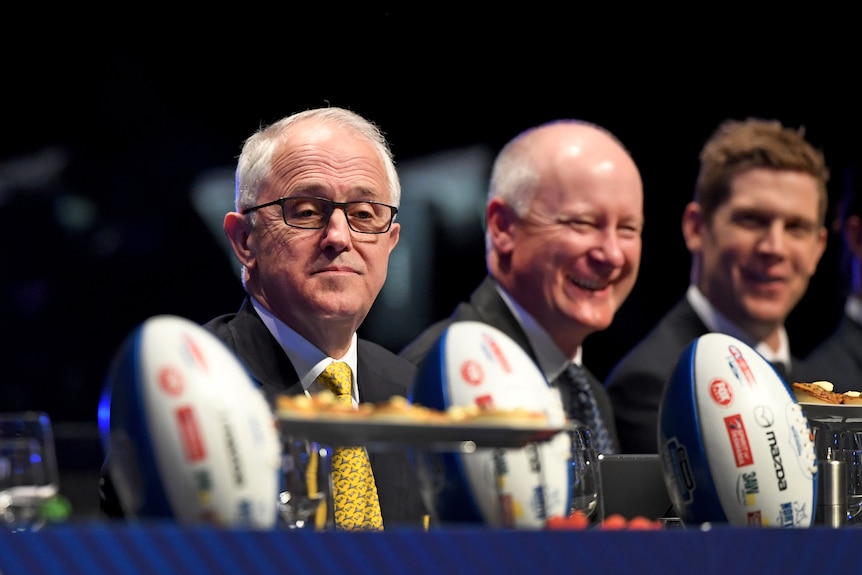
Political leaders regularly speak at the North Melbourne Grand Final breakfast, as Malcolm Turnbull did in 2017.
The need to identify stakeholders might explain why, for example, there is little sign of flights or large Comcar bills in connection with the musical concerts. For example, Albanese recorded no Comcar usage in Sydney on the day he saw Taylor Swift.
One day in September
And a search of the records of other parliamentarians for their sporting attendance records suggests that the main billers of taxpayers are those who either lead parties, and so have broad responsibility for all stakeholders, or who hold the sports portfolio.
A study of flights and Comcars in the vicinity of AFL Grand Finals since 2017, when expenses were first collected, show taxpayers pay thousands of dollars every year to transport politicians to Melbourne.
Most of this money is spent on major party leaders, sports ministers and shadow ministers, but not all of it. The 2017 AFL Grand Final between Richmond and Adelaide, for example, was particularly well attended.
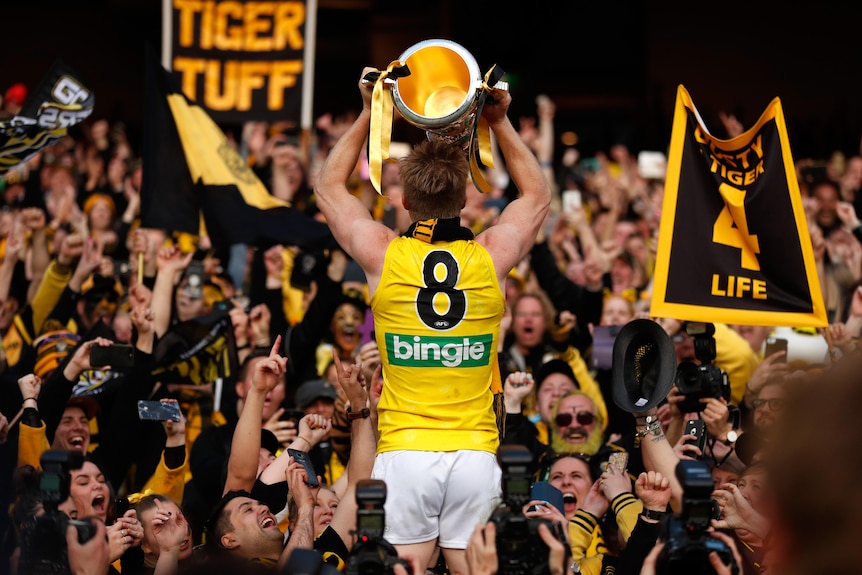
Multiple politicians flew to Melbourne for the 2017 AFL Grand Final, for a total cost of more than $18,000 to taxpayers. (Getty Images: AFL Media/Michael Willson)
Leaders Malcolm Turnbull and Bill Shorten and sports reps Greg Hunt and Don Farrell were there, but were joined by Liberals Julie Bishop, Josh Frydenberg, Mitch Fifield, Tony Smith and Labor’s Catherine King, according to their registers.
Apart from King, all billed the taxpayer for flights to Melbourne, Comcars, and in some cases flights away again, for a total cost of more than $18,000.
There was a slightly smaller crowd the following year, but West Coast fan and Labor MP Madeleine King billed taxpayers $7,854 to fly from Perth and back with her partner for the Grand Final weekend, and declared tickets to the game.
King is not the only MP to fly family members to the game. Farrell, though he lost the sports portfolio in 2022, attended the 2023 and 2024 grand finals with a family member in trips costing a combined $5,760.
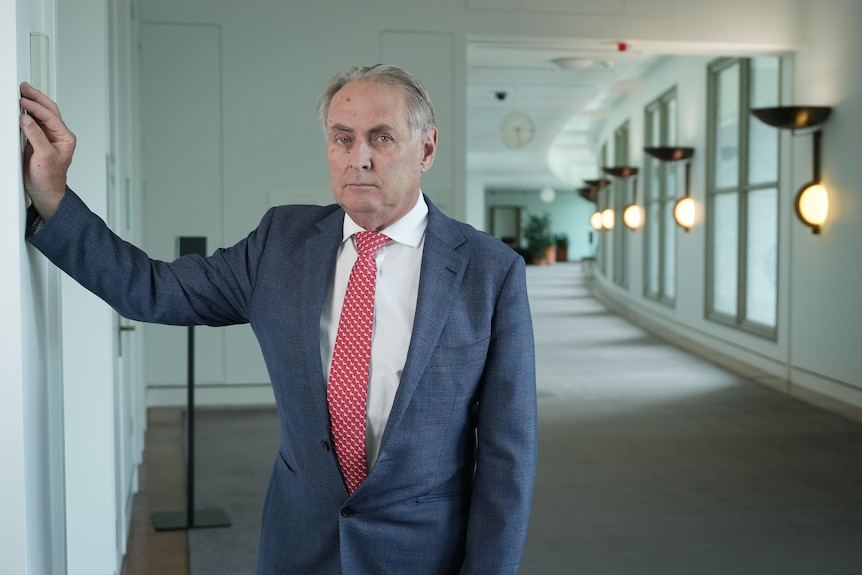
Don Farrell has billed taxpayers for his own transport to the AFL Grand Final and that of a family member on multiple occasions. (ABC News: Matt Roberts)
A family affair
Both are on the record defending their use of family travel as within the rules. Here again, the rules are broad.
There are no stipulations about the type of work-related events families can attend — they can go anywhere the politician is performing work duties. And while much of the family reunion travel claimed by politicians is to Canberra, much is not.
Pollies charge taxpayers $1.1m for family travel in 12 months
That may encompass sporting events, just as Wells asserted she was within the rules to bring her family to a ski resort in Thredbo where they went skiing while she worked.
This category of travel represents just one per cent of taxpayer-funded expenses claimed by politicians since detailed disclosures began in 2017, but is often a source of controversy.
In 2015, Labor’s Tony Burke repaid money for family flights to Uluru, maintaining it was within the rules but acknowledging it fell short of public expectations.
That gap between the letter of the law and the “pub test” has prompted calls for reform, with the crossbenchers and the opposition both indicating a willingness to support a rethink.
The government’s request of IPEA could be a sign it intends to bridge the gap between the parliament and the pub.