
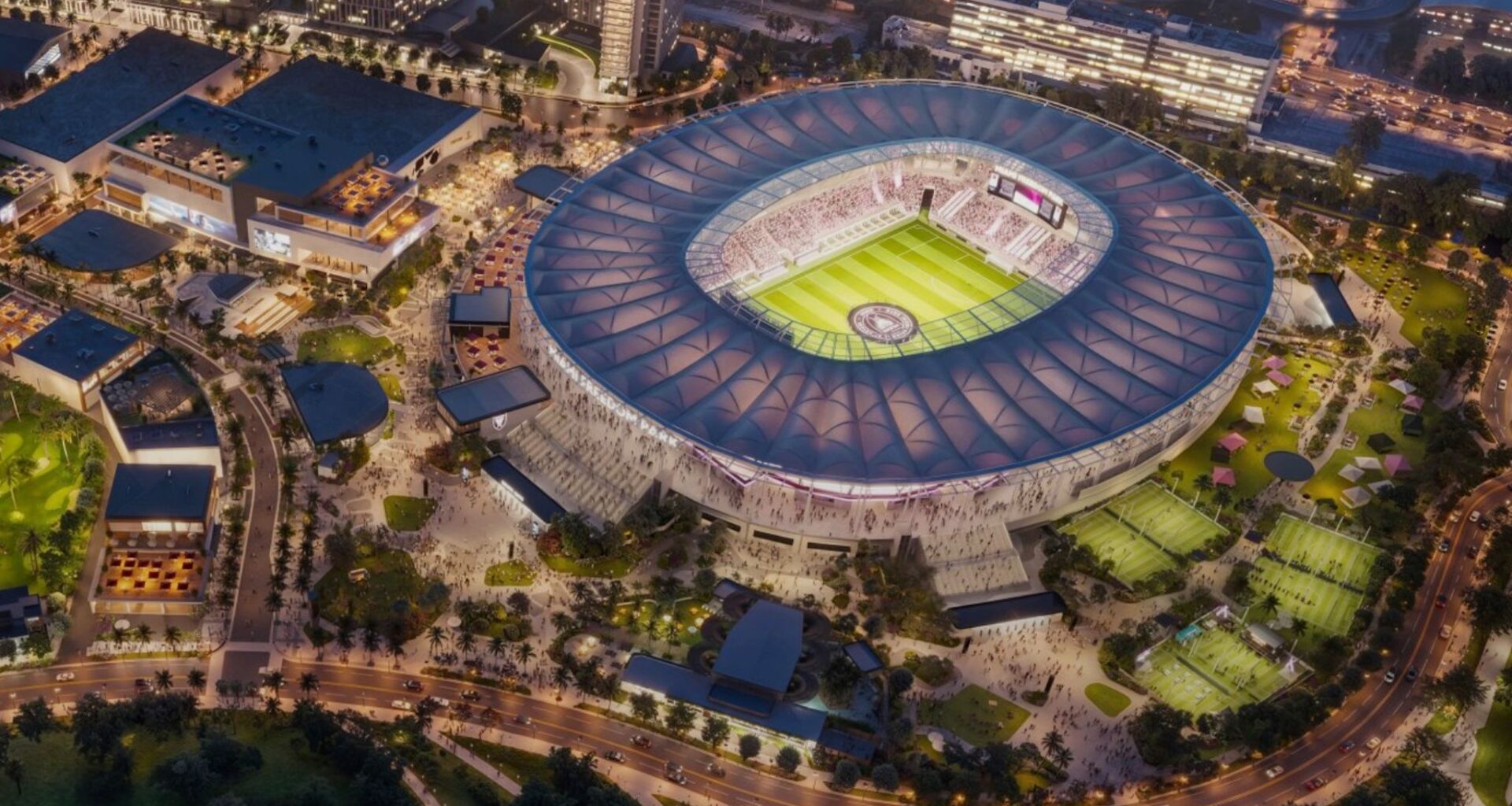
The prospect of Vancouver Whitecaps FC building a new purpose-built soccer stadium to replace Hastings Racecourse would be a game changer — not only for the team, by giving future ownership greater ability to strengthen its financial viability and avoid relocation, but also for Hastings Park and the PNE, while further supporting the case for future public transit improvements along the Hastings Street corridor.
This morning, Vancouver Mayor Ken Sim and Whitecaps CEO and sporting director Axel Schuster signed a memorandum of understanding (MOU) to formally enter into a negotiation period to explore building a new soccer stadium at the historic racecourse site.
The aim is to reach a ground lease agreement between the municipal government and club by no later than the end of 2026, which includes the stadium design concept, financial terms, and community benefits of the development.
It was also shared today that this stadium would be part of a larger mixed-use entertainment district within the footprint of the racecourse.
Today’s MOU signing comes almost exactly one year — Dec. 13, 2024 — after Whitecaps ownership first announced the franchise was for sale.
On April 4, 2025, the club also revealed that it was in active discussions with the City about potentially building a new stadium at Hastings Park/PNE. This follows both parties signing an early, non-binding agreement the previous month expressing interest in exploring a stadium project.
Over the past year, the Whitecaps and the league’s leadership have reiterated that the team’s current business model — relying on the provincially owned and operated BC Place Stadium — is no longer financially sustainable, leaving them among the least profitable franchises in MLS. As more teams across the league shift to modern, soccer-specific stadiums that they own or at least can control operations, the Whitecaps now find themselves in a shrinking group of outliers without a dedicated home of their own.
IT’S OFFICIAL… Vancouver Mayor Ken Sim & Vancouver Whitecaps CEO Axel Schuster have signed a memorandum of understanding to formally explore a possible new soccer stadium at Hastings Park/PNE.
Lease agreement & stadium design concept by late 2026. #MLS #VWFC #vanpoli #vanre pic.twitter.com/5TJRV8wuDW
— Kenneth Chan (@iamkennethchan) December 11, 2025
As well, today’s announcement marks the first time both parties have formally acknowledged that the racecourse footprint is being considered for the development. It follows the announcement on Dec. 5, 2025, that thoroughbred horse racing at the site has permanently ended, effective immediately, bringing a 133-year tradition in the northwest quadrant of Hastings Park to a sudden close — after decades of declining popularity and falling revenues.
In late November 2025, as a precursor to this, the provincial government also removed the racecourse’s access to revenue generated by the casino’s slot machines.
Just weeks earlier, on Nov. 10, 2025, the Tsleil-Waututh First Nation announced they have reached a definitive agreement with Great Canadian Entertainment to acquire the casino portion of the racecourse business and other casino-related real property interests at the site. This comes just ahead of the racecourse and casino’s lease expiration in May 2026.
99-year lease to the Whitecaps
According to the technical details and terms embedded into the actual MOU document signed by both Sim and Schuster, the Whitecaps are seeking a 99-year lease from the City for the racecourse property, with the possession date to the Whitecaps set for no earlier than Dec. 31, 2026. All the while, the MOU states this near-century lease term will begin only after the first building permit for the stadium is issued.
The MOU further notes that the final lease will be based on a fair market, prepaid rent, along with operating fees, taxes, and other payments.
The Whitecaps will also have the right to assign the lease if a new team owner is approved, and can sublease parts of the property, such as for restaurants, retail, events, and other uses. They can also use the lease as collateral to help secure the significant construction financing required.
A Hastings Park map attached to the MOU document also shows the precise footprint of the lease area — framed by Miller Drive to the south and west, the PNE’s northwest parking lot to the west, McGill Street to the north, and the PNE’s northeast parking lot to the east. This entails the entire racecourse oval, the horse barns, and the racecourse grandstand and casino facilities. Altogether, this is a lease area of approximately 40 acres or about 25 per cent of the overall Hastings Park footprint.
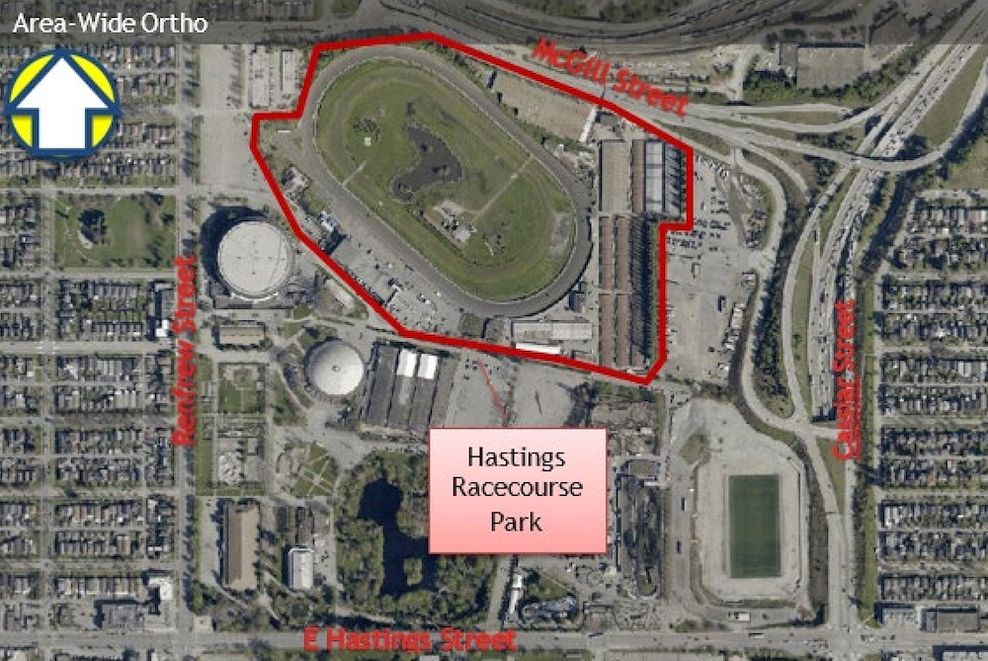
Potential Hastings Racecourse lease area to the Vancouver Whitecaps FC at Hastings Park. (City of Vancouver)
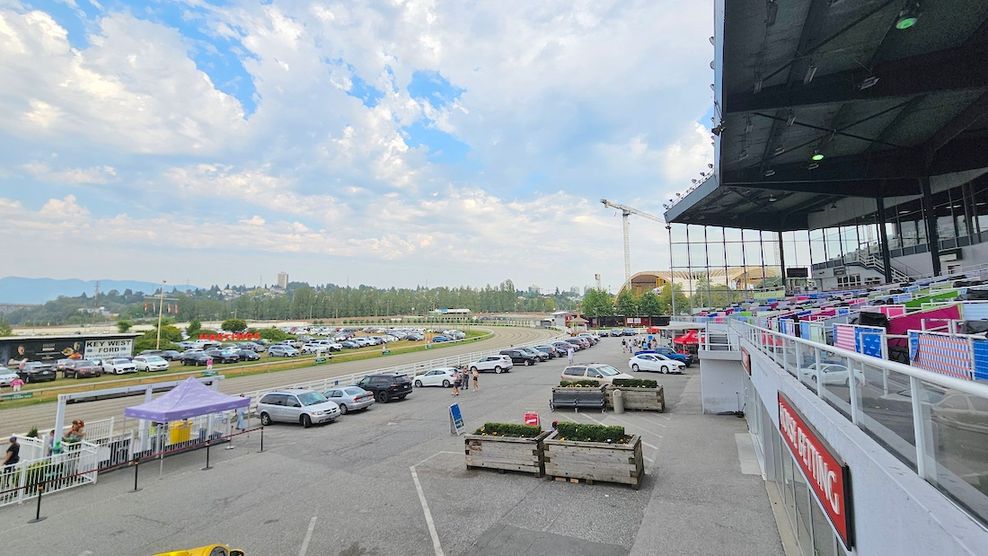
Overflow vehicle parking within the oval infield of Hastings Racecourse during the 2025 PNE Fair. (Kenneth Chan)
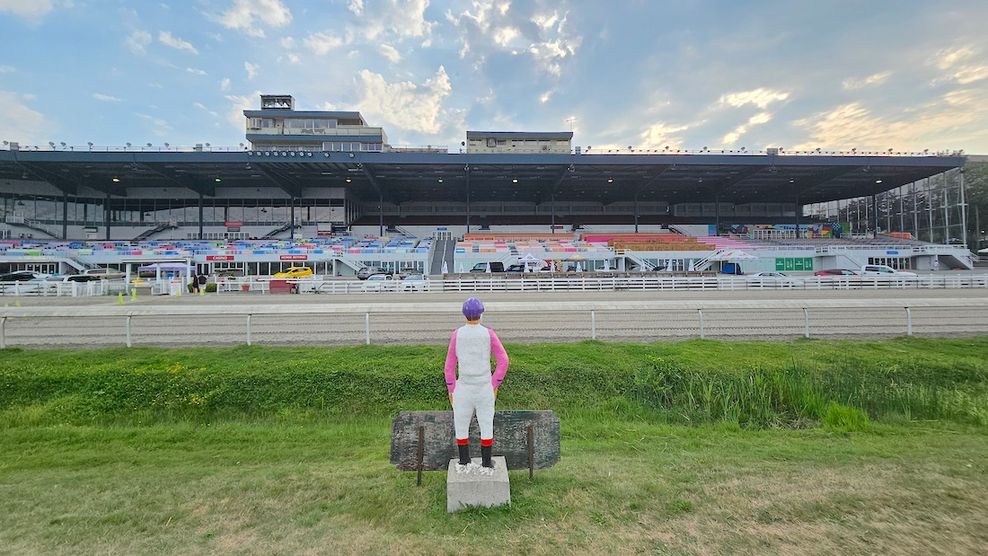
Overflow vehicle parking within the oval infield of Hastings Racecourse during the 2025 PNE Fair. (Kenneth Chan)
This MOU is far from the final deal, but it gives the Whitecaps the exclusive rights to negotiate toward one and sets the principles for the actual lease agreement. After the final agreement is signed, the Whitecaps would still have to pursue rezoning, development permit, and building permit applications, as well as any other entitlements. Construction could still be a few years away, at the earliest.
As well, the MOU does not require a closure of any use of the racecourse or casino facilities, with interim uses permitted during the lease negotiation period.
By the end of 2026, both sides must finish negotiating all documents and agree on the terms, which includes a final vote by Vancouver City Council.
During today’s press conference and MOU signing, Mayor Sim emphasized that they “intend to secure a fair market value lease while ensuring no undue financial risk to taxpayers…. This is not about the approval of a new project.”
The Whitecaps will be responsible for covering the project’s costs, according to the MOU. No City contribution is currently expected, and such a request — if it were to be made — would require City Council approval.
“Now, this partnership has the potential to create a heck of a lot of jobs, boost our local economy, and transform Hastings Park into a vibrant destination for sports, concerts, and community events that reflect Vancouver’s energy, diversity, and love of sports. So we still have a long ways to go, but I’m incredibly optimistic about the future of soccer in our city for the next, you know, countless generations,” continued the Mayor.
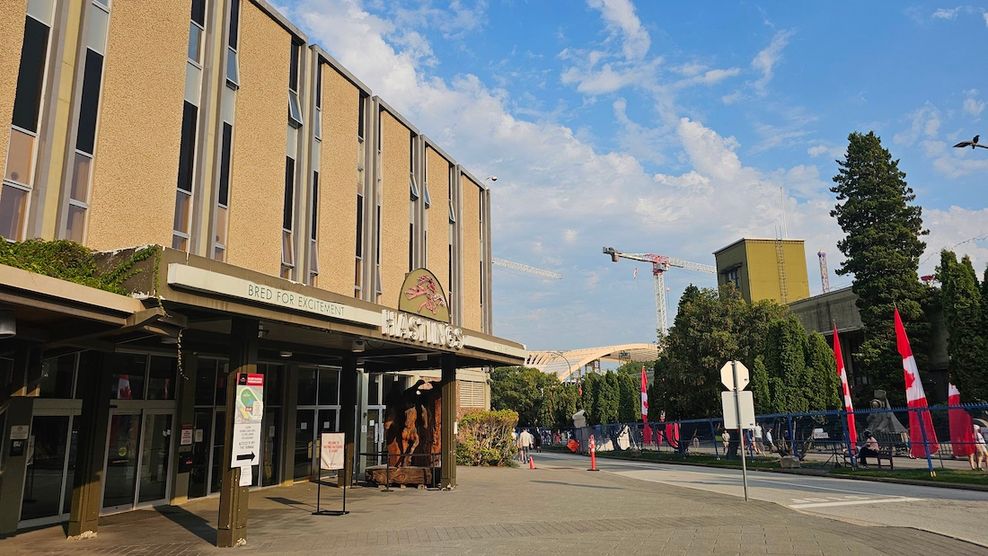
Miller Drive on the south side of Hastings Racecourse and the casino. (Kenneth Chan)
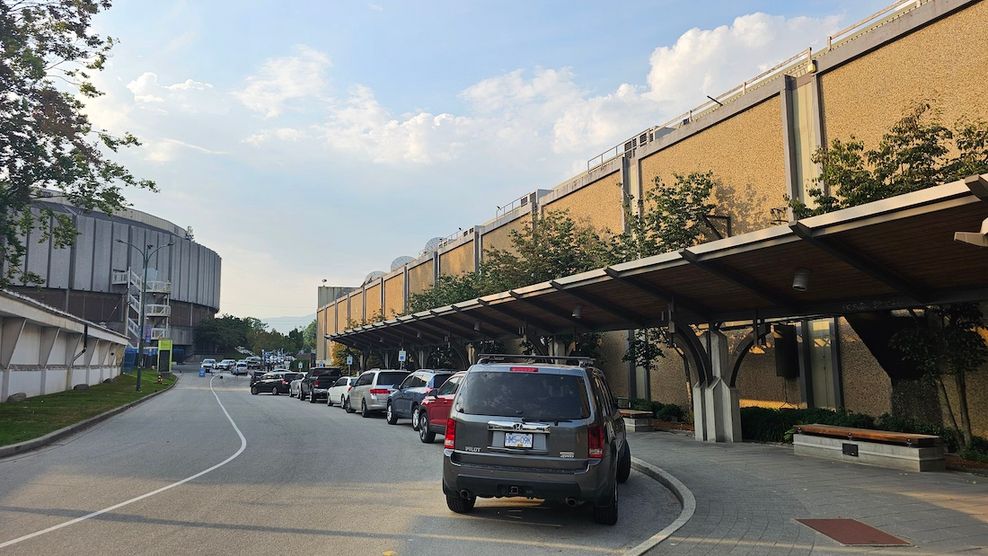
Miller Drive on the south side of Hastings Racecourse and the casino. (Kenneth Chan)
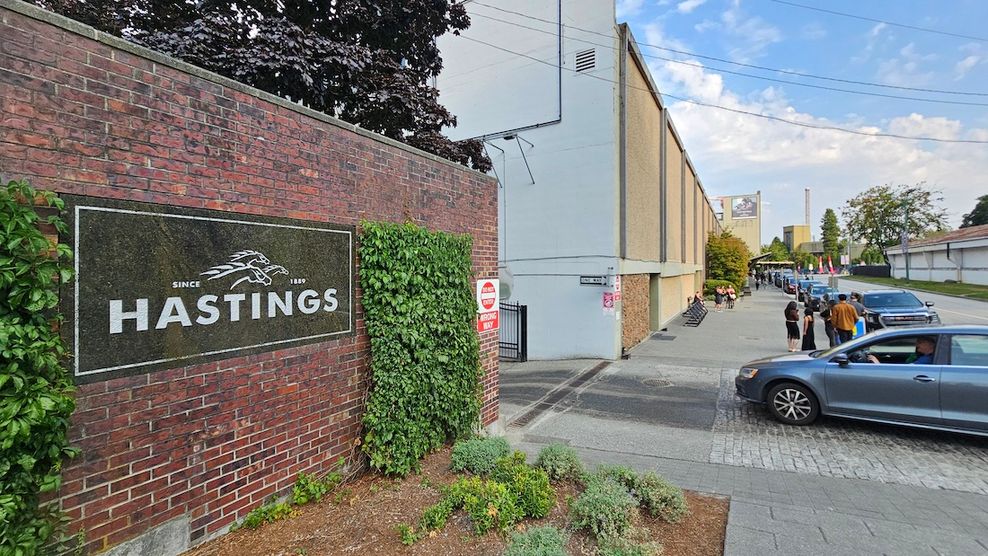
Miller Drive on the south side of Hastings Racecourse and the casino. (Kenneth Chan)
How big could the stadium be?
When asked by media today, Schuster could not comment on the spectator capacity of the potential stadium. He only said that it would be a capacity that “financially makes sense, that from the revenue side makes sense.”
But the precedent set by recent purpose-built stadiums and upcoming venues offers a clear indication of the direction the Whitecaps could take.
Of the 30 MLS stadiums currently in use, 13 have been constructed within the past decade — 12 of which are soccer-specific. Moreover, the vast majority of the 30 venues are soccer-specific stadiums, and this is increasingly the case.
The venues built over the past 10 years range in capacity from 18,000 seats at the San Jose Earthquakes’ PayPal Park to 35,000 at San Diego FC’s Snapdragon Stadium.
Across the entire league, PayPal Park remains the smallest MLS stadium, while Atlanta United FC’s home at Mercedes-Benz Stadium is the largest, accommodating 42,500 for soccer — half the venue’s full 71,000-seat capacity, as it also hosts the NFL’s Atlanta Falcons. Seven teams play in stadiums with capacities above 30,000, and another seven play in venues with fewer than 20,000 seats.
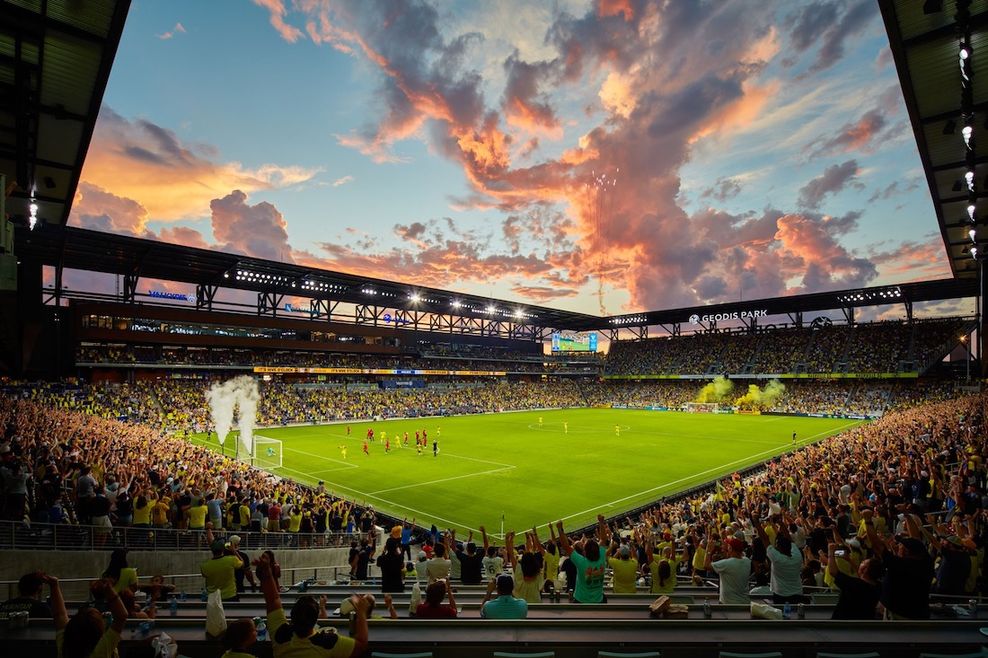
The 2022-built, 30,000-seat Geodis Park stadium of Nashville SC. (Populous)
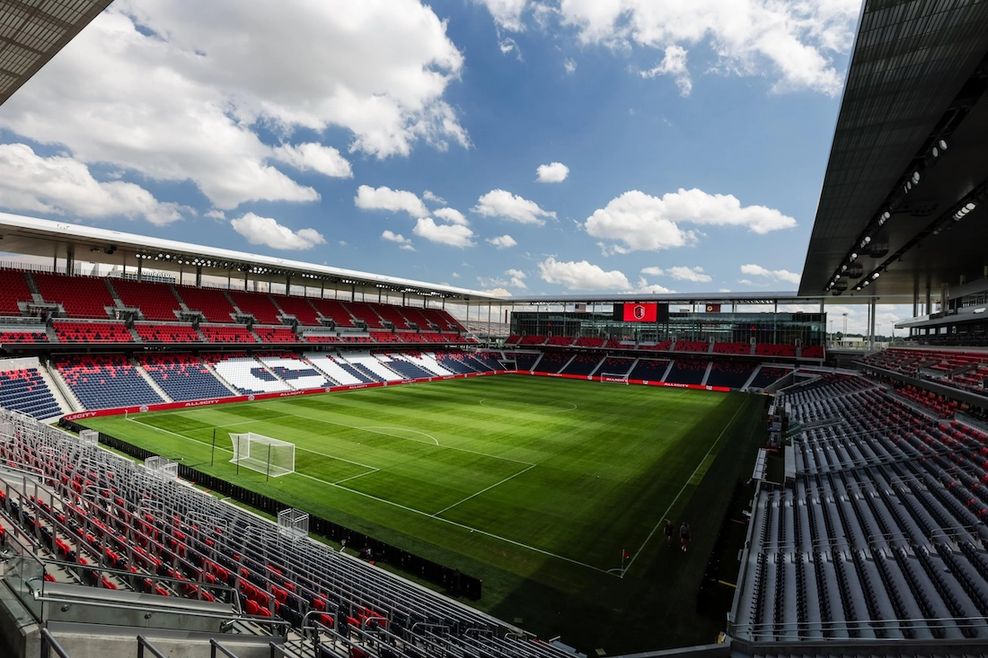
The 2022-built, 22,400-seat Energizer Park stadium of St. Louis City SC. (Energizer Park)
Two MLS-sized, soccer-specific stadiums are currently under construction — Inter Miami CF’s 25,000-seat Miami Freedom Park and New York City FC’s 25,000-seat Etihad Park. Construction is also scheduled to begin in early 2026 on Chicago Fire FC’s new 22,000-seat home. All three soccer-specific stadiums are scheduled for completion within the next three years.
BC Place Stadium, the Whitecaps’ current home, is the sixth-largest venue in the MLS with a full capacity of 54,500, but ranks 15th — right in the middle pack of the league — when configured for the Whitecaps’ typical lower-bowl setup of just over 22,000 seats.
A new stadium at Hastings Park would also give the Whitecaps the opportunity to create a more intimate spectator environment and optimal sight-lines specifically for soccer, and the ability to install natural grass — drastically improving their ability to attract top-tier international soccer talent. Today, 24 MLS stadiums use natural grass, while the half a dozen that do not — including BC Place Stadium — typically serve multiple sports tenants and other multi-purpose uses. Operators of BC Place Stadium confirmed earlier this fall that the natural grass surface required for the 2026 FIFA World Cup will be removed after the tournament and replaced with artificial turf.
In addition, the stadium’s design and configuration could be oriented to frame the North Shore mountains, giving spectators a dramatic and memorable natural backdrop.
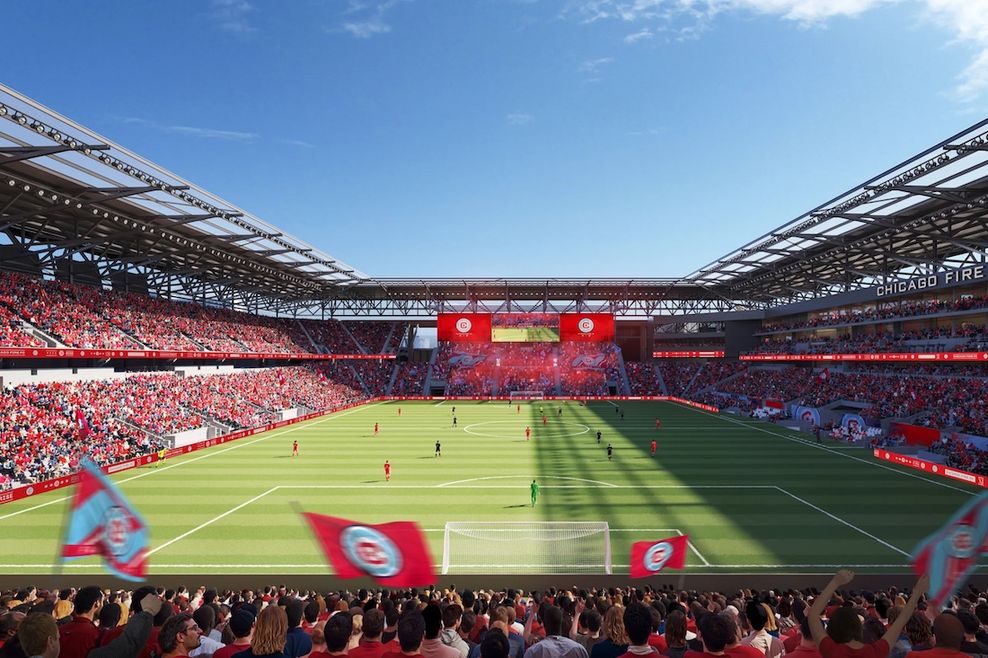
Concept of the new Chicago Fire FC stadium. (Chicago Fire FC)
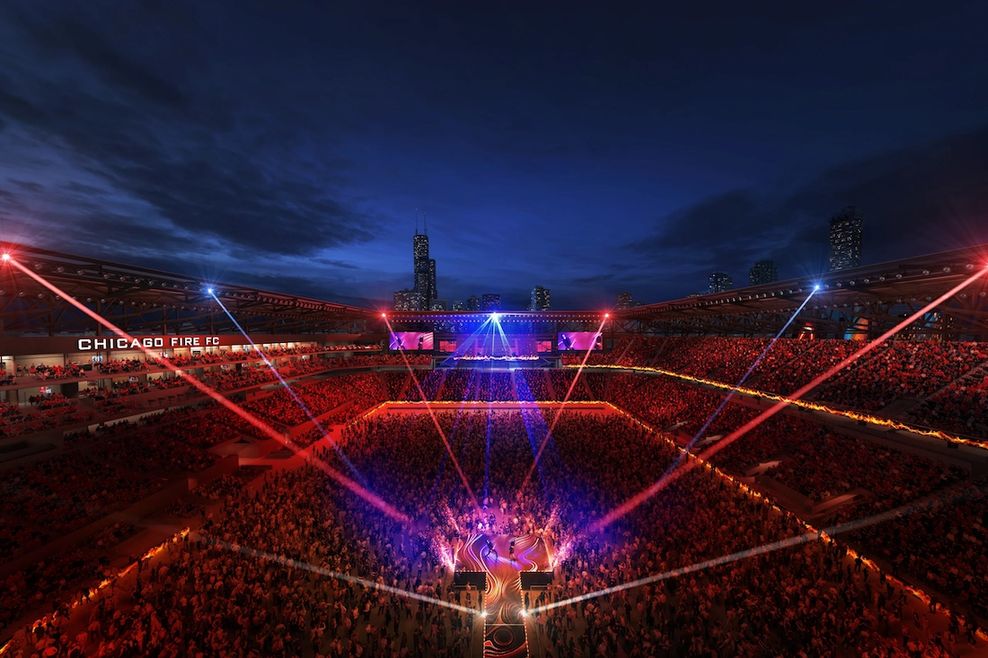
Concept of the new Chicago Fire FC stadium. (Chicago Fire FC)
When asked by media today, Schuster said it is still too early to determine whether the stadium could be designed as a multi-purpose, multi-tenant venue — specifically whether the CFL’s BC Lions might be interested in using a future Hastings Park stadium as their home field.
Whether the stadium is designed with expandable capacity — either temporary or permanent — to accommodate a growth in Whitecaps fan demand and larger future events is also likely a key consideration.
The historic former Empire Stadium at Hastings Park — previously located at the southeast corner of the park, where the sports field and track are located — had a capacity of about 33,000 seats. This was, of course, the previous home of the BC Lions and the home of the Whitecaps during the NASL era, with the venue demolished in 1993 due to its age, condition, and falling use ever since the construction of BC Place Stadium in 1983.
The temporary Empire Field stadium that occupied the same footprint in 2010 and 2011 — during BC Place Stadium’s major renovation project — had a capacity of 27,500 seats.
In the 2000s, the Whitecaps created a concept to build a soccer stadium on an elevated deck over the downtown Vancouver waterfront railyard next to Gastown. The failed concept envisioned a 15,000-seat stadium, expandable to 30,000.
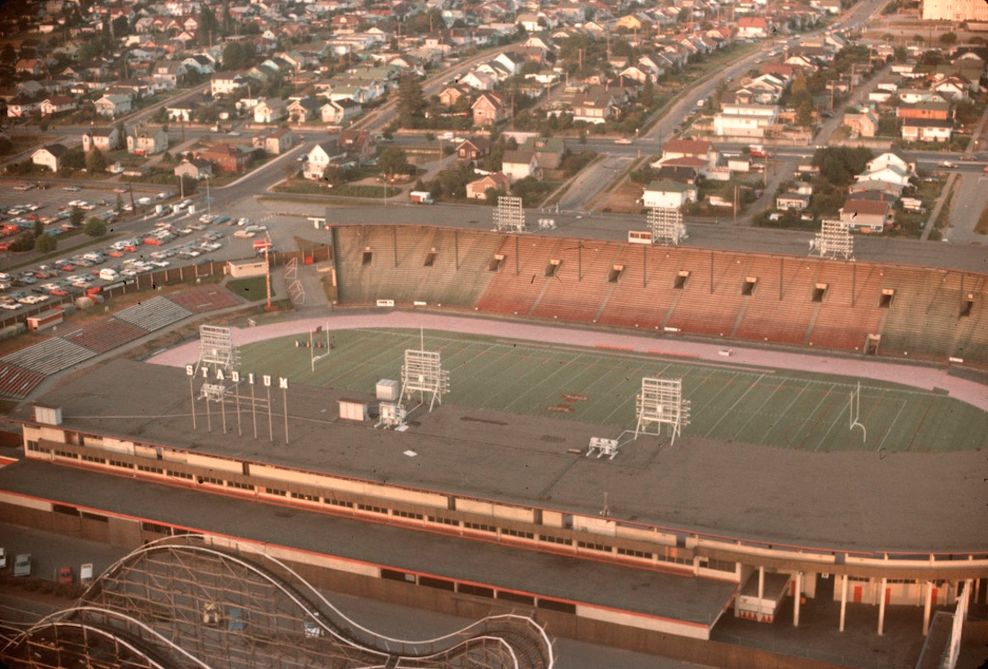
The former Empire Stadium at Hastings Park. (City of Vancouver Archives)
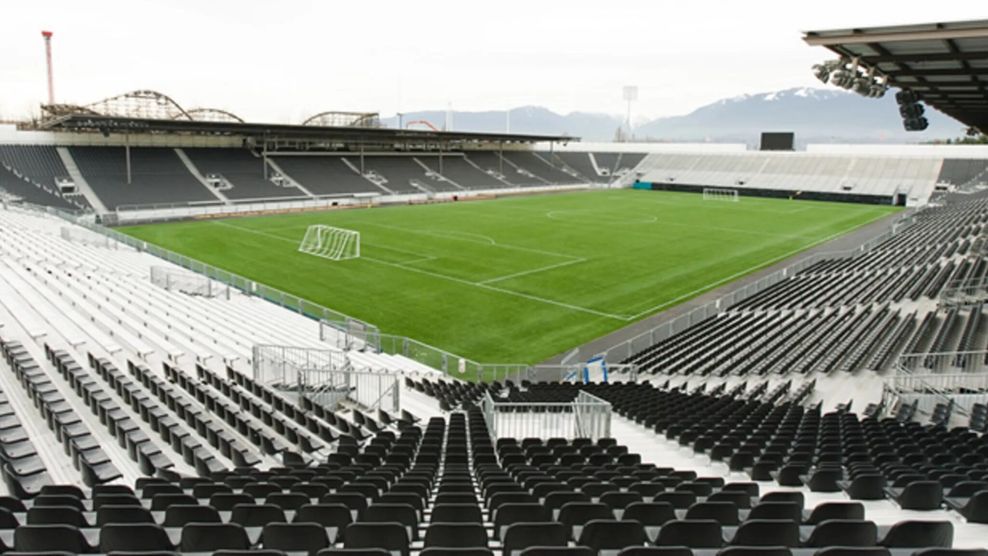
Vancouver Whitecaps FC at the 2010/2011 temporary Empire Field stadium at Hastings Park. (Vancouver Whitecaps FC)
What could the entertainment district anchored by the stadium look like?
With up to 40 acres to work with, there are likely many possibilities and permutations for a major mixed-use entertainment district with a mid-sized soccer-specific stadium.
Based on the precedents, a new stadium would require well under half of the former racecourse footprint — even with generous in-stadium amenities and circulation space for spectators.
In general, the newest purpose-built, soccer-specific stadiums in the MLS are far more ambitious in architectural calibre, design, and amenities than earlier venues such as Toronto FC’s BMO Field and CF Montreal’s Saputo Stadium, both of which are barebone minimalist skeleton venues designed in the 2000s. Over time, some major improvements have been made to BMO Field’s grandstand-based design.
No specific details have been provided by the Whitecaps about what uses an entertainment district at the Hastings Racecourse footprint could potentially entail, but master-planned, stadium-anchored entertainment districts around the world are commonly associated with a surrounding concentration of restaurants, bars, pubs, other nightlife businesses, shops, large public plaza and open spaces, and hotels, and sometimes casinos, office space, and mid-to-upscale housing.
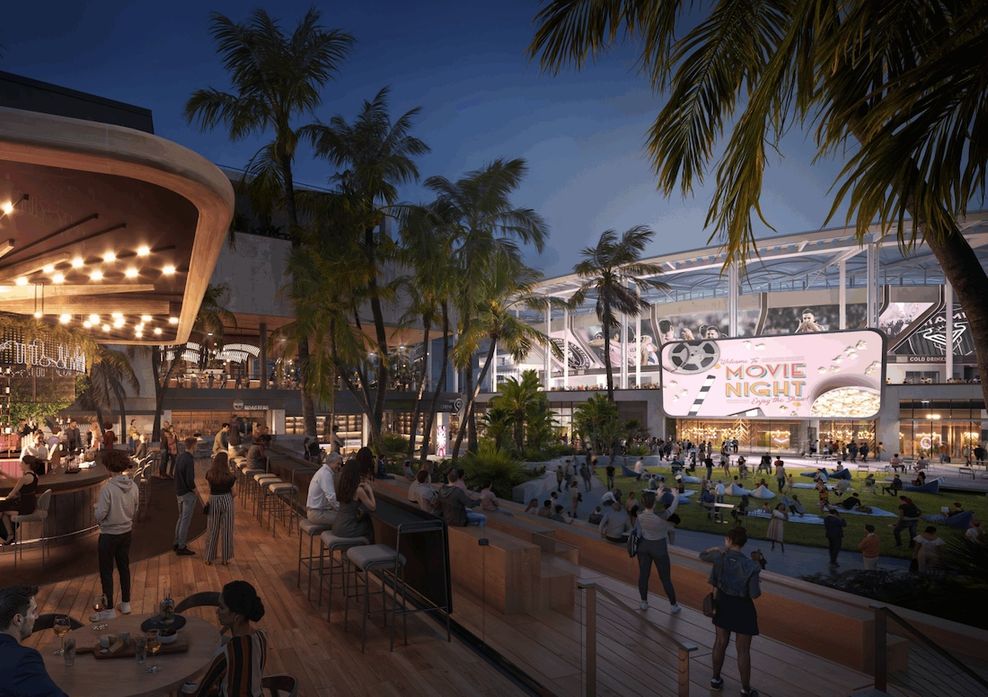
Concept of Inter Miami CF’s stadium-anchored entertainment district at Miami Freedom Park. (Miami Freedom Park)
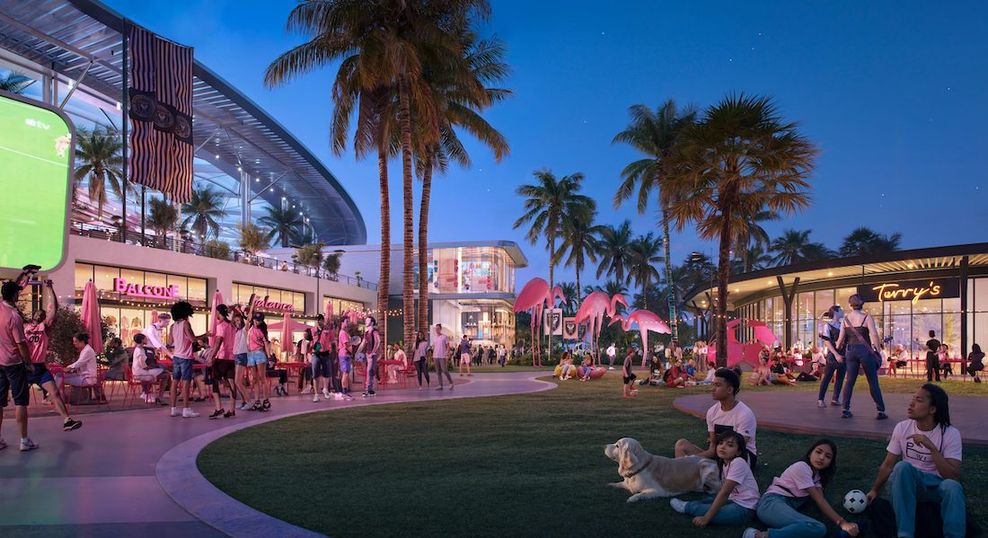
Concept of Inter Miami CF’s stadium-anchored entertainment district at Miami Freedom Park. (Miami Freedom Park)
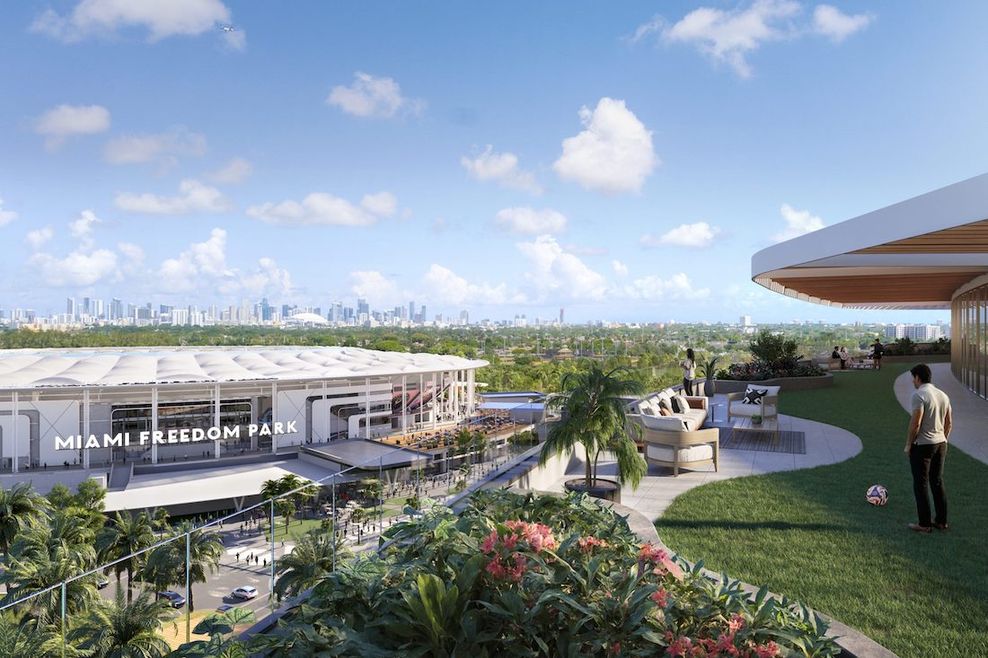
Concept of Inter Miami CF’s stadium-anchored entertainment district at Miami Freedom Park. (Miami Freedom Park)
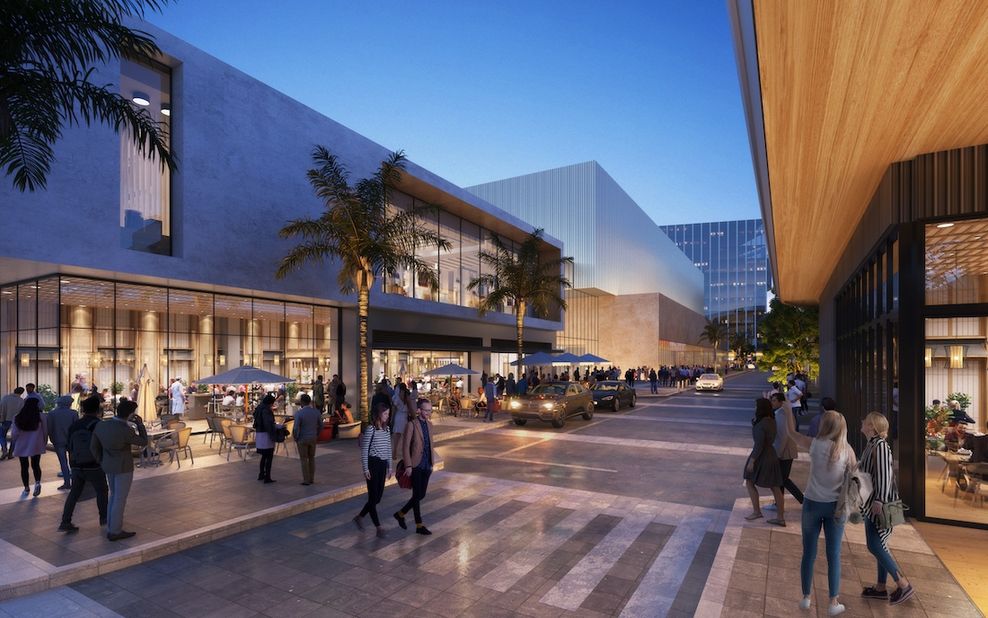
Concept of Inter Miami CF’s stadium-anchored entertainment district at Miami Freedom Park. (Miami Freedom Park)
Beyond building a soccer stadium, a mixed-use entertainment district is likely crucial to the overall financial and economic viability of the entire project. This was also hinted by Schuster today.
“All the factors have to be worked out over the [coming] months, the year. And then, we have to see how much space do we need and what can we do with the additional space,” said the Whitecaps CEO.
While a purpose-built soccer stadium for the Whitecaps’ needs, specifically under the franchise’s control, would resolve many of the current issues with using BC Place Stadium, it is suggested that additional mixed-use development is needed to help cover overall project costs. This could potentially include having a real estate development partner to oversee at least some of the other aspects of the redevelopment.
“The next step is that we continue to have conversations with everyone who can help and could be interested in participating, in partnering in this project,” continued Schuster.
“And if you speak about an entertainment [district], if you speak about the whole piece of land there, you can imagine that a lot of things are doable there… If you just build a stadium in the city of Vancouver and you build that as a private organization and you pay it fully by yourself, then with the cost that this comes with, you will not get into a better financial situation. So we have to be smart and we have to find other avenues how we can make this whole thing work.”
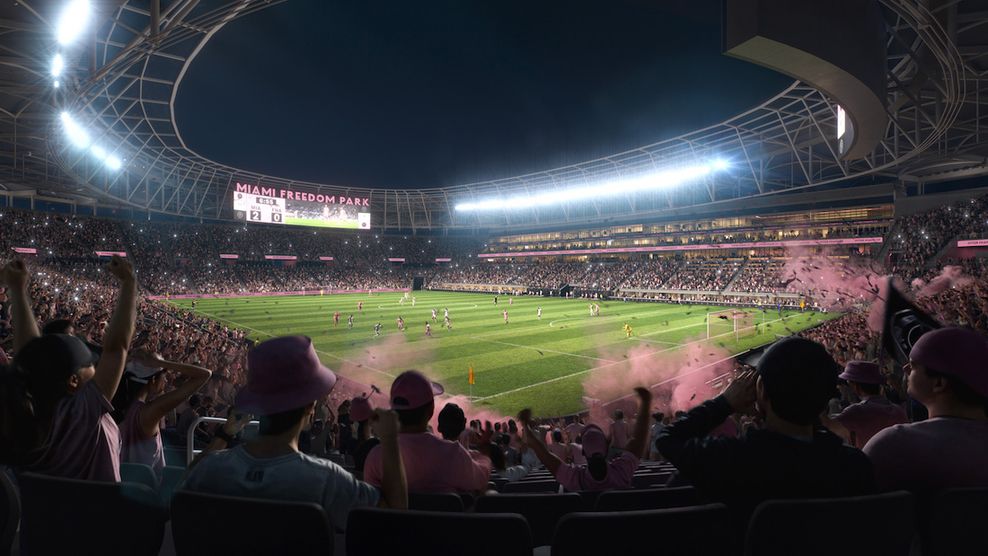
Concept of Inter Miami CF’s new Miami Freedom Park stadium. (Miami Freedom Park)
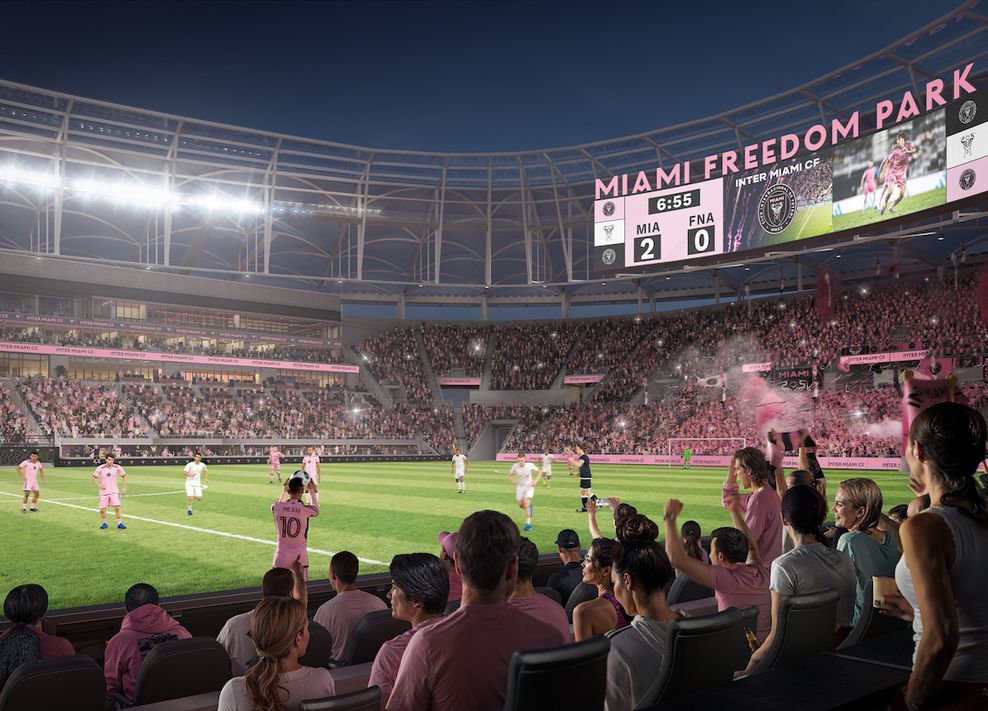
Concept of Inter Miami CF’s new Miami Freedom Park stadium. (Miami Freedom Park)
Over the past decade, there has been an emerging trend of building new stadiums with an attached entertainment district, and the future MLS stadiums of Miami Freedom Park, Etihad Park, and Chicago Fire FC are no exceptions.
Miami Freedom Park, for instance, is the redevelopment of a former 131-acre golf course, with the new stadium, additional mixed-use commercial and residential buildings, and 58 acres of new public park space. The first phase featuring the stadium and a portion of the entertainment district will cost US$1 billion (C$1.4 billion), and it is completely privately funded, on City-owned land under a 99-year lease, which will provide the municipal government with US$2.67 billion (C$3.7 billion) in rent revenue over the entire lease term — based on paying 57 per cent more than fair market value rent. This project is also notable for being backed by notable individuals such as David Beckham since its inception.
Although Inter Miami CF’s new stadium will open in 2026, the wider entertainment district will be built in multiple phases, eventually totalling over one million sq. ft. of retail, restaurant, entertainment, and office space, as well as a hotel with 750 guest rooms.
The cost of Chicago Fire FC’s new stadium is estimated at US$650 million (C$0.9 billion), based on a 2028 completion date and excluding the surrounding entertainment district developments that the stadium is intended to anchor and help catalyze.
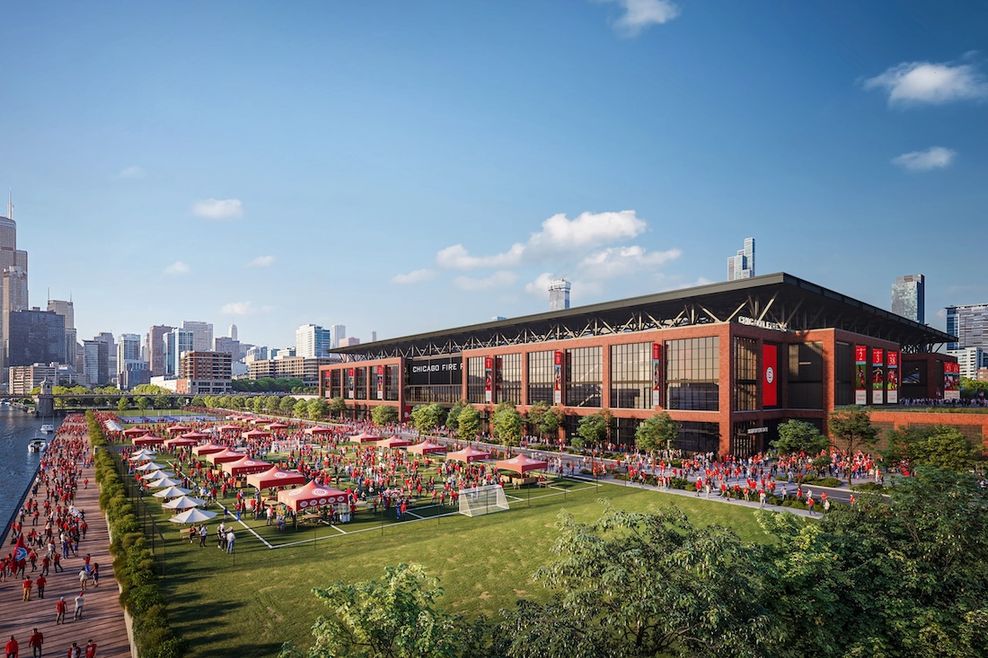
Concept of the new Chicago Fire FC stadium. (Chicago Fire FC)
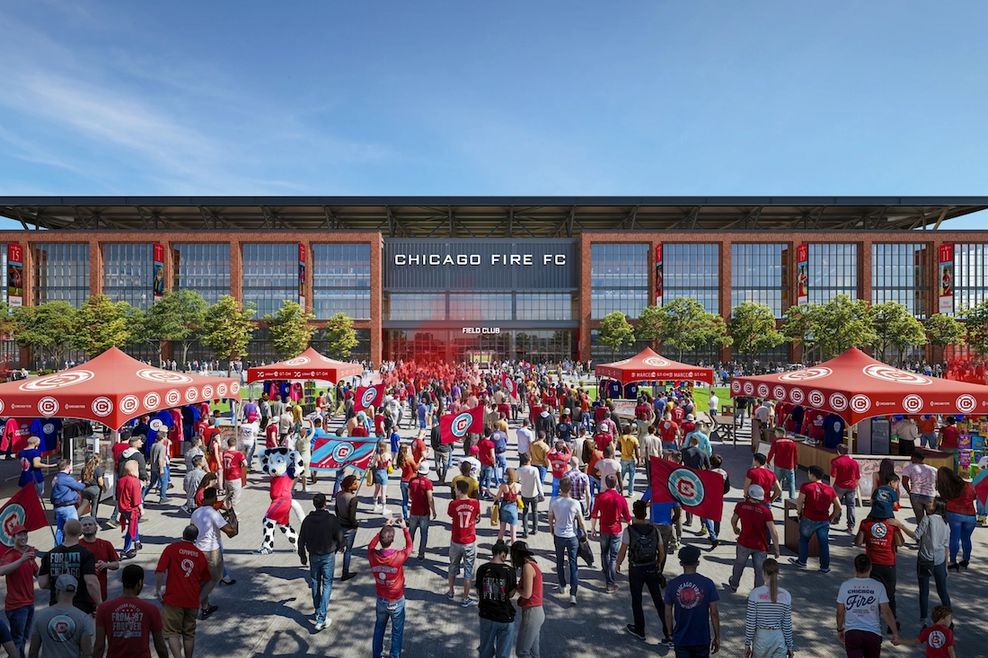
Concept of the new Chicago Fire FC stadium. (Chicago Fire FC)
For the Hastings Racecourse redevelopment concept, a casino as one of the uses in the entertainment district is within the realm of possibility, based on the Tsleil-Waututh First Nation’s recent agreement to acquire the existing casino business on the site, and their previously stated interest in adding casino operations to their business ventures as a long-term revenue source for the First Nation.
Existing provincial regulations permit Hastings Racecourse to be equipped with up to 600 slot machines, but zero table games. Currently, Hastings Racecourse has 446 slot machines on a 42,000 sq. ft. casino floor beneath the horse racing grandstands.
Under the regulations, municipal governments across the province receive 10 per cent of the net casino gaming revenue from casinos located within their jurisdiction. Hastings Racecourse and its casino generated $9.48 million in the 2019/2020 fiscal year, with $948,000 going to the City, and $9.96 million in the 2022/2023 fiscal year, with $996,000 going to the City.
During today’s announcement, when asked about about the importance of potential First Nation’s involvement, Schuster said, “I can say that we have very, very strong connections and partnerships with the Nations, and we actually had representatives of all three Nations as guests at our game in Miami. We are talking with them currently, and this will also continue. When I said we need partners and we are looking for partners to get this done, we definitely will also involve these in our conversations.”
The Musqueam, Squamish, and Tsleil-Waututh First Nations each have their own independent real estate and economic development arms, but all three First Nations also have a much larger jointly-owned real estate development company — MST Development — which is behind some of Metro Vancouver’s largest development projects, such as the Heather Lands and Jericho Lands in Vancouver.
Could the stadium and entertainment district improve the PNE?
Moreover, there are also other unique site-specific considerations for the Hastings Park location, specifically racecourse redevelopment considerations that could take into account a potential partnership and/or relationship with the City-owned non-profit organization that operates and programs the PNE fairgrounds.
The PNE has faced ongoing challenges since the late 1990s, when the City — anticipating that the PNE was on the verge of relocating out of Hastings Park — demolished 200,000 sq. ft. of indoor exhibition space and removed surrounding outdoor event areas. These changes made way for the park’s current landscape of gardens and green spaces, including the Sanctuary lake, the Italian Gardens, and the skatepark.
But in the process, the PNE lost major revenue-generating facilities with a high utility, and inherited new operational and maintenance costs for large park spaces that produce little to no income and are not well suited for the more elaborate events and programming the PNE Fair was once known for. As a result, the PNE Fair has become significantly smaller over the past 25 years compared with its historic heyday, which is also reflected by its far smaller annual attendance.
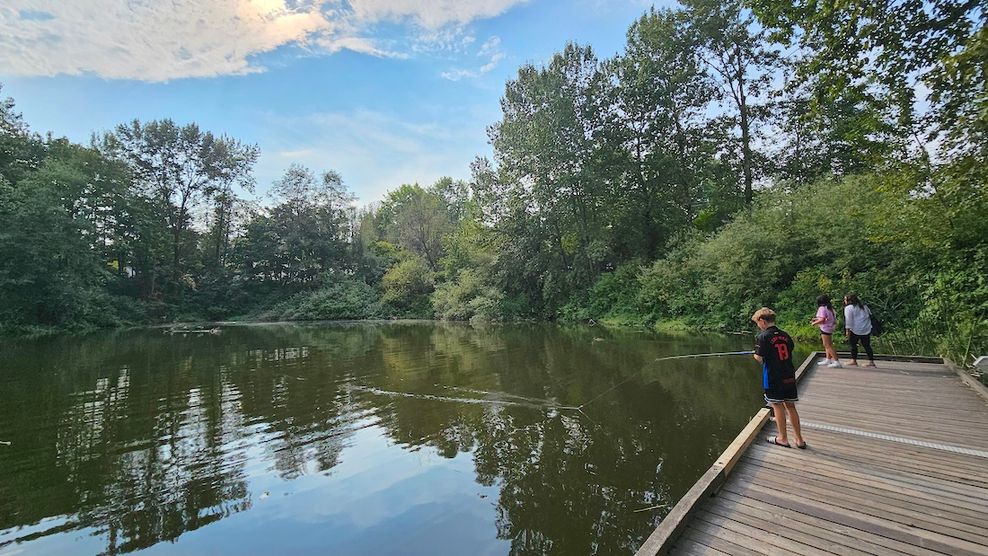
The Sanctuary pond at Hastings Park was created from the demolition of PNE fairground buildings and event spaces in the late 1990s and early 2000s. (Kenneth Chan)
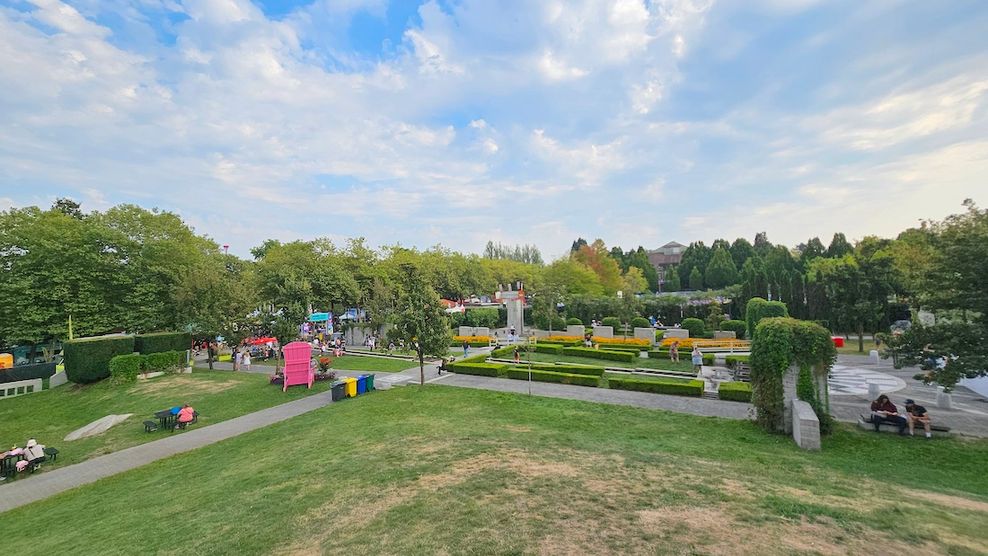
Hastings Park green spaces created from the demolition of PNE fairground buildings and event spaces in the late 1990s and early 2000s. (Kenneth Chan)
The PNE is in dire need of additional major indoor and outdoor event spaces to expand and improve its programming and revenue-generating potential. The City’s 2010-approved Hastings Park/PNE master plan calls for reversing some of the big mistakes previously made with demolition, envisioning long-term components for implementation such as the redevelopment and expansion of Playland amusement park into a theme park, the construction of a new 150,000 sq. ft. multi-purpose indoor hall building between the Pacific Coliseum and Agrodome to replace some of the previously lost indoor exhibition space, and the construction of a new outdoor amphitheatre.
Currently, the PNE is in the process of realizing one of the master plan’s largest components to revitalize Hastings Park’s entertainment uses.
Construction on the $184-million, 10,000-spectator capacity Freedom Mobile Arch amphitheatre — featuring a landmark mass-timber roof — is now approaching the final stages ahead of its inaugural use for the 2026 FIFA World Cup Fan Festival. This weather-protected venue with permanent-built in staging, facilities, and amenities could lead to the modern amphitheatre hosting 40 concerts and events per year outside of the PNE Fair season — a drastic increase from just a handful with the previous dilapidated 1960s-built temporary amphitheatre.
This new amphitheatre is the single largest capital investment on a new permanent entertainment/event venue at Hastings Park since the construction of the 16,000-seat Pacific Coliseum in 1968 to attract an NHL franchise to the city, with the Vancouver Canucks achieving this two years later. The Canucks left Pacific Coliseum in 1995, after Rogers Arena reached completion.
The Pacific Coliseum is also experiencing a resurgence, now serving as the home ice for the PWHL’s Vancouver Goldeneyes, who debuted at the venue last month with a near-sellout crowd. In preparation, upgrades were made to both the Pacific Coliseum and the Agrodome, which functions as the team’s practice facility. The PNE has also recently begun the process of securing a naming-rights sponsorship partner for both venues. The Pacific Coliseum has been without an anchor tenant, ever since the WHL’s Vancouver Giants left for the Langley Events Centre a decade ago.
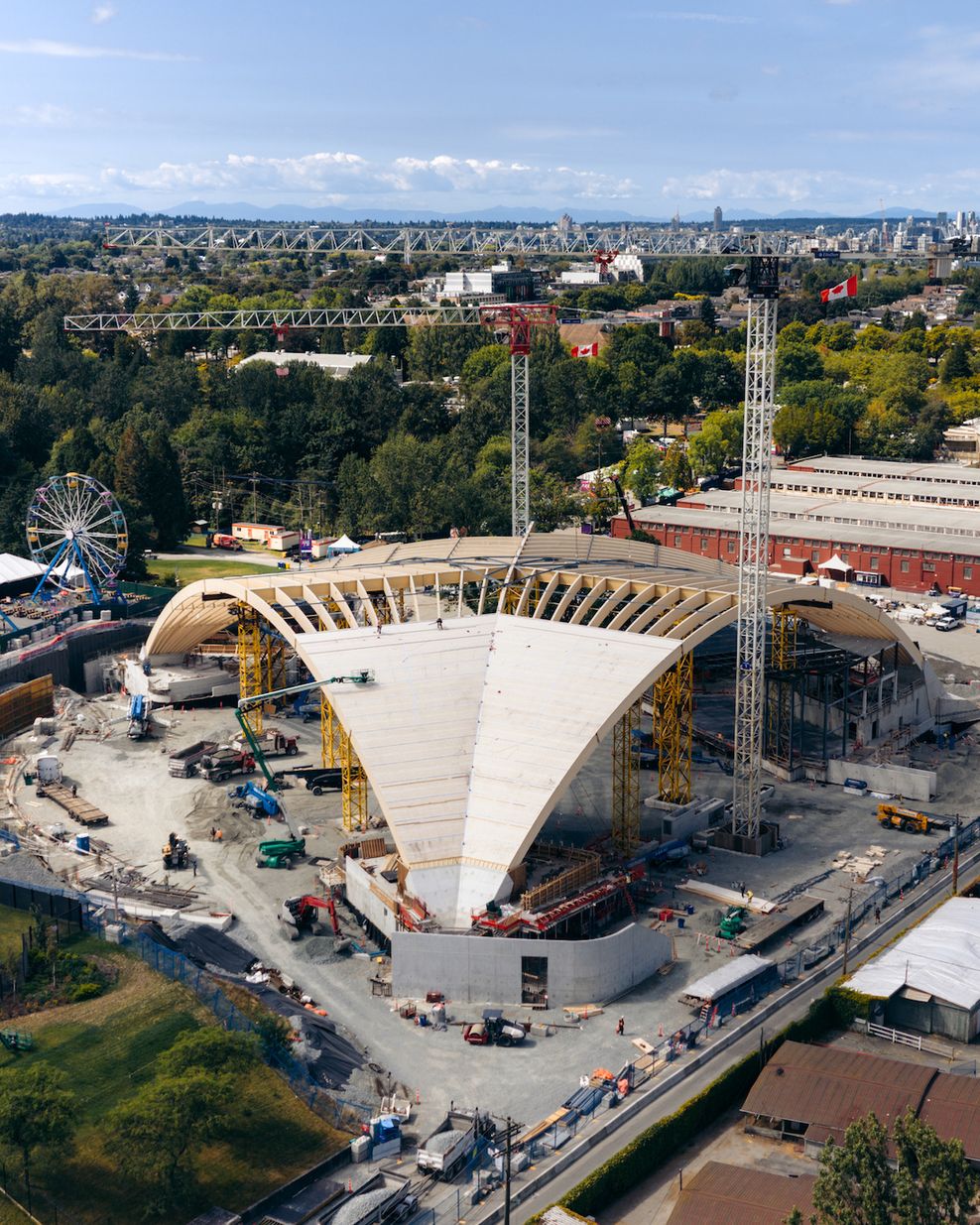
September 2025 construction progress on Freedom Mobile Arch, the new PNE amphitheatre. (Revery Architecture)
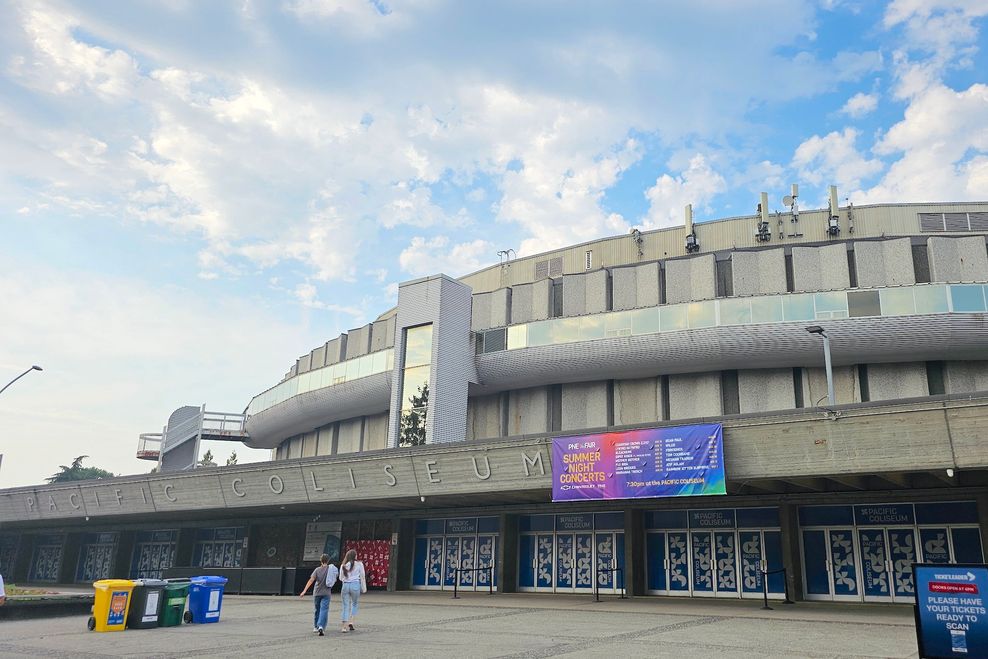
Pacific Coliseum at Hastings Park. (Kenneth Chan)
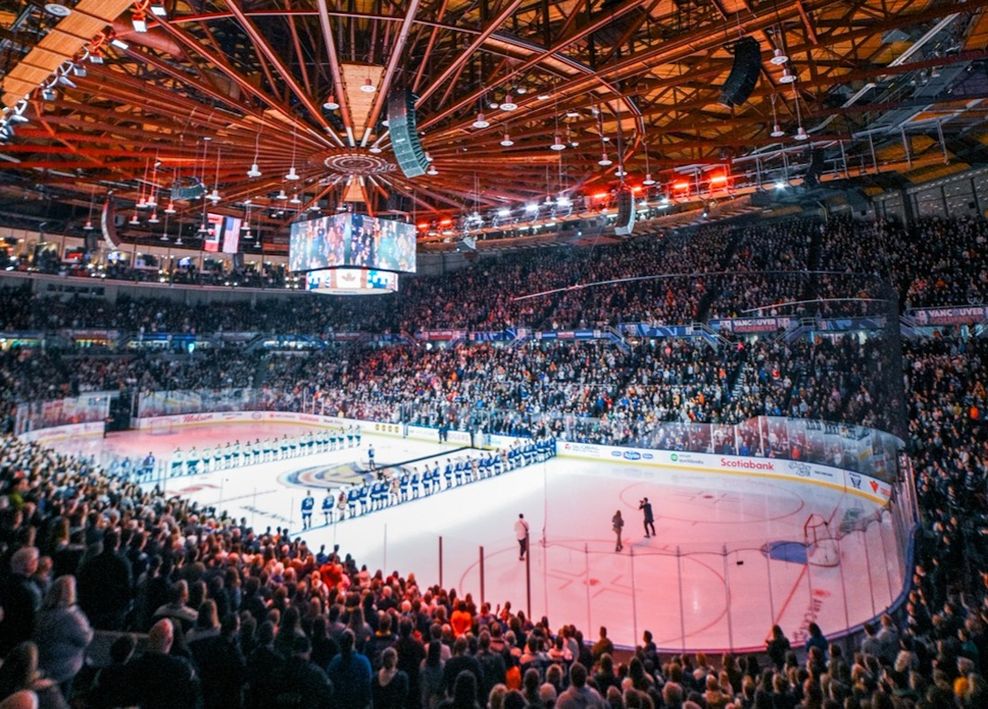
PWHL’s Vancouver Goldeneyes at the Pacific Coliseum. (PWHL)
There are potential economies of scale and synergies between the PNE fairgrounds and the Whitecaps’ proposed stadium and entertainment district. Similarly, BMO Field and Toronto’s CNE demonstrate how a separately-operated soccer stadium and major fairgrounds can operate in a mutually beneficial, symbiotic relationship.
For example, a partnership with the PNE could allow the PNE Fair to expand significantly by extending its programming northward into the Whitecaps stadium and the surrounding plaza spaces of the entertainment district. A potential entertainment district featuring restaurants, bars, pubs, and hotel uses could also complement the PNE’s venues and programming by offering visitors activities before and after events at the new amphitheatre, the Pacific Coliseum, the Agrodome, other fairground facilities, and the PNE Fair and Playland itself. The entertainment district would also encourage people to visit the park even when no events are taking place.
While a new Whitecaps stadium would represent a major net gain to Hastings Park’s overall offerings, it remains to be seen whether such a concept could affect the PNE’s expectations for a high-performing, revenue-generating new amphitheatre — particularly if the stadium is also designed and positioned to host outdoor concerts and other non-sporting events that could also be hosted in the amphitheatre. Planning and market demand forecasts for the covered outdoor amphitheatre did not anticipate the addition of an outdoor stadium at Hastings Park.
However, a new stadium and entertainment district could significantly improve transportation capacity and options at Hastings Park, both for vehicle parking and for public transit.
Parking to support Hastings Park’s active uses is currently very limited. The redevelopment of the racecourse, for example, could introduce substantial new parking capacity, such as underground parkades beneath the stadium and entertainment district buildings. On-site vehicle parking will likely be a key consideration, given the limited existing supply, the need to prevent parking demand from spilling into surrounding residential neighbourhood streets, and the importance of adequately accommodating transportation needs to support the stadium events in the absence of rail rapid transit — at least for years to come.
This new parking could also be made available for events held on the PNE fairgrounds, particularly when Whitecaps matches and other stadium events are not being held. For the 2024 MLS season, the Whitecaps played a total of 23 home matches at BC Place Stadium, including 17 regular season matches.
That said, for years, the racecourse footprint has already provided significant additional vehicle parking capacity on a temporary basis; the grassy infield inside the racecourse oval has been serving as overflow parking during the PNE Fair period.
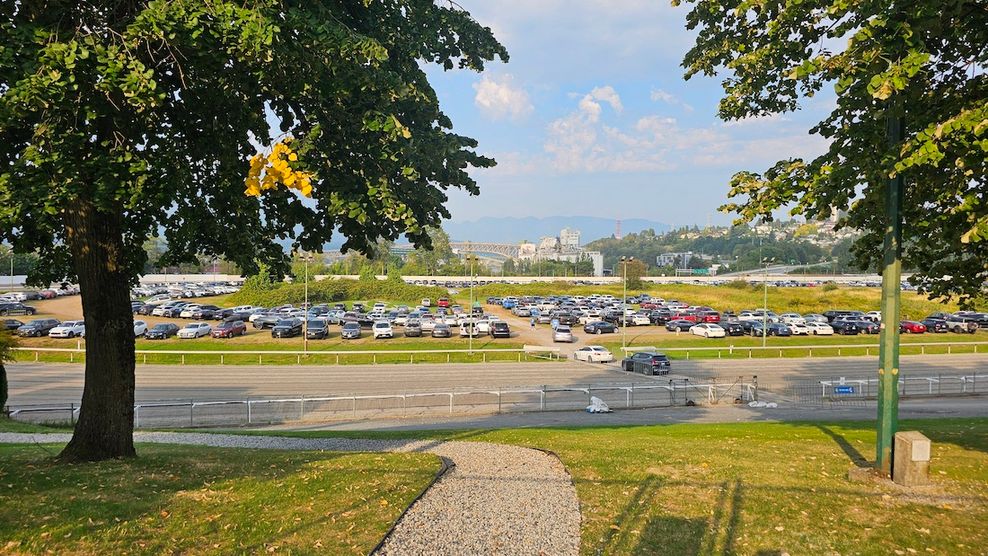
Overflow vehicle parking within the oval infield of Hastings Racecourse during the 2025 PNE Fair. (Kenneth Chan)
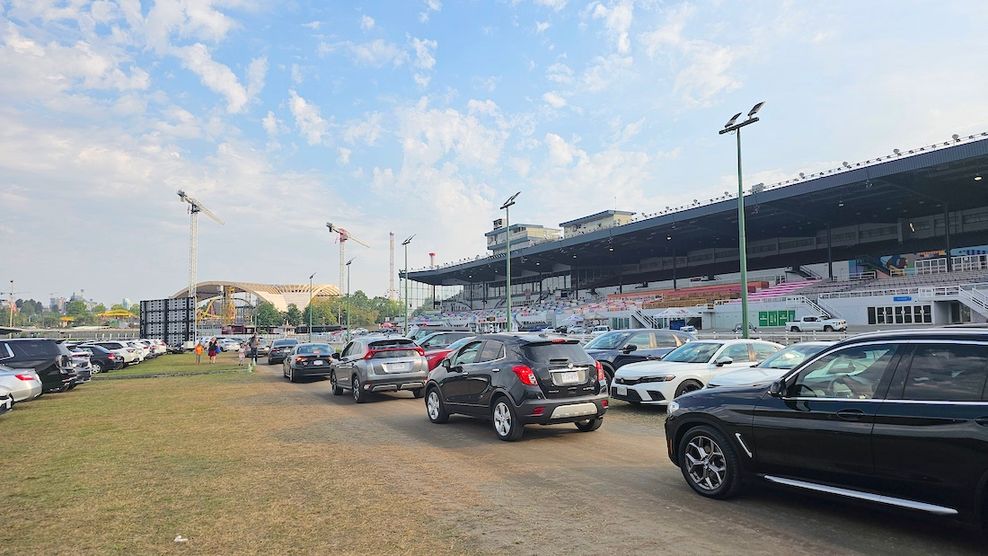
Overflow vehicle parking within the oval infield of Hastings Racecourse during the 2025 PNE Fair. (Kenneth Chan)
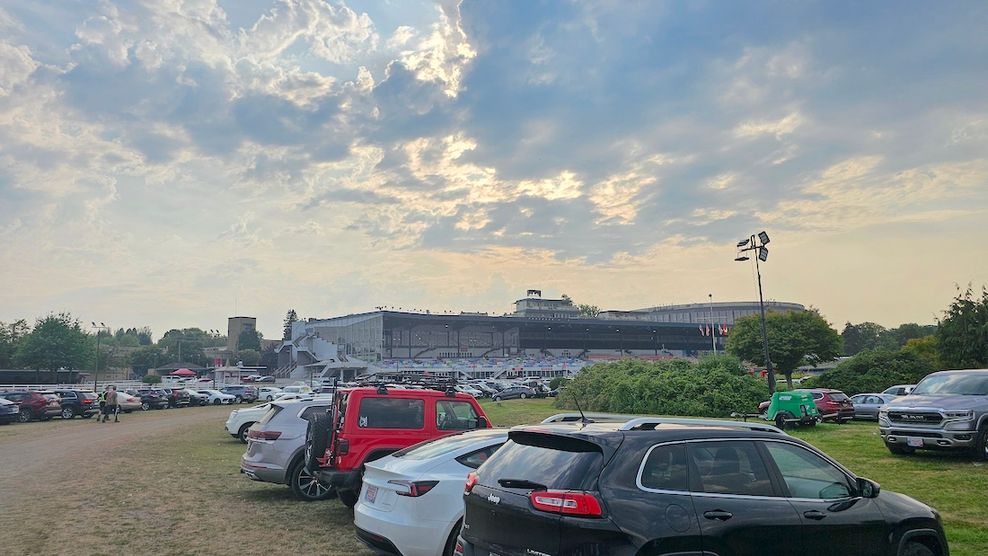
Overflow vehicle parking within the oval infield of Hastings Racecourse during the 2025 PNE Fair. (Kenneth Chan)
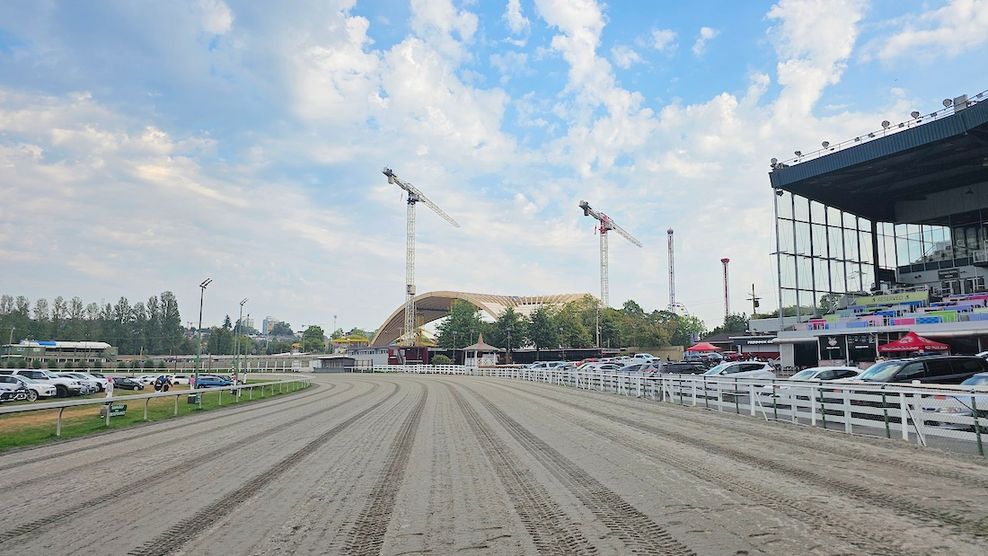
Overflow vehicle parking within the oval infield of Hastings Racecourse during the 2025 PNE Fair. (Kenneth Chan)
Will SkyTrain reach Hastings Park?
Furthermore, the increased ridership demand generated by the stadium, mixed-use entertainment district complex, new amphitheatre, and anchor tenant of Pacific Coliseum also better enables the feasibility of improving TransLink public transit bus services reaching Hastings Park over the short term, while also improving the case for building rail rapid transit to reach the area over the longer term.
Unlike Toronto’s Exhibition Place (home to BMO Field and the CNE), Calgary’s Stampede Park, or Seattle Center, Vancouver’s equivalent — Hastings Park — is located on the outer edge of the city, a considerable distance from downtown Vancouver. In contrast, the aforementioned sites sit immediately adjacent to their cities’ downtown areas, and are also well served by rail rapid transit.
Optimizing the potential of Hastings Park’s venues and as a new and improved regional destination likely relies on drastic improvements to public transit.
In 2023, Vancouver City Council approved a member motion requesting TransLink to identify the Hastings Street corridor as the next corridor for studying the potential next major rapid transit project directly serving the city, after the UBC SkyTrain extension.
“We identified in terms of our transportation planning in the city of Vancouver that studying the Hastings corridor in terms of the next opportunity to really advance significant transit improvements, particularly with respect to, I should say, rapid transit, was particularly important. We still continue to advocate for the extension to UBC,” said Sarah Kirby-Yung, a Vancouver city councillor who sits on TransLink’s Mayor’s Council, today.
“But as we look to the future, we identified that that is particularly important to keep people moving east-west to support the entertainment destination that was envisioned in the plans for the PNE and Hastings Park and connectivity to the North Shore. So we have had motions at Vancouver Council to prioritize that as the next planning exercise and have asked for support in investing that, and that has been supported at TransLink as part of the overall planning and connecting both regional needs and Vancouver’s needs.”
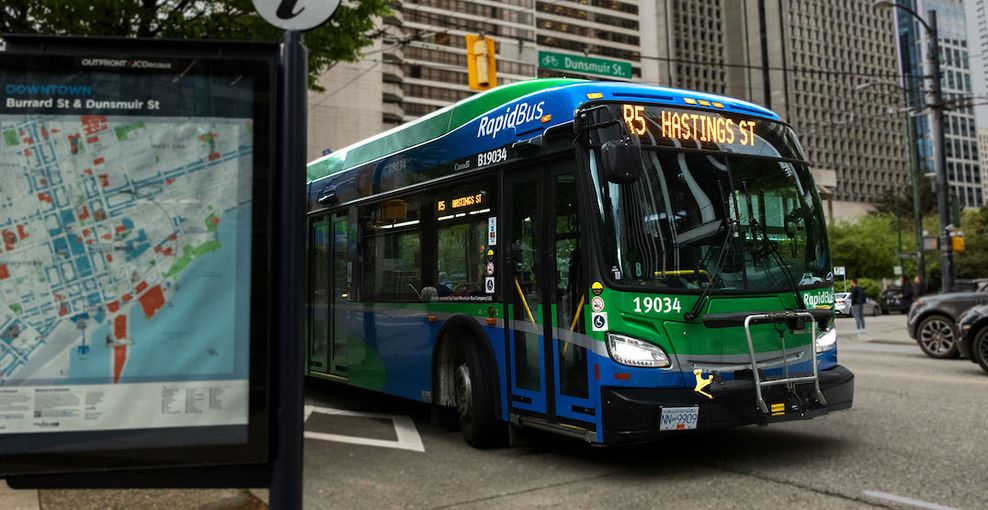
A bus of the R5 Hastings Street RapidBus at Burrard Station in downtown Vancouver. (TransLink)
Mayor Sim went further, stating that there is a probability that a SkyTrain extension will run through the area at some point in the future.
“We take a very long-term view on these opportunities and if you look at that area, we have the amphitheatre going up, now we have professional women’s hockey there. It’s a nice fit and when you look out into the future, there will be a future where you have a subway line or SkyTrain… it’s centrally located and it’s one of these incredibly under-utilized assets that the city has and we’re excited about it,” said Sim.
Currently, TransLink is planning improvements for the existing R2 Marine Drive RapidBus, which runs within the North Shore between Park Royal and Phibbs bus exchange. In 2027, the R2 will see a significant southward route extension from Phibbs bus exchange — across the Ironworkers Memorial Bridge, and passing by Hastings Park along the way to reach Brentwood and Metrotown. After the route extension, TransLink could fully upgrade the R2 to the Bus Rapid Transit (BRT) standard, which involves building new street infrastructure to improve the speed and reliability of the buses.
Additionally, TransLink is studying the longer term permanent solution of rail rapid transit replacing this semi-permanent Metrotown-North Shore BRT service, such as light rail transit (LRT) or SkyTrain.
Previous provincial and North Shore municipal preliminary studies also contemplated SkyTrain routes along the Hastings Street corridor between downtown Vancouver and the North Shore via the Second Narrows, directly serving Hastings Park along the way.
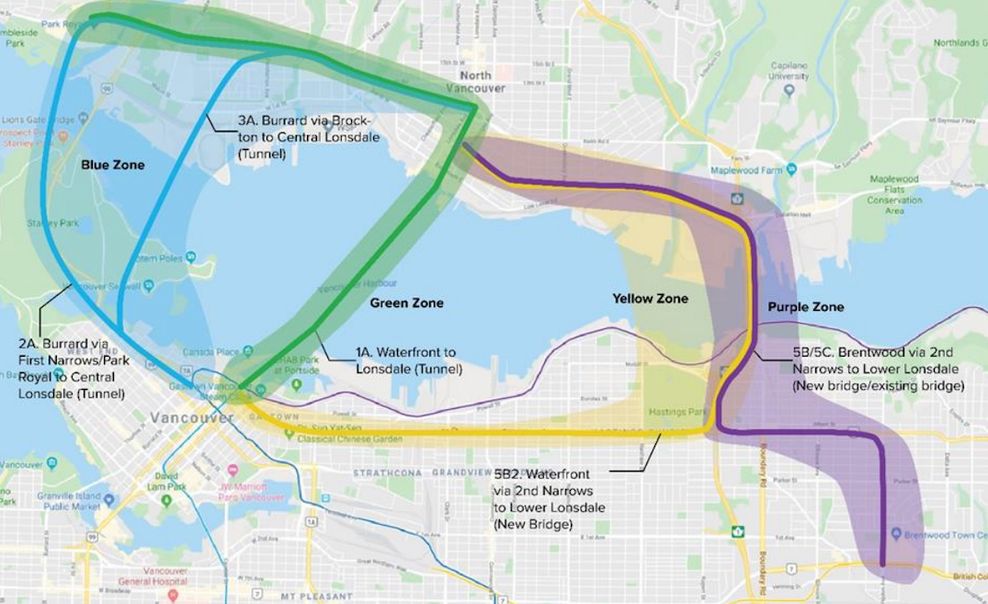
September 2020 map of North Shore SkyTrain route options. (Government of BC)
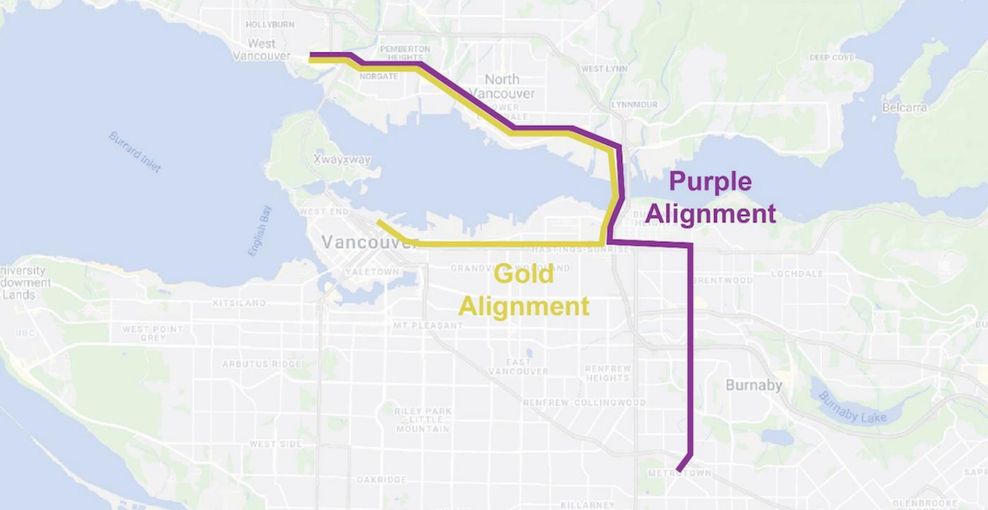
Burrard Inlet Rapid Transit concepts of two North Shore SkyTrain lines via the Second Narrows: Gold Line from Park Royal to downtown Vancouver via Hastings, and Purple Line from Park Royal to Brentwood Town Centre Station and Metrotown Station via Willingdon Avenue. (North Shore Connects)
Currently, TransLink’s long-term strategy calls for potentially upgrading the R5 Hastings Street RapidBus into BRT. However, the BRT standard also involves the removal of general vehicle traffic lanes for physically-separated bus-only lanes along the route — a move that could be highly controversial for the busy east-west Hastings Street arterial road route.
According to TransLink’s 2024 data, the R5 on Hastings Street between downtown Vancouver and the SFU Burnaby campus is Metro Vancouver’s 10th busiest bus route, with 4.35 million annual boardings and averages of 13,700 per weekday, 8,900 per Saturday, and 7,300 per Sunday/holiday. Among all seven B-Line and RapidBus routes, the R5 has the fifth highest ridership.
The Hastings Park area is also served by various other local bus routes, including some routes that terminate at Kootenay bus loop just to the east of the park.
During the PNE Fair periods and 2010 Winter Olympics, TransLink operated a special shuttle bus service along Renfrew Street linking the Expo Line’s 29th Avenue Station, Millennium Line’s Renfrew Station, and the bus pick-up/drop-off area next to Pacific Coliseum. This shuttle bus service is expected to return for the 2026 FIFA World Cup Fan Festival held at the fairgrounds.
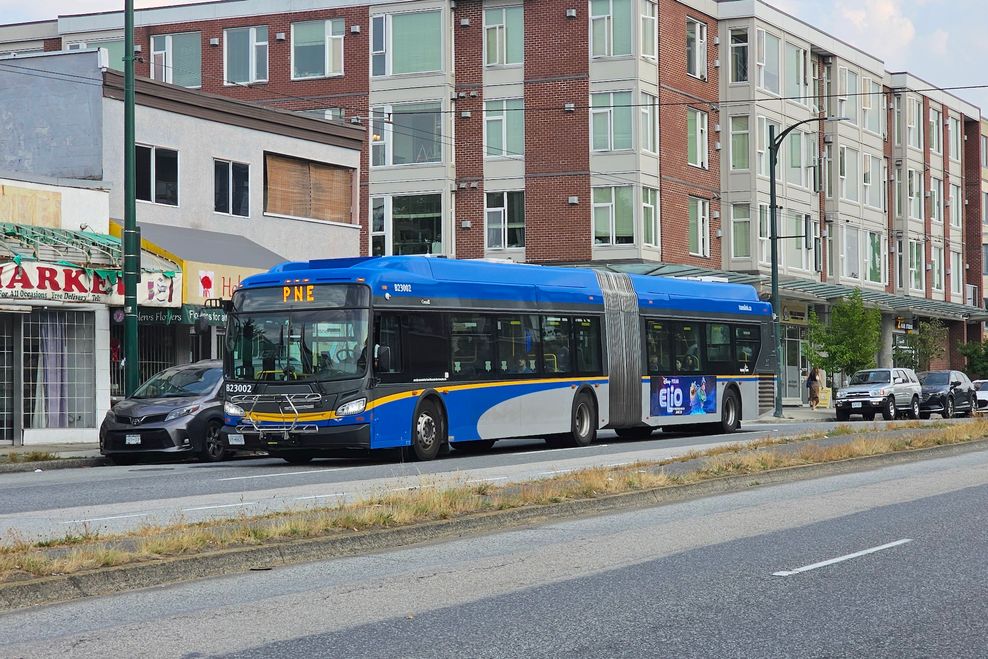
TransLink’s special Renfrew Street shuttle bus during the PNE Fair. (Kenneth Chan)