
A £240 million renovation of the Barbican Arts Centre is set to get started after the City of London granted full planning permission.
However, it will also see the Barbican close for a year to allow the rebuilding to take place.

When it opened in 1982, the arts centre was described as “one of the wonders of the modern world.” Although the core building still matches its lofty ambitions, decades of wear and internal changes have interfered with the original vision.
Many of the back-of-house facilities are also hopelessly outdated and inefficient, which increases the building’s operating costs.
The arts centre has now been permitted to repair what needs repairing, replace the worn-out, and revamp the layout to make it easier to find things. They also plan to improve disabled access, which was good for the time it was built, but is not quite what we would expect today.
Oh, and add a lot more toilets.
The redevelopment of the Barbican Centre was chosen as an alternative to building a new concert hall on the former Museum of London site, and it allows them to address some of the inherent problems with the Barbican Centre at the same time.
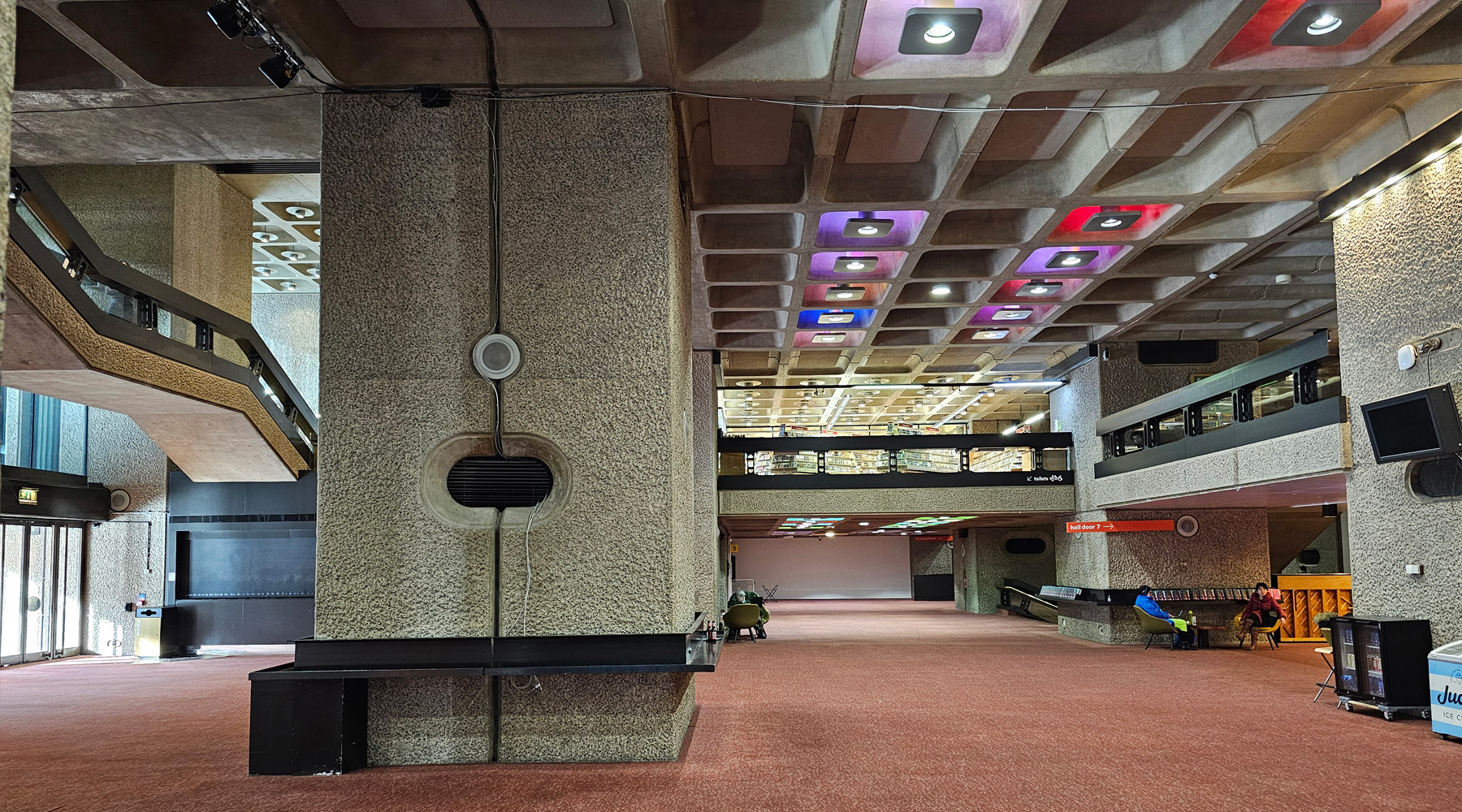
The first phase of the restoration will focus on the Barbican’s distinctive brutalist foyers, lakeside terrace and opening up the Conservatory so that more people can visit it.

Many of the proposed changes involve bringing a building designed with 1970s attitudes toward accessibility up to modern expectations.
Later upgrades will focus on the back of house facilities, which will require a considerable amount of work. Part of the team’s difficulty is that the Barbican building was built around some of the huge basement boilers, making them exceptionally difficult to replace.

The main Arts Centre will close for events from the end of June 2028 to June 2029, although its cinemas facing Beech Street will remain open. The on-site London Symphony Orchestra will still perform, but will move to temporary venues while the Barbican is closed.
Sir William Russell, Chair of the Barbican Board, said: “Today marks a huge step into the Barbican’s future. We’re not just preserving the centrepiece of the UK’s largest listed site but unlocking the full potential of a cultural icon – a new dawn has begun.”
The City of London is providing £191m of the costs, which represents around 80% of the funding needed for the first five-year phase, with the remainder to be raised through a Barbican fundraising campaign.
The Renewal Programme design process is led by Allies and Morrison, Asif Khan Studio, and Buro Happold.
There is also a related project to reopen the Barbican’s dormant exhibition halls, which haven’t been in use for a couple of decades.