
When Anthony Albanese stumbled badly on the first day of the 2022 federal election campaign, some of his closest confidants in the Labor party made an urgent intervention.
Stubborn and too confident in his own abilities, Albanese had not done enough preparation for the intensity of an election campaign and was unable to state the Reserve Bank’s cash rate or how many people were jobless around the country.
Labor was rattled and the Coalition smelled blood just six weeks out from the election. Heavy hitters including Mark Butler, Penny Wong and Katy Gallagher were forced to tell Albanese to get across his brief quick smart or face humiliation from voters.
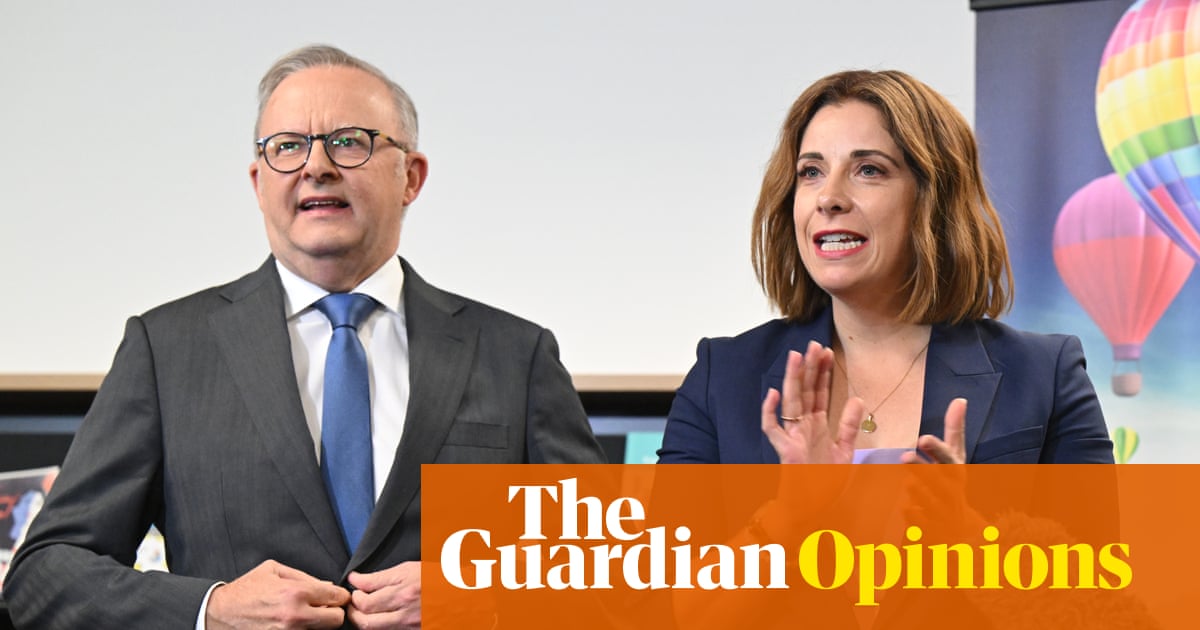
A flash of that same hubris showed up on the prime minister’s face this week as he tried to tough out the growing political expenses scandal without giving his critics an inch.
Determined to defend the communications minister, Anika Wells, and other Labor MPs claiming thousands in travel perks funded by taxpayers, Albanese equivocated and misdirected, rather than properly face up to the problem.
Well known for resisting questions about travel expenses across his parliamentary career, the prime minister defaulted to reminding critics that the current system had been established in the wake of a scandal involving the now opposition leader, Sussan Ley, and a Gold Coast investment property.
The result was one of the government’s worst weeks since the May federal election. It is unclear who in Albanese’s inner circle intervened to help resolve the situation, but Butler was the first to signal a backdown was imminent during morning television interviews on Friday.
Sign up: AU Breaking News email
Things were capped off by the prime minister playing word games, about just when he had sought advice on possible changes to the rules, including provisions which give ministers and other senior officeholders unlimited travel rights for their spouse.
Soon, after days of incorrectly suggesting the Independent Parliamentary Expenses Agency set the rules, Albanese confirmed he had asked for advice on possible changes. The government and the parliament are responsible for the laws and regulations which set the allowances, not the independent agency.
Albanese even tried to suggest he had already confirmed that IPEA had been asked to do the work. That claim was undermined quickly when the government struggled to say how the request for advice had been communicated and when, or if the body’s chair, John Fernon SC, or its chief executive, Christina Grant, would lead the work. Grant, an experienced bureaucrat, has the job.
In a week that should have been dominated by the government’s landmark social media ban for children under 16, Albanese wasted too much time trying to gaslight some of the most cynical people in the country: the Canberra press gallery.
Parliament ends the week with Wells and the attorney general, Michelle Rowland, referring tens of thousands of dollars in travel expenses for audit, and an undefined process about possible changes.
Not for nothing, Labor has already twice delayed the planned three-yearly stocktake of perks for MPs. Worrying too is IPEA’s record for investigating possible breaches: established in 2017, the authority takes months or years to complete audits and allows unwarranted spending by politicians to be repaid quietly.
Pressure should remain on other big spenders – including the special minister of state, Don Farrell, and the Dawson MP and Coalition shadow minister Andrew Wilcox – to check they’ve complied with the rules.
Wells sparked the controversy by flying to New York in September at a cost of nearly $100,000. The communications minister sought approval from Albanese’s office for the expensive flights after the Optus triple-zero crisis delayed her travel.
While the controversy raged this week, a parliamentary inquiry heard Wells’ office was wrongly told no one had died in the network failures in September, leaving everyone in the dark about an additional fatality for more than 10 weeks. Guardian Australia reported the minister’s office only became fully aware of the development when it was revealed in the hearing on Tuesday.
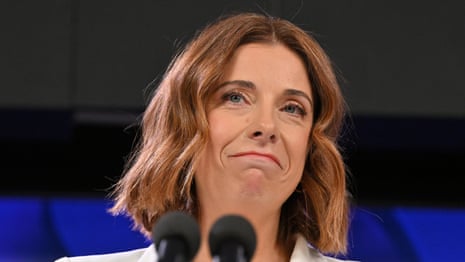 Communications minister Anika Wells defends $95,000 trip to UN general assembly in New York – video
Wells is a case study for the best and worst of the travel rules. The mother of young children, she has shown how even parents with all-consuming jobs can have strong and successful family lives.
Equally it would be surprising if she is as eager to charge taxpayers for her husband to attend top-tier sporting events in the future.
Public support for politicians’ pay and conditions relies on the recipients not taking the piss, as demonstrated by cabinet colleagues including the energy minister, Chris Bowen, not using family reunion entitlements at all in recent years.
Analysis of the data shows that of the about $4m spent since 2022, the top-30-spending MPs make up nearly half of all claims.
One of the reasons expense scandals capture the media and public imagination so fully is because they both confound voters and confirm their worst instincts about politics.
How could the rules for elected representatives be so out of step with the real world, and how could people who already earn hundreds of thousands of dollars a year be so eager to maximise every additional taxpayer dollar for travel?
When he moved to establish IPEA and abolish lifetime gold-pass rules for former politicians, Malcolm Turnbull suggested referring to travel rules for MPs as entitlements instead of allowances could be part of the problem.
A sensible change to travel rules could include stopping family reunion provisions being used to subsidise holidays, and be limited to bringing family members to Canberra. Ministers who are required to work and travel on weekends regularly could seek prior approval to bring their children and spouses, to limit the opportunity for wasteful spending.
Albanese is known for his methodical and cautious approach in government. Bringing the rules closer to community expectations would serve him and the whole parliament well, especially in a time of trimmed budgets and cost-cutting.
After a messy week for Labor, a circuit breaker was badly needed. The problem with politicians treating voters like mugs is eventually they start to return the favour.
Tom McIlroy is Guardian Australia’s political editor
This story was amended on Saturday, 13 December 2025. An earlier version referred to to the prime minister’s performance in the 2019 election – this should have read 2022.