

Listen to this article
Estimated 4 minutes
The audio version of this article is generated by AI-based technology. Mispronunciations can occur. We are working with our partners to continually review and improve the results.
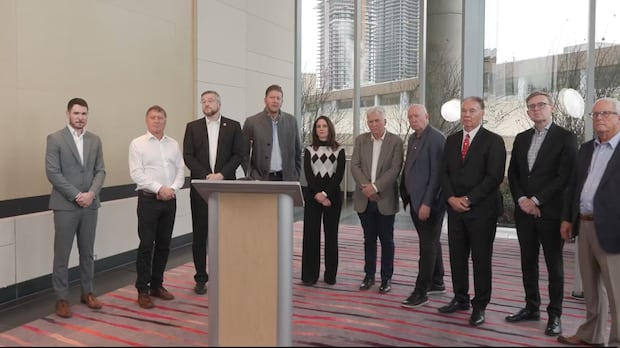
A coalition of Metro Vancouver mayors is calling on the B.C. government to repeal housing legislation designed to increase supply through higher density, but the housing minister says there’s no going “backward.”
The mayors representing 16 municipalities including Surrey, Burnaby, Richmond, Delta, West Vancouver and the Township of Langley say the measures overlook local realities and pile infrastructure costs onto municipalities.
At a joint press conference Thursday, local officials said they are urging the province to roll back legislation that requires communities to add density around transit hubs, allow multiplexes on traditional single-family lots and meet provincially imposed housing targets.
“One size fits all doesn’t work and it will never work,” said Burnaby Mayor Mike Hurley.
“Six units on a single-family lot under 7,000 square feet doesn’t work especially if we add into that no parking [space requirements]. How is that going to work? These are just not thought through,” he said.
Since May 2023, the province has had the authority to set binding housing targets for municipalities facing high population growth and increasing housing needs.
Delta Mayor George Harvie said the province’s housing targets have not helped spur construction in his city.
Delta and West Vancouver were among 10 municipalities on the province’s so-called “naughty list” in 2023.
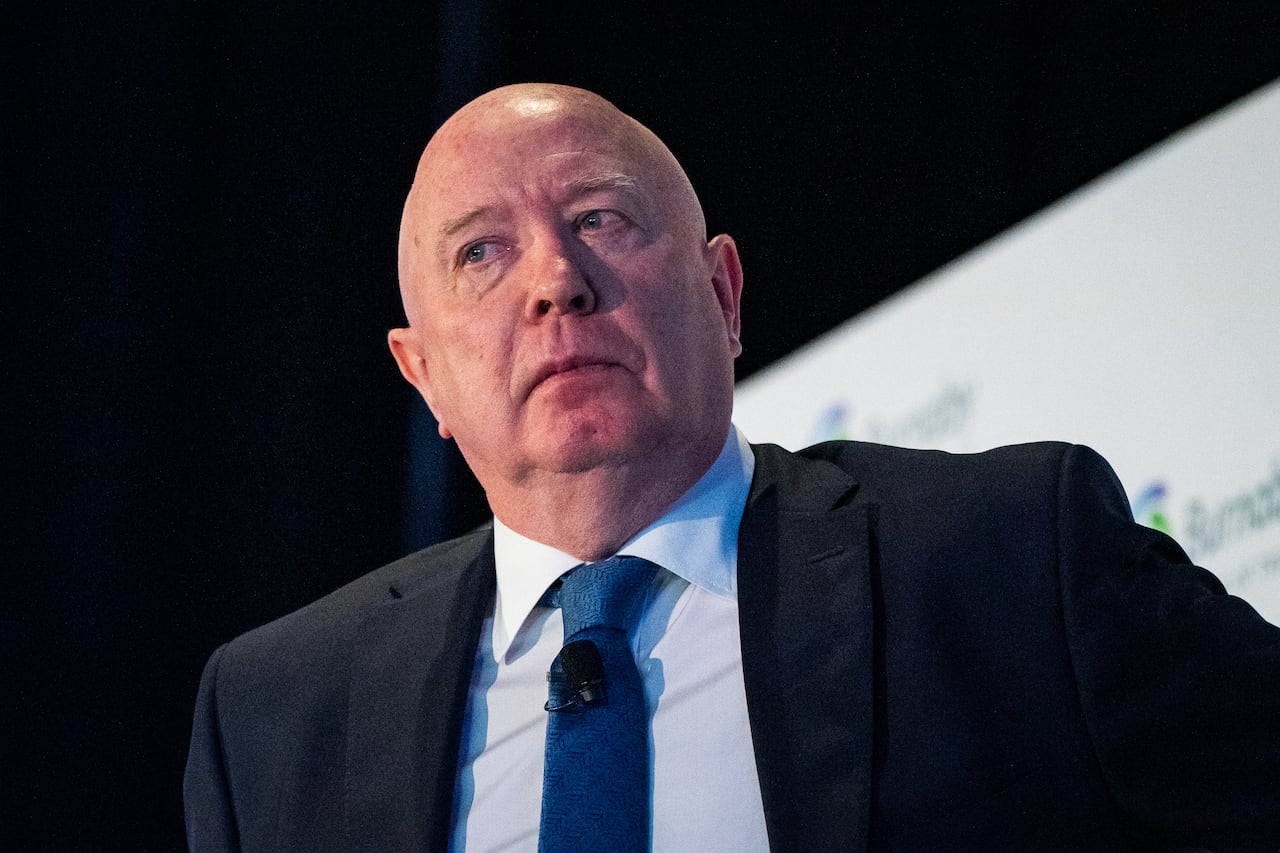 More than a dozen mayors of lower mainland municipalities including Burnaby Mayor Mike Hurley are calling for changes to legislation on housing targets, transit hubs and small scale multi-unit housing.
(Ethan Cairns/CBC)
While the province’s housing targets are calculated by the number of occupancy permits granted, Harvie said the City of Delta has approved a number of homes that are yet to be built.
“We have approximately 1,200 approved units and we get letters from the province saying, ‘Congratulations, here’s the next target you have,’” he said.
“None of those have been built.”
Harvie said he wants the provincial “demand letters” to stop.
West Vancouver Mayor Mark Sager said his municipality lacks the infrastructure to absorb mandated growth.
“Those who live on the North Shore face gridlock on a daily basis,” he said.
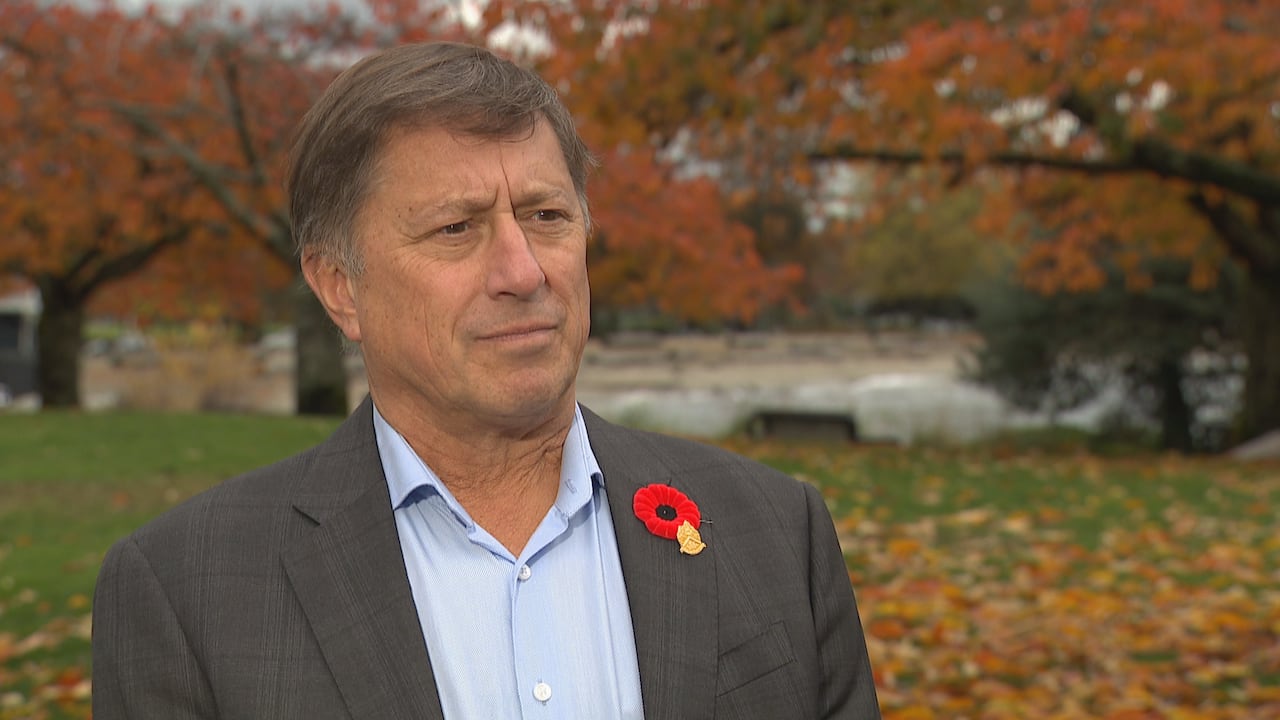 West Vancouver Mayor Mark Sager, seen here in early November, says his community lacks the infrastructure to absorb the growth from increased housing. (Martin Diotte/CBC)
Other leaders say that the province is ignoring the realities on the ground.
Pitt Meadows Mayor Nicole MacDonald said her community is “80 per cent agricultural” and sits on a flood plain.
“Where are we expected to build the houses?” she said.
WATCH | West Vancouver rejects B.C.’s housing deadline: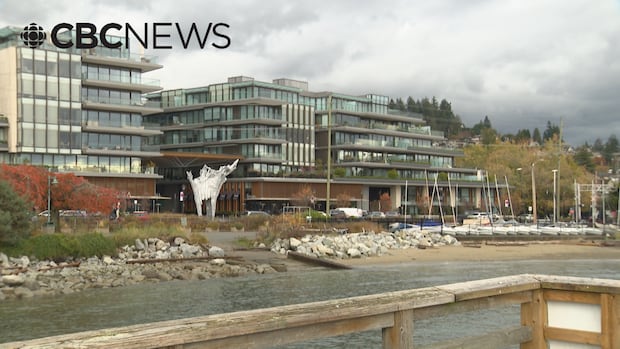
West Vancouver rejects B.C.’s deadline to rezone neighbourhoods for more housing
The B.C. government has threatened to take over West Vancouver’s housing policy if they don’t approve more density by the end of the year — and as Justin McElroy explains, the mayor seems ready to call the province’s bluff.
Township of Langley Mayor Eric Woodward said he simply ignores the provincial housing targets.
“If the infrastructure support doesn’t go hand in hand with endless housing mandates, we pay them no mind,” he said.
Housing minister rejects repeal calls
B.C. Housing Minister Christine Boyle says these policies are “making a real difference” and that the government has no plans to make further changes to them.
“We’re not going backwards when we see these policies are making a real difference,” she said. “B.C. is leading the country in declines in asking rents.”
Local officials say they reject the idea that provincial legislation is responsible for easing rents, saying municipal planning and approvals have driven that progress.
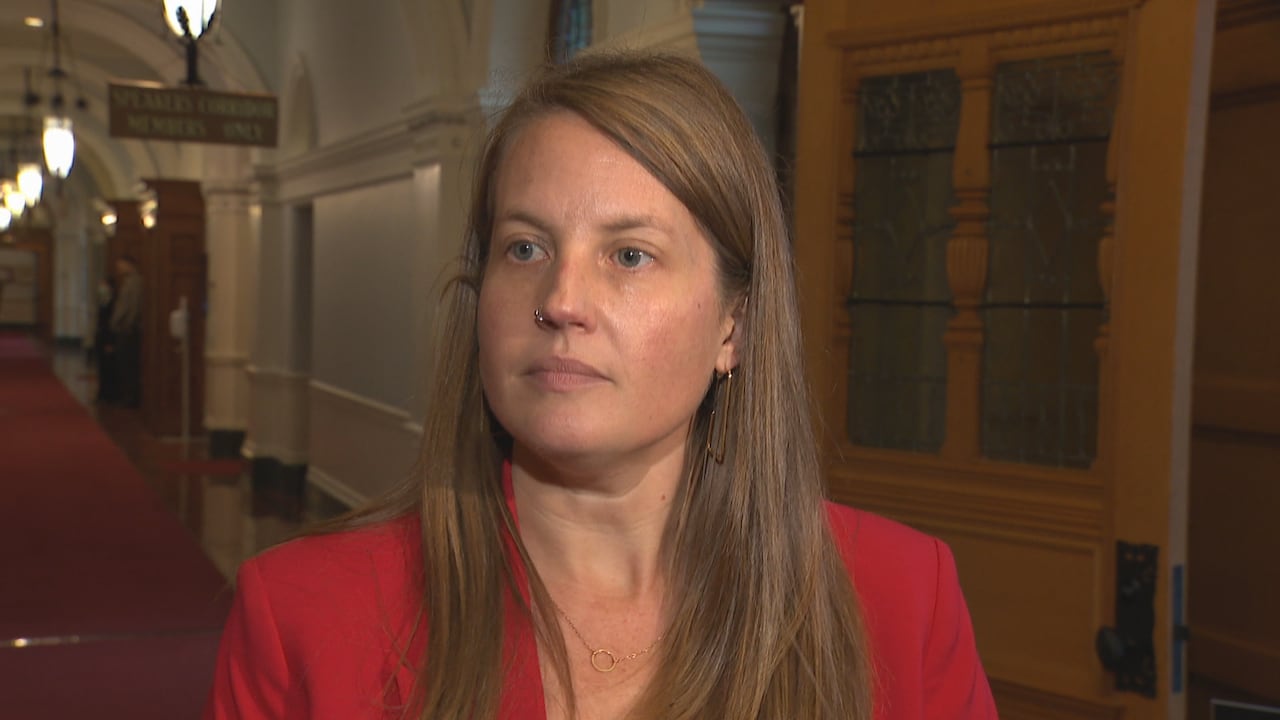 Housing Minister Christine Boyle says the policies are “making a real difference” and that government has no plans to make further changes to them. (Mike McArthur/CBC)
In its latest report, the Canada Mortgage and Housing Corporation says Vancouver’s rental vacancy rate has risen to 3.7 per cent, which is the highest level recorded since 1988.
The corporation says that’s due to a combination of record new rental supply and weaker demand from slower population growth and economic uncertainty.
When asked if the province would give the municipalities more money for infrastructure, Boyle says money is “tight” for every level of government and that it has already made “important investments in infrastructure,” which local governments can use in ways they see fit.
Boyle says she can’t speak to next year’s provincial budget, but B.C. continues “to advocate for more federal infrastructure dollars as well.”