
Plans to build Canada’s first high-speed rail line took a major step forward today, with the federal government announcing that the first segment of Alto will run between Ottawa and Montreal.
The roughly 200-km-long Ottawa–Montreal corridor will serve as the first phase of what will eventually become an approximately 1,000-km-long high-speed rail line stretching from Toronto to Quebec City. Construction on this initial segment is now expected to begin in 2029.
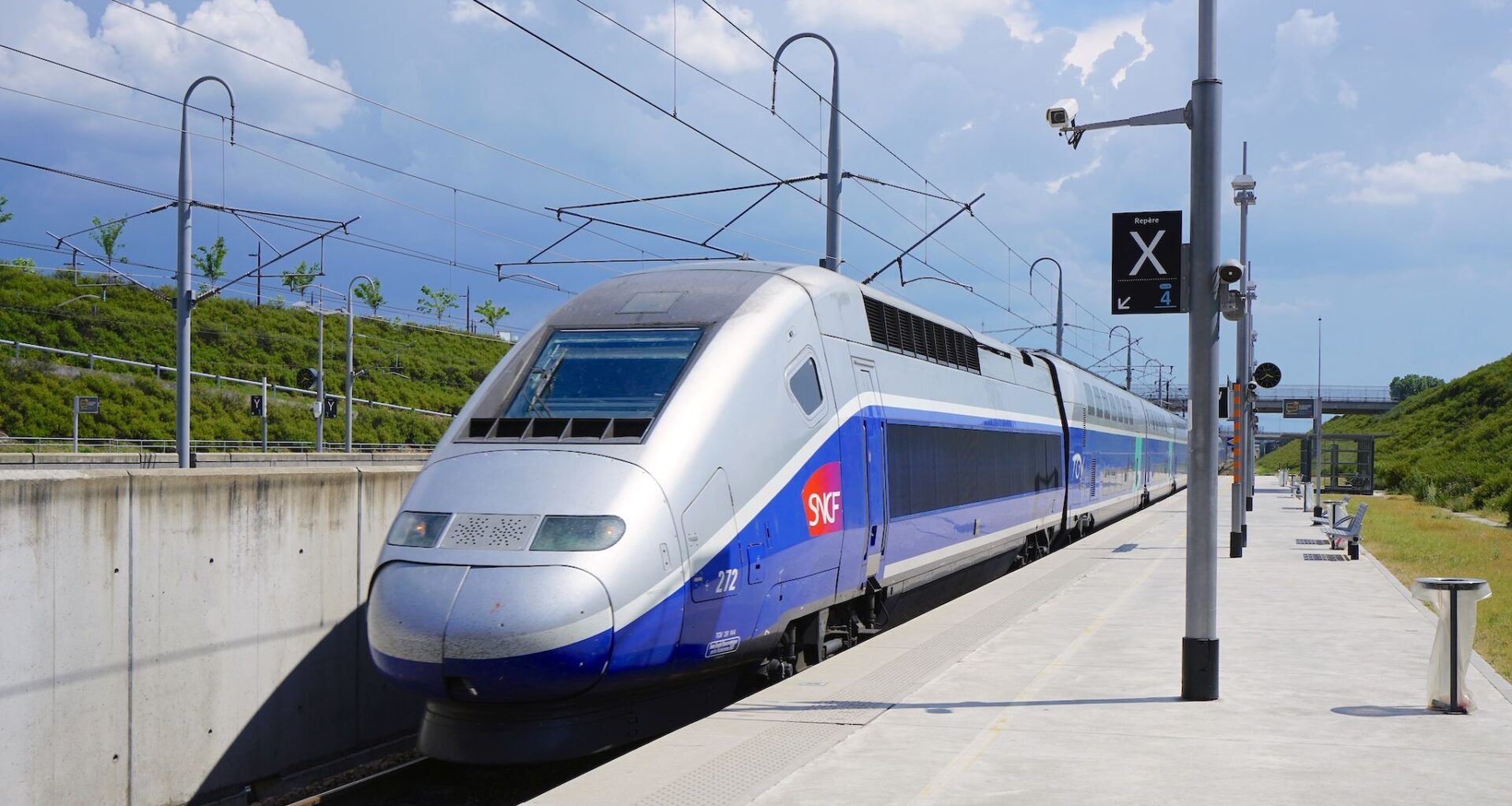
Alto, the name of both the line and the recently created federal Crown corporation overseeing the public-private partnership to achieve the project, will introduce trains capable of reaching speeds of up to 300 km/h on 100 per cent dedicated tracks powered by overhead catenary electrical lines — cutting travel times in half and linking major economic centres that together represent nearly half of Canada’s population.
“This announcement marks an important step forward in delivering faster, cleaner, and more connected transportation for Canadians. By working closely with Alto and our partners across governments and communities, we are laying the groundwork for a high-speed rail network that will put Canada firmly on the global map for modern rail innovation,” said federal transport minister Steven MacKinnon in a statement.
According to the federal government, the rationale for proceeding with the Ottawa-Montreal segment first is to enable teams in both provinces to start construction at the same time, with workers gaining the experience needed to expand the network more quickly to Toronto to the west and Quebec City to the east. No potential construction start timelines have been identified for the remaining segments.
While a construction start date has now been established, a potential completion and operational date for the first segment has not been made public at this time.
Beyond allowing both Ontario and Quebec to benefit from Alto simultaneously, it is not immediately clear whether there are specific technical advantages that make the Ottawa-Montreal segment easier to implement as the first phase, such as greater availability of space or the relative ease of creating a fully grade-separated right-of-way.
It is not uncommon for new high-speed rail lines to be built in phases, reflecting the immense cost, technical complexity, and political coordination required to deliver them. Starting with a shorter or strategically chosen segment allows governments and project teams to test designs, establish construction expertise, and demonstrate early benefits that can help sustain long-term public and political support.
California’s much-maligned high-speed rail project illustrates both the logic and the risks of this approach: the state government began construction in the Central Valley, where land acquisition was simpler and costs were lower, but the decision also exposed the project to criticism for delivering an initial segment far from its largest population centres.
In addition to Alto’s temporary terminus stations of Ottawa and Montreal and the longer-term ultimate terminus stations of Toronto and Quebec City, the intention is to also build stations along the way in Peterborough, Laval, and Trois-Rivieres.
Starting in January 2026, an initial three-month public consultation process will begin to help determine the preferred route alignment and station locations, minimize impacts, and reinforce community benefits.
“Undertaking one of the biggest infrastructure projects in Canada’s history requires multi-stage planning. Focusing first on the Ottawa-Montréal segment is a logical step to optimize the project, accelerate delivery, and generate tangible local economic benefits,” said Martin Imbleau, the president and CEO of Alto.
“This approach allows us to mobilize teams even more rapidly in both provinces while continuing work on all other segments of the corridor, from Toronto to Québec City. As consultations begin, we look forward to engaging with communities and hearing their perspectives firsthand.”
Today’s announcement follows last month’s 2025 federal budget, which indicated Alto will see its engineering, regulatory, and permitting work accelerated. This will enable construction on Alto to begin in four years from now (2029) instead of the original timeline of in eight years (towards the middle of the 2030s), as previously stated in early 2025 — when the federal government announced the selection of a private consortium to lead the project and its decision to evolve the project from a high-frequency rail (HFR) standard to a far more superior high-speed rail (HSR) mode.
The November 2025 budget notes that the accelerated progress on Alto will be supported by the federal government’s newly created Major Projects Office (MPO), which is designed to cut red tape, prioritize, and fast-track “nation-building projects” with significant economic and/or national security value — such as natural resource projects and energy and transportation infrastructure.
Moreover, the budget states that Alto will be supported by forthcoming “legislative amendments to streamline approval processes and reduce regulatory uncertainties.”
At this preliminary stage of planning, there is no estimated construction cost, but it will certainly be in the tens of billions of dollars. It will likely be exponentially higher than the previous preliminary estimate of $6 billion to $12 billion for the original HFR concept.
For the extensive technical design, engineering, and planning work alone required for high-speed rail, the federal government has already set aside $3.9 billion — before shovels can hit the ground.
In February 2025, following a lengthy procurement process, the federal government selected a private consortium called Cadence to plan, design, build, operate, maintain, and help finance Alto.
Cadence is a joint venture that includes SNCF Voyageurs — the French government-owned company that operates France’s high-speed rail network — and the French transportation engineering firm SYSTRA, as well as Canadian institutional investor La Caisse (formerly known as CDPQ and backed by the Québec pension fund), Canadian engineering firm AtkinsRealis (formerly SNC-Lavalin), and Air Canada.
La Caisse and AtkinsRealis are also involved in the private-public projects of Vancouver’s SkyTrain Canada Line and Montreal’s new REM metro network.