
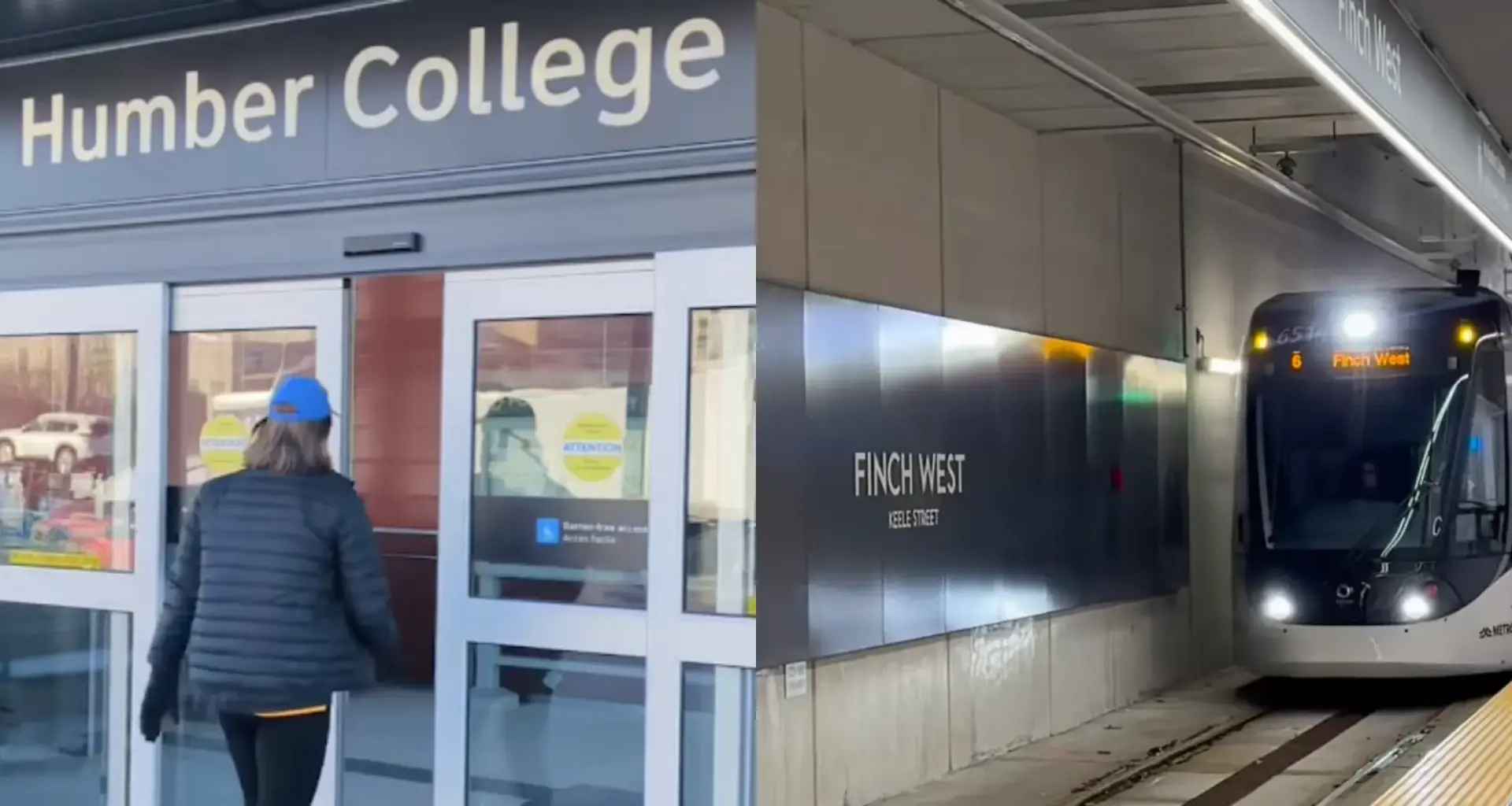
Toronto runner Mac Bauer raced the Finch West LRT along its 10.3-kilometre route, and beat it by 18 minutes on Friday.
“I had the day off and my friends had the day off so it kind of just aligned,” Bauer tells Now Toronto.
“We went, let’s do this.”
In fact, Bauer didn’t just beat the LRT that he was racing, he also beat the one ahead of it by eight minutes.
“[My friend on the LRT] said that he sat outside the station for five to six minutes because of signal issues. So, he should have been a little bit quicker,” Bauer says.
Bauer’s victory is impressive but not surprising given the complaints reported by the line’s riders since it opened a week ago.
Read More
Worth noting is that Bauer’s win was in spite of the icy conditions parallel to the train’s 10.3-kilometre route.
“I was slipping and sliding,” Bauer says.
“It was kind of on me, though. I was running on the south side of [Finch] and I think it got more shade and didn’t have a chance to melt.”
This isn’t the first time Bauer has beat Toronto’s public transit on foot. In fact, to date, he has raced every single streetcar line in the city.
“Bathurst, which is a very short line, I beat by over 20 minutes – over multiple times,” Bauer says.
“Surprisingly, Queen Street was faster than I thought, St. Clair was slower than I thought.”
Bauer says there are various factors that go into the speed of a streetcar, such as time of day and luck. One thing he has noticed across streetcars, including the LRT, is the consistent lack of signal priority.
“Signal priority really has an impact on the overall runtime [of a streetcar],” Bauer says.
“If [the streetcar] hits a lot of lights, it will obviously be much faster than if they hit red lights one after another.”
On Thursday, Toronto Mayor Olivia Chow told Now Toronto she is planning to move a motion at city council next week to increase transit signal priority to the Finch West LRT and that she is hopeful it will move quicker by the end of winter.
Read More
In a motion that was carried in city council Wednesday, the Toronto Transit Commission is directed to “significantly improve performance, frequency and speed” of the Finch LRT.
But signal priority is only one side of the coin. Another factor that affects the speed: the proximity of stops. As for the 10.3-kilometre-long Finch West LRT, there are 16 stops between Finch West Station and Humber Polytechnic North Campus.
“It’s a big train,” Bauer says. “It doesn’t accelerate or stop all that quickly.”
Bauer believes it’s about optimizing travel speed and distance.
“I don’t think that has been done [in the planning stages] at all. [Reducing the number of stops] would make the LRT so much faster, and paired with signal priority, it would actually be faster than cars especially during rush hour.”