

Climate Lab is a Seattle Times initiative that explores the effects of climate change in the Pacific Northwest and beyond. The project is funded in part by The Bullitt Foundation, CO2 Foundation, Jim and Birte Falconer, Mike and Becky Hughes, Henry M. Jackson Foundation, Martin-Fabert Foundation, Craig McKibben and Sarah Merner, University of Washington and Walker Family Foundation, and its fiscal sponsor is the Seattle Foundation.
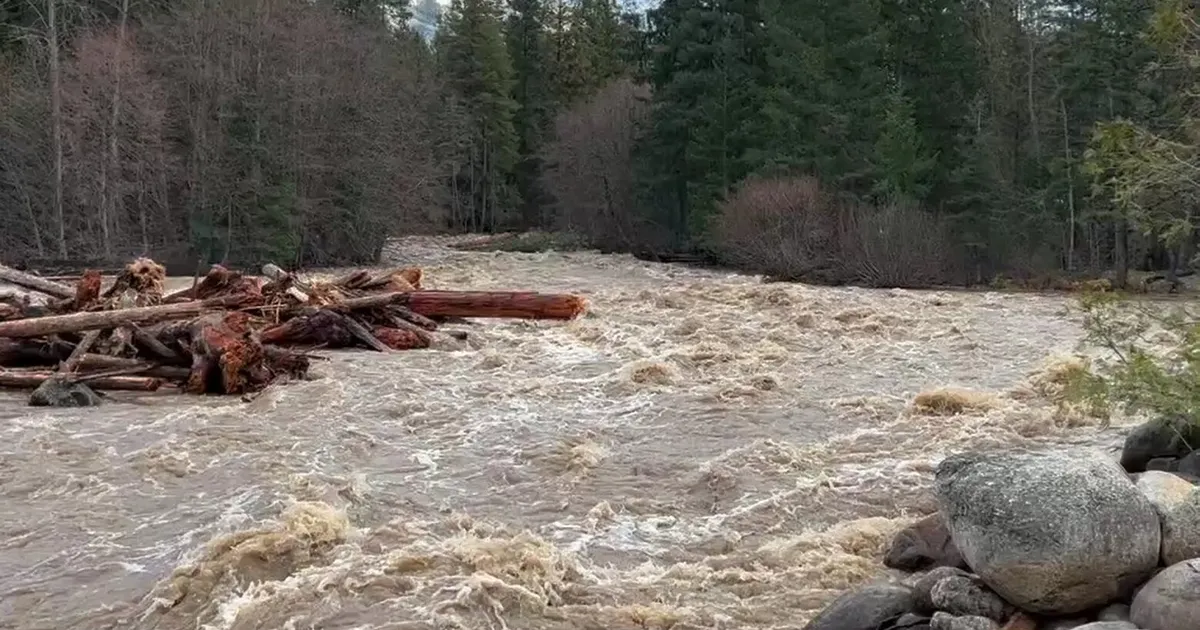
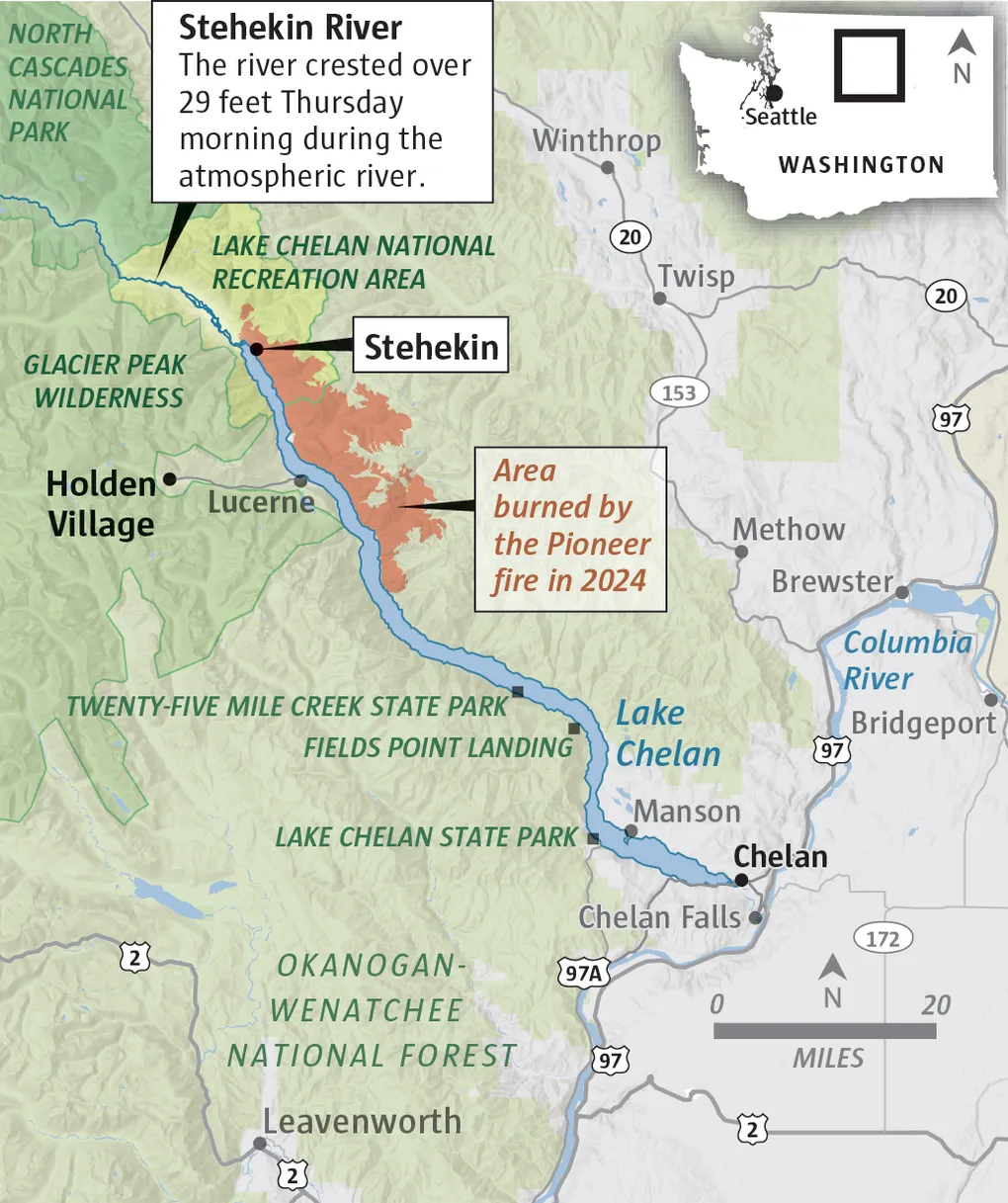
The remote town of Stehekin, on the north shore of Lake Chelan, is reeling after devastating floodwaters rushed down the fire-scarred mountainsides surrounding it, Chelan County Sheriff Mike Morrison said.
Houses, roadways and even the small resort town’s water treatment plant were all hit by the flood, brought on by an atmospheric river that dumped many inches of rain across the Pacific Northwest this week.
“Stehekin is an absolute mess,” Morrison said. “It’s staggering, the damage we’re seeing.”
Related
More
So far no injuries or deaths have been reported, Morrison said. But without a freshwater source, many of the people remaining in the area have no water supply. Some felt they needed to flee the area; the forecast calls for even more rain in the days ahead.
If anybody else decides they need to leave the area, Morrison said, the sheriff’s office will find a way to evacuate them. In the meantime, the office shipped up seven pallets of water. But soon they’ll need more.
This disaster is going to need more emergency funding, he said.
Earlier Friday, President Donald Trump signed a disaster declaration for the statewide flooding. But just how quickly any of that money might make its way to Chelan County remains to be seen.
The damage isn’t limited to Stehekin, either.
On the west side of the lake, crucial roads were washed out around the village of Holden, blocking off major access routes, Morrison said. Officials are still working to assess the size and scope of the damage and determine the next course of action.
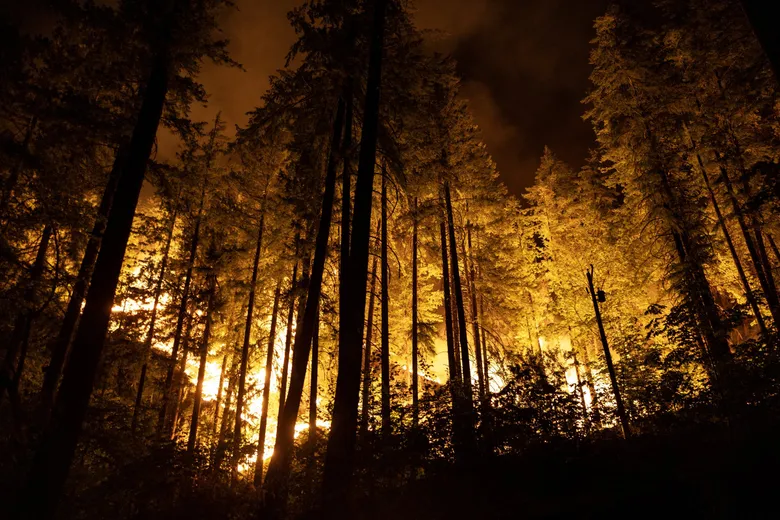
Much of the flooding poured down over burn scars from last year’s Pioneer fire or older burn scars in the area. This is the type of damage that can often follow major wildfires, which scorch steep landscapes of trees and shrubs that otherwise would absorb water and help stabilize the landscape.
Stehekin hit by floodwaters
Fires and floods
Susan Prichard let out a heavy sigh when she heard the news of Stehekin’s severe flood damage. As a scientist specializing in wildfire ecology for the University of Washington, she knew this might be a possibility after the Pioneer fire scorched nearly 60 square miles of the mountainsides around the area.
“Fires and floods,” Prichard said.
One so often follows the other.
Rain falling on healthy forest slopes will be absorbed and slowed in a number of ways. The moisture will seep into the soil or be taken up by the shrubs and trees in the area. The softened ground will be stabilized by the roots running all throughout.
But wildfires throw those norms out the window. A severe fire, like the one that tore around the north side of Lake Chelan last year, literally scorches the earth and leaves a thick layer of hydrophobic soil behind, Prichard said. Fires also burn off most plant life that would otherwise take up much of the excess moisture and hold the slopes firm.
When water starts flowing, like it did over the last few days, it rushes downhill, catching much more sediment than normal and creating hazardous mudflows, Prichard said. The devastation these floods leave behind are called “mass wasting events.”
Decades or centuries ago, the risk wasn’t as pronounced, Prichard said. Wildfires weren’t as large or severe and they wouldn’t scorch nearly everything off the landscape. Rather, they left behind a patchwork of burn scars across the landscape and served as a crucial part of the ecology.
Today, wildfires remain a crucial part of the environment. But the atmosphere is warming and generations of wildfire suppression have left huge amounts of dead or dying trees and shrubs. As a result, wildfires are burning larger and hotter than before. They leave a trail of destruction in their wake and the floods that follow generally respond in kind.
This one-two combination represents a problem all across the American West, threatening towns, roads, water and irrigation supplies, among many other things.
Perhaps a bit of silver lining, though, is that the first floods after a major fire – like this one – tend to be the worst, Prichard said. That is not to say Stehekin is safe from danger just yet. More rain is in the forecast. But hopefully the worst has passed, she said.
Conrad Swanson: 206-464-3805 or cswanson@seattletimes.com. Conrad Swanson is a climate reporter at The Seattle Times whose work focuses on climate change and its intersections with environmental and political issues.