
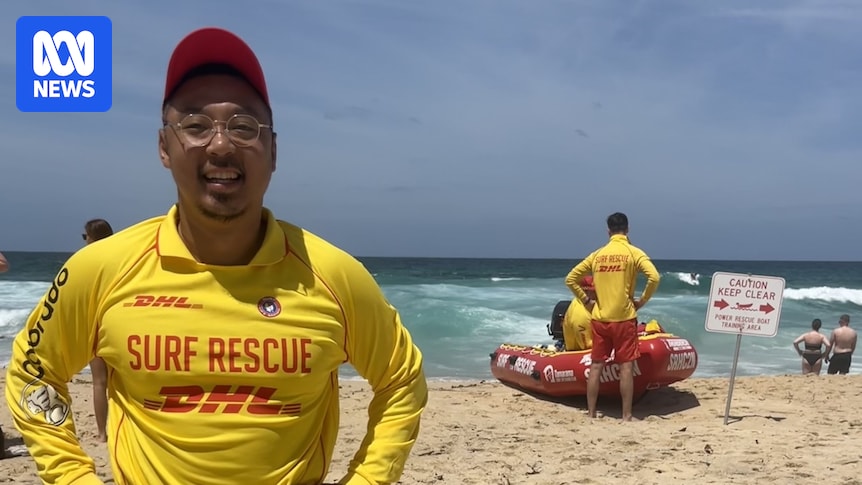
Surf lifesaver Masaki Shibata was doing a volunteer shift on the Gold Coast when he encountered four South Koreans struggling in a rip.
“We arrived yesterday,” they told him once safe on shore.
It’s an anecdotal experience that has since been reinforced by data collected in Dr Shibata’s other capacity as a lecturer in intercultural studies at Monash University.
A study he completed this year found only 14 per cent of South Korean university students surveyed correctly understood red and yellow safety flags.
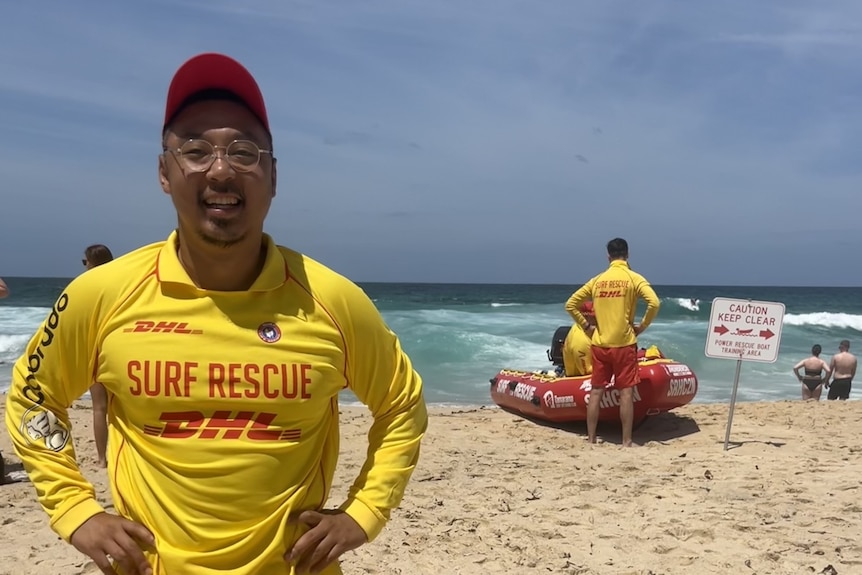
Masaki Shibata says incorporating beach safety into English language learning could be one way to save lives. (Supplied)
More than seven in 10 misinterpreted the flags as denoting a danger zone.
Dr Shibata said many people could not identify a rip, which was why “nearly one-third of all drowning deaths are caused by rip currents”.
“Having this knowledge can enhance awareness and save lives.”Loading…Drowning deaths up, with migrants over-represented
As Australia heads into summer, experts are again warning the community to be aware of swim safety at beaches, pools and other waterways.
Drownings are most likely to occur on public holidays, weekends and school holidays, according to a study from the University of New South Wales.
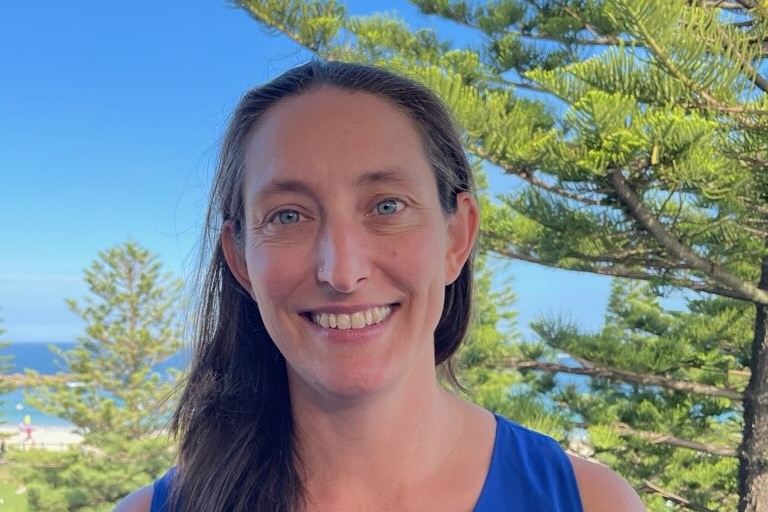
Jaz Lawes says a “one size fits all” approach to water safety is inadequate in a multicultural society like Australia. (Supplied)
“Summer is our highest risk period for drownings, particularly on the coast,” said Surf Life Saving Australia’s head of research, Jaz Lawes.
“It’s when people are out in the sun, on the beach … and that’s a wonderful thing. We don’t want to stop that.
“We want to promote it — and the best way to do that is to make sure that people are recreating safely and they know what the risks might be.”
Surf Life Saving Australia’s Beach Passport safety course
This year’s National Drowning Report identified 357 drowning deaths between July 2024 and June 2025 — the highest number since records began three decades ago.
People born overseas accounted for one third of all drowning deaths.
Older people were also especially vulnerable, with adults aged over 65 accounting for 33 per cent of deaths by drowning.
Dr Lawes said educating multicultural communities about swim safety was, almost by definition, a complex task.
Australia was home to many languages and cultures — each requiring a “nuanced approach” — so a “one size fits all” method did not work, she said.
Swim Brothers is a Sydney-based initiative aimed at equipping multicultural communities with water safety knowledge.
Its co-founder Feroz Sattar told ABC Radio National that many migrants and visitors to Australia opted for quieter beaches, where often there were no lifesaving flags.
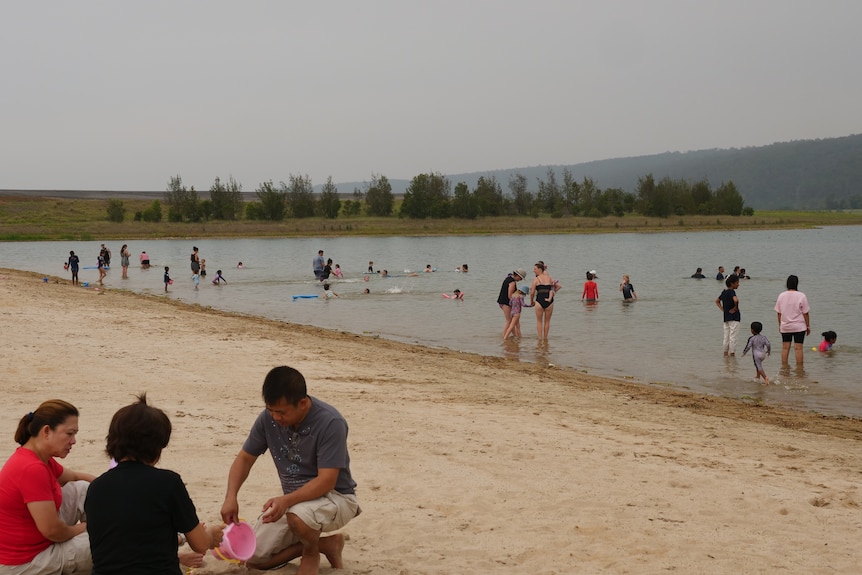
Western Sydney residents swim at the Penrith beach dubbed “Pondi”. (ABC Radio Sydney: Declan Bowring)
“The messaging around swimming between the flags is absolutely critical and essential, but it needs to go a step further in terms of if people are choosing to swim at other locations,” he said.
“What are the things that you really need to look out for to ensure that yourself and your family and communities are safe while doing so?”
Incorporating swim safety as part of arrival into Australia
Every year, thousands of migrants sit the International English Language Testing System (IELTS) exam as part of applications for their visas, university or employment in Australia.
A new study from Monash researchers in collaboration with Surf Life Saving Australia and the UNSW Beach Safety Research Group found that an IELTS-style reading exercise teaching essential beach safety could rapidly lift people’s knowledge, including their ability to identify rip currents.
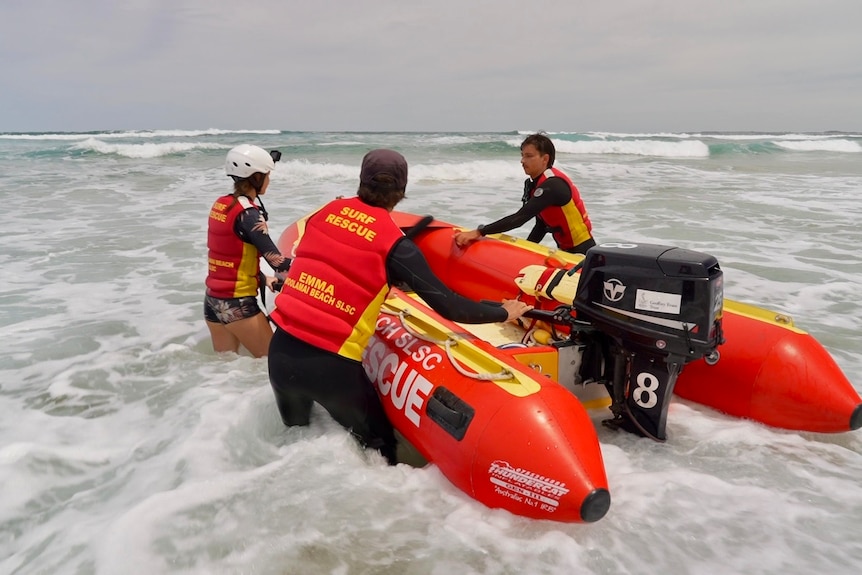
The 2025 National Drowning Report identified 357 drowning deaths across Australia. (ABC News: Patrick Rocca)
“Traditional water safety programs may not reach those who are uninterested, overconfident or simply unaware of the risks,” said Dr Shibata, who co-authored the study.
The exercise provided a “two birds with one stone” benefit for migrants, he said.
“By embedding safety education into something migrants prioritise – English exams – we can deliver free, accessible, life-saving knowledge to ultimately prevent drowning.”
Janice Ford collaborated with the researchers, bringing her experience as a retired English language teacher and previous owner of a swim school in the Sutherland Shire.
Speaking to the ABC, she suggested Australia could integrate swim safety into videos that international arrivals are required to watch upon arrival in the country.
“Every time I fly back into Australia I think, ‘Why don’t we have a little lifesaving video?'” she said.
“It doesn’t matter if someone sees it a thousand times. If there’s one person who sees it for the first time and gets something out of it — that’s worth it.”
Melbourne swim teacher Alida Sabilla said many families from overseas, especially from war-torn countries, had not had the opportunity to learn swim skills.
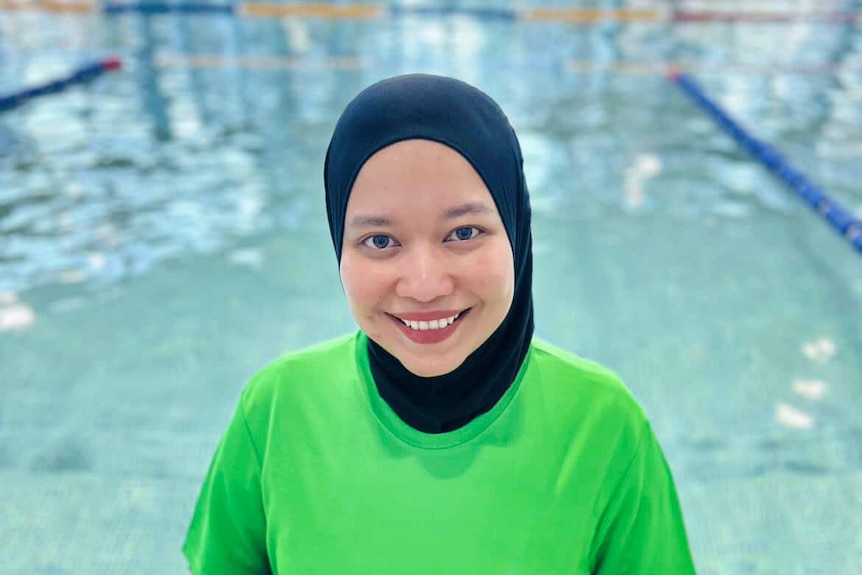
Alida Sabilla hopes more Australians from multicultural backgrounds will become involved in swim teaching and lifesaving. (Supplied)
Unsurprisingly, her top advice for multicultural families was for children and adults to attend swimming lessons so that they had the basic skills of floating, gliding and treading water.
“It’s important to understand how to ask for help, know how to call out [in] an emergency, and have a buoyancy aid at hand for rescue if needed,” she said.
What else can be done?
Experts and practitioners emphasise that all Australians play a part in keeping others safe.
“It’s something that we collectively have to do, to make people aware. People you know who perhaps haven’t swum here, even if you just know them socially,” Ms Ford said.
“It’s like workplace safety — something we’re kind of all responsible for.”
Dr Lawes from Surf Life Saving Australia said government also had a role to play, particularly by helping local organisations and multicultural groups to “promote water safety champions within their community”.
Free swimming lessons aim to reduce drownings in multicultural communities
Earlier this year, the federal government announced a $5 million Multicultural Communities Swimming and Water Safety Program to provide grants of $50,000 to organisations around the country.
“I’ve spoken with many families who have moved to Australia from countries where swimming isn’t part of the culture,” said Sally Sitou, the MP for Reid in Sydney’s west.
“They worry about their children’s safety around our beaches, pools, and waterways.”
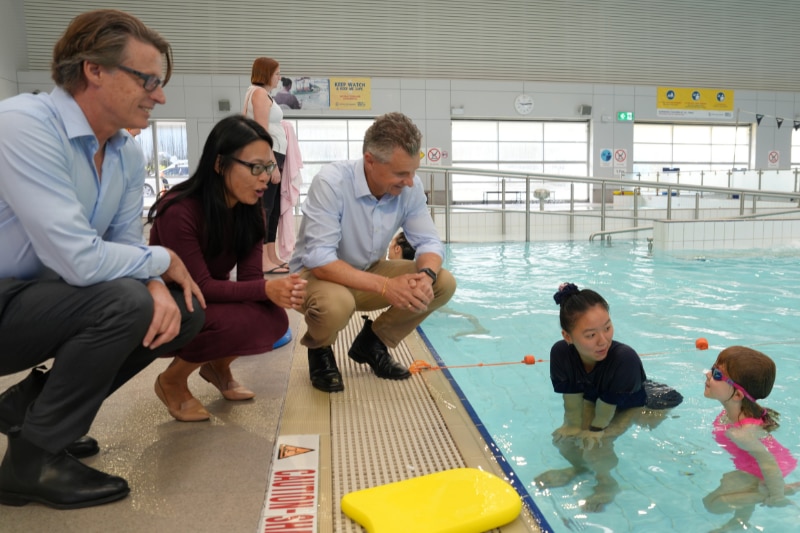
Sally Sitou (second from left) says parents from multicultural communities worry about the safety of their children in the water. (Supplied)
Minister for Sport Anika Wells said in August that the federal government had provided more than $34 million over two years as part of a “suite of safety measures to raise awareness for water safety and drowning prevention”.
Ms Sabilla, the swim teacher, said her industry needed to attract more teachers and lifeguards from culturally and linguistically diverse backgrounds.
“Not only will the language barrier be lessened but also [for] cultural safety. Cultural safety builds trust and is key for learning,” she said.
“Anyone who feels safe and a sense of belonging will learn better. The more diverse communities feel safe as who they are, the less fear of water we have as a nation.”