
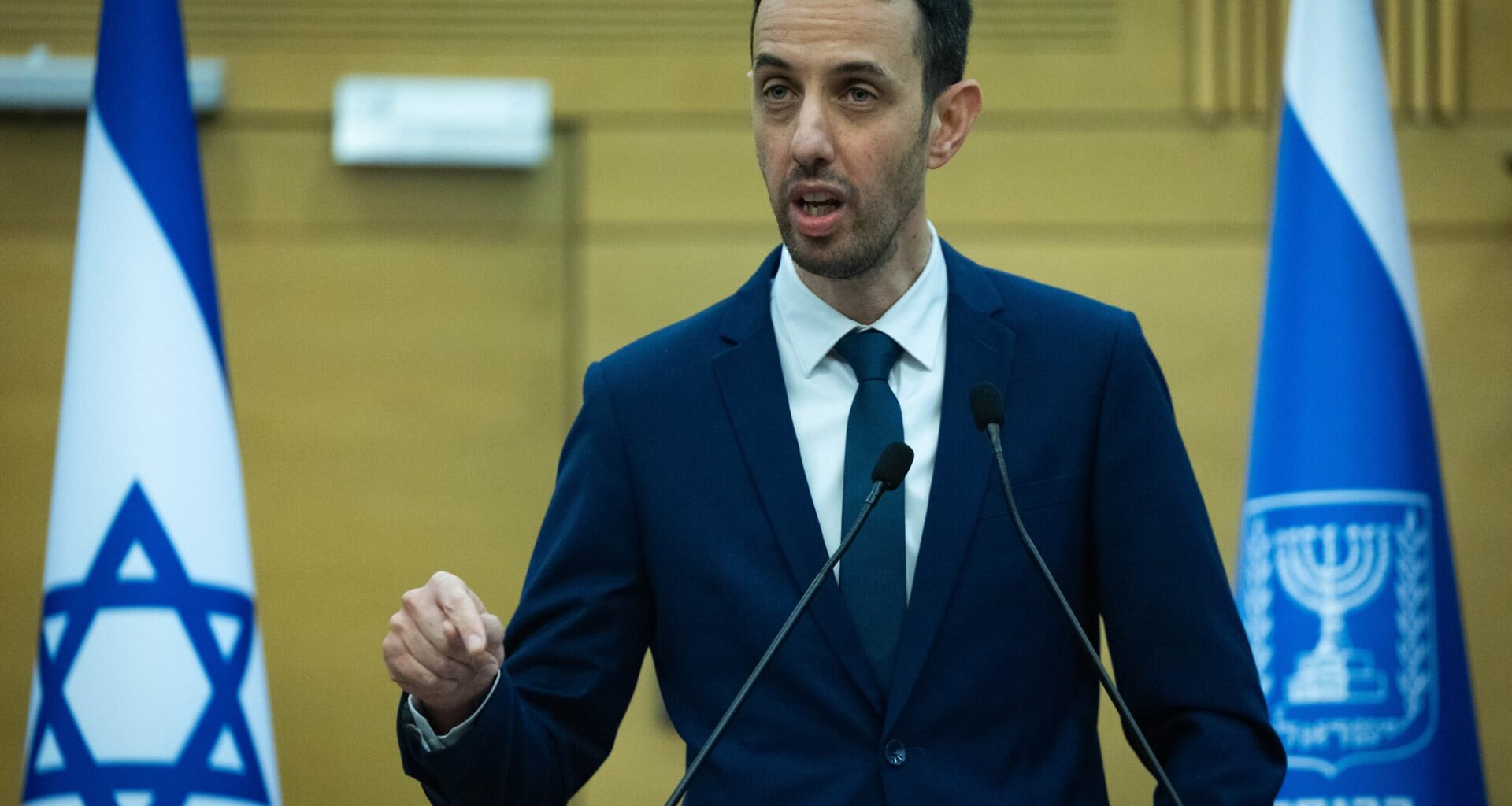
Likud lawmaker Ariel Kallner, in a press conference in the Knesset on Sunday, presented the main principles of his outline for a proposed “national state investigation committee” into the failures surrounding Hamas’s onslaught on October 7, 2023, in place of an independent state commission of inquiry, which the government opposes, but which polls consistently show is backed by most of the public.
Opposition leaders dismissed it as an effort by the coalition to cover up its failures by appointing its own investigators and setting their mandate.
The plan, an earlier version of which was floated by Kallner earlier this year, calls for a majority of 80 out of 120 MKs to appoint a six-member committee and its chairman. If there were no agreement after two weeks, both the opposition and coalition would be allowed to select three committee members each, who would be joined by four supervisory members representing bereaved families.
The proposal states that if either the coalition or opposition does not cooperate in the process or cannot settle on a candidate, the Knesset speaker will choose instead, giving the coalition effective control, in the event of an expected opposition boycott.
Any two members of the committee would be empowered to summon any person or investigate any entity, and all discussions would be broadcast live.
Get The Times of Israel’s Daily Edition
by email and never miss our top stories
By signing up, you agree to the terms
In a booklet explaining his proposal, Kallner wrote that the proposal is intended to provide the probe with broad public approval, arguing that a state commission of inquiry, whose members would be chosen by Supreme Court President Isaac Amit, would not enjoy public support.
“Instead of appointing a committee by one controversial individual, who heads a judicial system that is at an unprecedented low in terms of public trust, the establishment of a committee would be done in an equitable manner by those elected by the people. This would give the committee and its conclusions the broad public trust it needs,” he argued.
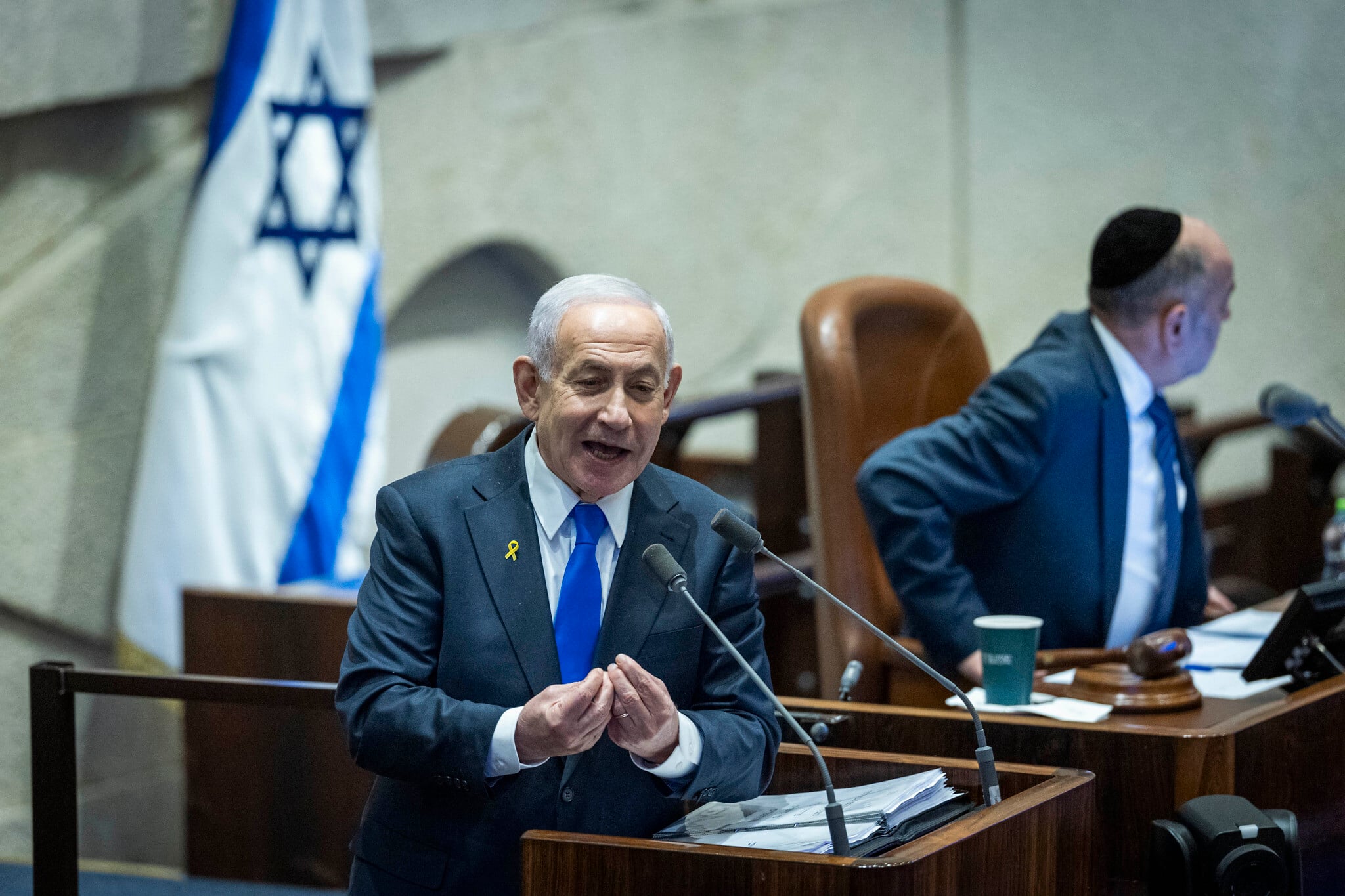
Prime Minister Benjamin Netanyahu speaks at a 40-signatures debate, at the plenum hall of the Knesset, December 8, 2025. (Chaim Goldberg/Flash90)
The proposed bill is reportedly backed by Prime Minister Benjamin Netanyahu — who has argued strongly against a state commission of inquiry — and was formulated with the input of Justice Minister Yariv Levin. The bill has not yet been approved by the Ministerial Committee for Legislation, but will reportedly be on its agenda in the coming weeks.
Netanyahu and his supporters have long rejected a state commission of inquiry, the country’s highest investigative authority, because its make-up would be determined by the judiciary, which his government does not trust and seeks to weaken through a judicial overhaul. However, as recently as three years ago, Netanyahu backed a state commission of inquiry into the conduct of the previous government.
‘A cover-up committee’
The opposition will not play ball with any attempt to sidestep the establishment of a state commission of inquiry, Opposition Leader Yair Lapid declared following Kallner’s press conference, declaring that “the opposition will not cooperate with the coalition’s proposal to establish a cover-up committee for October 7.”
Kallner’s bill also drew condemnations from Avidgor Liberman’s hawkish Yisrael Beytenu party, which said it would “not allow the October 7 prime minister to establish a whitewashing committee,” and claimed that Liberman has “conclusive evidence that Netanyahu was warned about the attack” that he will only present to a state commission of inquiry.
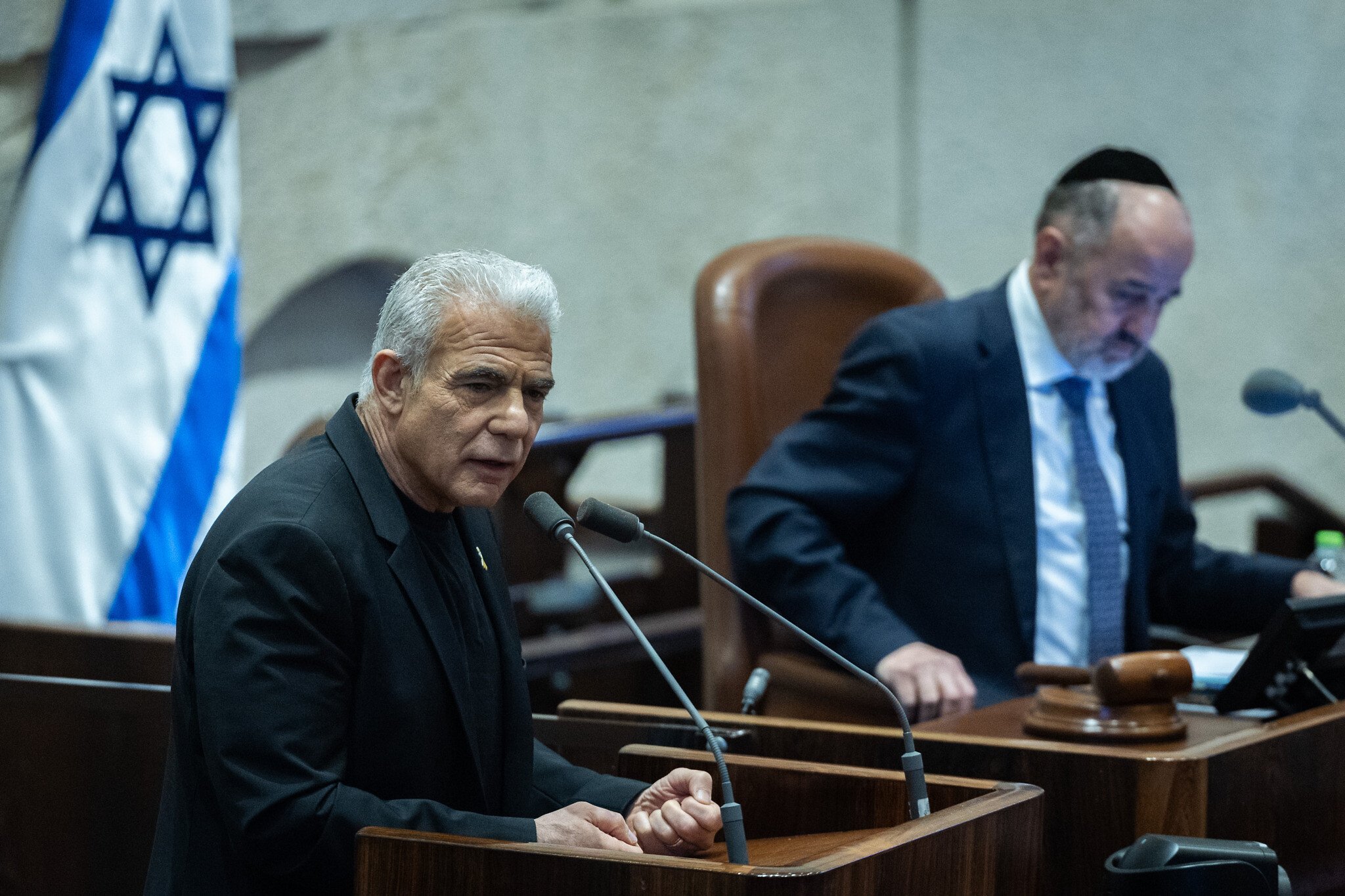
MK Yair Lapid attends a plenum session at the assembly hall of the Knesset, the Israeli parliament in Jerusalem, November 26, 2025. (Yonatan Sindel/Flash90)
The Democrats MK Gilad Kariv argued that Kallner’s proposal was a “spit in the face” of the bereaved families and would be a “political circus,” while former prime minister Naftali Bennett described it as “a knife in the back of the bereaved families and the entire people of Israel.”
Bennett argued that the bill boils down to one thing — “those being investigated appoint the investigators” — promising that “the leadership will not escape its responsibility for over a decade of lost deterrence, the transfer of cash suitcases to Hamas, and the building of terror monsters on our borders.”
He said things will be different after elections, assuming he wins: “In the first meeting of our government, we will cancel this political committee and establish a state investigative committee according to the law.”
Multiple routes to bypass a state commission
Kallner’s proposal is not the only one being advanced by the coalition. Last month, the government voted to establish its own probe into the failures surrounding the Hamas invasion and massacre.
Despite being touted as an “independent” investigation, the government commission’s mandate will be determined by cabinet ministers, and the government will strive for its makeup to receive “as broad public approval as possible,” the government decision noted.
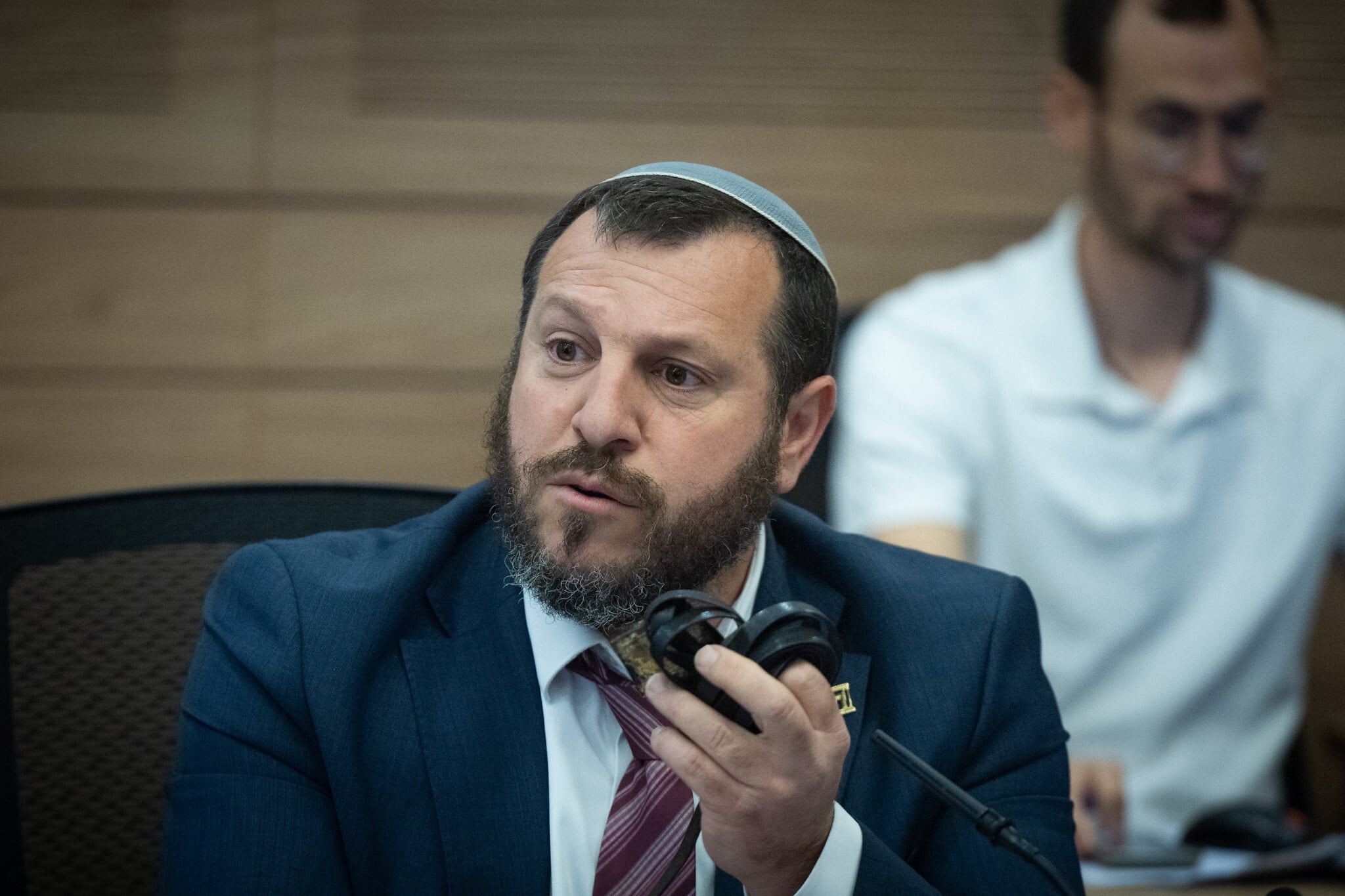
Minister of Heritage Amichai Eliyahu speaks during a meeting at the Knesset in Jerusalem, on July 7, 2025. (Yonatan Sindel/Flash90)
Heritage Minister Amichai Eliyahu, a member of the ministerial panel appointed to determine the mandate of the government’s controversial commission of inquiry, has said that the panel will probe “the judicial system” and others who “weakened our deterrence.”
Addressing lawmakers in the Knesset last week, Netanyahu asserted that “the establishment of the commission and its makeup will be done equally between the coalition and the opposition” and that “only someone who does not want to reveal the truth” would oppose it.
Critics have noted that both the coalition and the opposition include many officials who held top political and security positions in the years leading up to October 7, and who would therefore themselves be targets of the inquiry.
You appreciate our journalism

You clearly find our careful reporting valuable, in a time when facts are often distorted and news coverage often lacks context.
Your support is essential to continue our work. We want to continue delivering the professional journalism you value, even as the demands on our newsroom have grown dramatically since October 7.
So today, please consider joining our reader support group, The Times of Israel Community. For as little as $6 a month you’ll become our partners while enjoying The Times of Israel AD-FREE, as well as accessing exclusive content available only to Times of Israel Community members.
Thank you,
David Horovitz, Founding Editor of The Times of Israel