
Normal text sizeLarger text sizeVery large text size
When Stephanie Ward squealed with joy on the phone, her mother assumed it was because Pizza Hut had finally accepted her job application.
“She thought I was getting excited about that. When I got off the phone and said I apparently got a TER of 100, my mum very wisely said we needed to ring them back and check,” Ward said.
“But it wasn’t a hoax!”
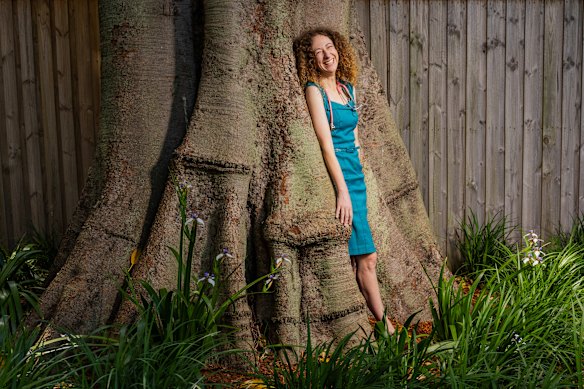
Dr Stephanie Ward received a perfect TER score of 100 for her HSC. She was in the graduating class of 1995 at Merewether High School.Credit: Sam Mooy
The Merewether High School graduate was one of 13 NSW students who topped the state and received a perfect Tertiary Entrance Rank of 100 in 1995.
But Ward didn’t always have a clear sense of where she was headed – and especially not when she was 17.
Nobody in her family had a background in the medical field, and she knew very little about what being a doctor actually entailed.
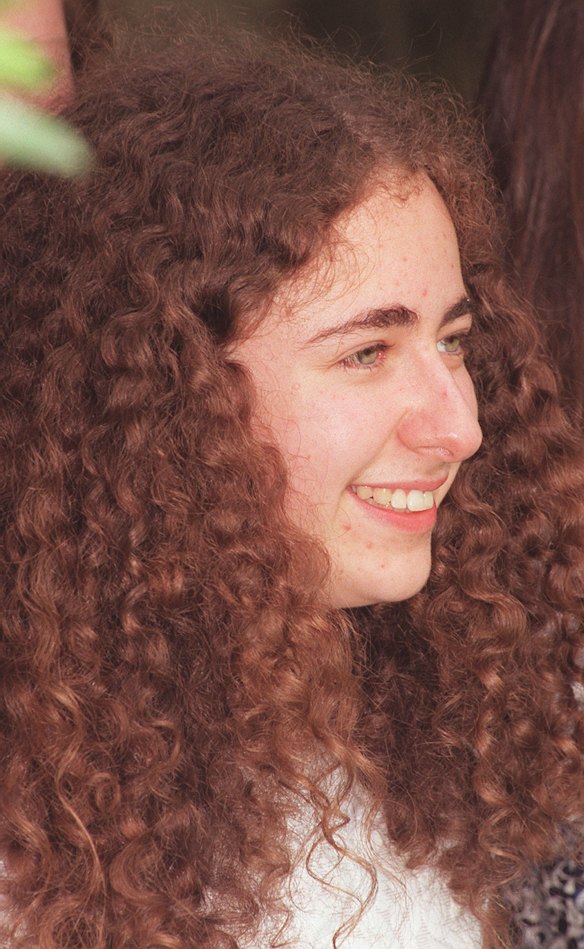
Stephanie Ward as an HSC student in 1995.Credit: Peter Rae
She studied medicine at the University of Newcastle, won a scholarship to study public health at Harvard, and recently completed her PhD at Monash University.
Ward featured as an expert geriatrician on the award-winning ABC documentary series Old People’s Home for 4 Year Olds.
She describes geriatrics as “work that has a purpose and helps people”, and “work that’s social in nature”.
“It’s a great privilege to work with older people, and it’s humbling,” she said. “I think you start to learn a lot about life by spending time with people who have lived for a long time.”
And she did get that job at Pizza Hut.
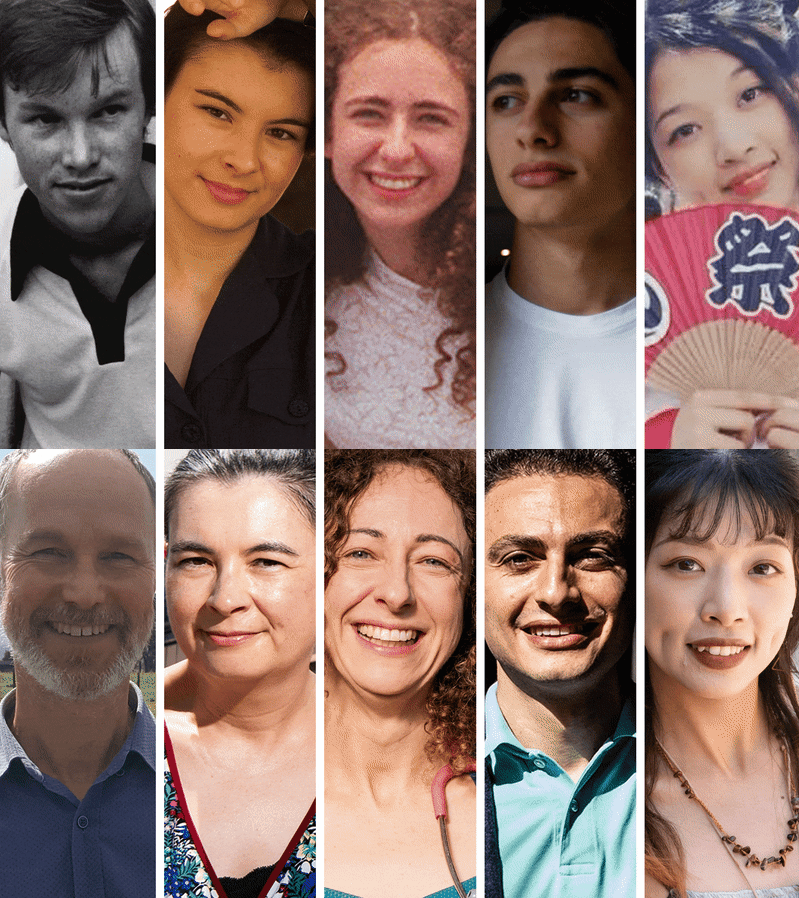
More than 74,000 students will receive their HSC results on Thursday. The Herald tracked down school-leavers from 10, 20, 30 and 40 years ago to see where they are now and what advice they have for students about to embark on their journey after high school.
Class of 1985: Four decades ago
When the Herald interviewed Paul Teal in 1985 after he topped the state in the HSC with a score of 496 out of 500, he had his eyes set on an engineering cadetship.
“You don’t decide on your interests – they decide on you,” is how the James Ruse graduate has summed up his life-long love for mathematics and engineering.
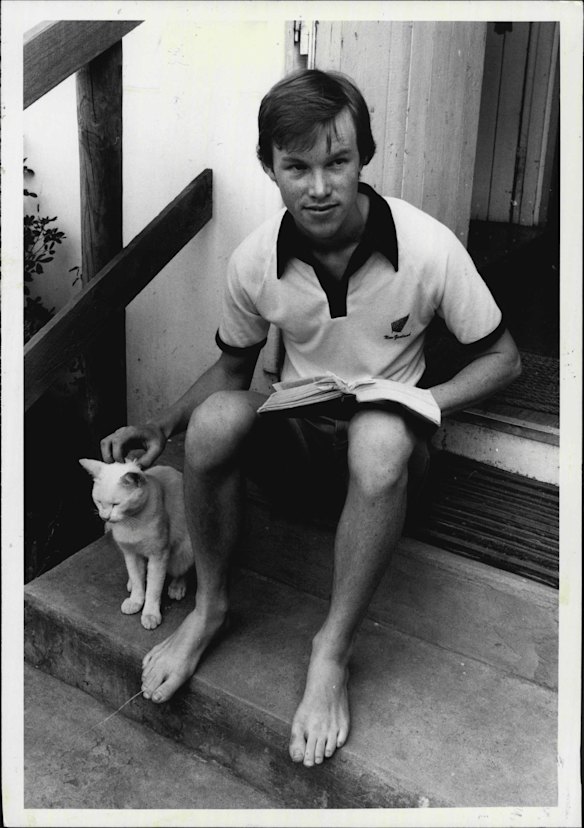
Paul Teal came equal first in the state for the 1985 HSC with a mark of 496/500. Credit: Ross Anthony Willis
Teal won the cadetship in his second year of studying electrical engineering at the University of Sydney, and has since worked at electrical and telecommunications companies in Australia and New Zealand.
But he always found the idea of teaching students compelling, and at one point seriously entertained the idea of doing a teaching diploma.
“As I’ve matured, I’ve become more aware of passing on value,” he said. “I had some very good teachers both at high school and as an undergraduate. I admired them and wanted to do the same.”
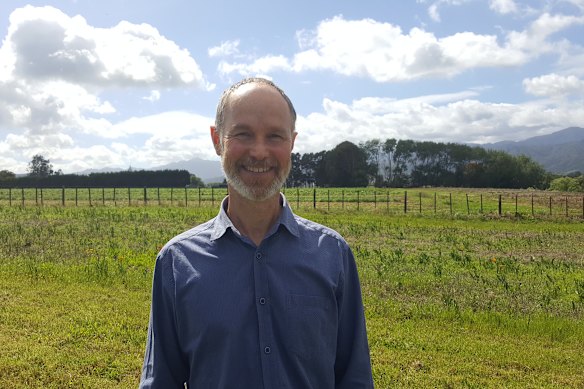
Paul Teal graduated from James Ruse in 1985, achieving the state’s highest score of 496 out of 500. Now, he is working on a team trialling a medical device for stroke diagnosis.
In 2001, Teal completed a PhD in engineering, and in 2006 pivoted into research and teaching. He has taught at the Victoria University of Wellington for almost 18 years.
While he still supervises research students occasionally, he now works as the chief data scientist on a team testing a medical device for stroke diagnosis. If the prototype is approved and hits the shelves one day, Teal hopes it will improve the lives of many, particularly those living in rural areas.
Class of 1995: Three decades ago
When Joel Gibson, the dux and school captain of Trinity Grammar, achieved perfect TER score of 100 in 1995, he knew what he wanted: to become a barrister.
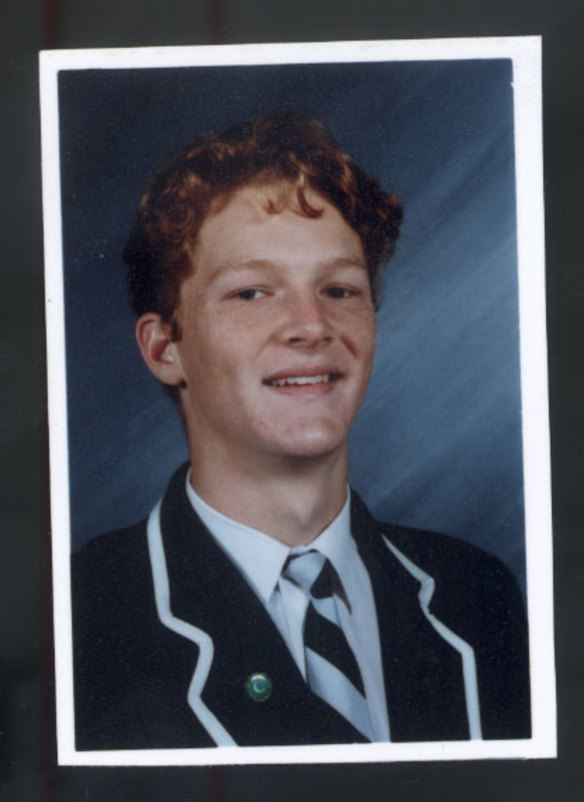
Joel Gibson attended Trinity Grammar, where he received a TER of 100 in the 1995 HSC.Credit: Fairfax
But a few years into a double arts and law degree at the University of Sydney, Gibson realised he preferred the creativity his arts degree afforded him. It spurred his passion for writing.
“The mark doesn’t necessarily set you out on a particular course. I was more passionate about my arts subjects, and ended up becoming a journalist at The Sydney Morning Herald for 10 years,” Gibson said.
Gibson admitted he was “pretty hopeless with money until the age of 30,” but noticed a dearth of accessible personal finance content for people like himself without backgrounds in finance.

Money expert Joel Gibson on the set of Nine’s breakfast show, Today, where he is a regular guest. Credit: Sitthixay Ditthavong
Since then, he has authored two books, and also makes regular appearances on Nine’s breakfast show, Today, as a money expert.
“Things have happened not by design, but quite by accident,” he said.
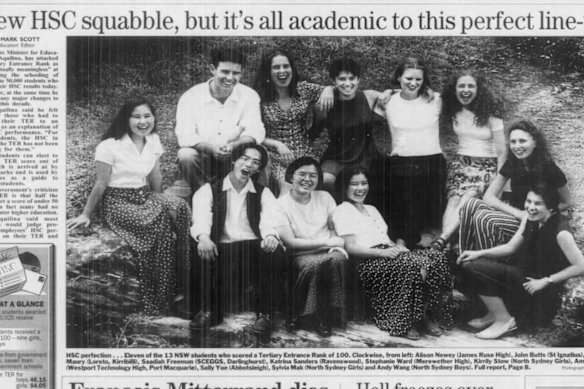
Students in the graduating class of 1995 who topped the state in the HSC.Credit: Sydney Morning Herald, photographed by Peter Rae
Amber Glynn was the only student from a comprehensive school to get a perfect 100 in the 1995 HSC, and thought the phone call informing her of the good news was a prank.
“It felt a bit surreal … I’m from Port Macquarie, and I knew I was competing with people from much bigger places like Sydney,” Glynn, who graduated from Westport Technology High School, said.
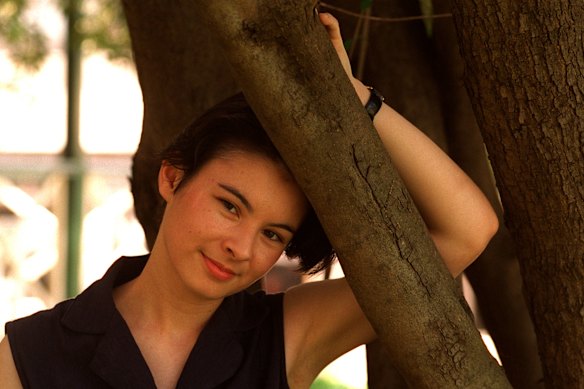
Amber Glynn graduated from Westport Technology High School in Port Macquarie, and was the only student from a comprehensive school to get a perfect TER score of 100 in 1995.Credit: Ben Rushton
Glynn studied pure mathematics at UNSW and also studied in London, which led to her first job as a web developer at a sports media start-up, where she was abruptly let go.
“They had a mass lay-off, and I’d only been there for about eight months when we all got made redundant. I was in pieces wondering where I was going to get another job,” she said.
“Things don’t always go the way you think they will. You just keep trying, and don’t despair.”
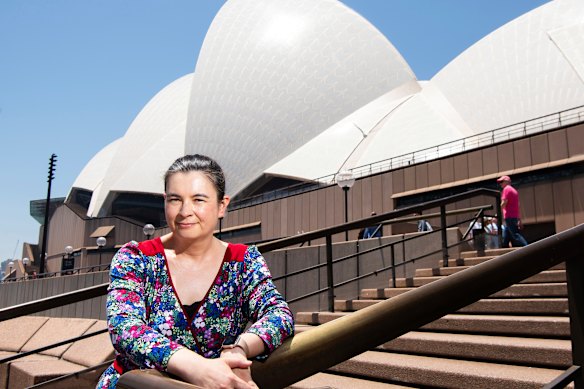
Amber Glynn is now a business analyst at the Sydney Opera House, which she describes as the “best place to work in the universe”.Credit: Steven Siewert
Now, on top of her day job as a business analyst at the Sydney Opera House, which she describes as being the “best place to work in the universe”, Glynn is a pianist and an artist who draws Australian wildlife.
“I never settled on just doing one thing in my career,” she said. “There’s a lot of value in having an interest that’s totally different from your day job. It reminds you that there’s more to do outside of just one specific field or industry.”
Class of 2005: Two decades ago
While working at NASA is a faraway dream for many, it crystallised into reality for former Scots College student Casey Handmer.
Handmer started at NASA in 2018 – the year of its 60th anniversary – and said working in his 1950s asbestos and linoleum office wasn’t quite as glamorous as the movies depicted.
“What an amazing place, what a privilege to work there,” he said. “The day-to-day was usually a pleasant grind with lots of interesting problems and colleagues.
“But what I really learnt to appreciate was the subtle art and constraints of organising large groups of people to work on somewhat nebulous and extremely ambitious projects. All the really interesting, challenging problems come down to co-ordinating very large teams of people.”
Handmer, now based in Los Angeles, said he was relieved he received a UAI of 99.70.
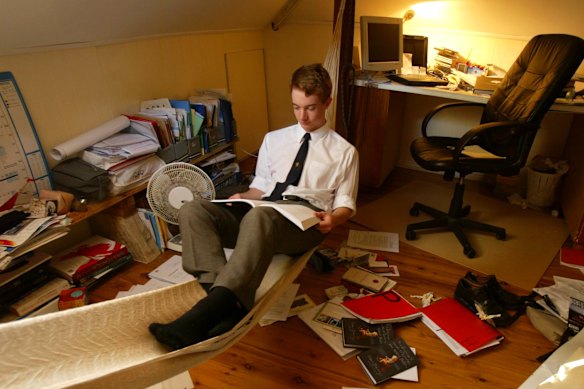
Casey Handmer in 2005. Handmer graduated from Scots College 20 years ago, and received a UAI of 99.70.Credit: Steven Siewert
“I called my nerd friend group and compared notes,” he said. “It was the end of a very long push and we were all relieved to have gotten scores high enough for our preferred courses at university. A warm day, and perhaps a sense that the HSC process could no longer hurt us!”
The HSC taught Handmer to take a more strategic approach to study and work.
“I learnt to take a professional attitude to learning and testing, which is to say, practise not until you get it right, but until you can’t get it wrong.”
He studied advanced mathematics at the University of Sydney, and completed his PhD in physics at the California Institute of Technology, where he worked as an academic upon graduating.
Then he decided to pivot his career to be more hands-on and “devote the following decade to building real stuff in the real world”.
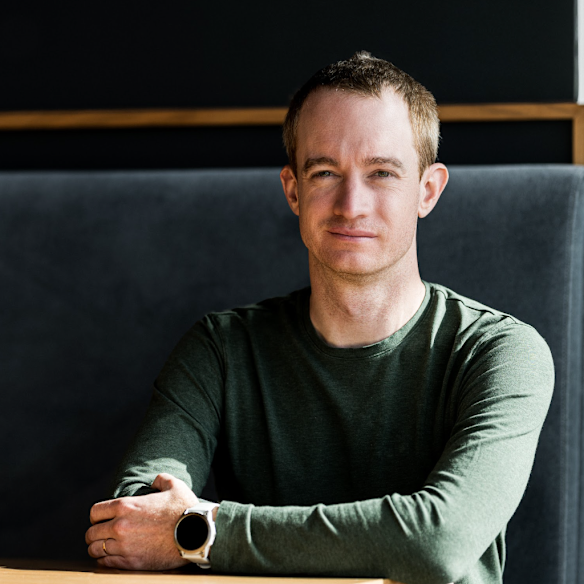
Casey Handmer studied his PhD at Caltech. He later worked at Hyperloop One and NASA in the US, and is the founder of Terraform Industries.
Handmer had stints at the NASA Frontier Development lab, Hyperloop One, and, since leaving NASA’s Jet Propulsion Laboratory in 2021, founded Terraform Industries, which is developing a machine that aims to make synthetic natural gas from sunlight and air.
As for why he has dedicated his entire career to physics, he describes it as “the most powerful set of cognitive tools to study and understand the universe, to build an accurate predictive world model, and to develop the technology that supports our entire civilisation”.
Handmer’s advice to school-leavers is this: “Form an opinion as to what you would like to devote your life’s creation towards, and pursue it with extreme determination – the sweat is essential as it feeds your motivation.”
Twenty years after completing his HSC, the clearest memories Christopher Beshara has of year 12 aren’t of receiving a perfect UAI of 100 on results day, or anything else that was particularly monumental. They are instead of the ordinary days, when he spent hours at libraries studying and poring over books.
“They’re just great places to study and procrastinate when you’re in between periods of studying. And you’ve always got friends in the same boat who you can commiserate with,” the Marcellin College graduate said.
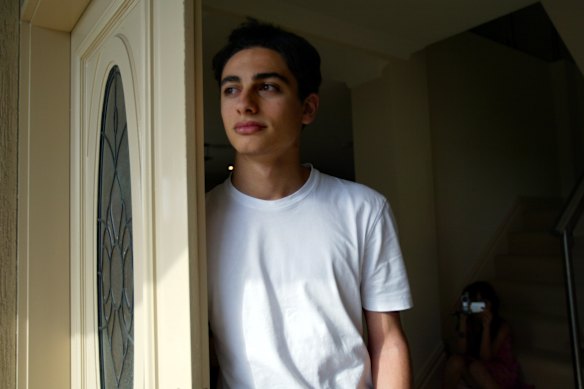
Christopher Beshara attended Marcellin College in Randwick and received a perfect UAI score of 100 in 2005.Credit: Lisa Wiltse
Despite these routines and incremental study efforts, Beshara compared the HSC results process to the hidden internal workings of a “black box”.
“You know what you can control in terms of how hard you work and the effort you put in, but you don’t really have a good sense of how well you did until the day arrives,” he said.
His affinity for humanities, languages and debating propelled him into studying law at the University of Sydney. He continued his studies at New York University, and sat the bar exam, which he said was a “rite of passage” for Australian lawyers studying in the US.
“That was an intense, challenging, but interesting period. Living in New York – a very dynamic city – was a real treat.”
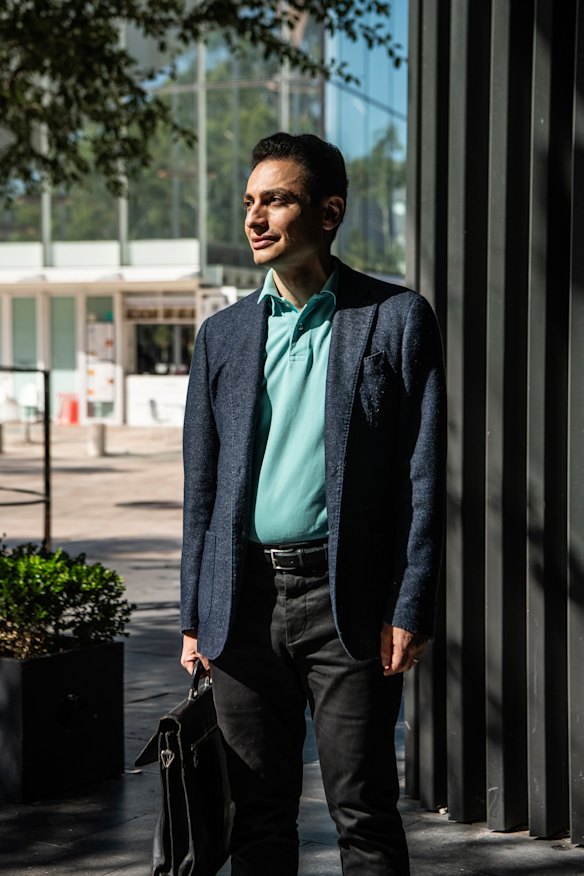
Christopher Beshara passed the bar exam in New York, where he practised for six years before returning to Sydney. He now works as a barrister.Credit: Steven Siewert
He worked at a law firm in New York for six years before returning to Sydney in 2021, where he now works as a barrister.
Beshara likens his work as a lawyer to problem-solving, which he finds incredibly “intellectually satisfying”.
“It’s someone coming to you with a problem that initially seems complex and multifaceted, and you have the opportunity to help them chart a course to the right solution.”
Class of 2015: A decade ago
When Yanting Zhan moved from Shanghai to Sydney in year 10, she remembers experiencing a culture shock: she could choose any subjects she wanted for the HSC.
Zhan had spent her life in China until that point, where studying science and mathematics courses for the university entrance exam – called the gaokao – was the norm.

Yanting Zhan graduated from Burwood Girls in 2015, and topped the state in Japanese beginners. She received an ATAR of 98.65.
“The most surprising thing for me was that maths is optional here – in China we didn’t have many choices,” she said. “You had to do maths, chemistry and physics even if you weren’t good at it.”
She had just two years to learn English and quickly adjust to the Australian education system. The Burwood Girls graduate topped the state in Japanese beginners and achieved an ATAR of 98.65.
On top of learning English and Japanese at school, Zhan spoke Mandarin and Shanghainese at home, with her mind a revolving door of languages ever since.
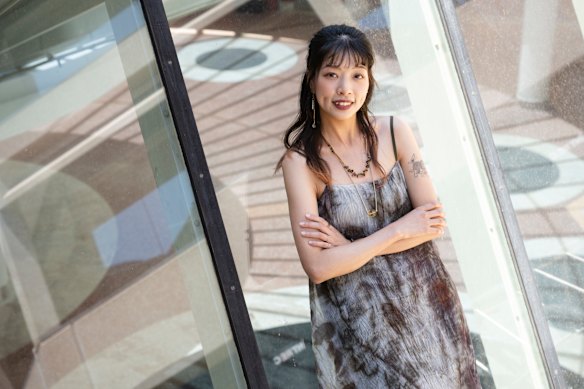
Yanting Zhan moved from Shanghai to Sydney more than 10 years ago and now works in urban research and communications in Sydney. Credit: Janie Barrett
Zhan majored in spatial design and ceramics at UNSW, and studied urban design for her master’s degree at the University of Sydney.
Now she works in urban research and communications, and says her language skills are useful when interviewing the community, helping her connect with people and relay their lived experiences.
“Communication in people’s own languages becomes very important – once you start to speak their own language, people who aren’t so confident in English become very open and keen to share.”
Sophie Alder said the meticulous and lengthy process of making a dress from scratch for her HSC textiles and design major work was a true labour of love.
Alder learnt different sewing techniques, traipsed inside fabric-printing stores in Surry Hills, and refined ideas countless times all to ensure her design, inspired by the Louvre Museum in Paris, would spring off the page.
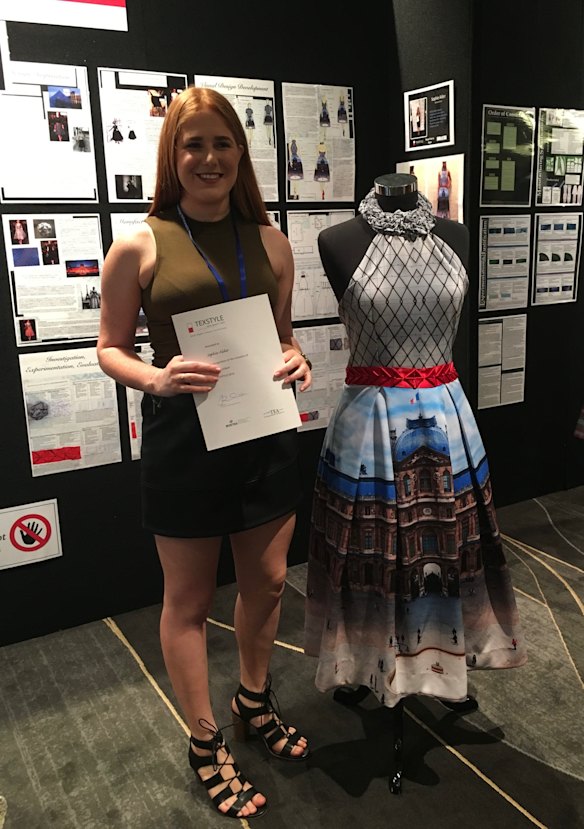
Sophie Alder graduated from Wenona School in 2015, and topped the state in textiles and design. She is pictured above, with her major work that was inspired by the Louvre Museum.
The Wenona School graduate was delighted when, while on holiday with friends, she received the news she had topped the state in the subject, and found it difficult keeping the good news to herself. Alder scored an ATAR of 99.35.
“I remember I got my results on an online portal, opening it up with my parents, having a look and just being very, very excited and just ecstatic.”
Alder studied law and economics at ANU in Canberra, and is now based in Sydney, where she works as a lawyer at Clifford Chance.
Alder found a way to weave in her steadfast love for fashion, which she describes as her “creative outlet”, with her work in corporate law.
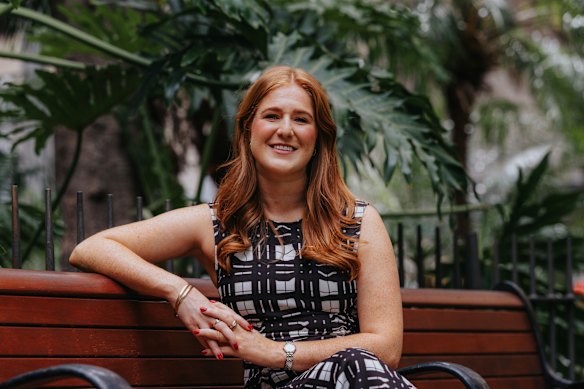
In her spare time, Sophie Alder researches and writes for a fashion and luxury goods newsletter covering major events in the industry from a legal perspective.Credit: James Brickwood
She researches for a retail and fashion sector newsletter sent out internally at her company that provides a legal perspective on everything happening in the industry, from deals, mergers and acquisitions, major shakers and movers, to disputes and intellectual property cases.
“[The newsletter] helps me tie my creative interests in with the work that I do. What was an academic interest for me has now turned into more of a side passion and a creative outlet,” Alder said.
“I saw it [fashion] as something that was inspiring – I knew it wasn’t going to be my career, but it was something I could throw myself into and have as a focus on things that weren’t writing words.”
Start the day with a summary of the day’s most important and interesting stories, analysis and insights. Sign up for our Morning Edition newsletter.