
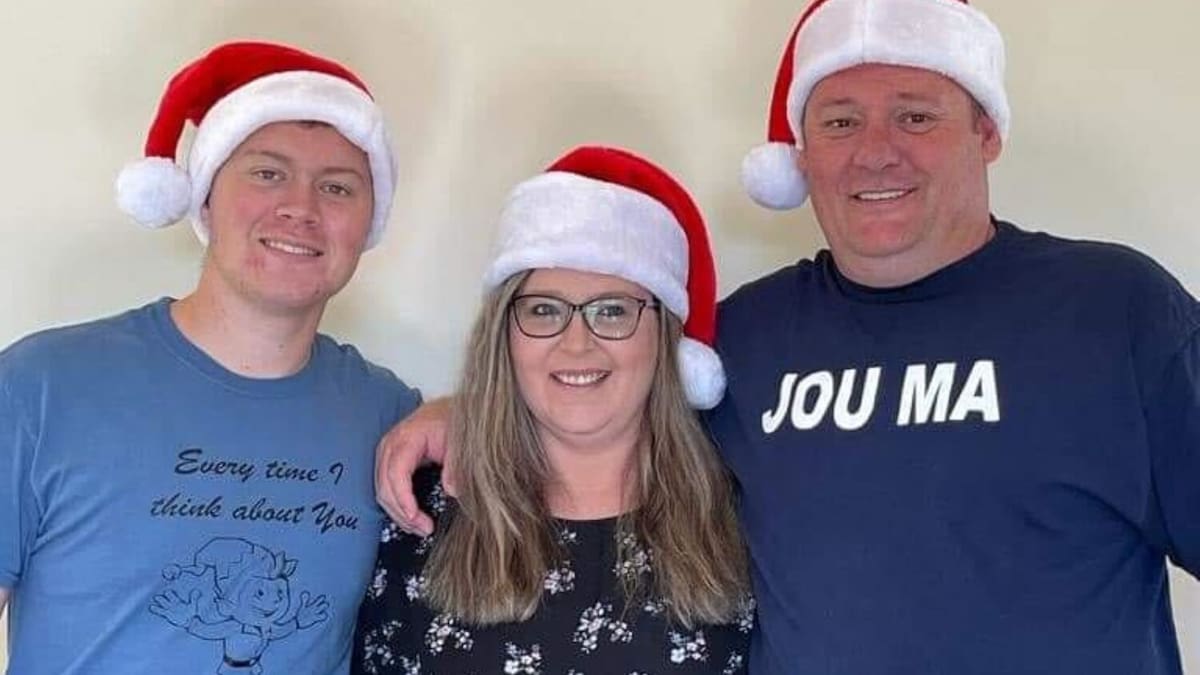
Coetzee, a Year 13 student at Tauranga Boys’ College, was driving to work experience in Kawerau on State Highway 2 at Pikowai when he collided head-on with a truck on June 15, 2022.
Coroner Ian Telford’s findings, released today, found Coetzee’s fatigue was the primary contributory factor in the accident.
He found Coetzee died on impact from multiple blunt traumatic injuries.
Hanekom told the Bay of Plenty Times that this time of year was “very difficult”.
“His birthday’s on the 26th of December, so we normally … go away. We don’t do Christmas anymore.
“Not that we don’t believe, it’s just that it’s hard. Everyone has got their children with them, giving them hugs and things like that.
“We’ve gone through all these phases – sad, cross, and that. I’m now at the stage where I’m appreciating the fact that I had the honour to have him in my life.
“We’ll live with this forever.”
Tauranga teenager Keanan Coetzee died in a car crash on June 15, 2022. His parents Werner and Vanessa Hanekom regularly visit the accident site on SH2 at Pikowai.
Hanekom said his son drove past a rest spot and did not stop.
“As an adult, you’ll know you’re tired, and it’s more important to be alert than to get to your job.
“As a child, it was his first work experience, and he just wanted to impress everyone.”
He and Vanessa changed the name of their personalised printing business to KC Printing in their son’s memory and rebranded its T-shirts as Keanan Coetzee Apparel.
He said clients who had dealt with Coetzee, even just once, praised his “amazing” manners.
“Even till today, people still talk about him.”
Keanan Coetzee’s nickname was Boerseun, Afrikaans for “Farm Boy”.
Hanekom said “many cars” in Tauranga had a “Boerseun” sticker on them, which was Coetzee’s nickname. It meant “farm boy” in Afrikaans, and denoted someone of character with “old school” manners and respect.
“It’s kids – they want to honour him.”
He said Keanan was a “true boerseun”.
Teen ‘likely’ fell asleep at the wheel
In his findings, Telford said Coetzee, who held a full licence, left home at 6.39am on the day of the crash.
The collision happened at 7.13am.
A toxicology analysis found no alcohol or drugs in Coetzee’s blood.
The Serious Crash Unit found several factors indicating that fatigue was the primary cause.
Witness evidence showed Coetzee had gone to bed about midnight and woke at 6am.
His sleep pattern had recently changed because he had started work experience.
He continued to go to bed at his usual time but woke between one and three hours earlier, and had told his family he was feeling sleepy as a result.
He would also nap during the day.
Video footage showed evidence of “fatigue-related behaviour”, with Coetzee “lane weaving” before the crash.
A witness following Coetzee’s car had been concerned about his driving – “primarily drifting” – and started filming and hooting.
Coetzee’s car swung “wide to the left” on the corner immediately before the crash.
It then recovered but started “drifting into the opposing lane”, despite the oncoming vehicle.
Coetzee’s rear brake light illuminated a “split second before impact”, indicating he may have woken at that point.
Other “fatigue-related” factors included the time of the crash, it being head-on, and involving one occupant.
Tauranga teenager Keanan Coetzee died on State Highway 2 at Pikowai, while on his way to work experience in Kawerau.
The coroner found Coetzee’s death was “likely” caused by him falling asleep at the wheel.
He considered it likely that Coetzee had “cumulative sleep deprivation”, being “routinely more fatigued than usual” with “significantly restricted opportunity for rest” before the crash.
Telford had recently commissioned a report on the effects of sleep deprivation on driving.
“Driving while fatigued affects lane keeping, speed control, reaction times, and hazard perception – impairments comparable to, or greater than, alcohol intoxication.”
Studies confirmed that driving after five or fewer hours’ sleep roughly doubled the risk of a crash.
“Chronic sleep restriction amplifies these effects and increases the risk of microsleeps.
“Tragically, this pattern mirrors what happened to Keanan, underscoring the critical importance of never driving while fatigued.”
Telford referred drivers to the New Zealand Transport Agency webpage on driver fatigue.
“If you feel tired, don’t drive. Don’t risk your life or the lives of others.”
Megan Wilson is a health and general news reporter for the Bay of Plenty Times and the Rotorua Daily Post. She has been a journalist since 2021.