
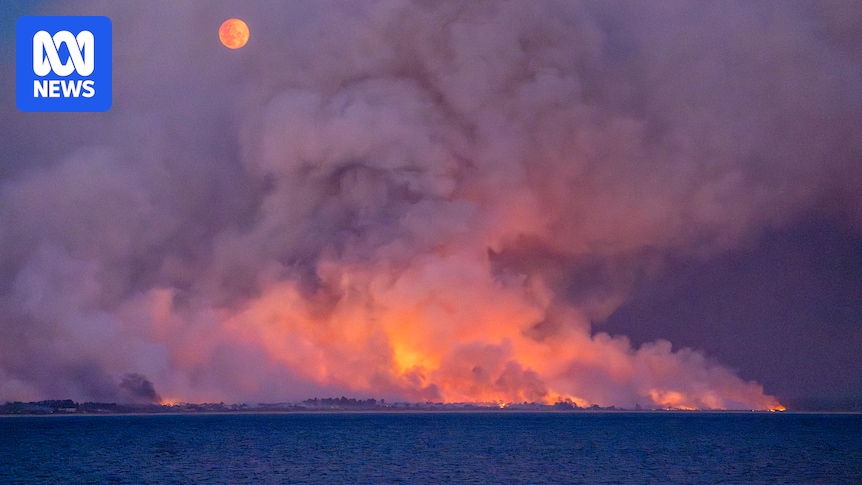
A bushfire in Tasmania that destroyed 19 homes was caused by a registered burn conducted about a week prior, which was not extinguished properly, authorities have confirmed.
“Unfortunately, the landowner chose to cover the fire with sand, which has contained the heat in the ground and the uplift in wind has caused embers to come out of that,” Tasmania Fire Service (TFS) deputy chief officer Matt Lowe said today.
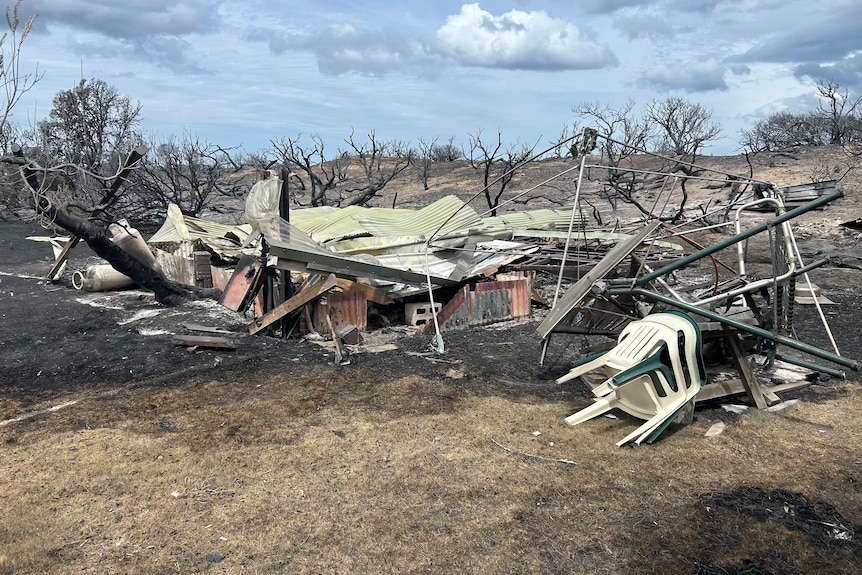
Lisa and Mick Verrier’s shack was destroyed in the bushfire. (Supplied: Lisa and Mick Verrier)
The bushfire was first reported on December 4, with many residents evacuated for days before they were allowed to return.
A total of 33 houses were damaged, including 19 destroyed.
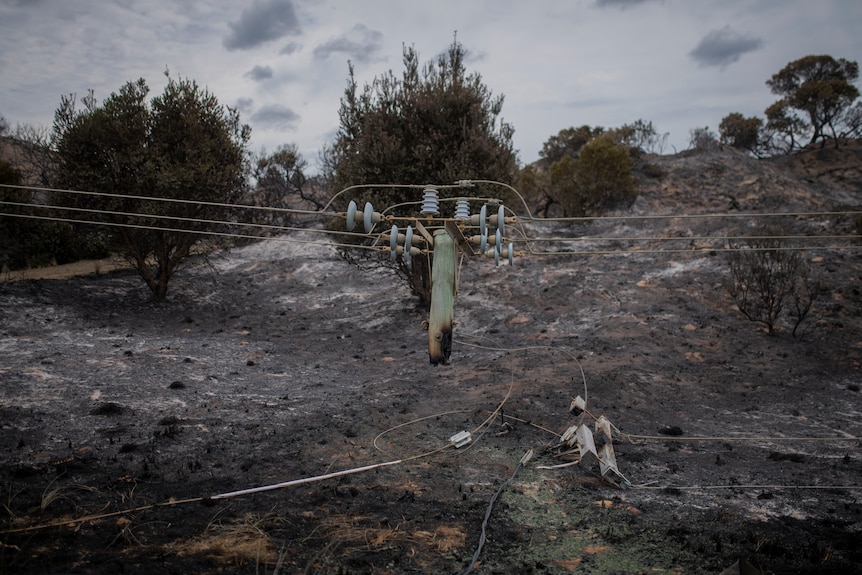
Powerline infrastructure was also destroyed in the blaze. (ABC News: Morgan Timms)
Authorities said 122 other assets, including sheds, caravans, water tanks, garages and electrical poles, were damaged.
Mr Lowe said anyone conducting a burn or using a campfire had to put it out properly.
“You never cover it with sand. You need to cool it with water, rake the coals out and monitor it until it’s fully extinguished,” he said.
The Tasmania Fire Service also announced the state’s fire permit period will start on Tuesday December 16, with those conducting burns required to apply for a free permit online or by phone on 1800 000 699.
Applicants are then contacted by a permit officer with advice on how to conduct a safe burn.
Barbecues, campfires and incinerators do not need a permit, provided users comply with conditions for their use.
Last year’s permit period started around November.
Could an active permit period have saved 19 homes?
Deputy Chief Officer Lowe said authorities had met weekly to discuss when to begin the fire permit period, taking into account the dryness of vegetation and available firefighting resources.
Mr Lowe said it was difficult to say whether having an earlier active fire permit period would have resulted in the registered burn that sparked the Dolphin Sands bushfire being disallowed.
Only road to bushfire-ravaged town reopens
He said fires are approved based on aspects such as the weather conditions of the day and what conditions are written into the fire permit.
“So without having all that detail, we’re just assuming.”
Tasmania Parks and Wildlife Service has also announced restrictions on campfires, which will be banned in some areas from December 20.
The ban will cover national parks and reserves in the Dorset, Break O’Day and Glamorgan-Spring Bay councils as well as Flinders Island, Maria Island and other conservation areas.
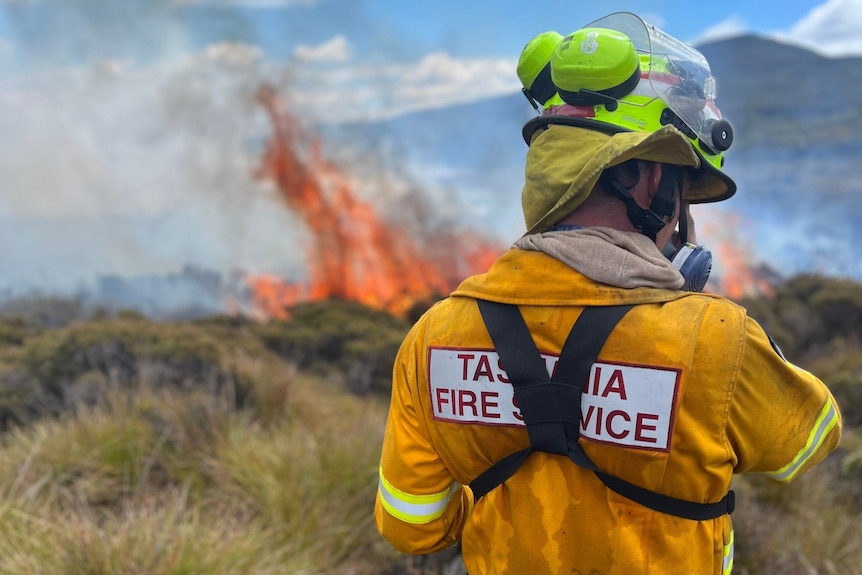
Tasmania’s fire permit period will start on Tuesday December 16. (Tasmania Fire Service)
State Fire Manager Katy Edwards said it was due to a warm and dry January forecast.
“Even a small, unattended campfire can trigger a major bushfire when conditions are right. Prevention is our strongest tool,” she said.
Aerial firefighting contracts are also coming into effect for the bushfire season, with 15 aircraft to arrive in Tasmania from Tuesday.
The fleet will include eight helicopters and seven planes, which are a mix of fire bombers and logistical aircraft.
Changing climate
As the bushfire season rolls in, a fire expert has warned that changes to weather patterns are driving Tasmania’s fire danger.
The usual culprits of hot summer days and dry air blowing from mainland Australia have been displaced, according to the deputy director of the University of Tasmania Fire Centre, Grant Williamson, who spoke on ABC Radio.
No fire weather warning issued before Tasmanian fires
“We’ve had some dry days, but on the whole, it’s those really strong, sudden wind events we’ve seen,” Dr Williamson said.
“The westerlies, which often blow south of Tasmania around Antarctica, have really moved northward this season,” he said.
Dr Williamson said increasingly warm and dry summers in Tasmania showed the state’s climate was becoming increasingly similar to that of the mainland.
“Traditionally in Tasmania, we think of the peak of the fire danger season being late summer. We’re seeing it earlier and earlier.
“So we do have to start taking some lessons from the mainland and expecting the kind of conditions that are more traditional there,” Dr Williamson said.