
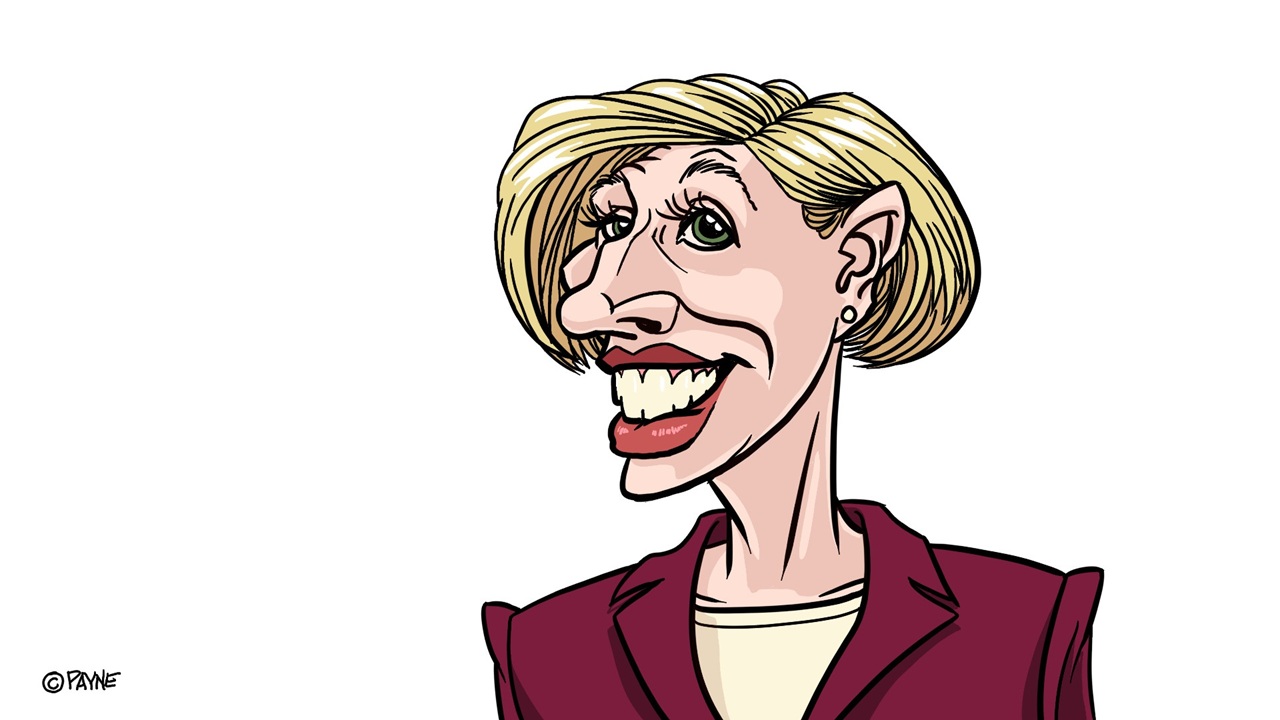
Reserve Bank (RBNZ) Governor Anna Breman says the current tightening in financial market conditions has gone “beyond” the RBNZ’s projection for interest rates.
In what is clearly a response to an increasing clamour for the RBNZ to clarify its position, Breman, in her first major monetary policy message since starting in the job on December 1, reiterated that the forward path for the Official Cash Rate (OCR) published in the November Monetary Policy Statement (MPS) indicates a slight probability of another rate cut in the near term.
“However, if economic conditions evolve as expected the OCR is likely to remain at its current level of 2.25% for some time,” she said.
“Financial market conditions have tightened since the November [26] decision, beyond what is implied by our central projection for the OCR,” Breman said.
“As always, we are closely monitoring wholesale market interest rates and their effect on households and businesses.
“Ahead of our next OCR decision in February, we will continue to assess incoming data, financial conditions, and global developments, and implications for New Zealand’s economic outlook and our medium-term inflation objective.”
The comments issued proactively by the RBNZ are most unusual. Generally if the RBNZ wants to say something about monetary policy it will do so either at a scheduled event, such as an OCR review, or in a scheduled speech. These comments were issued by the RBNZ media team. And the statement also indicated that Breman is giving radio, TV and newspaper interviews this week “speaking about New Zealand’s economic outlook and monetary policy settings, as outlined in the November Monetary Policy Statement (MPS)”.
The Governor’s remarks come as there has again been discussion of the long gap between the last OCR review of one year and the first review of the next year.
This has been the case following the sharp rise in wholesale interest rates and some rises in mortgage and deposit rates after the last OCR review on November 26. Breman did not take part in that review.
And the rises have come even though the RBNZ cut the OCR again in that review by 25 basis points, following on from a cut of 50 bps in the October review. However, the comments from the RBNZ accompanying the November decision suggested it saw itself as done with rate cuts, while the markets had expected it would at least leave the door open to more cuts.
Breman said although she was not involved in the preparation of the November MPS, or its post-release communications, “this statement is being released to enable equitable access to information”.
She said the November Monetary Policy Statement contains a thorough and clearly presented discussion of the Monetary Policy Committee’s (MPC) assessment of economic conditions and the inflation outlook. She also noted that the policy decision and the balance of risks to the outlook are well articulated in the MPC’s summary record of meeting.
“One of my priorities as Governor is to promote understanding of our role and decisions. This is especially important at this time given that I have only recently joined the MPC and assessed recent data.”
Since the November MPS, the economic outlook has evolved broadly in line with the MPC’s expectations, Breman said.
“We continue to see signs that growth is recovering after having stalled in the middle of this year. The labour market is still weak but is expected to recover as demand in the economy strengthens. We remain confident that annual headline consumers price index inflation will decline towards the 2% target mid-point by the middle of next year.”
Breman reiterated that monetary policy is not on a preset course. “This is why the MPC meets seven times a year to assess the latest economic conditions and forecasts.”