
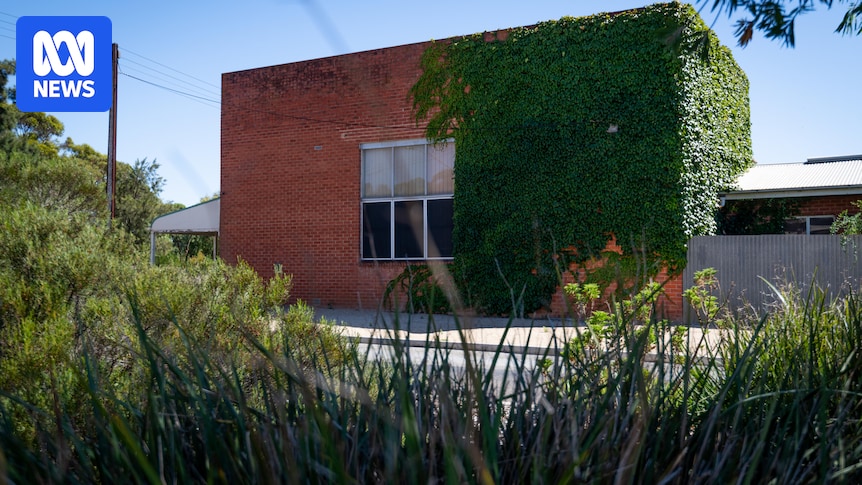
Snowtown serial killer James Vlassakis will remain behind bars, after the South Australian Parole Board’s decision to release him was overturned.
In August, James Vlassakis was granted parole after serving 26 years of his life sentence for the murder of four victims of the “bodies in the barrels” serial killings in the 1990s.
But SA Attorney-General Kyam Maher requested a review of the decision in October on the basis that the parole board “erred”.
In listing his reasons, Mr Maher said the board had “failed to give proper weight to” the safety of the community, the likelihood of the prisoner complying with the conditions of parole, the circumstances and gravity of the offence, and any reports tendered to the board under the act.
Parole Administrative Review Commissioner Michael David KC has allowed the Attorney-General’s appeal, stating that releasing Vlassakis posed a risk to the community.
“I find that because of the gravity of the offending as described above, with the fact that this is the first occasion on which parole is available, to release Mr Vlassakis at this relatively early stage would be a risk to the community,” he said in his written statements.
Mr David found the Parole Board “underestimated the effect of the gravity of the criminal behaviour of Mr Vlassakis”.
“These offences were very evilly premeditated by everyone; they were violent, gross, and committed over a substantial period of time.”
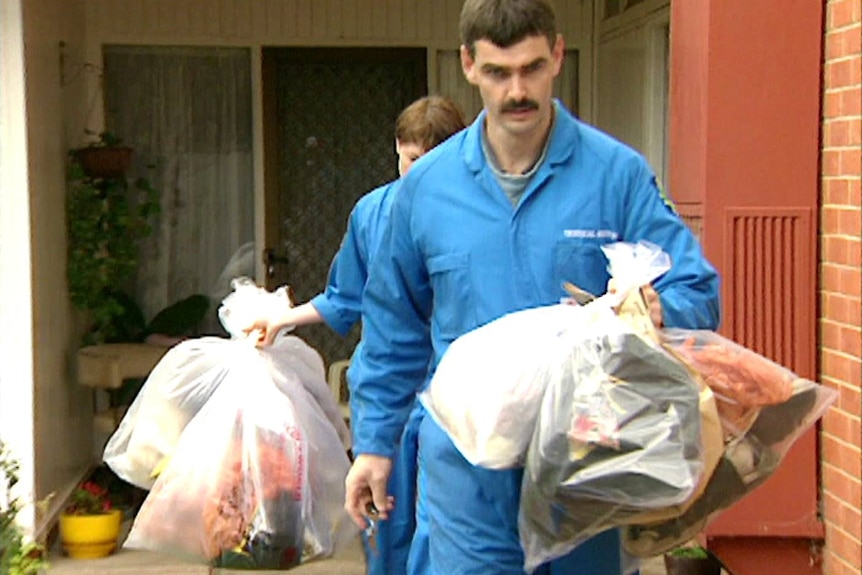
Police officers at the old Snowtown bank building during the investigation in 1999. (ABC News)
Mr David referenced Vlassakis’s behaviour behind bars and commended his cooperation and guilty pleas.
“However, I do remind myself that [Vlassakis] has been given a substantial benefit by the sentencing judge in relation to that behaviour,” he said.
Mr David said his job was not to concern himself with the sentence, but rather what had happened since, and the paramount concern of public protection.
“There are certain aspects of the offending that concern me when considering parole at this early stage, being the first occasion after the completion of the non-parole period,” he said.
In granting a non-parole period during sentencing in 2022, Justice Kevin Duggan considered the influence of Vlassakis’s stepfather and Snowtown ringleader John Bunting, who was convicted of 11 murders and was in a relationship with the then-teenager’s mother.
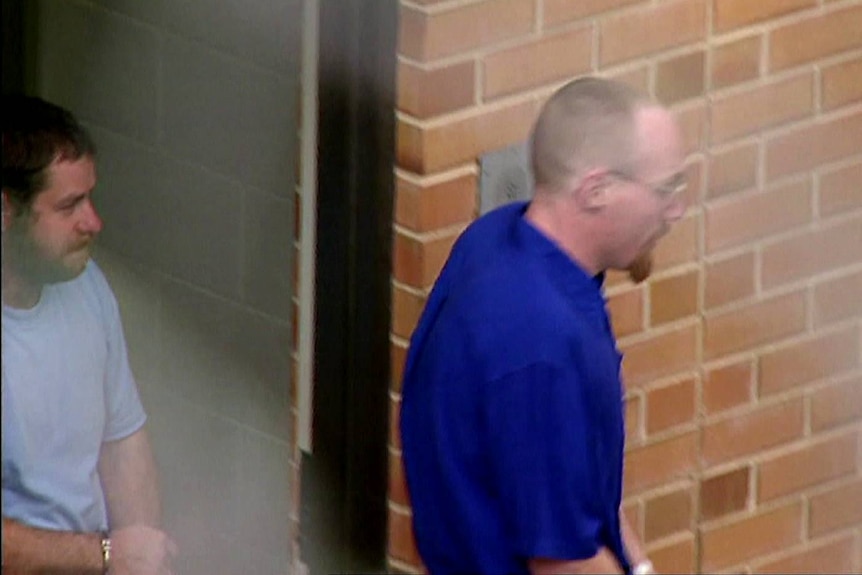
Snowtown killers John Bunting and Robert Wagner in custody after they were arrested. (ABC News)
“It was argued, as a mitigating factor, that the question of the influence over him by Mr Bunting was important,” Mr David said.
“However, this could not in any way excuse crimes of this magnitude, nor has anyone sought to argue that and, of course, there is his relative youth and admissions of guilt and assistance.”
Parole Board chair Frances Nelson KC said the board was seeking expert legal advice from senior legal counsel to scrutinise whether Mr David had “fallen into jurisdictional error” when overturning its decision to grant Vlassakis parole.
“He has concluded that it is too early to release Vlassakis, so in effect he has re-sentenced him,” she said.
“There is little point in the court setting a non-parole period if it is going to be overruled by the Parole Administrative Review Commissioner, particularly where the legislation specifically says that in considering the gravity of the offending, the Parole Board is not to substitute its view for that of the sentencing judge.
“I think that means that the Commissioner can’t substitute his either.”
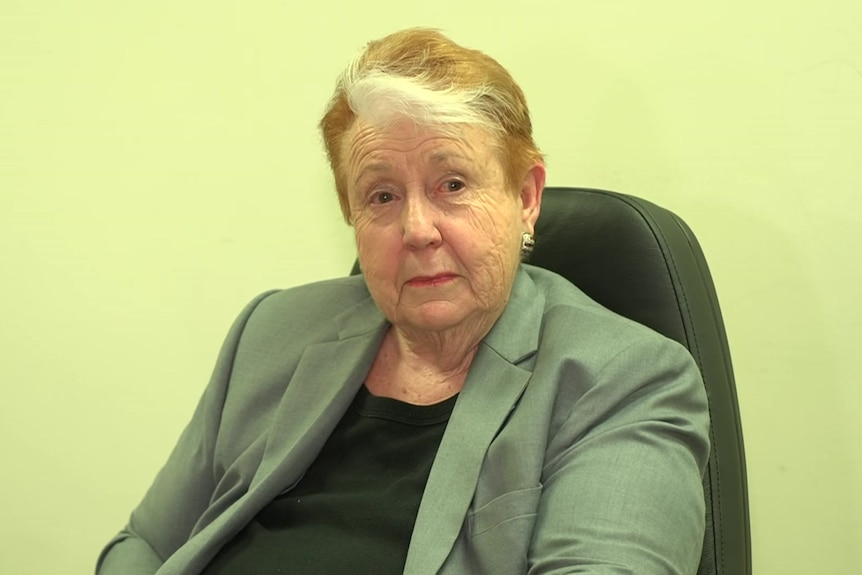
SA Parole Board chair Frances Nelson KC says she is seeking legal advice about the decision. (ABC News)
She said, depending on the advice, which was being sought from Dick Whitington KC and expected by mid-January, the board could apply to the Supreme Court for a judicial review.
“I just think he’s wrong as a matter of law,” Ms Nelson said.
She also said the board had been denied procedural fairness because it had not been allowed to give submissions at the review hearing.
SA Commissioner for Victims’ Rights Sarah Quick said some of the families affected by the murders were relieved with today’s parole decision.
“Of course, nothing can undo the harm that these victims have suffered, but there is a level of reassurance in knowing that decisions can be thoroughly scrutinised and overturned where appropriate, and that has really helped in increasing the victims’ sense of confidence in the justice system,” she said.
“Whilst they are incredibly pleased with today’s decision, they are also acutely aware that they will have to face a parole application in the future and, in that sense, their stress and anxiety is simply on pause; it’s not eliminated.”
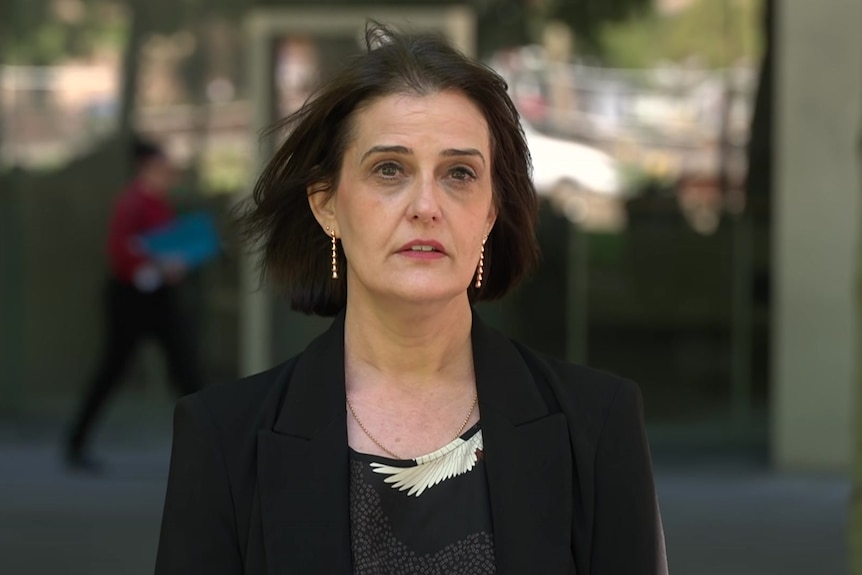
Sarah Quick welcomes the ruling overturning the Parole Board’s decision to release James Vlassakis. (ABC News)
Vlassakis attended nine hours of intervention program
A lawyer appearing for the Attorney-General submitted three reasons the decision should be set aside, including drug use recorded in custody and that there was a chance of reoffending based on a necessity for more sessions of a program concerning violence.
The written reasons by Mr David stated Vlassakis partook in “nine hours of a modified intervention program” between 2020 and 2021, and that lawyers for the Attorney-General argued more was needed to satisfy the safety of the community.
“As to why he only had nine hours of treatment in this program was quite difficult to understand, but after further enquiries, it was finally resolved that, at that time, after he had been in a modified program for nine hours, no more was offered,” he said.
“I was told that normally, one-on-one sessions are up to 10 hours. The people in charge considered that it was appropriate that the program ended at that stage.”
It was determined that Vlassakis could not participate in the usual group classes due to the notoriety of his offending, and “there was the rather unsatisfactory situation that only nine hours of intervention had been utilised”.
But his lawyer, Ms Lindy Powell KC, argued Vlassakis could undertake a 12-month rehabilitation process before his release, which Mr David noted was mandatory.
“She emphasised that he has partaken in all courses that were asked of him,” he said.
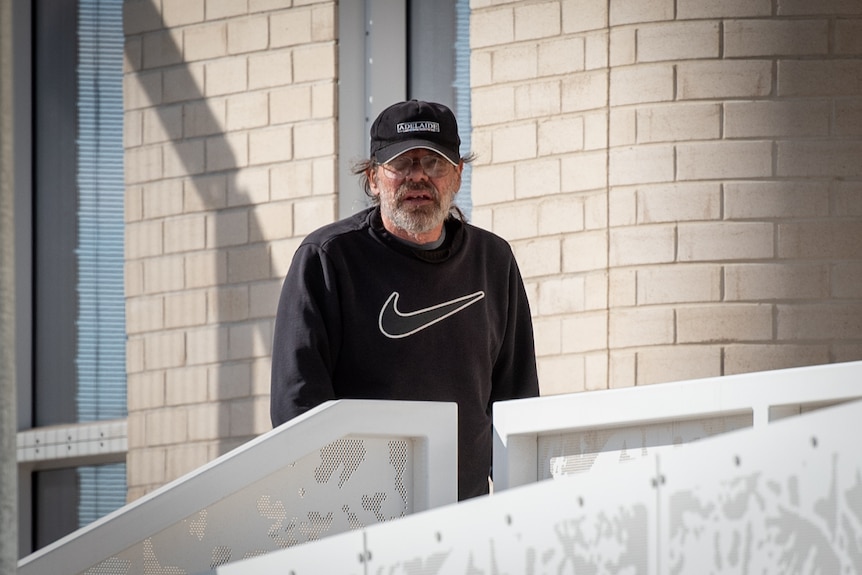
Snowtown accomplice Mark Haydon was released to the community in 2024. (ABC News: Che Chorley)
Twelve deaths between 1992 and 1999 were linked to the crime, 11 of which were later deemed to have been murders — Vlassakis pleaded guilty to four of them.
He was sentenced in 2002 to life imprisonment, with a non-parole period of 26 years from June 2, 1999, when he was taken into custody.
Vlassakis was the key witness in the prosecution case against killers John Bunting and Robert Wagner, who were convicted of 11 and 10 murders, respectively.
Now aged in his mid-40s, Vlassakis’s image was and remains suppressed.
Bunting and Wagner are serving life sentences without the possibility of parole.
Accomplice Mark Ray Haydon was released into the community last year after serving a 25-year sentence.
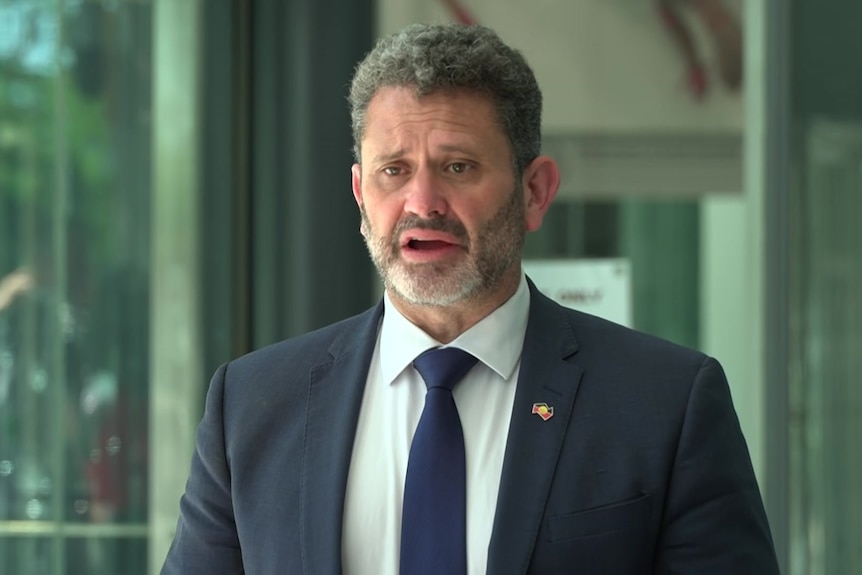
SA Attorney-General Kyam Maher requested a review of the Parole Board’s decision to grant James Vlassakis bail. (ABC News)
Attorney-General Kyam Maher said the Parole Board could determine when Vlassakis would be eligible to make a future application for parole.
“I won’t like to try and predict what may or may not happen, but would be open to time set down by the Parole Board for when a future application can be made, that [when] that application is made, the Parole Board would have to give reasons again and of course we would have to look at them as we did this time,” he said.
“Any criminal justice system needs to have the victims’ concerns at the very forefront of what we do, and this is showing there are checks and balances in the system.”