
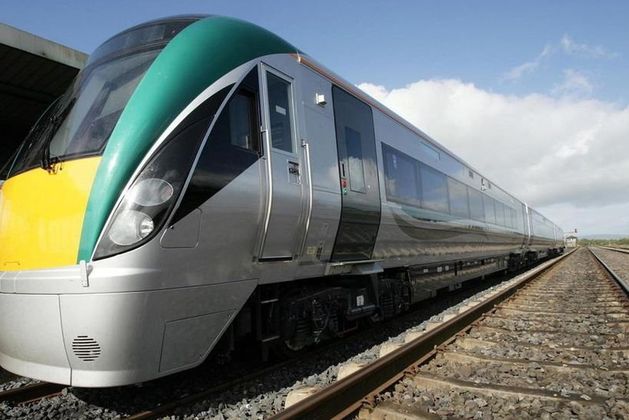
Social Democrats councillor for Rush-Lusk, Paul Mulville, raised a motion calling for urgent action from the Transport Minister and emergency funding for the National Transport Authority and Irish Rail after constituents using the services raised their concerns.
Karen Gibson, who uses the northern commuter line from Donabate to Pearse two to three days a week, finds that standing through her commute has led to health concerns.
“You’re standing for what’s supposed to be 35 minutes, which can go on up to 45 minutes. I’ve had previous surgeries, so my back is just locking up from the standing – I’m hobbling on to the train at this stage,” she said.
“People are standing cheek-to-cheek, I’ve seen people faint. A few weeks ago, I saw a girl fainting near Connolly. There was an ambulance called and the rest of us had to get off and walk across the city or wait for another train.
“There’s no chance of getting a seat whatsoever, I have to take an ibuprofen when I walk into the office because of the standing. I’ve seen older people and pregnant women standing or missing their train so many times.
I’ve missed the train so many times because it’s been so crowded
“It’s shocking. I’ve missed the train so many times because it’s been so crowded – sometimes there will only be four carriages instead of the eight.
“It’s only going to get worse with more houses going into Donabate.”
At an area committee meeting for Fingal County Council, Mr Mulville said he had heard of delays and overcrowding through the first weeks of November.
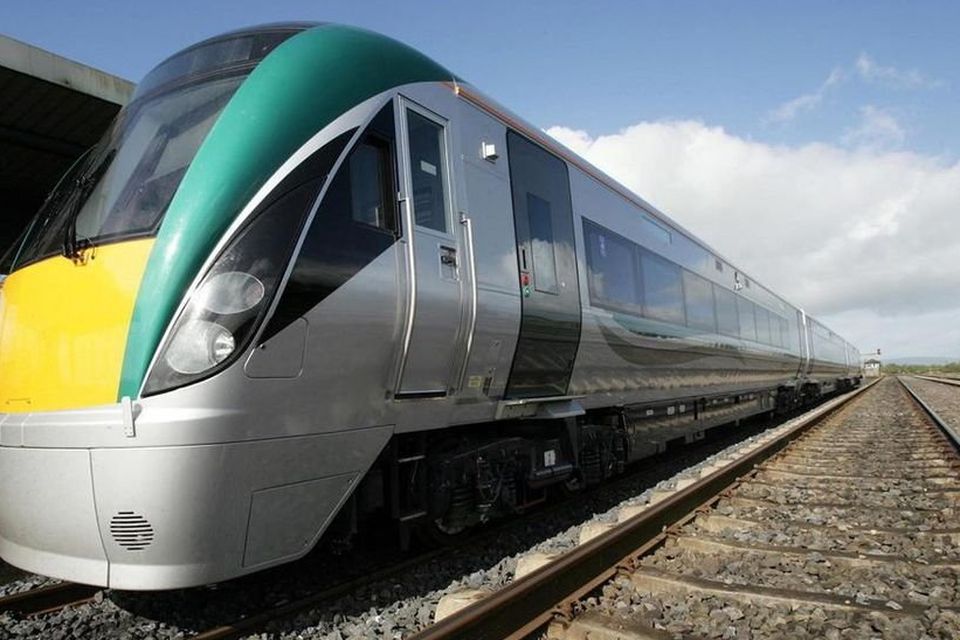
Trains into Dublin are often crowded. Stock image
Today’s News in 90 Seconds – Monday, December 15
“It’s been a near-daily issue of people being left behind in platforms, fainting on trains, everything you can imagine. It’s a very concerning issue since this is a very important service that a lot of people in the rural villages of north Dublin rely on,” he said.
He called for Transport Minister Darragh O’Brien to address the issues.
Patrick Lynn, who uses the service three to four times a week, said: “I work in the city centre, so I usually get the 8.10am or 9.10am train from Donabate to the city centre.
“In the mornings, by the time the train arrives in Donabate, it’s already full. You have to squeeze in with your work bags, laptops and coats that people have this time of year.
“There’s a lot of congestion with people trying to put things up on the shelves, it’s just really just full.
“One September morning, I was on the front carriage where the heating was on full blast and I saw two people collapse in two adjoining carriages.

Commuter Patrick Lynn
“I was standing next to one of the people and had to press the emergency button, we got him a seat and some water and managed to get off the train thankfully.”
Mr Lynn has found his 30-minute journey now stretches on to at least 35 or 40 minutes.
“The train is usually on time from Donabate but it’s very unusual to see one arriving on time to Pearse Station – it always seems a few minutes late,” he said.
“If there’s a breakdown or accident, the whole line is just shut. In the last six weeks, there were severe delays or cancellations – and there’s no other way to get home if you live in Donabate or somewhere like that.
“We need to have more carriages or an increased service because the population of Donabate and Malahide is growing substantially – there’s no point selling houses here if we don’t have these basic services.”
A spokesperson from Irish Rail told the Irish Independent that its “punctuality performance” has seen an improvement since August this year.
Customers will see punctuality significantly improve
“From late September to around now is the most challenging period of the year for punctuality performance due to the effect of autumn leaf-fall on our services,” the spokesperson said.
“We take a range of measures every year to counteract this. Thankfully, the leaf-fall season is now coming to an end, and customers will see punctuality significantly improve.
“What we have seen over the past two years is two record years in terms of passenger demand. Our trains are busier than ever across the network, with the northern commuter route up over 18pc in those two years, and back to pre-Covid highs.
“We did add 41 new carriages to our national fleet in 2024.”
The spokesperson added that 185 new Dart+ carriages (an extension of the Dart line) have been introduced, which will be in service from 2027.
“The Dart+ Programme overall – with new trains and investment in network capacity, is set to double capacity of greater Dublin area rail services over the coming years, and treble the size of the Dart network,” they said.
“We appreciate customers want to see more capacity as quickly as possible, but in the meantime we will do our utmost to maximise available capacity to meet growing demand.”
Funded by the Local Democracy Reporting Scheme