
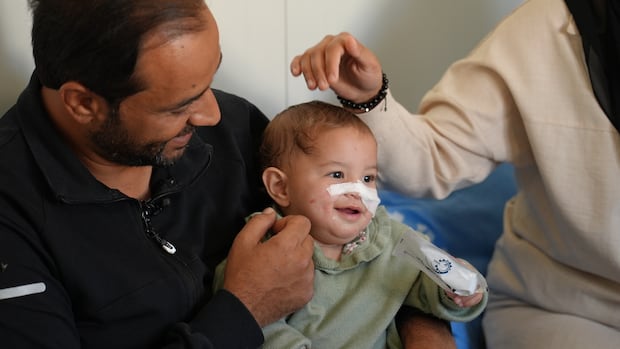
After spending more than 40 days in the Nasser hospital in Khan Younis, Hani Mohammad Abu Zarqa’s phone rang with the news his young family had been waiting for.
His six-month-old daughter Habiba was going to be transferred out of Gaza to receive urgent medical care in southern Turkey.
The problem: His five-year-old son Abdullah, also critically ill, was not on the list. The boy was diagnosed with rickets at two years old. The condition caused his bones to weaken and left him with a severe vitamin D deficiency. Throughout the war, Abdullah’s health declined, his father said. Pictures show a small, frail boy often with bones protruding.
After a flurry of paperwork, he was soon added, and the family of five was flown out of Israel’s Ramon airport. They went first to Belgium, then to Turkey, where both children were admitted into a hospital in Adana.
But four days later, Abdullah started having severe stomach pain. He suddenly deteriorated, and his family said he was dead within minutes.
“We tried to get him out earlier to treat him, but we couldn’t,” said his father in an interview with CBC News. “It took him so long to get the medicine.”
More than 10,000 patients have been transferred out of Gaza since the war began. Around 60 per cent of them were transferred to hospitals in Egypt. The UAE and Qatar also each took in several hundred, while Turkey has received nearly 500.
But according to the World Health Organization (WHO), more than 16,000 remain on evacuation lists, at risk of further worsening as they wait for the green light to be transferred out of Gaza, where hospitals have largely been decimated after two years of war.
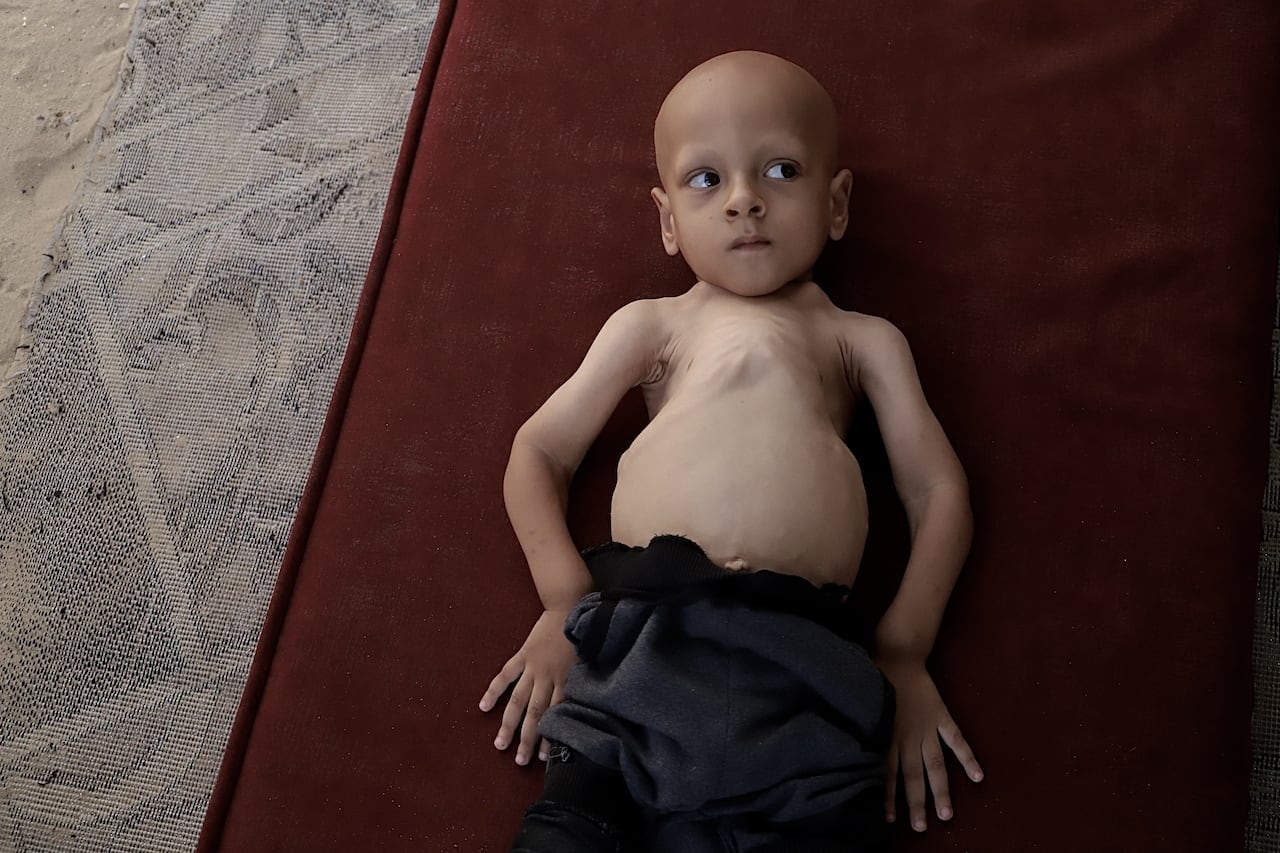 This photo taken on July 17, in Khan Younis, Gaza, shows Abdullah Abu Zarqa, who was suffering from a condition causing poor growth, and brittle bones. He was evacuated to Turkey for treatment, and passed away four days later. (Doaa Albaz/Getty Images)Thousands in need of care
Less than half of Gaza’s beleaguered hospitals are still functioning, according to the WHO. There remain critical shortages of medicine, supplies and health-care workers.
Since a ceasefire came into effect on Oct. 10, the UN global health agency says it has been able to scale up medical shipments and support, but not the number of medical evacuations. Key border crossings out of Gaza remain closed, including the Rafah crossing into Egypt.
Doctors in Gaza, along with the non-profit Doctors Without Borders, say hundreds of patients have died while waiting to be transferred abroad for treatment.
“Sometimes you have the doctor and you have the patient, but you don’t have the equipment to do anything to save the life of that patient,” Dr. Ahmed Al-Farra, pediatrics director at Nasser hospital, told CBC’s freelance videographer Mohamed El Saife.
Some patients waiting to be transferred have traumatic injuries from the war, while others have cancer and chronic illness.
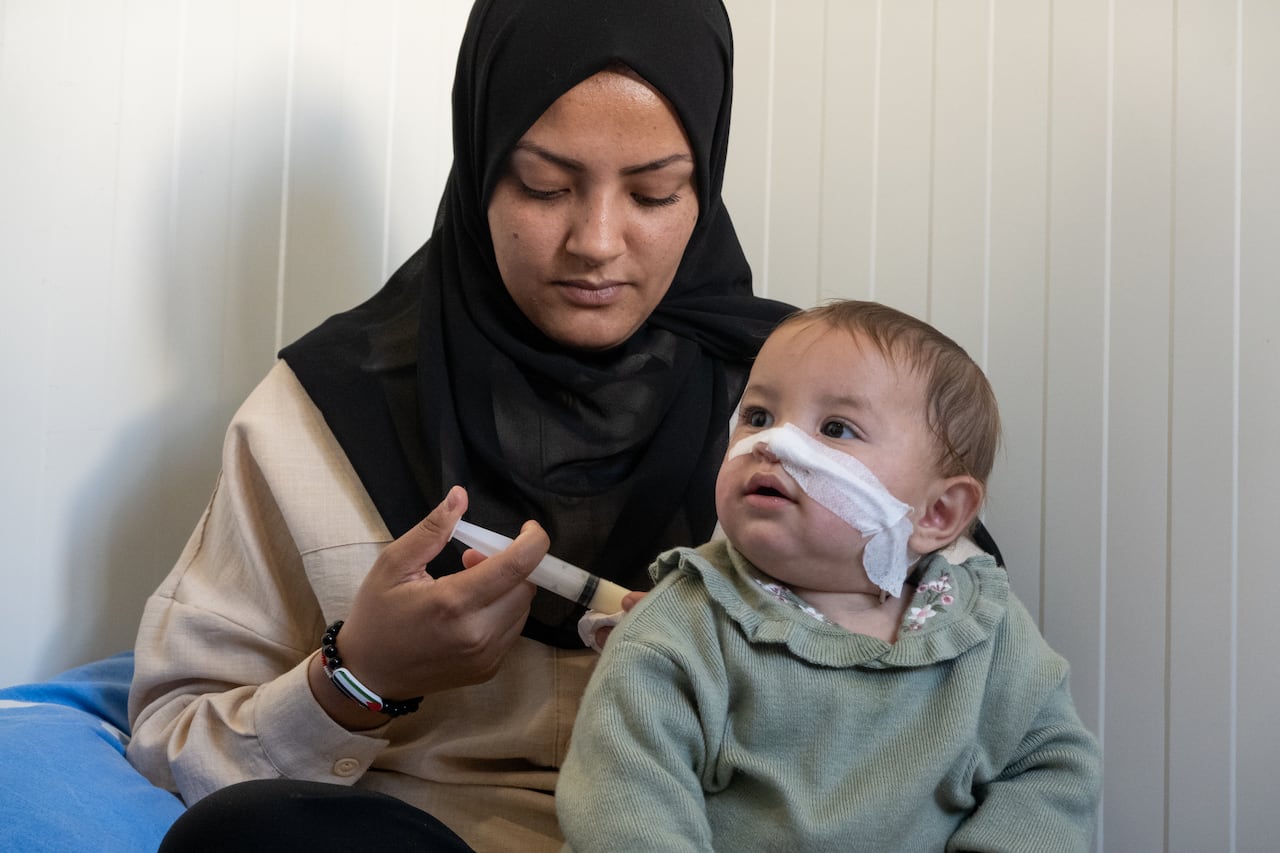 Habiba Abu Zarqa has her blood sugar constantly monitored, and when it falls too low, an alarm sounds. To help regulate her levels, her parents feed her a special formula through a tube. (Angela Johnston/CBC)Deteriorating health
In Abdullah’s case, Abu Zarqa said that the family had been managing his condition before the war with medicine and supplements, but it became much harder in the past two years with severe shortages.
He said Abdullah had been an active child, but his health got worse after he was injured by shrapnel in March 2024. His father said he received multiple fractures which left him unable to walk.
After that, the family left the city and lived in a tent, first staying in Khan Younis, and then on the city’s western edge toward the beach.
In the weeks before they left Gaza, the family’s plight was publicized on social media and in some news platforms. Some of the pieces said that Abdullah was severely malnourished. In response, the Israel Defence Forces said the boy’s image was being used as propaganda as part of a Hamas “starvation campaign.” In a post on social media, the IDF said Abdullah had gone to East Jerusalem for medical treatment even before the war for a “genetic disease.”
Not long after Habiba was born in early spring, she started suffering from infections. Upon examination, doctors observed she had an enlarged liver.
Her dad says doctors in Gaza were unable to diagnosis her as they didn’t have enough resources. Doctors in Turkey told them she had glycogen storage disease, a rare metabolic disorder where her body has problems breaking down and storing glycogen, a form of glucose.
When the family spoke with CBC News, Habiba’s blood sugar was constantly being monitored and an alarm would beep if it dropped too low. When that happened, she was fed a specialized formula through a nasal tube.
“Our future is on hold right now; the focus is on Habiba,” her father said.
“The most important thing for us is to treat Habiba. They are helping us here; all the resources are available, but we can’t leave the place.” The family is unsure about how long they can stay in Turkey, but they understand it is meant to be a temporary arrangement while Habiba receives care.
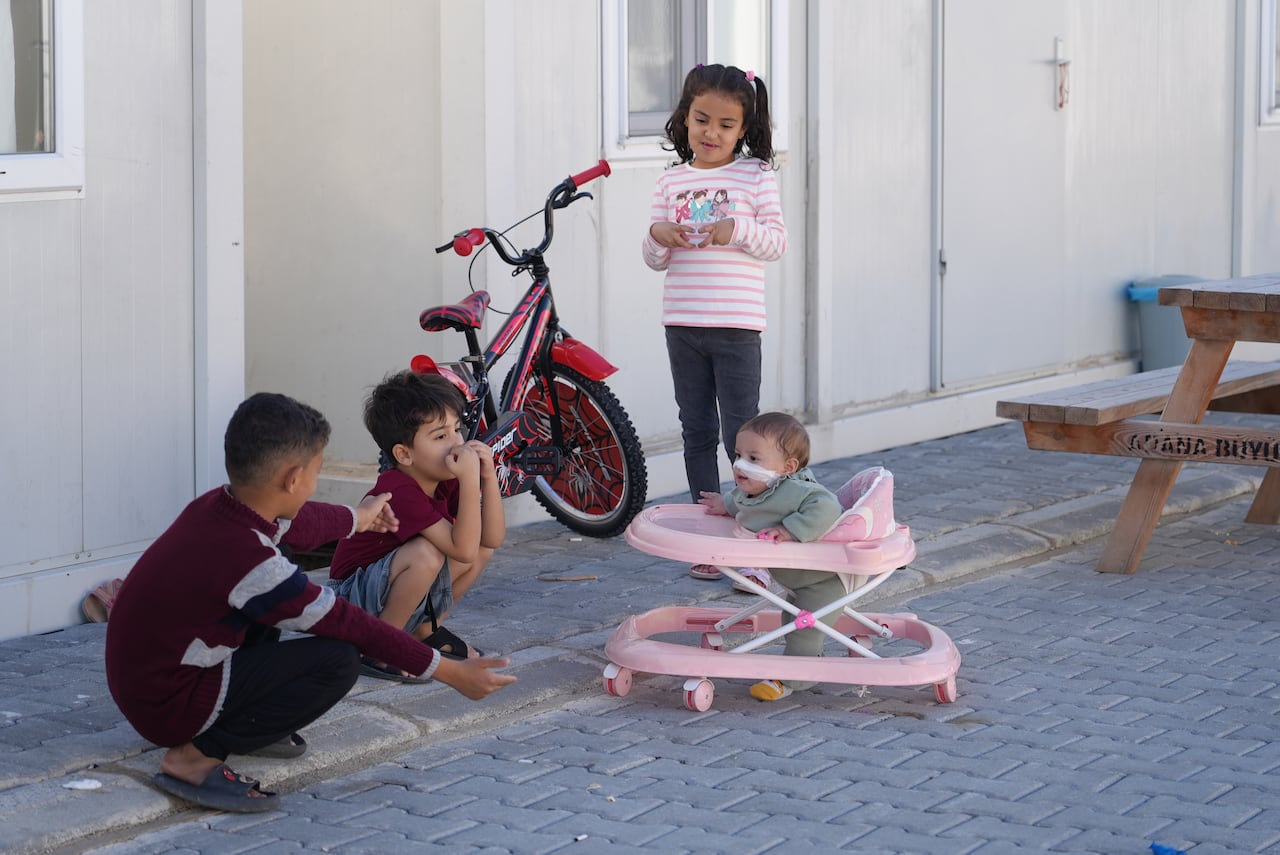 Habiba Abu Zarqa, along with her brother Hamad (far left) play with Karim (in the maroon shirt) and Sila Hammouda at a temporary housing settlement in Adana, Turkey. (Briar Stewart/CBC)
The family of four, which also includes Habiba’s nine-year-old brother Hamad, are staying in a small housing unit, a converted shipping container at a site in Adana.
The temporary development was built for survivors of a devastating earthquake that struck the region in 2023. When CBC News was there, about 10 families from Gaza had moved in, and staff from Turkey’s Disaster and Emergency Management Authority were preparing to welcome a few more.
From physiotherapist to patient
Mohammed Hammouda was also transferred to Turkey for medical treatment a month and a half ago. The father of three used to work as a physiotherapist before his clinic and home in Beit Lahiya were destroyed in airstrikes in November 2023. This June, he was injured in an explosion, while walking down the street.
He spent a month in the hospital in Khan Younis. He was discharged in a wheelchair, which made it even more difficult to help his family move their tent when Israel issued warnings to evacuate the area.
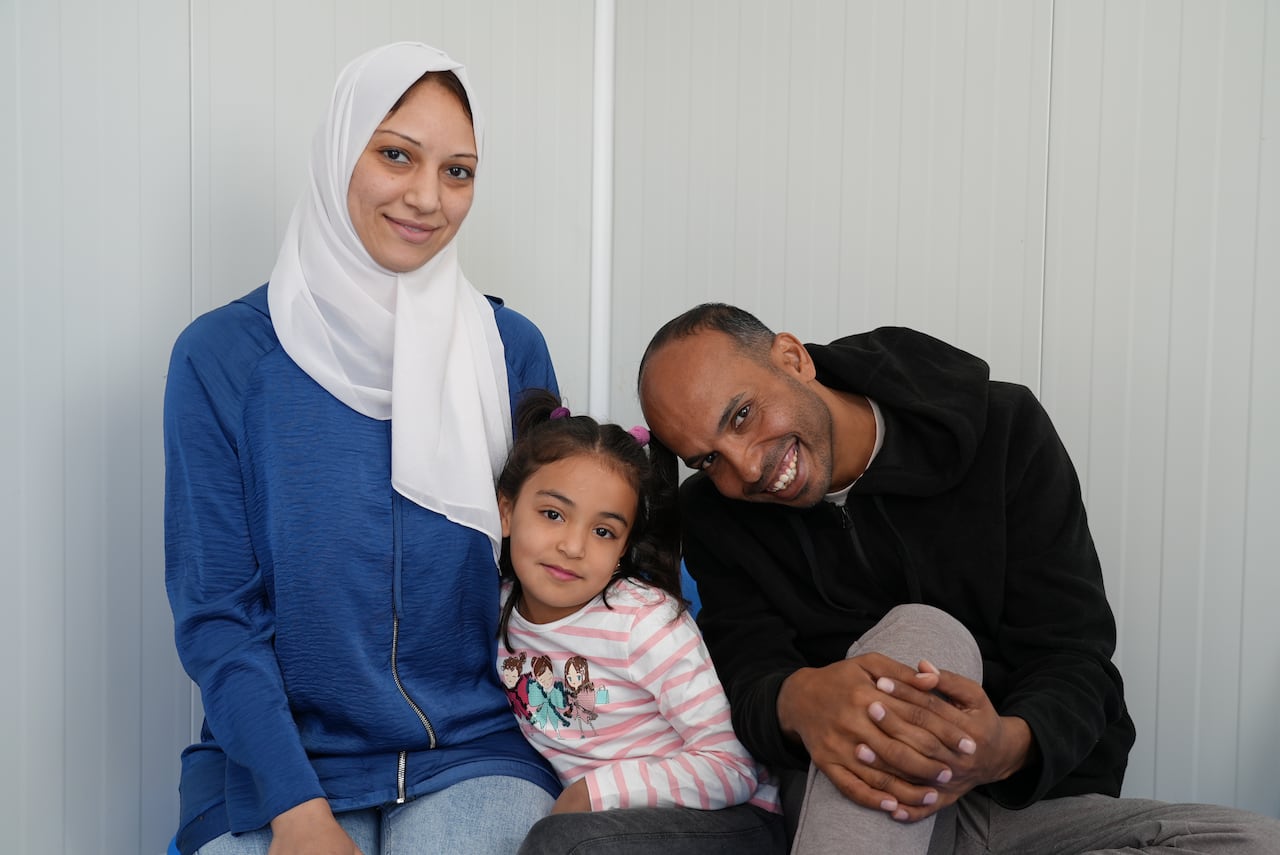 Mohammed Hammouda, with his wife Dina and their six-year-old daughter Sila in Adana, Turkey, on Dec. 2. (Briar Stewart/CBC)
Now in Turkey, he is only able to walk short distances and is waiting to see an orthopedic surgeon. His index finger on his left hand was also fractured. It remains bent and unusable.
“I am worried but not for me only.… I have three children,” the 40-year-old said. “They need me to support them. I am very worried about this and whether I can do this for them or not.”
He says his children often wake up with nightmares and curl up beside him asking if he is still alive. They frequently wet the bed and never stray far from their parents.
He wishes they could access counselling in Turkey and register for school, but it is unclear how long the family will be able to stay.
“All of the things that I built in Gaza have been destroyed,” he said. The children need space to play and be able to learn.
“It’s difficult because I see how they are suffering and I cannot do anything for them.”
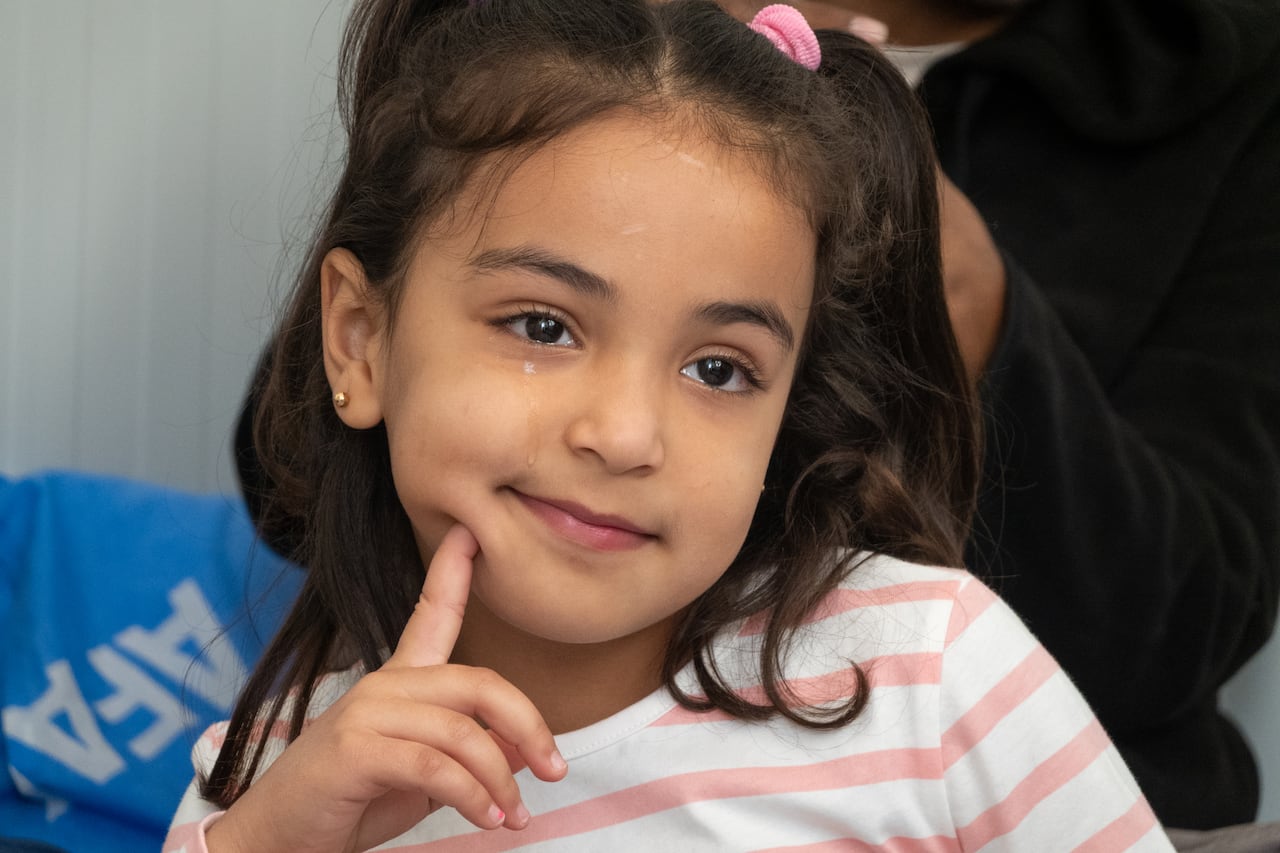 Sila Hammouda, 6, started to cry as her father described the family’s evacuation from Gaza and the injuries he suffered in an explosion. (Angela Johnston/CBC)