
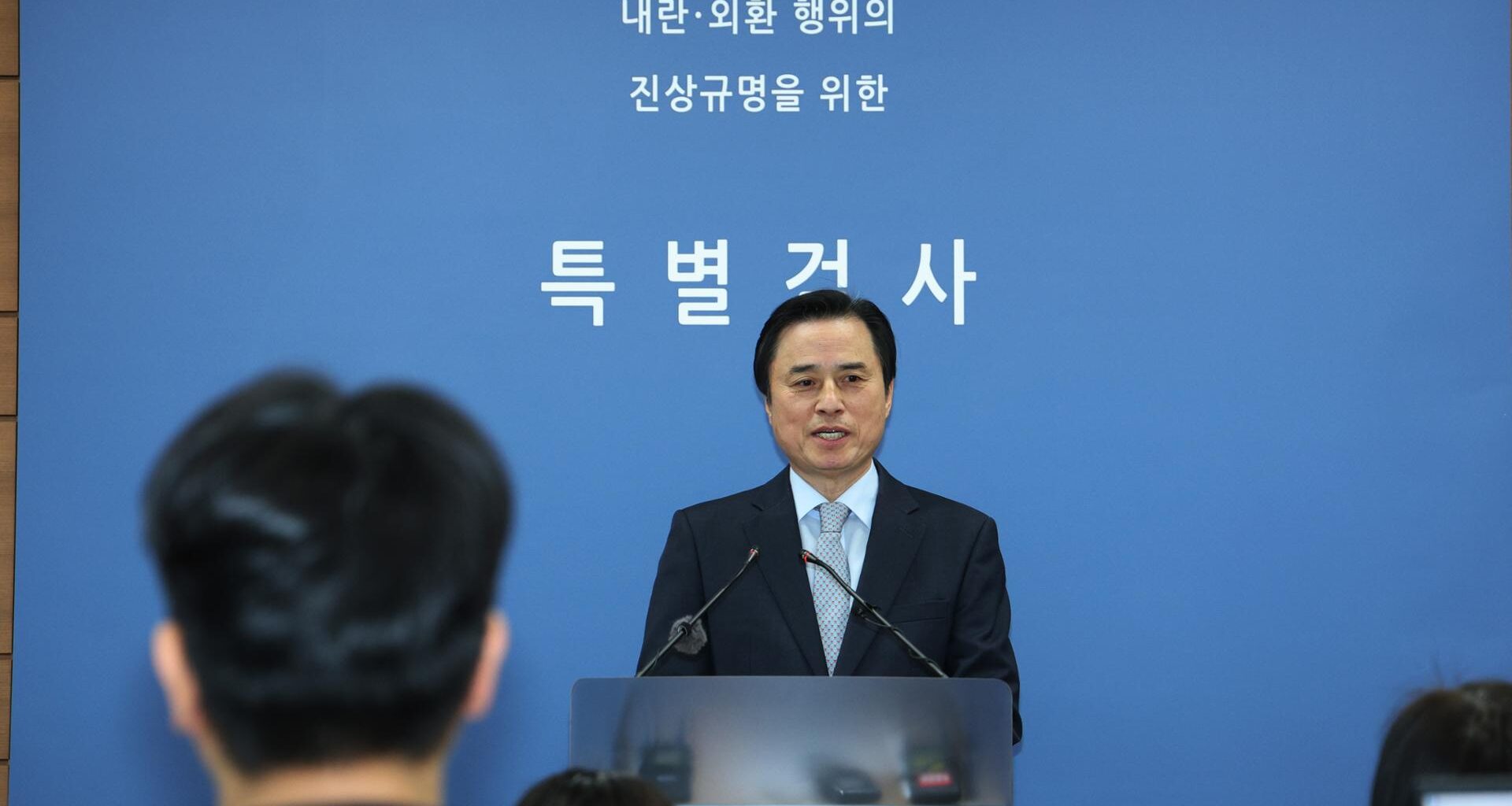
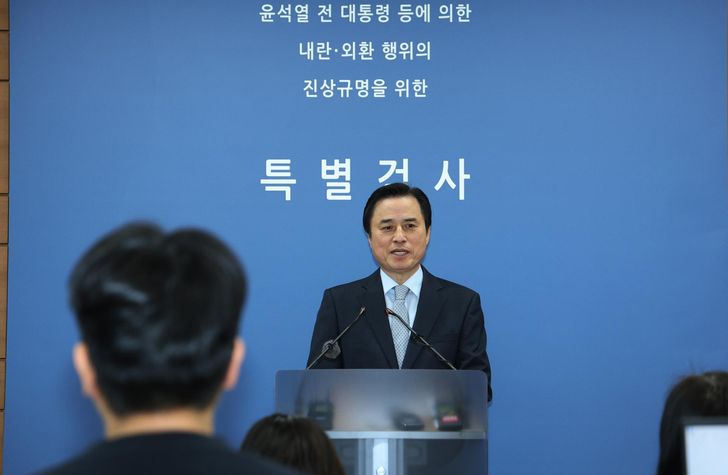
Special counsel Cho Eun-seok speaks during a press briefing at the Seoul High Prosecutors’ Office in Seocho District, Seoul, Monday, as he announces the final results of the investigation into former President Yoon Suk Yeol’s martial law case. Joint Press Corps
Former President Yoon Suk Yeol spent more than a year laying the groundwork for his martial law declaration on Dec. 3, 2024, with preparations beginning as early as October 2023, a special probe team said Monday.
He chose the timing of the declaration to minimize intervention by the U.S., as the country would be undergoing a political transition after the presidential election, it said.
The investigation team led by special counsel Cho Eun-seok announced the final results of its probe into the martial law case, wrapping up its six-month investigation. During that period, investigators indicted 24 people, including Yoon, former Prime Minister Han Duck-soo, former Cabinet members, senior military officials and political figures on charges related to insurrection and foreign interference.
The decision to declare martial law was not an incidental or improvised response to the main opposition party’s budget cuts and impeachment of government officials, which Yoon publicly claimed as his justification for declaring martial law. Rather, investigators found that he mentioned martial law multiple times to his aides, beginning shortly after his inauguration in May 2022. Preparations began to intensify around a series of military reshuffles in late 2023, according to the team.
“The core purpose was the consolidation and maintenance of power,” Cho said, adding that the findings were based on seized notes, internal memos and testimony from individuals involved in the planning process.
The investigation concluded that Yoon and his associates planned to use the military to suspend normal political activities and paralyze the National Assembly, replacing it with an emergency legislative body. Through this mechanism, they intended to seize legislative and judicial authority and suppress opposition forces.
The preparations included personnel planning, operational discussions and repeated contact with senior commanders. The team also said that the relocation of the presidential office and residence to Yongsan District, which is closer to key military facilities, helped to create the conditions for closer coordination between the president and the armed forces.
It said discussions over the timing and implementation of martial law continued regardless of political developments, including the outcome of last year’s general elections. The special counsel said the planning was internally framed as a response to what Yoon and his associates described as a national crisis driven by hostile political forces.
Cho’s team said the timing of the martial law declaration was intended to reduce the likelihood of foreign intervention, particularly by the U.S., then in the midst of a presidential transition from Joe Biden to Donald Trump.
The briefing included a memo from a Yoon associate that mentioned “cooperation from the U.S.” and “prior notice to the U.S.” Senior Korean intelligence officials were scheduled to travel to Washington the day after the declaration.
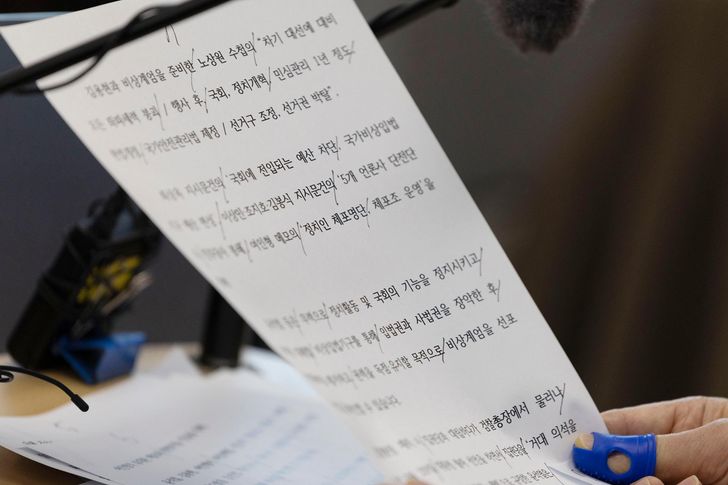
Special counsel Cho Eun-seok announces the final results of a six-month investigation into former President Yoon Suk Yeol’s martial law declaration, during a press briefing at the Seoul High Prosecutors’ Office in Seocho District, Seoul, Monday. A document bearing the words “politicians arrest list” is shown. Joint Press Corps
Cho also addressed claims that Yoon intended to provoke a security crisis with North Korea to justify martial law, including through methods like sending drones with anti-Kim Jong-un leaflets to Pyongyang.
“While there were attempts to create a situation that could have been used to justify such measures, those efforts did not lead to a military response from Pyongyang,” he said.
The special counsel said that despite the rumors, there was no evidence that former first lady Kim Keon Hee was involved in planning or executing the imposition of martial law.
“We also found no evidence to support claims of shamanistic or occult influence,” he said.
The investigation also examined allegations involving the judiciary and prosecutors’ offices but concluded that there was no evidence that senior judicial officials had participated in or coordinated actions related to the declaration.
Cho emphasized that while the inquiry had established a detailed account of the preparation and intent behind the martial law imposition, the courts would make the final determinations of guilt. He said the special counsel’s role was to present factual findings and bring legal charges based on the evidence collected.
Prosecutors involved in the case will now turn to pursuing convictions in court based on the indictments filed.