
Loading
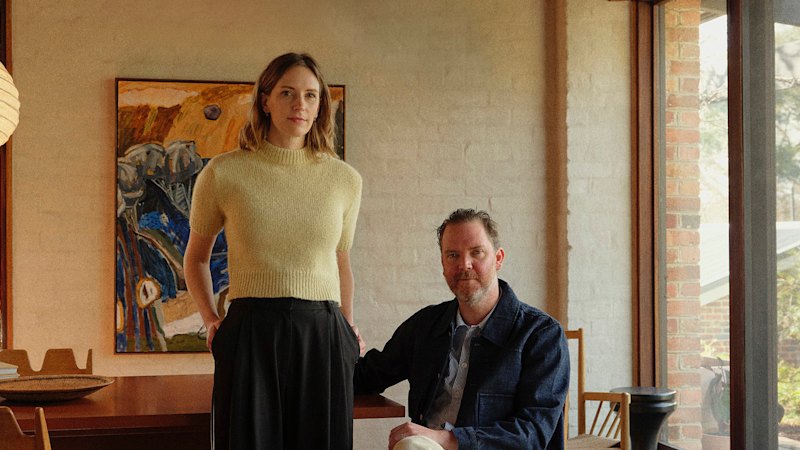
The Warrandyte home they bought in 2019 had not been updated since the ’70s, so they renovated the kitchen and bathroom.
They added 21st-century specifications, such as a dishwasher and an en suite to the main bedroom, while keeping with the aesthetics of the home, working with architect Adriana Hanna.
The process made them realise a danger that an appreciation for this style of home in its original condition could be lost.
Eager to promote the home owners looking after these houses, Fennessy, a photographer, and Lillico, a creative director and interior stylist, created their photographic book Bush Modern.
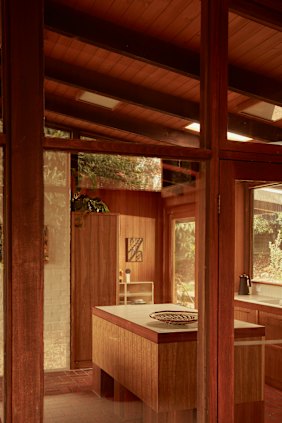
The home’s kitchen.Credit: Bush Modern
While capturing the stories of the original builders and home owners of the 23 homes featured, they uncovered a strong and passionate community with an affinity for Knox’s style.
“They were a combination of people who built the houses themselves with their own hands, from the mud bricks they made themselves and recycled timber they salvaged,” Fennessy says.
“The other side of it is the new generation of people who are moving to these areas attracted to these houses and are renovating them and keeping them in their original condition, and appreciate the historical value, which is really exciting.”
Fennessy says the homes have a typical Australian way about them, not just in the materials but in how they were built.
“The lifestyle doesn’t exist any more, when it was affordable to buy a block of land and build a house that probably, to start with, didn’t have power or water,” he says.
“It goes back to this time when people were building houses themselves, making mud themselves, salvaging timber – it was an affordable thing to do, and I don’t know if it will be possible again.”
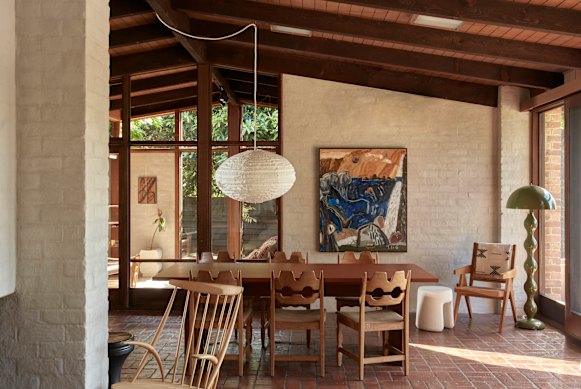
Bush modern homes have a typical Australian way about them.Credit: Bush Modern
These days, there is a high demand for these time-capsule homes representing Australiana architecture, especially those designed by Knox.
A recent example is 46 Victoria Avenue, Rosanna, which attracted considerable interest since it was listed in October.
Nelson Alexander partner and auctioneer Nick Smith says the house is being sold by the sons of the late owners, who commissioned the home in 1968.
Some buyers are keenly interested in Knox’s design, while others, unfamiliar with the architectural history, were drawn to its character.
“It’s bringing people in from far and wide – people from country Victoria, interstate and expats based in the UK are among the admirers,” he says.
The three-bedroom home features exposed Hawthorn brickwork, not mud brick as in many of Knox’s designs, and Oregon cedar panelling.
Loading
Slate flooring, high ceilings and open fireplaces enhance its character, while full picture windows further connect the home to nature.
“The backyard was also created by well-known landscape designer Gordon Ford, and there is a lovely outlook from every room out to the garden, which provides a sense of tranquillity,” Smith says.
The agent says those looking to snag their own piece of Knox history should cast their net over Melbourne’s leafy north-eastern suburbs.
“These homes more commonly found in Eltham, Research and Eaglemont,” he says.
This article was originally published by Domain.com.au. Reproduced with permission.