
Intelbrief / Recent Attacks and Plots Highlight the Importance of Maintaining Counterterrorism Capabilities
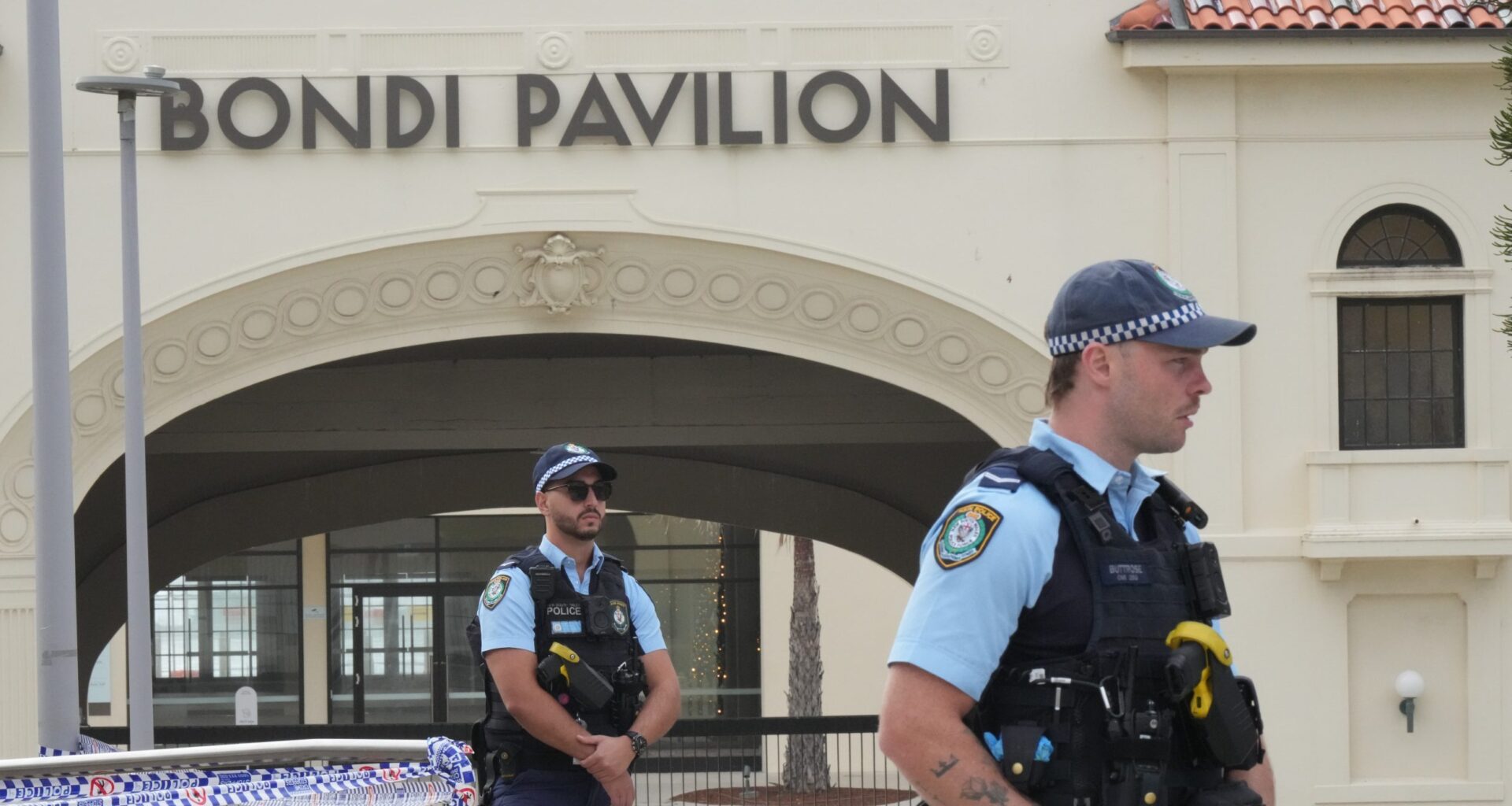
AP Photo/Mark Baker
Bottom Line Up Front
Several deadly terrorist attacks and a disrupted plot over the weekend, including in Australia, Syria, and Germany, highlight the continued threat posed by violent extremists and jihadists.
Two terrorists targeted a Hanukkah event in Bondi Beach in Sydney, Australia, killing 12 and injuring dozens more, in what was the deadliest attack against Jews since the October 7, 2023, Hamas terrorist attack in southern Israel.
In Palmyra, Syria, an Islamic State (IS) member infiltrated the Syrian security services and launched an attack that killed three Americans, sparking growing concerns about more ‘green-on-blue’ incidents.
In Bavaria, Germany, authorities arrested five men who planned to conduct a vehicle ramming attack against a Christmas market, a recurring tactic and target in IS-inspired and facilitated plots.
Several deadly terrorist attacks and a disrupted plot over the weekend highlight the continued threat posed by violent extremists and jihadists. In Australia, a terrorist attack targeting the Jewish community at Bondi Beach in Sydney on Sunday left 12 dead and dozens wounded, in what was the deadliest attack against Jews since the Hamas attack of October 7, 2023. In Palmyra, Syria, an Islamic State (IS) fighter who had infiltrated the Syrian security services killed three Americans, two Iowa national guardsmen, and a civilian translator. And in Germany, authorities disrupted a plot and arrested five individuals who were planning a terrorist attack targeting a Christmas market in Bavaria. As states around the world continue to shift resources away from counterterrorism and toward great power competition, new vulnerabilities emerge, and the persistent and enduring nature of the terrorist threat remains.
The attack in Sydney targeted a Chabad event being held on the beach in observance of the Hanukkah holiday. Various videos have appeared online, with one showing panicked beachgoers fleeing en masse, and in another, a brave civilian attempts to tackle and neutralize one of the gunmen. One of the perpetrators — the tandem was apparently a father and son team — was killed at the scene, and another was critically wounded and taken into custody. Police discovered numerous improvised explosive devices (IEDs) in a vehicle belonging to one of the terrorists, and another IED was found underneath the footbridge from which the terrorists were firing at the crowd. The attackers used long-barreled firearms, and one of them had been previously known to the intelligence services. Australian Prime Minister Anthony Albanese said, “This is a targeted attack on Jewish Australians on the first day of Hanukkah, which should be a day of joy…an attack on Jewish Australians is an attack on every Australian.”
Approximately 1,000 people were attending the Hanukkah event at Bondi Beach, and several more thousand beachgoers were in the surrounding area. Authorities are still trying to discern more details about the attackers to determine whether they are linked to a foreign terrorist organization like the Islamic State and whether they were in touch with other individuals in a broader network. Australia, like many other countries around the globe, has experienced a massive surge in antisemitic incidents and attacks since October 7, 2023. Last year, a string of arson attacks targeting Jewish businesses and a synagogue led Australian authorities to blame Iran. Canberra went on to expel Iranian diplomats in the wake of these incidents. The attacks on Jewish sites and people in Australia fit Tehran’s pattern of external operations in the West.
In Palmyra, Syria, an Islamic State member infiltrated the Syrian security services and launched an attack that killed three Americans. According to Islamic State expert Aaron Zelin, the individual responsible for the attack was a member of the Islamic State in 2014, then moved between Raqqa, Homs, and, after the fall of the Assad regime, to Idlib, where he joined Syria’s General Security and was assigned to Palmyra. Following the attack, Syrian intelligence rolled up several other Islamic State members who had infiltrated the security forces. It remains unclear how many Islamic State members, supporters, and sympathizers remain part of Syria’s current security services, but the attack was widely celebrated in IS forums online. This ‘green-on-blue’ attack is reminiscent of the Taliban’s often successful strategy, which was used to evict U.S. forces from Afghanistan. There are growing concerns that this incident could provide an impetus for those in the Trump administration who want to see Washington withdraw its remaining troops from Syria. Previously, President Trump has openly mused about this prospect. The attack is also likely to introduce tension into the counterterrorism relationship between the United States and Syria.
In Bavaria, German authorities disrupted a jihadist terror plot involving a vehicle ramming attack against a Christmas market. Five men were arrested in the Dingolfing-Landau area of southern Bavaria, according to the Munich public prosecutor’s office. According to the BBC, those arrested included three Moroccans, an Egyptian, and a Syrian. The Egyptian man has been identified as an imam at a local mosque in the area where he had explicitly called for such attacks against Christmas markets, according to the German newspaper Bild, raising questions about the potential for copycat plots and other radicalized members in the community. Over the years, Christmas markets throughout Europe, especially in Germany, have remained in the crosshairs of jihadists. In 2016, a jihadist attack at a Christmas market in Berlin, Germany’s capital, killed twelve people and injured many more. The high costs and the intense resources required to securitize these soft targets have led some towns to cancel the organization of Christmas markets altogether.
Across the West, including among the “Five Eyes (FVEY)” countries — the United States, Canada, Australia, New Zealand, and the United Kingdom — counterterrorism has been deemphasized in favor of dedicating more resources, personnel, and bandwidth to other priority areas, including great power competition and the threat posed by a rising China and a revanchist Russia. The Trump administration’s National Security Strategy largely ignored terrorist threats (the forthcoming National Counterterrorism Strategy should fill in some of these gaps), while discussions within the United States primarily focused on narco-terrorism, a shift following the designation of organized crime and terrorist organizations as Foreign Terrorist Organizations (FTOs). With a dearth of experienced counterterrorism analysts and practitioners, there are serious concerns that the U.S. homeland is vulnerable, just two weeks away from the one-year anniversary of the New Year’s Day Islamic State-inspired terrorist attack in New Orleans, Louisiana, last year.