
The Canadian Civil Liberties Association says the inquiry into Soleiman Faqiri’s death ‘reveals a truth many don’t want to hear’ about Ontario prisons.
The family of a man with mental health issues who died in an Ontario jail cell nine years ago is calling on the government to take action nearly two years after an inquest into his death made 57 recommendations to improve the correctional service.
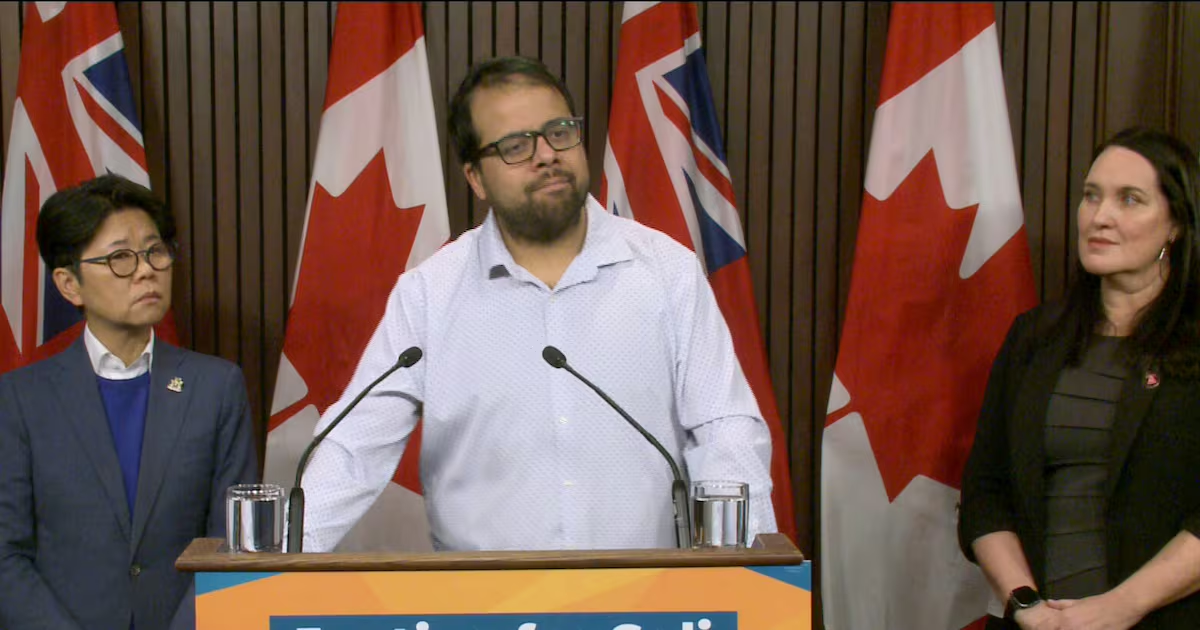
“Two years later, and now nine years to Soli’s death, not once has the Ontario government reached out to my family to engage with us with respect to this tragedy, not once have they spoke to us,” Yusuf Faqiri, Soleiman Faqiri’s brother, said during a news conference at Queen’s Park Monday.
Soleiman “Soli” Faqiri died on Dec. 16, 2016, at the Central East Correctional Centre in Lindsay, Ont. He had been taken into custody after allegedly stabbing a neighbour.
Faqiri had schizophrenia, and correctional and medical staff expressed concerns about his condition several times, an inquest heard. However, he was not taken to hospital or assessed by a psychiatrist.
A fight broke out between Faqiri and the guards as they escorted him back from a shower on his 11th day at the jail.
Faqiri was struck multiple times and pepper sprayed. He was handcuffed, had his head covered in a spit hood and was left face down on the floor of a cell in a prone position, where he eventually died.
The coroner’s jury inquest issued its recommendations in 2023 and also deemed Faqiri’s death a homicide, saying he should have been taken to hospital many days earlier.
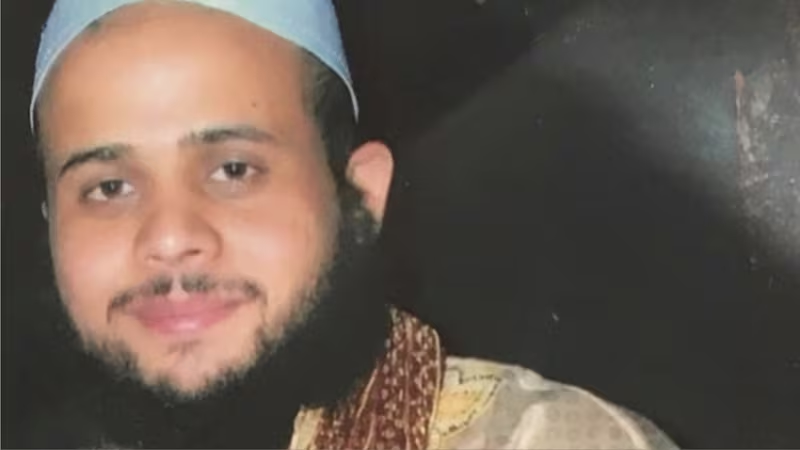 Soleiman Faqiri Soleiman Faqiri is shown in this undated family handout photo. In the 11 days before Faqiri’s death, family members tried to visit him four times, making the hour-long drive to the Ontario jail where he was being held, his brother said. THE CANADIAN PRESS/HO, Yusuf Faqiri
Recommendations from the inquest included the creation of a new agency to oversee mental health care in prisons, establishing partnerships between prisons and hospitals and establishing a “correctional inspectorate” to investigate problems in the correctional system.
Yusuf Faqiri said Monday his family is seeking an apology from Premier Doug Ford and wants to know that action is being taken to prevent something similar from happening to others with mental health problems.
“My family is not just asking for the apology that we deserve for Soleiman’s death, but for action on the 57 recommendations — especially the call for people with mental health challenges to not be warehoused in prisons,” Yusuf Faqiri said.
“My family has been ready to engage with the government, but we have not heard back once. They have not made a simple phone call.”
It’s not clear how many of the recommendations have been acted on, but in a statement to CTV News Toronto Monday, Solicitor General Michael Kerzner’s office called Faqiri’s death a tragedy and said the government is working to improve the system.
“What happened to Mr. Faqiri is a tragedy. Our thoughts are with his family and all those who have lost loved ones in the correctional system,” the statement reads.
“Our government has made record investments into our corrections system that was left on the brink by the previous Liberal government. This includes over $500 million to update and build new facilities and hire additional staff.
“We have also established a new health services division to ensure those in custody receive the care they need including support with mental health and addiction issues delivered by social workers, nurse practitioners, mental health nurses and addictions counsellors.”
The ministry responded to the chief coroner in August 2024, outlining some of their efforts to respond to Faqiri’s death, including a 2021 directive prohibiting the use of segregation for inmates with serious mental illnesses, including those experiencing suicidal ideation.
Asked about the family’s request for an apology at an unrelated news conference Monday, Ford said “my heart goes out to the family,” though he stopped short of apologizing.
“I think it’s terrible. First of all, anyone who passed away, no matter if they’re in a correctional facility or not, no one should lose their life. So we’re always trying to make sure that anyone that works there is professional, and if they aren’t, if they don’t act professional, then they’re going to be held accountable. It’s as simple as that.”
He said Kerzner is already acting on the recommendations.
“He’s doing a great job, and we’re going to continue doing a great job. And the other thing what we need, we need to build more correctional facilities and make sure they’re state of the art,” Ford said. “But, you know, at the end of the day, stay out of the jails, stop breaking the laws, and you won’t have anything to worry about.”
Back in 2016, a court suggested Faqiri be given an examination for his fitness to stand trial – a sign he may have been having a psychotic episode, where he would not have been aware of his surroundings at the time.
In a statement, the Ontario NDP called Ford’s comment “heartless” and called on the government to implement the recommendations from the inquest.
Emilie Coyle, co-executive director of the Canadian Association of Elizabeth Fry Societies, spoke alongside Yusuf Faqiri and said the case holds a mirror up to how the province is treating people with mental illness.
“Soleiman could have been any one of our brothers, our sons, our fathers. He could have been any one of our family members,” Coyle said. “His death is not only a personal tragedy for those who loved him, it’s also a mirror held up to this province and to this country, reflecting what it is choosing to do to people in crisis who are all too often forgotten inside its jails.”
Yusuf Faqiri added “people who are suffering from mental health challenges in their lives, that should not be a death sentence.”
He said his brother’s death “will not be the final chapter of his life,” but an opportunity “to honour our most vulnerable.”
With files from CTV’s Jon Woodward and The Canadian Press