
David Rosenberg, founder and president of Rosenberg Research & Associates Inc., joins BNN Bloomberg to share his outlook on the Canadian economy.
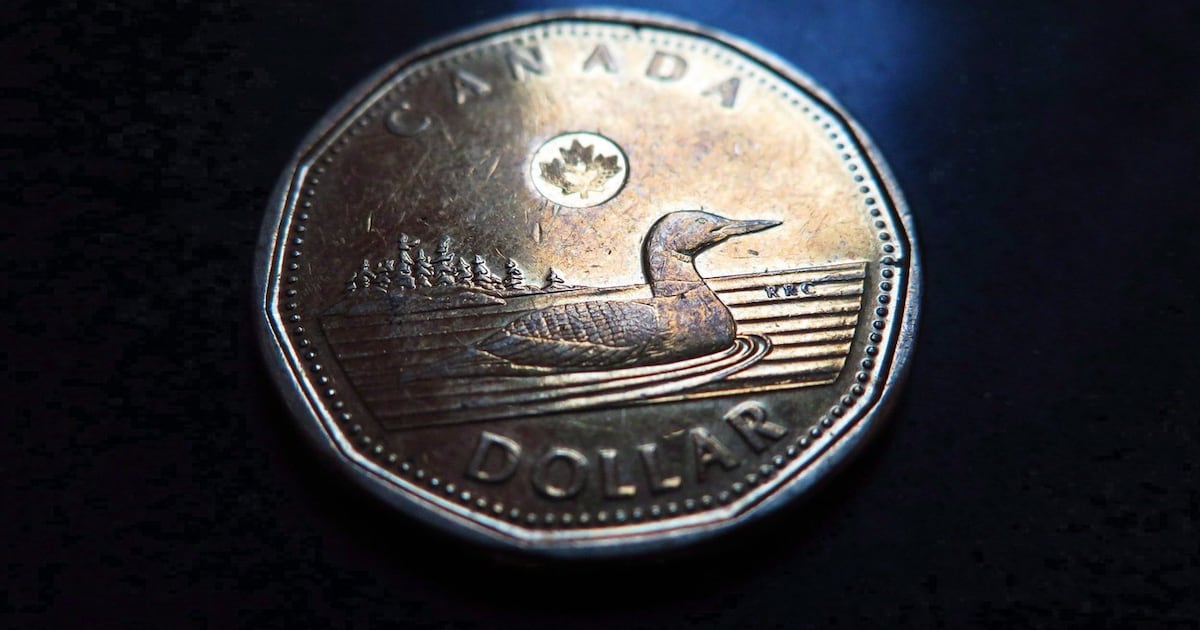
Canada’s economic backdrop is showing signs of renewed momentum, prompting fresh debate over whether the loonie is poised for a sustained rebound after years of underperformance. Shifting interest rate dynamics, improving trade conditions and global growth are reshaping the outlook for the currency.
BNN Bloomberg spoke with David Rosenberg, founder and president of Rosenberg Research & Associates Inc., about why he has shifted from a long-held bearish view and now sees scope for further gains in the Canadian dollar.
Key TakeawaysRosenberg has shifted from a bearish stance and now sees the Canadian dollar rising toward 77 cents U.S. in 2026 as interest rate differentials turn supportive.A steady Bank of Canada policy rate alongside further U.S. Federal Reserve cuts could provide a sustained tailwind for the loonie.Improving terms of trade, firmer commodity prices and stronger exports are helping reverse years of currency weakness.Valuation metrics suggest the Canadian dollar remains undervalued, easing concerns that appreciation would hurt competitiveness.Canada’s relative insulation from global tariff pressures and improving per-capita growth are boosting investor confidence in the currency. David Rosenberg, founder and president of Rosenberg Research & Associates Inc. David Rosenberg, founder and president of Rosenberg Research & Associates Inc.
Read the full transcript below:
ROGER: Canada has been seeing economic growth, including stronger employment, and with the dollar on the rise, our next guest has turned bullish on the loonie for several reasons. Here to unpack them is David Rosenberg, founder and president of Rosenberg Research & Associates. David, thank you very much for joining us.
DAVID: Thanks for inviting me on.
ROGER: What makes you so bullish on the Canadian dollar right now?
DAVID: Well, look, I’m not a raging bull. But over the past several months, I’ve become increasingly less bearish. We were negative on the Canadian dollar and, for the most part, quite right for the last couple of years.
As John Maynard Keynes said, when the facts begin to change, you should change your view. And there have been some changes at the margin over the past several months that we’ve taken notice of.
One is that the Bank of Canada seems very comfortable holding the policy rate at 2.25 per cent. The Fed has just cut rates and will probably cut more. I think at least one more cut is coming, and frankly, I don’t put much weight on the dot plots. I think the Fed has two or three more cuts ahead, while the Bank of Canada stays on hold.
That means interest rate differentials will increasingly become a tailwind, rather than the headwind they were during much of the Bank of Canada’s easing cycle, which came before the Fed started cutting. That’s one part of it.
Another part is Canada’s terms of trade — export prices relative to import prices — which have a strong correlation with the loonie and have started to improve. Unlike the United States, Canada, much like New Zealand and Australia, is a hard-asset currency. The commodity sector is starting to look better, particularly base metals, and oil prices appear to be putting in a floor. That’s more good news, or at least less negative news, for the Canadian dollar.
Then there’s the trade file. If you go back to the spring, there were fears that Donald Trump would unleash a major trade war against Canada with reciprocal tariffs, which would have been a serious negative for a small, open economy like ours. We dodged that bullet.
What’s different now, compared with the Trudeau era, is that — whether people like it or not — Donald Trump has chosen to have a better relationship with Mark Carney. What that means for trade negotiations next year remains to be seen. But despite all the anxiety over tariffs, when you look at Canada relative to the rest of the world, we came out relatively unscathed. Most of the products targeted by tariffs were covered under the trade agreement and were not affected.
There’s still a lot of frustration over rhetoric and past comments, but in relative terms, Canada actually emerged as a winner from the tariff file.
We also look at valuation metrics. U.S. equity valuations are at nosebleed levels, but the Canadian dollar has looked extremely undervalued. The question was what would be the spark. It’s not just the Fed cutting while the Bank of Canada holds.
I gave the Carney budget a B-minus — which might sound tough — but I haven’t given a grade like that to a federal budget since the Harper years. Every budget has its warts, but I liked the supply-side and productivity focus.
At the margin, we’re also seeing a shift away from aggressive environmental policy toward a more pro-growth stance, particularly on the resource side. If you’re watching the Canadian dollar, that’s another positive. A more responsible immigration policy is also helping. For the first time in many years, we’re seeing positive growth in real per-capita terms.
I’m not saying we’re going back to parity. But I do think enough of the headwinds have faded to move from a long-term bearish stance to something moderately positive, with the loonie heading toward about 77 cents U.S.
ROGER: What are some of the challenges with a 77-cent loonie as it rises?
DAVID: As long as the Canadian dollar doesn’t move above its fundamental valuation, there’s nothing wrong with it. A stronger currency isn’t inherently a problem for manufacturing. A currency is a price, like anything else, and that price reflects improving fundamentals.
When your currency is appreciating relative to your neighbour, it means things are going better on a relative basis. That’s something to embrace. It reflects that conditions are less negative than they were six, 12, or even 36 months ago.
ROGER: And what does a stronger dollar mean for servicing debt?
DAVID: It doesn’t directly change debt servicing. The indirect effect is that a stronger currency helps contain import costs, which is disinflationary. That can eventually create room for lower interest rates at the margin. It’s a second-round effect, but from that perspective, it’s modestly positive.
ROGER: David, we’ll have to leave it there. Thank you very much for joining us.
DAVID: My pleasure. Take care.
ROGER: David Rosenberg is founder and president of Rosenberg Research & Associates.
—
This BNN Bloomberg summary and transcript of the Dec. 15, 2025 interview with David Rosenberg are published with the assistance of AI. Original research, interview questions and added context was created by BNN Bloomberg journalists. An editor also reviewed this material before it was published to ensure its accuracy and adherence with BNN Bloomberg editorial policies and standards.