
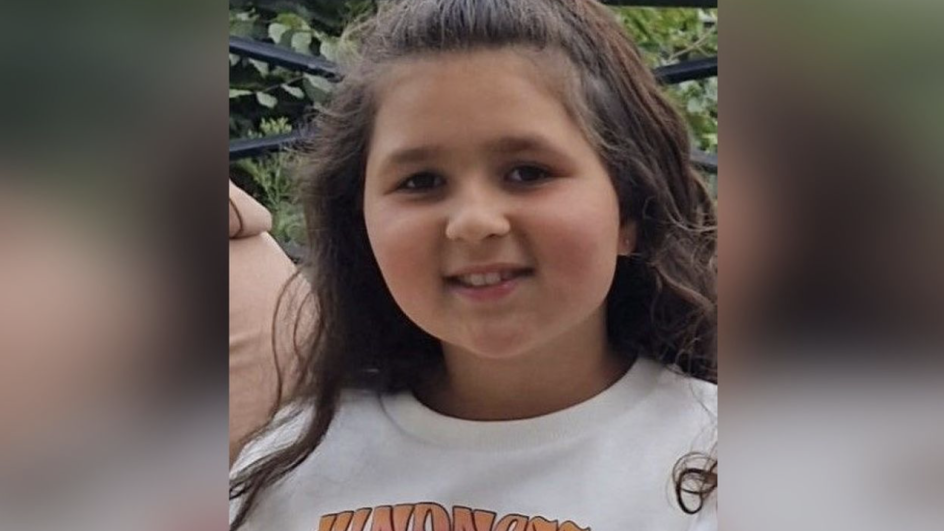
The mother of murdered eight-year-old, Malika Al Katib has said that her killer, Muhammed Al Shaker Al Tamimi, “smiled directly” into her face “as he cut Malika’s throat.”
Al Tamimi was sentenced to 10 years in prison for the attempted murder of his wife, Aisha Al Katib, and life in prison for the murder of his daughter Malika Al Katib, which is to run consecutively.
The accused, a Kuwaiti who was smuggled to Ireland by human traffickers, pleaded guilty to the murder of his daughter, Malika, and the attempted murder of her mother, Aisha, at an address on Lower William’s Street, New Ross, County Wexford on the 1st of December 2024.
Mr. Justice Paul McDermott said that the level of violence involved in the killing of the little girl was “appalling” and that the mother and child were “helpless” as they were both “repeatedly” stabbed by the very person who should have “protected” his child.
The court also commented that the location of the incident, the family home, should have been “a place where mother and child should have felt at their most secure and most protected.”
Despite this, Justice McDermott said that Aisha had been forced to watch “the extinction of her daughter’s life in front of her eyes.”
“It’s very difficult to escape the conclusion that this is one of the most serious offences of its type.” he said, adding that the crime had come about as the accused believed that “both his wife and daughter were not showing him respect.”
During the sentencing hearing this afternoon, the Central Criminal Court heard that Aisha Al Katib was raised in Waterford, but converted to Islam between the age of 17 and 18.
In 2015 she met Muhammed Al Shaker Al Tamimi in Belfast, and the pair began a relationship after the accused, who is originally from a “nomadic tribe” inKuwait, had arrived there from the British mainland.
After her first pregnancy ended in miscarriage, Malika was conceived and born in August 2016.
Detective Garda Donal Doyle, of New Ross Garda Station, told the court that Al Tamimi “wasn’t involved during the pregnancy” and that Aisha was living back in Tramore with her mother.
When baby Malika was 7-8 weeks old, Aisha brought her to the UK to meet her father before the three ended up living in emergency accommodation. The court heard that whenever Aisha and Al Tamimi would get into an argument “she always felt she was to blame”, but that she went to London so Malika would have a father.
Around June 2017 there was another “row” before Aisha returned to Ireland. Anne Rowland SC, prosecuting, told the court that Al Tamimi had had non consensual sexual contact with her, dragging her from the bathroom to the living room and “strangling her on the floor”.
During her time in London she was “not allowed to leave” the flat, after being accused of seeing another man, and was “rescued” by relatives who got involved after being contacted by Aisha’s mother in Ireland.
UK police had to “cut” bars from the windows of the flat to free Aisha, the court heard.
Al Tamimi, has previously spent time in prison in the UK having been convicted of attempted rape in respect of another woman.
There was little or no contact between Aisha and the accused until 2023, when she returned to the UK to visit family.
After she returned to Ireland Al Tamimi “contacted her constantly asking about Malika” and wanting to ensure that the child “would behave according to the Islamic faith,” which led Aisha to block him as he kept “complaining about Malika and her behaviour,” the court heard.
In August last year, the accused came to Ireland, through Belfast, on a bus to Tramore saying that he had changed, he wanted to work, and for Malika to have a father. Aisha then agreed to allow him to stay with her in her house.
At this time, the court heard that Aisha’s mother warned Al Tamimi “not to hurt her daughter”.
Ms. Rowland explained that the accused did not actually take up work, but that Aisha was happy to have someone to help with picking her daughter up from school.
Detective Doyle told the court that Al Tamimi came to New Ross Garda station to inquire about claiming asylum in Ireland.
On the weekend before Malika’s death, Aisha and her daughter went to Tramore to visit family, leaving Al Tamimi, who said he would enjoy the break alone, in New Ross.
The accused was “not in very good form” and was talking about how he was “going to kill” Aisha’s brother as he “wasn’t a real man.”
When Aisha returned from Tramore, she got Malika some chicken nuggets, before getting home.
Malika put on her pajamas and went upstairs to play Roblox on her phone, while Al Tamimi and Aisha sat on the sofa downstairs to watch, ‘I’m a celebrity, get me out of here.’
Al Tamimi had been saying he would sleep in a park that night before returning to London the next morning, Ms. Rowland said, before Aisha told him to “relax” before he got “more angry”.
He accused her and Malika of “having no respect for him” and complained that the child had not hugged him when he came home.
When Aisha told him to stop “nitpicking” before going to the bathroom, he accused her of sleeping with another man in Waterford. He demanded to see her phone and said, “don’t make me crazy” before hitting her in the head with the device.
When Aisha went to get her car keys from her jacket, the accused went to the kitchen and returned with a 19cm kitchen knife before stabbing her in the right side of the neck, and “trying to cut across” her neck.
She began to shout and try to push him away before Malika ran down stairs to see what was happening.
The child began shouting for the accused to stop, with her mother telling her to “run” before she was “struck” with the blade.
Al Tamimi then went to the kitchen again, this time coming back with a larger 30cm knife, before holding Malika while making direct eye contact with her mother.
He then “appeared to cut her throat while looking” at Aisha, who again told the child to run.
At this point, Ms. Rowland told the court that Malika tried to run but fell onto the ground, before Al Tamimi stabbed her as she lay there.
Aisha said that she didn’t know exactly how many times her daughter had been stabbed, but that at least two of the blows were to her back.
Al Tamimi then turned the blade on himself, but did not stab himself as deeply as he had Aisha or Malika, the court heard. He then said, “That’s fine we can all die, all three of us can die.”
Aisha, who had lost the use of her legs due to her injuries, managed to call 999 while on the ground, then dragged herself along the floor, holding onto curtains to pull herself, before reaching the front door and managing to open it.
After a neighbour came to help and administer first aid to her, she told him, “Im going to die, but please save my daughter.”
When the man entered the house, he saw Malika lying on her back, while Al Tamimi was also on the ground.
By this time the child was ‘pale, clammy, was not breathing, not responsive, and had no pulse,”.
There was a 2-3 inch laceration on the right side of her neck, where a layer of fatty tissue could be seen from the “gaping wound”.
When she was conveyed to hospital, “a lot of her blood was on the floor of the ambulance”, the court heard.
There was also “a very large and deep wound” on the right side of her rib cage, which caused her lung to collapse. Malika also suffered a number of other cuts and slashing wounds to her facial area, her arms, and her hands. The wounds on her hands and arms were consistent with “defensive type injuries”.
When she arrived at the hospital there was “no cardiac output” and she was pronounced dead.
Al Tamimi smuggled into Ireland by human traffickers.
Defending counsel, Michael Bowman SC told the court that his client is one of 11 siblings who grew up in impoverished circumstances in Kuwait, and were affected by the war with Iraq.
Al Tamimi claims to have begun working at the age of eight, to have limited formal education, and to have been asked to leave his family. He paid £20,000 to traffickers to smuggle him to Ireland before he went to the UK and eventually gained status.
Two previous convictions were aired before the court, one for attempted rape, and one for battery, both of which were dealt with by UK courts.
When interviewed, he admitted to the murder of his daughter, and at the time believed that his wife had also died.
“I slaughtered my daughter. I didn’t have any mercy, I don’t want any mercy,” he said.
He also stated that, “If the court does not decide to execute me, I will kill myself.”
Victim impact statements
Taking the witness stand, Aisha Al Katib said that the “the murder of my daughter has destroyed my life and that the images of the last moments, “of my beautiful daughter being brutally stabbed to death and having her throat cut” are “carved into my mind forever”.
“I live in a constant state of fear and heartbreak,” she said, describing how “her clothes are still hanging in her wardrobe” and “washing each piece one by one knowing she will never wear them again.”
She described an ongoing “fear” of Al Tamimi, saying he repeatedly threatened to “kill” her, as she only “belonged to him”.
“Every step he made that night felt deliberate and calculated.”
“He always told me I belonged only to him and told me many times that if he ever saw me with another man he would kill me.” she said.
I can no longer live on the ground floor “because of the fear of him and what he might do,” she said.
She said that she wanted to “make it clear”that she was “with him for 10 months” and left “because of his behaviour” and that he spent “long periods in prison or on probations matters involving his behaviour involving others.”
Even when he was not with his wife and child “he still controlled me through phone calls, messages, false promises.” She said he had “placed his hand on the holy Koran and swore he would never harm me, or Malika.”
She said she believed him because of “how precious the holy Koran is to us Muslims” and“He swore in the name of Allah” and “because of how sacred the name of Allah is to me.”
“All I wanted was for him to be a good father, she said, adding, “I feel like I am the one who caused the pain because I trusted him.”
“I wish I had never let him back into our lives,” she said.
She said that the physical pain of her injuries, which rendered her wheelchair bound for a time, was “nothing compared to the agony in my heart.”
She said that the “scream that came out of my mouth the moment I heard she was dead” still echoes in her head, and that she knows he heard it too, as she could hear him “screaming” from the “next room” in the hospital.
“My heart feels like it’s pouring out blood,” she said, adding, “when I try to breathe it hurts.”
“He smiled directly into my face as he cut Malika’s throat,” she said, adding that this was “a smile that I will never forget, a smile that follows me in every nightmare.”
“Why do you think I dyed my hair pink?” she asked, saying that this was to distract her from her scars when she looks in the mirror, and because Malika loved pink.
She described the anguish of having to visit her daughter’s body “in a place of soil”, adding, “I know she hears me when I speak to her.”
She described the trauma of the medical examination of her daughter’s body, saying, if she didn’t believe she would see her again one day, she “would not be here”, expressing a wish to “change the law to protect other children.”
She explained that Malika’s name, Malika Noor Al Katib means “princess of God’s light”.
Malika’s grandmother, Ann Hardy Al Katib described the “Immense pain of losing our little princess.”
She said that when Malika was born, “I called her my angel baby.”
The day before her death, Malika had asked her grandmother to close her eyes and open her hands, before placing a number of coloured stones in them and telling her they were “diamonds”.
Ms. Hardy Al Katib described her granddaughter as having “so much compassion, and so much love for everyone around her.”
“She was simply an amazing little girl, life will never be the same without her.” she said.
She said that the family will “never get over the horrible way she was taken from us,” describing the “Incredibly close” relationship Malika had with her mother.
“That night I lost my granddaughter, I almost lost my daughter as well,” she said, describing how Aisha has not been the same since the incident.
“Her joy, her peace, her future, have been taken from her,” she said.
Turning back to Malika, she said, “I cannot bear the image of what went through her little mind.”