
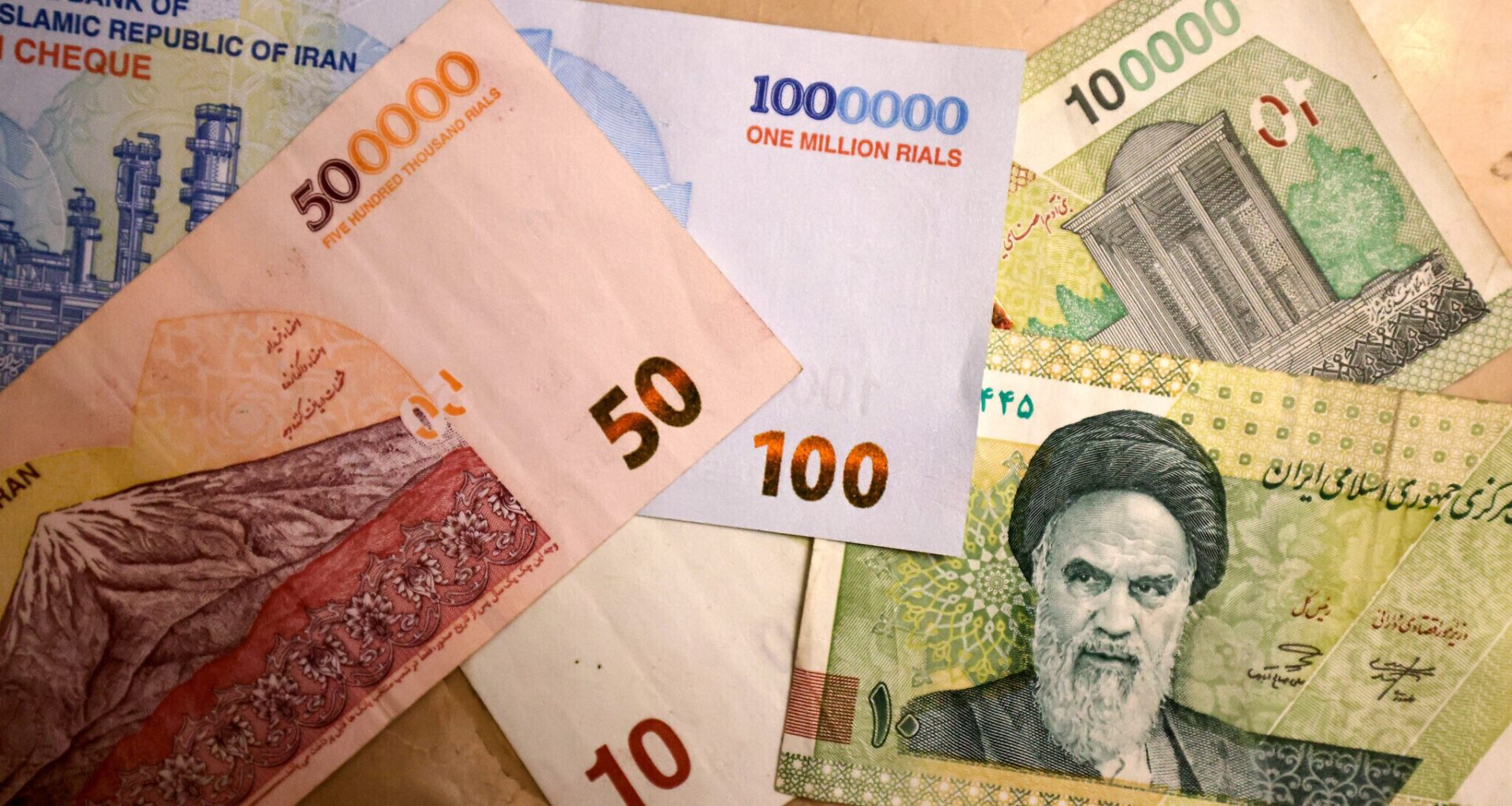
TEHRAN — Iran’s rial slid further Monday to a new record low of more than 1.3 million to the US dollar, deepening the currency’s collapse less than two weeks after it first breached the 1.2-million mark amid sanctions pressure and regional tensions.
Currency traders in Tehran quoted the dollar above 1.3 million rials, underscoring the speed of the decline since December 3, when the rial hit what was then a historic low.
The rapid depreciation is compounding inflationary pressures, pushing up prices for food and other daily necessities and further straining household budgets, a trend that could be intensified by a gasoline price change introduced in recent days.
Iran on Saturday added a third gasoline price tier, the first major adjustment to fuel pricing since a price hike in 2019 that sparked nationwide protests and a crackdown that reportedly killed over 300 people.
Under the revised system, motorists continue to receive 60 liters a month at the subsidized rate of 15,000 rials per liter and another 100 liters at 30,000 rials, but any additional purchases now cost more than three times the original subsidized price. While gasoline in Iran remains among the cheapest in the world, economists warn the change could feed inflation at a time when the rapidly weakening rial is already pushing up the cost of food and other basic goods.
Get The Times of Israel’s Daily Edition
by email and never miss our top stories
By signing up, you agree to the terms
The fall comes as efforts to revive negotiations between Washington and Tehran over Iran’s nuclear program appear stalled, while uncertainty persists over the risk of renewed conflict following June’s 12-day war involving Iran and Israel.
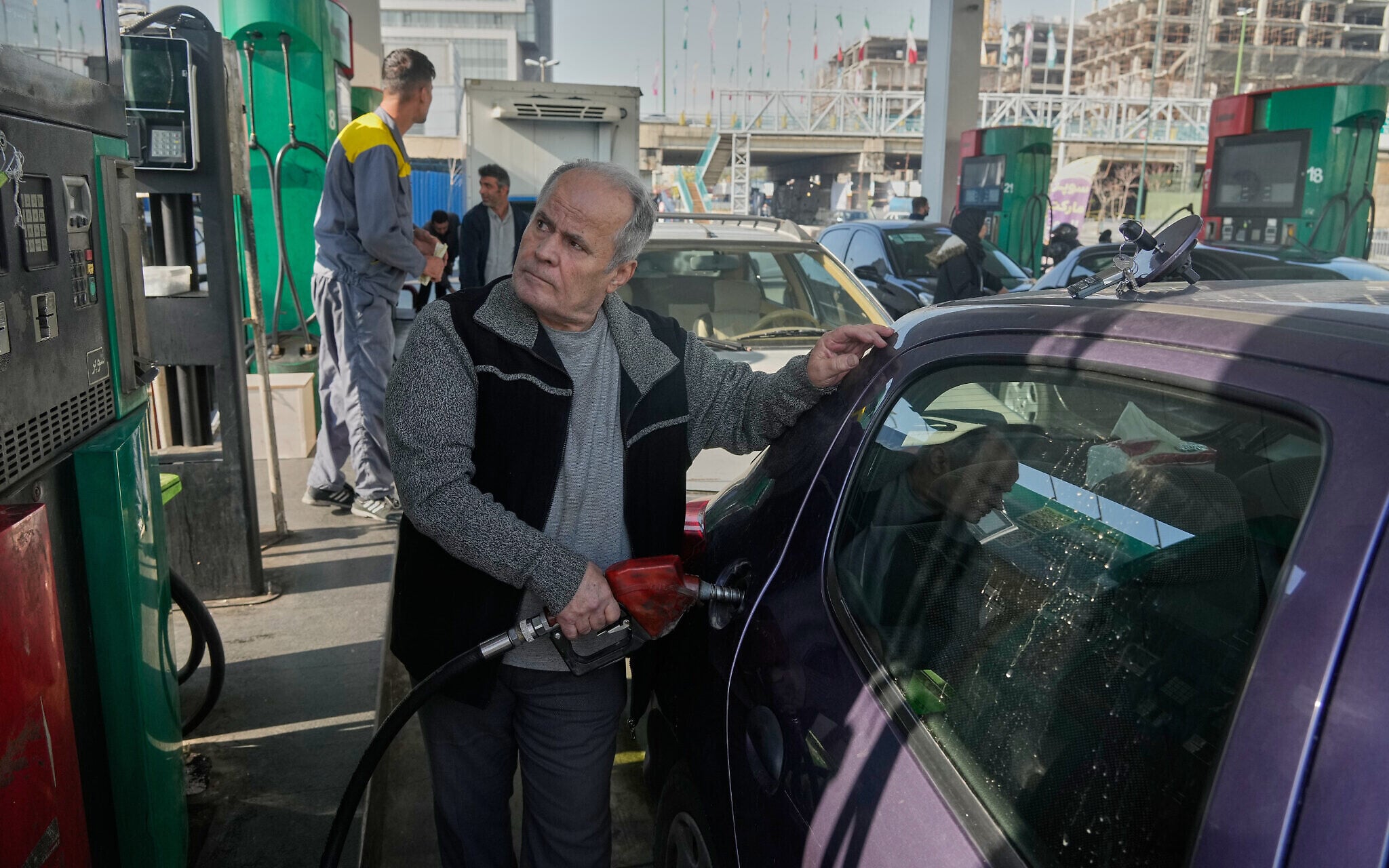
A man fills his car at a gas station in Tehran, Iran, December 13, 2025. (AP Photo/Vahid Salemi)
Israel said its sweeping assault in June on Iran’s top military leaders, nuclear scientists, uranium enrichment sites, and ballistic missile program was necessary to prevent the Islamic Republic from realizing its avowed plan to destroy the Jewish state.
Iran has consistently denied seeking to acquire nuclear weapons. However, it has enriched uranium to levels that have no peaceful application, obstructed international inspectors from checking its nuclear facilities, and expanded its ballistic missile capabilities. Israel said Iran had recently taken steps toward weaponization.
Many Iranians fear the possibility of a broader confrontation that could draw in the United States, adding to market anxiety.
Iran’s economy has been battered for years by international sanctions, particularly after Donald Trump unilaterally withdrew the United States from Tehran’s nuclear deal with world powers in 2018. At the time the 2015 accord was implemented — which sharply curtailed Iran’s uranium enrichment and stockpiles in exchange for sanctions relief — the rial traded at about 32,000 to the dollar.
After Trump returned to the White House for a second term in January, his administration revived a “maximum pressure” campaign, expanding sanctions that target Iran’s financial sector and energy exports. Washington has again pursued firms involved in trading Iranian crude oil, including discounted sales to buyers in China, according to US statements.
Further pressure followed in late September, when the United Nations reimposed nuclear-related sanctions on Iran through what diplomats described as the “snapback” mechanism. Those measures once again froze Iranian assets abroad, halted arms transactions with Tehran, and imposed penalties tied to Iran’s ballistic missile program.
Economists warn that the rial’s accelerating decline risks feeding a vicious cycle of higher prices and reduced purchasing power, particularly for staples such as meat and rice that are central to Iranian diets. For many Iranians, the latest record low reinforces concerns that relief remains distant as diplomacy falters and sanctions tighten.
Times of Israel staff contributed to this report.
Give a Hanukkah gift that illuminates

This year, send your loved ones a special connection to Israel and the Jewish world.
A Times of Israel Community gift membership entitles your recipient to one full year of membership benefits, at a special discounted price.
Already a member? Sign in to stop seeing this
You appreciate our journalism

You clearly find our careful reporting valuable, in a time when facts are often distorted and news coverage often lacks context.
Your support is essential to continue our work. We want to continue delivering the professional journalism you value, even as the demands on our newsroom have grown dramatically since October 7.
So today, please consider joining our reader support group, The Times of Israel Community. For as little as $6 a month you’ll become our partners while enjoying The Times of Israel AD-FREE, as well as accessing exclusive content available only to Times of Israel Community members.
Thank you,
David Horovitz, Founding Editor of The Times of Israel