
Globally, liver cancer is the sixth-most commonly diagnosed cancer and the third-highest leading cause of cancer death.
Victorian women born in Greece, China and South Pacific countries such Samoa, Fiji and Papua New Guinea are twice as likely to be diagnosed with stomach cancer as women born in Australia.
Loading
Victorian men born in the Middle East are 1.7 times more likely to be diagnosed with thyroid cancer, while men born in Spain, Portugal and Malta are 1.6 times more likely to be diagnosed with pancreatic cancer.
The thyroid is a butterfly-shaped gland at the base of the neck, below the Adam’s apple, which helps regulate the body’s metabolism. The pancreas is located behind the stomach and helps to regulate blood sugars. Cancer of the thyroid and pancreas isn’t common, but cases are rising – among women and young people, respectively.
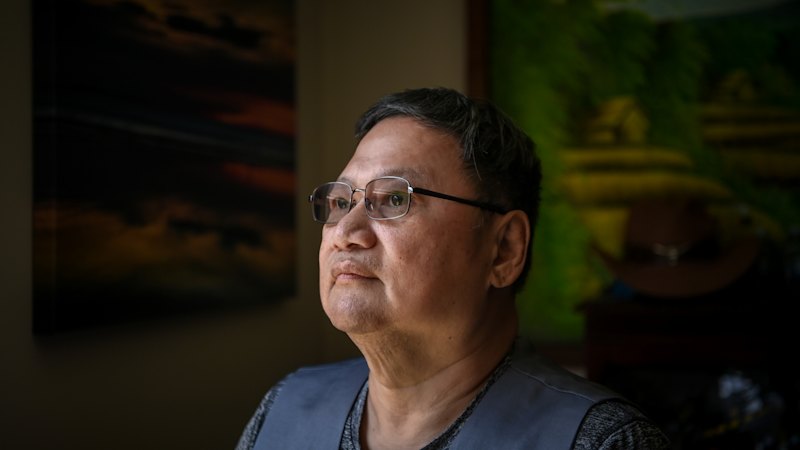
Truganina resident Chris Kee was born in Malaysia and moved to Melbourne in 2003. A tumour on his liver was discovered by doctors three years ago after he suffered a bad fall.
“I fell at Hoppers Crossing while walking to retrieve my car from a parking lot,” Kee said. “I was walking there, and I don’t know how I tripped, but I fell, and I broke six ribs.”
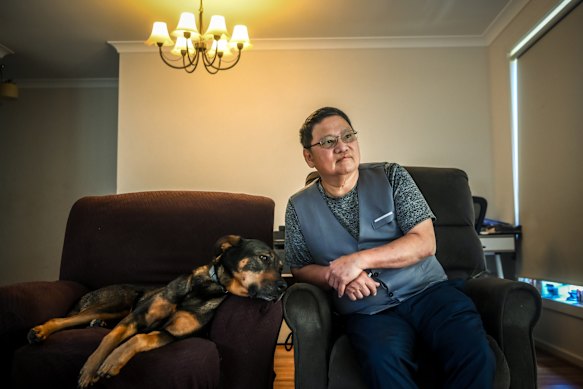
Kee at home in Melbourne’s western suburbs with his dog, Lunar.Credit: Justin McManus
A series of scans and tests revealed he had a six-centimetre tumour on his liver, which, when removed, was found to be cancerous – a result that left him in shock.
“I never had hepatitis when I came to Australia. If I had it, they would have denied my visa because they’re very strict here,” he said. “All the blood tests – I was surprised.”
Kee said his liver function was OK for now because the hepatitis B virus was “sleeping”, but it could return at any moment with a vengeance. For this reason, he is on the liver transplant list.
“In a way, I’m lucky,” he said. “When I fell down, they discovered this. If I didn’t fall down, I wouldn’t be talking to you.
“I encourage people from the Asian community to please go and get tested. It could save your life.”
Charissa Feng, a senior manager at Cancer Council Victoria’s liver cancer program, said hepatitis B could remain a silent infection for decades and not all countries had access to vaccines administered at birth.
“If you don’t know your hepatitis B status, or you don’t know if you’ve been vaccinated before – especially if you were born overseas – ask your GP for a blood test,” Feng said. “And if you have got the hep B virus, it does not mean that you’ve got liver cancer straight away. It’s about getting regular checkups with your GP once or twice a year.”
Victorian Cancer Registry director Professor Sue Evans said she hoped the latest report would start conversations among families that would ultimately save lives.
Loading
“A large percentage of Victoria’s population have been born overseas, or have parents that have been born overseas,” she said. “It’s important that we understand where resources should be focused.”
Evans said it was important to note that there were many factors that contributed to cancer risk. While men born in Italy, Greece, Asia and the Middle East had lower rates of prostate cancer diagnosis compared with Australian-born men, it did not necessarily mean that overseas-born populations had healthier prostates – it probably highlighted the need for men to have more regular conversations with their GPs once they turned 50.
In fact, Victorian males born in Vietnam and other countries within mainland South-East Asia were about 20 per cent more likely to be diagnosed with advanced prostate cancer than Australian-born Victorian men. This was similar for Victorian men born in India, despite having lower overall incidences of the disease.
“It’s a very crude tool to measure cancer, but it’s the one that we have available for us at the moment,” Evans said of Wednesday’s report.
“Ideally, we would like to be collecting information on how long a person’s been in Australia for and what their language spoken at home is, and what their culture and ethnicity is.”
Start the day with a summary of the day’s most important and interesting stories, analysis and insights. Sign up for our Morning Edition newsletter.