
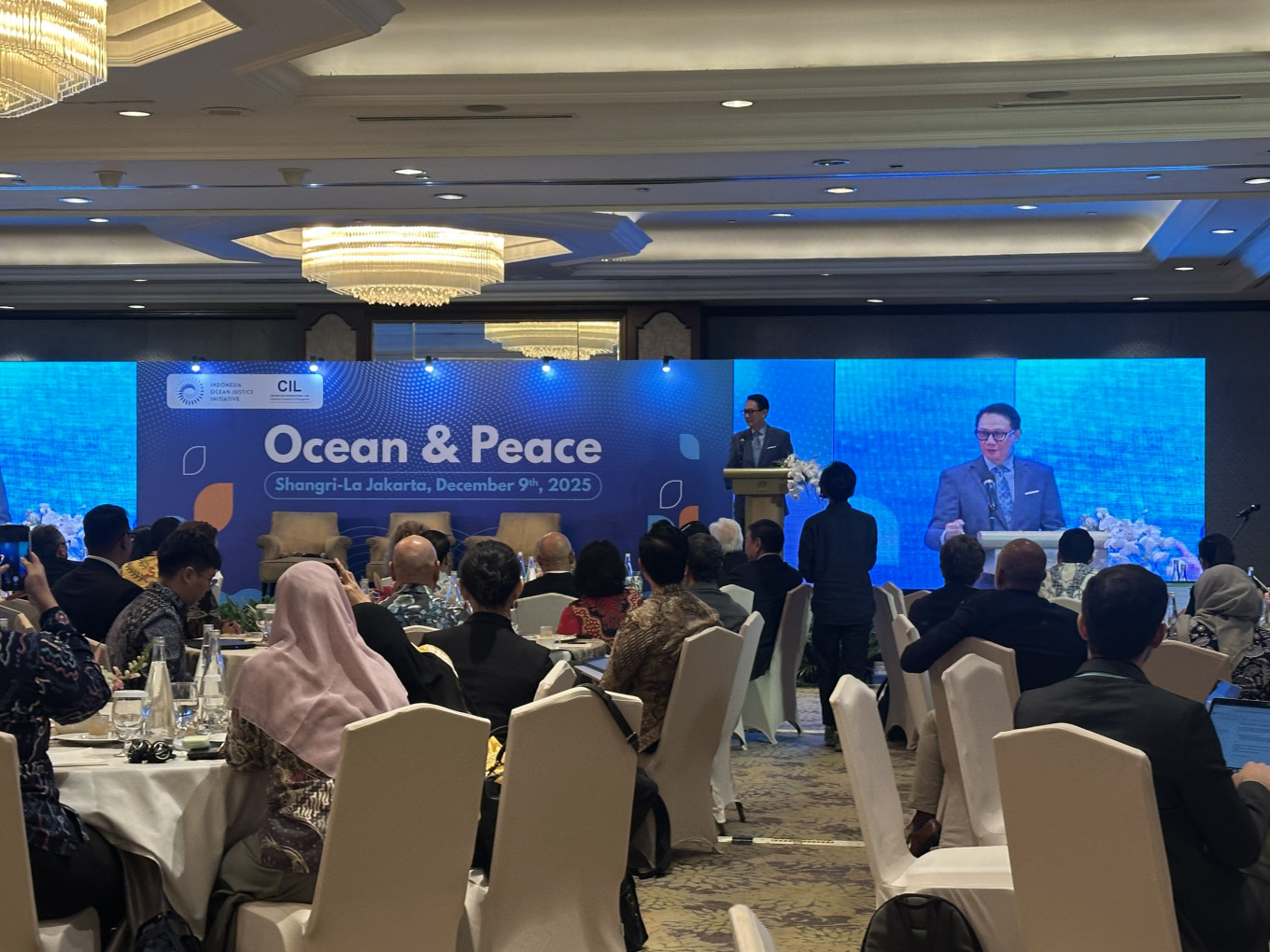
SEAN should pivot from rivalry to cooperation in the South China Sea by prioritizing environmental sustainability, shared resource management and rules-based maritime governance, experts said at a recent regional Ocean & Peace forum in Jakarta.
The conference, jointly held by the Indonesia Ocean Justice Initiative (IOJI) and the Centre for International Law at the National University of Singapore, brought together scholars, researchers and diplomats to discuss maritime governance amid escalating environmental and geopolitical challenges.
Rahmat Mohamad, professor of law at the MARA Technological University in Malaysia, said the concept of a “cooperative ocean” offered ASEAN a practical way to manage disputes without undermining sovereignty.
A cooperative ocean does not mean abandoning sovereignty, he said during his speech at the Dec. 9 event.
“Rather it means managing disputes peacefully through the ASEAN way and rules-based international law. It means promoting shared use of marine resources, protecting the marine environment, ensuring freedom and safety of navigation, and preventing conflict through practical cooperation.”
He underscored the strategic importance of the South China Sea for Southeast Asia, describing it as vital to food and energy security, economic growth and environmental heritage, and urged member states to move beyond sovereignty disputes toward collaborative frameworks that deliver mutual benefits.
Read also: Becoming the Archipelagic Bridge: Reimagining Indonesia’s maritime strategy