
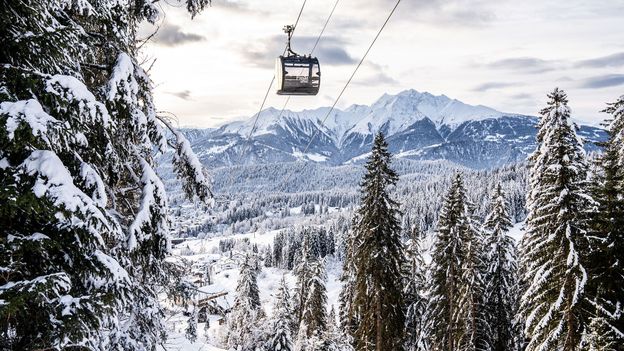
Decarbonised buildings glimmer with solar-panelled architecture. E-vehicles scoot silently. Vertical gardens resemble beanstalks on ski-lift base stations to help nurture bird, bee and insect life. To list every win would take too long, but particular pleasures of staying are its roof gardens, seasonal, plant-based menus (a rarity in Switzerland) and plentiful and free water stations (even rarer). If you turn up with damaged ski gear, a repair service to extend its lifecycle is also offered gratis.
More like this:
• The stunning car-free village reached by cable car
• The ski resort Olympians flock to each summer
• The magic of the legendary ‘enrosadira’
The latest transition to a CO2-neutral environment is the introduction of more than 20,000 flowers and perennials in specially designed gardens for the endangered black mud bee. Rarer still, the insect is being encouraged to nest in the rocky facades of the hotel buildings. “The species is under immense pressure,” explained Fry, “so to help its comeback, we have created a suitable, diverse habitat that optimally meets the nesting and feeding requirements.”
Nature lovers will also find the Senda dil Dragun – the world’s longest treetop path – winding through one of more than a dozen special wildlife protection areas. Look out for mountain hare, ibex and eagle, or print trails of more elusive critters such as red deer, chamois, bearded vulture and various species of grouse. Wolf and lynx are also rumoured to have returned.
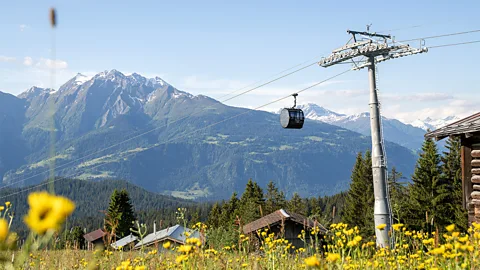 LaaxThe FlemXpress rethinks ski lifts as an on-demand network, cutting wait times and energy use (Credit: Laax)

Once you strap your skis or board on, another innovation is visible over in neighbouring Flims: the FlemXpress, the world’s first on-demand cable car whose fifth and final section opens on 19 December 2025. A sustainable ski lift taxi system, the cutting-edge gondolas only travel when needed, reducing energy consumption by 50% – a radical shift given that around 90% of cabins in conventional lifts travel empty. Like “an Uber of the Alps”, as Alicia Martinez, head of business performance for Weisse Arena Group, put it, the new system could “revolutionise mountain transport, but also in cities”.
“The Willy Wonka-inspired lift where you push a button and end up where you want to go – we invented it for innovation and guest privacy, but more because of energy consumption,” Martinez said. “Ski lifts everywhere consume a huge amount of energy, so this is our first transition away from the traditional winter sports model.”