

Listen to this article
Estimated 4 minutes
The audio version of this article is generated by AI-based technology. Mispronunciations can occur. We are working with our partners to continually review and improve the results.
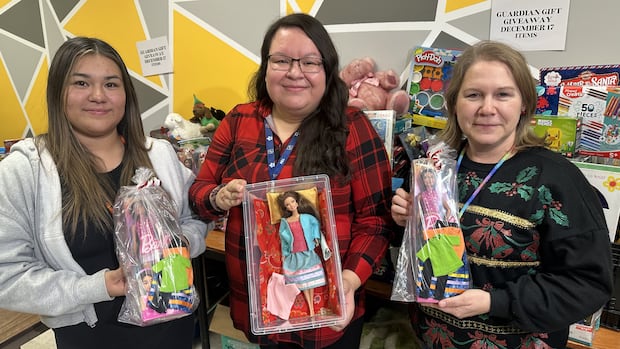
As soon as Tamara Woroschuk saw the Barbie dolls and their handmade outfits, carefully packaged in cellophane wrapping, she knew there had to be a story behind them.
“We get a lot of donations in, especially around Christmas time,” said Woroschuk, the development director for the North Central Family Centre in Regina.
“We don’t see a lot of handmade gifts where people take the time and handcraft them themselves.”
The dolls, donated for the centre’s holiday toy drive, came with handmade ribbon skirts — ceremonial attire that represents resilience and strength for many Indigenous women.
Each one has two shirts — one orange and one green — black leggings for winter and a blue flower-patterned skirt, carefully adorned with yellow, purple and orange ribbons.
“This was very special,” Woroschuk said.
She contacted the woman who dropped the dolls off, wanting to thank her and to learn more.
The woman, who doesn’t want to be identified, told Woroschuk she’s been making the custom ribbon skirts for several years in honour of her niece, who the family lost when she was five years old.
“She made these in hopes of making other little girls happy,” Woroschuk said.
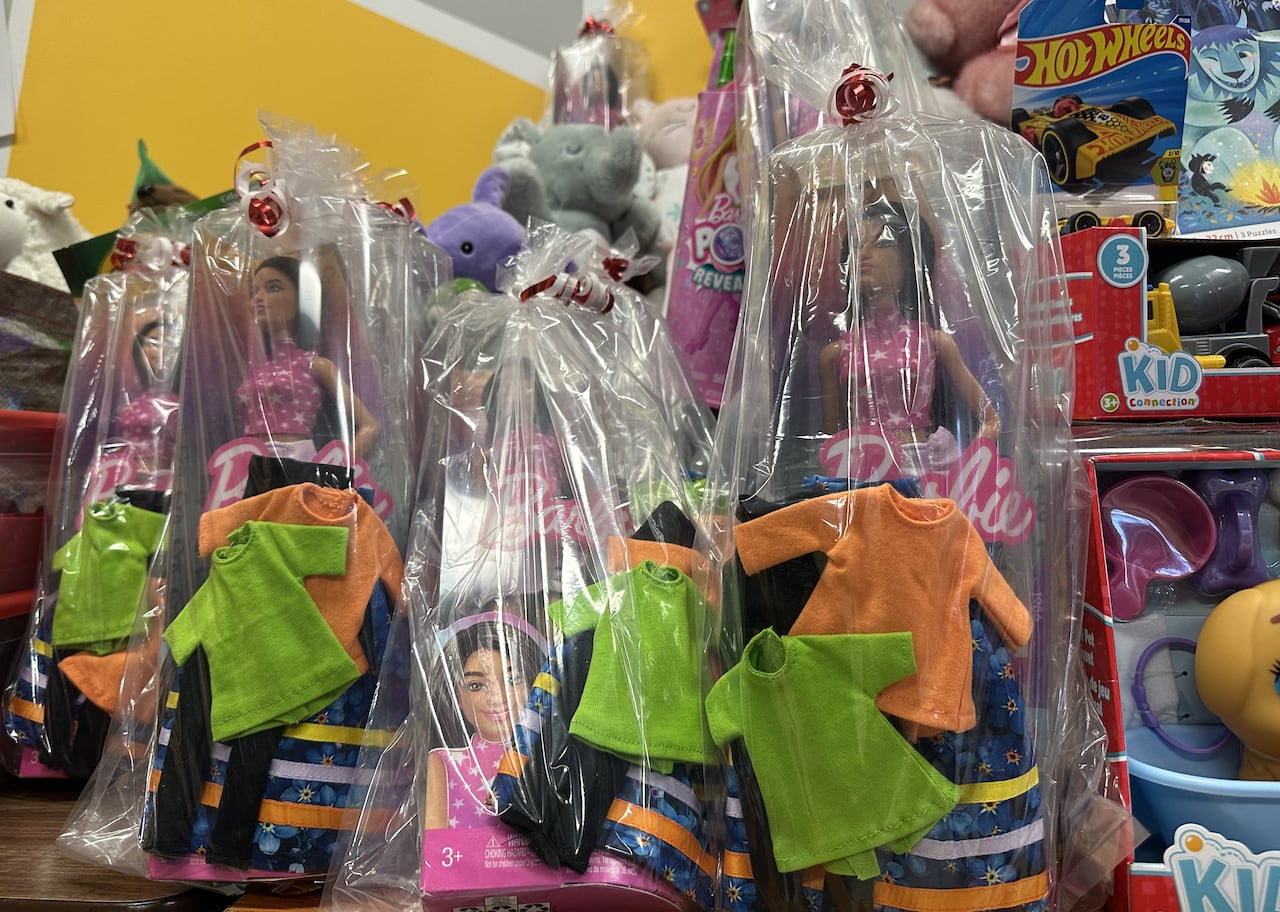 Ten Barbie dolls with handmade ribbon skirts were donated to Regina’s North Central Family Centre. The women who made them wish to remain anonymous. (Katie Swyers/ CBC News)
The woman told her she was inspired by the story of Isabella Kulak, a young member of Cote First Nation who sparked a national movement celebrating ribbon skirts after she was shamed by an education assistant for wearing hers to a formal day at her school in southeastern Saskatchewan in 2020.
Shortly after Woroschuk made a Facebook post about the donation, a second woman came to the centre with her own set of handmade ribbon skirts and Barbies. She also wishes to stay anonymous.
The centre ended up with 12 special Barbies.
Two of them made it into the hands of a pair of sisters, nine-year-old Mya and six-year-old Kimberly Kirkness-Henry.
Ripping through holiday paper and ribbons at the centre recently, the girls were delighted.
So was their mother, Alena Kirkness.
“I love them. They’re absolutely beautiful,” Kirkness said.
She never had dolls with culturally-specific clothing when she was little, and is happy that her daughters now have these ones, she said.
LISTEN | A local Regina not-for-profit received an unexpected donation that touched the staff that work there just in time for the holidays:
The Morning Edition – Sask6:45A local Regina not-for-profit received an unexpected donation that touched the staff that work there just in time for the holidays
The North Central Family Centre in Regina received a donation of 10 Barbie dolls wearing handmade ribbon skirts by an anonymous donor. CBC stopped by the centre where they are accepting donations just in time for the holidays.
Staff member Rayne Longman said she’s glad young Indigenous girls in the community have the opportunity to play with dolls that look like them.
“I think it’s a beautiful thing to see now, because as a little girl, that was not something that I’ve seen,” Longman said.
Outreach worker Ann Dorion said she wished she had a chance to meet the women who donated the dolls. She considers the donations, and the fact that young Indigenous children can now grow up with such toys, a form of reconciliation, she said.
It’s part of reconciliation to not be afraid to show your culture and your identity, Dorion said.
“What if this becomes a trend? Hopefully, this keeps on going,” she added.
“That would be really awesome.”
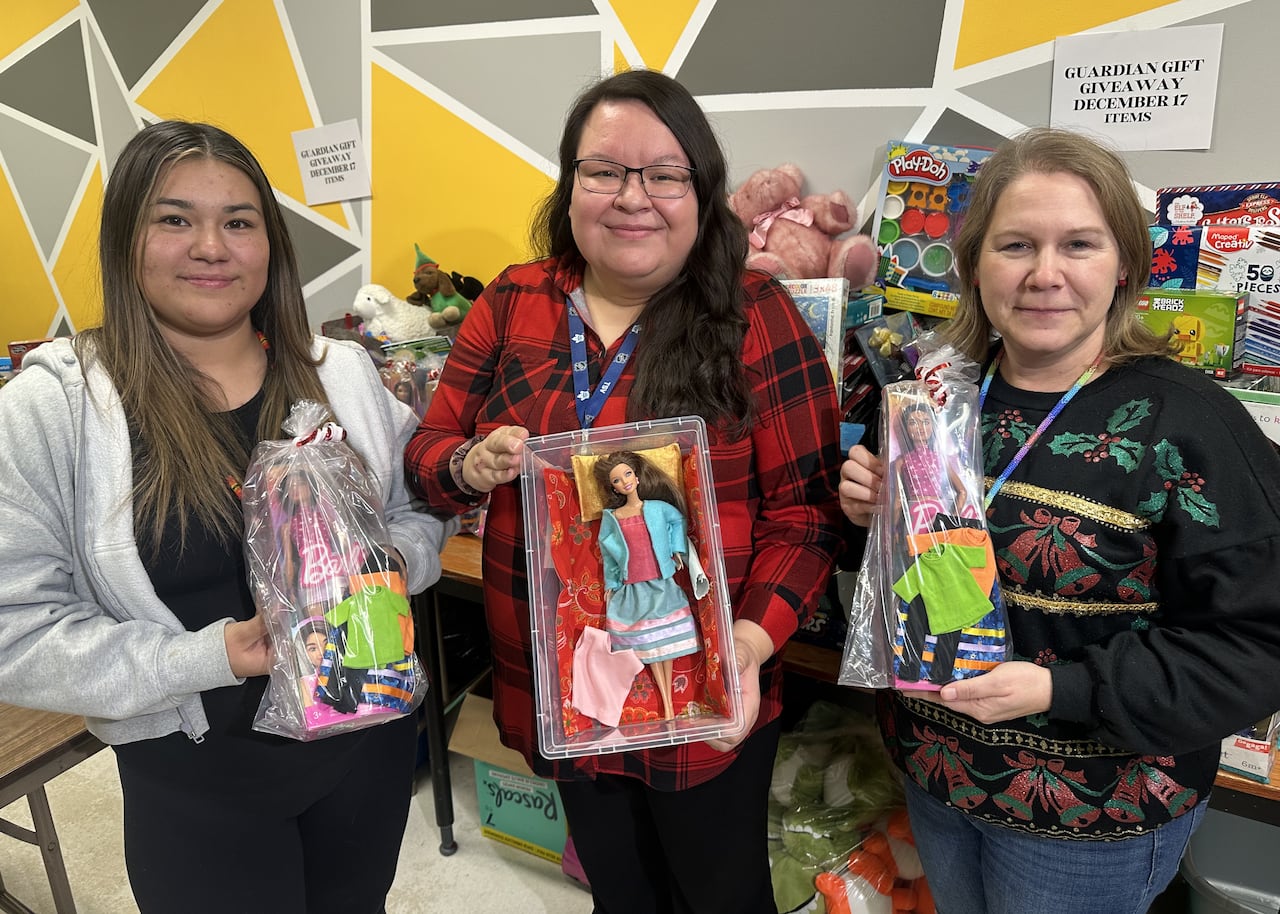 North Central Family Centre staff Rayne Longman, from left, Ann Dorion and Tamara Woroschuk hold Barbies with handmade ribbon skirts anonymously donated to its holiday toy drive. (Katie Swyers/ CBC News)Centre still accepting donations
The centre is running multiple donation campaigns for the holiday season, including its ‘Brighten a Light to Brighten a Life’ campaign, raising money for the 2,500 people it serves throughout the year by selling light bulbs that represent each person. The campaign runs until Dec. 31.
The centre’s executive director, Kimberly Wenger, said any type of donation is appreciated — time, money or items.
She’d like people to consider donating beyond the Christmas season, as the need is higher in January and February when “a lot of families put some bills on hold” in order to afford Christmas expenses, she said.
The centre was built for the community, by the community, and receives no core government funding. Instead, it has relied on sponsorships, grants and community donations for 20 years.
Nine-year-old Mya offered a message for the anonymous woman who brightened her Christmas:
“Thank you for making those dolls. I think it took a long time to make those ribbon skirts.”