

Listen to this article
Estimated 4 minutes
The audio version of this article is generated by AI-based technology. Mispronunciations can occur. We are working with our partners to continually review and improve the results.
Calgary city council has voted to move forward with a process that would begin repealing the municipality’s contentious blanket rezoning policy.
Ward 10 Coun. Andre Chabot put forward a motion Monday to reverse the citywide rezoning approved by the last council in 2024 and return to land use districts previously in place.
“The gist of my motion is to look at starting over and trying to get this right,” Chabot told council.
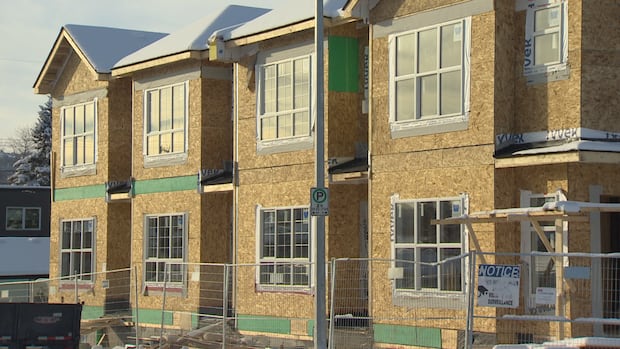
The policy was intended to eliminate bureaucratic processes, allowing Calgary to adapt to a growing population by permitting higher-density housing, like townhouses or row houses, in neighbourhoods that previously only allowed single or semi-detached homes.
But detractors have argued that blanket rezoning is putting stress on aging infrastructure, causing issues finding parking, worsening traffic for communities, and damaging the character of neighbourhoods.
“Whilst I think the intent was laudable, insofar as trying to create a more sustainable city,” said Chabot, “I think … it should have been done in a more co-ordinated, strategic, planned and sequenced fashion.”
Council voted 13-2 in favour of rolling back the policy, with Ward 7 Coun. Myke Atkinson and Ward 8 Coun. Nathaniel Schmidt voting against.
“This adds to the cost of housing. This makes it so that we are in a bureaucratic process … I don’t know that there’s going to be the political appetite to actually get to the solving of it once everyone just wishes this away,” Atkinson said.
City administration said the decision will start a process that amends the land use bylaw to bring back districts that were in effect prior to citywide rezoning.
It would exempt any developments already built or in progress.
The changes will now head to a public hearing next spring before going to council for another vote.
Housing funding questions
Prior to the vote, there had been questions about what changes to the policy would mean for federal funding meant for the City of Calgary through the Housing Accelerator Fund.
Calgary Mayor Jeromy Farkas said he had spoken with various federal officials, including Housing and Infrastructure Minister Gregor Robertson and Finance Minister François-Philippe Champagne.
“Federal officials confirmed the compliance with the Housing Accelerator Fund is assessed based on housing outcomes, not the use of any single zoning tool. Blanket rezoning was not identified as a legal requirement of the HAF contribution agreement,” Farkas said.
“I also explicitly raised the potential of a repeal with Minister Champagne, and he pledged his support to work with us on a flexible approach that respects local decision-making.”
 Calgary Mayor Jeromy Farkas said Monday that he had received assurances that blanket rezoning wasn’t identified as a legal requirement as part of Housing Accelerator Fund agreements. (Brendan Coulter/CBC)
Blanket rezoning passed in May 2024 after a marathon, multi-day public hearing that involved hundreds of speakers — the city’s longest ever.
It became a major topic on the campaign trail during the city’s last municipal election, with candidates debating whether the policy should be tweaked or whether it should see a full repeal.
Mixed reaction
The CEO of BILD Alberta, which represents groups like developers and builders, said his organization is prepared to collaborate as Calgary makes its way through its local area planning process.
“We continue to stand ready, work collaboratively with them on those matters, which are pretty consequential pieces in terms of how to unlock housing and how to make sure that the application and permitting processes runs smoothly,” Brian Hahn said.
Calgarians for Thoughtful Growth lobbied against blanket rezoning during the municipal election. Robert Lehodey, its founder, argued voters sent a clear message.
“People made their investments in their homes, and they don’t want to see the communities change without thoughtful planning consideration,” he said prior to Monday’s vote.
Others have voiced concern over the changes, such as Julia Law with the University of Calgary Students’ Union, who said prior to Monday’s vote that students are being squeezed by rising costs.
“We are firmly in favour of rezoning. We believe that it’s taken some pressure off the market for students,” Law said.