
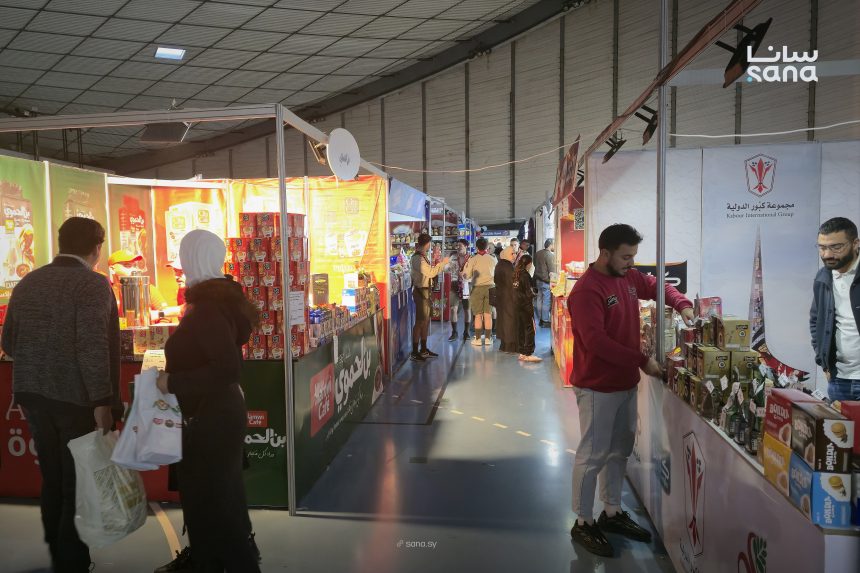
PARIS — As Syrians take stock of one year without the Assad regime, the economy is top of mind for many, with daily discussion centered on the exchange rate of the pound, its purchasing power and rising prices compared with incomes.
While the past year brought relative economic stability and a marked improvement in the Syrian pound’s (SYP) exchange rate, economic burdens continue to weigh on Syrians. A question remains, with no definitive answer so far: Have day-to-day economic conditions improved, or is the crisis deepening?
In the wake of the fall of the regime on December 8, 2024, Syria’s economy shifted “from continuous collapse to relative stability,” economic researcher Munaff Koman told Syria Direct. “The economy is slowly improving, but we need more time and tighter management of economic policies to stimulate the economy.”
“The rate of deterioration slowed, and signs of positive growth emerged in some sectors, especially trade,” Koman added. At the same time, the economy remains “bound by structural constraints, such as a severe shortage of physical capital due to destroyed infrastructure, large-scale emigration of expertise and human capital, distorted ownership structures, militarization of the economy during the war years, and—most importantly—weak tax collection.”
Has the economy improved?
On December 8, Abu Steif marked the one-year anniversary of the end of 54 years of Assad family rule in the bare-bones camp where he lives with his wife and children near the Syrian-Turkish border in Idlib province. For them, “the situation became worse after the liberation, because many organizations stopped working in the camp,” he told Syria Direct.
A year ago, Abu Steif dreamed of going home. Hours after Assad fell, he hurried to his house in the southern Idlib countryside, an area that had been controlled by regime forces. He found it “razed to the ground,” and turned back.
Today, Abu Steif is happy about “Syria’s liberation” but faces the day-to-day reality of “not having a roof to shelter my family and I from the winter cold,” he said.
Others have seen their fortunes change for the better. In Syria’s southern Daraa province, government employee Abu Wassim felt a marked improvement over the past year. “It has become possible for us to live like many Syrians—to eat meat once a week, to go shopping and buy some things we need,” he told Syria Direct.
As a public sector employee in northern Daraa, Abu Wassim brings home SYP 1.1 million ($99) a month, after the country’s new government raised pay for public sector workers and retirees by 200 percent in June.
Alongside his government job, Abu Wassim moonlights at a home electrical wiring workshop, earning around SYP 2 million ($165) a month. Before the regime fell, his two jobs brought in just SYP 1 million a month (around $83 at the current, improved exchange rate).
Alongside his own higher income and purchasing power, “goods have become available” in local markets, Abu Wassim added, “an achievement the new government should be thanked for.”
Today, the exchange rate of the Syrian pound stands at SYP 12,100 to the US dollar, up from an unprecedented plunge to SYP 19,000 to the dollar a few days before the regime fell last December.
As the value of the pound gradually improved over the year since, the prices of goods and services began to come down. However, “prices did not fall by the same amount as the dollar, and they remain higher than their real and natural levels,” said Abu al-Majd al-Kurdi, who owns a home furnishings store in the northern Daraa city of Inkhil.
“It is very clear that the economic situation has improved compared to previous years, but the situation is still difficult, and beyond the means of the [average] citizen,” al-Kurdi told Syria Direct.
Researcher Koman attributed the pound’s recovery to multiple factors, including “the improved political environment and the world opening up to Syria, the lifting of Western sanctions, the end of fighting and an expectation of continued security and stability in the future.”
Additionally, some remittances sent by Syrians abroad now enter the country “through official channels, rather than the black market, due to the narrowing gap between the [formal and informal] exchange rates,” Koman added. He also pointed to a more effective central bank and an “increased supply of dollars in the market, which has helped secure the necessary financing for imports.”
The involvement of “international institutions and some Arab countries, such as Qatar and Saudi Arabia, in funding the needs of the Syrian economy” has also played a role, the researcher said.
However, “this improvement in the pound did not result from an internal productive force,” he said, and cannot be said to reflect a “comprehensive stabilization of the currency if not accompanied by real growth in producing goods and services for export, improving the business environment and attracting real, long-term investment.”
The current improvement is a “symbolic and important macroeconomic indicator, but it does not necessarily translate to an improvement in people’s lives—especially when this strength comes from foreign inflows more than stemming from a new production structure,” Koman said.
On November 11, the Syrian Ministry of Energy set prices for oil derivatives in US dollars, pricing a cylinder of household gas—used across the country and much of the region to fuel stoves and heat homes—at $10.50, or SYP 127,000 at the parallel market exchange rate. By comparison, a subsidized cylinder of gas provided through the Assad regime’s smart card rationing system cost SYP 30,000.
Through the smart card, each family received one cylinder of gas every three-to-five months, and bought additional fuel through the parallel market, since most households use at least one cylinder a month, three sources told Syria Direct.
“The price has become exorbitant, and it is difficult to get by,” Ibtisam Salem, who lives in the capital Damascus, told Syria Direct. “Fuel, gas and everything is available, but at high prices we cannot pay. [The price of] a cylinder of gas went from SYP 30,000 to SYP 130,000.”
For al-Kurdi, “the availability of gas and stability of the price has become much better,” as in past years he “had to buy a cylinder of gas many times from the black market for SYP 600,000,” he said. “If you calculate gas prices annually, you would find that they are more affordable today.”
The official price of mazot (diesel) and gasoline is also up, with the energy ministry setting the price of one liter of 90-octane gas at $0.85 (SYP 10,200) and mazot at $0.75 (SYP 9,000). In November, the month before the regime fell, the same amount of gas was priced at SYP 11,500 ($0.77 at the time), and the same for unsubsidized mazot.
The price of a bundle of bread has also increased, to SYP 4,000 ($0.33), compared to SYP 500 through the smart card system.
While the price of bread is up, it is “available at any time,” al-Kurdi said. He said it is not possible to compare current prices with the price of subsidized goods purchased through the smart card system, since “the allocations were not enough, and people were often forced to buy [unsubsidized] bread at multiple times the subsidized price.”
But if it is still hard to get by in Damascus and other major cities, the situation for those who remain in northern displacement camps is “even more difficult than it was in the last months before the regime fell,” Abu Steif said.
Displaced people in camps located in opposition-controlled areas did not receive subsidized goods through the smart card, but had support from humanitarian organizations providing food aid and water. Today, “most families have no income, at a time when aid and services have been cut off and prices have gone up,” Abu Steif added.
In many camps, support from organizations has stopped or declined since last December, in part due to international funding cuts.
Before the regime fell, Abu Steif’s family received trucked-in water for drinking and other uses once every five days, provided free of cost by humanitarian organizations working in the camps. This service has been cut, leaving him to “buy a truck of water at a cost of 300 Turkish lira every 15 days,” spending around $14 spent each month on water alone, he said.
Economic activity
Abu Wassim’s electrical installation work has increased fivefold compared with last year, and he has customers “waiting in line for up to the next two months,” he said. He takes this as an indication that “economic activity in Daraa has been good for months.”
Al-Kurdi, in the same province, agreed, noting that sales at his shop are up this month, despite a usual “slowdown” in December. Over the past year, his sales were four times what they were before the regime fell, he said.
“Home reconstruction and repairs has stimulated activity across most other sectors and trades,” al-Kurdi added. “In Inkhil, there is excellent economic activity, and those with trades and businesses have multiple times the business they had in past years.”
Within Daraa, the extent of economic improvement is linked to security, with communities in areas facing persistent insecurity—such as the eastern countryside—lagging behind, Syria Direct previously reported.
Still, markets have opened up and “new goods and companies have entered the country,” al-Kurdi added. Fabrics are “more available, and the prices have gone down,” he said. “For example, the cost of a meter of top-grade fabric has gone down by $1 or $1.50, and this makes a big difference for us and the customers.”
All this impacts consumers at the end of the day, because increased activity has created “strong competition between merchants and companies, unlike the market monopolization there was in the days of the regime,” al-Kurdi said.
Increased hours of electricity service has also improved the economic and commercial situation, as electricity now comes for an average of four or five hours for every hour of interruption during the day. Sometimes, “the total number of hours is between 15 and 16 a day,” al-Kurdi said.
But what al-Kurdi views optimistically, Salam in Damascus views with trepidation. She worries more hours of electricity will increase her bills—especially after the government announced new electricity rates in October. She tries to ration her usage as much as possible, which is its own challenge: “electricity is available, yet you cannot use it normally,” she said.
On October 30, the Ministry of Energy published details of its decision to raise electricity prices, distributing users into four consumer segments. The ministry said at the time it “takes into account social groups and different levels of consumption.”
Beyond electricity, “everything has deteriorated, and life is harder,” Salam said. Her income from the private education center she runs fell this year, while salaries for the teachers she employs increased. In addition, the rent she pays for her home increased in November, from SYP 1.5 million to SYP 2.5 million ($207 to $248).
In addition to Salam and her husband’s incomes, the family receives remittances from their relatives abroad in Europe. Still, “we are trying to cut back on our expenses and consumption,” she said.
How has Syria’s economy changed?
Since the 1980s, the Assad regime adopted economic policies that deepened corruption and entrenched authoritarianism in the country. When the Syrian revolution broke out in 2011 and spiraled into civil conflict, the country’s economy shifted from oligarchy to a “war economy” that saw the rise of many warlords and regime-linked businessmen.
Over the following years, the country experienced an ongoing economic crisis, as the exchange rate collapsed to unprecedented levels amid soaring poverty and unemployment. Subsidies were reduced or removed from basic goods and materials, while foreign goods and currency ran low.
“The most important change after the fall of the former regime is the liberalization of the economy and adoption of free-market policies,” Koman said. However, this shift “is not the best decision for a post-conflict country, given the many distortions affecting the economy.”
A more appropriate approach would be to “implement policies gradually and adopt protective measures at the sectoral and social levels,” Koman said. For a country emerging from conflict, the most important actions are those that “stop the [economic] bleeding, control inflation, restore confidence in the currency and direct public spending toward essential services and vital infrastructure.”
Buying power improved “relatively” after the regime fell, due to increased stability and “partial improvement in the supply of goods and services—such as electricity, fuel, transportation and basic goods—alongside a slowdown in price inflation and relative improvement of the pound,” Koman explained.
“The severity of commodity disruptions and runaway prices has declined in some areas. Certain costs related to security risks, such as bribes at checkpoints, have decreased,” he added. The country is also seeing a “relative expansion of jobs in the construction and service sectors, related to reconstruction.”
Still, a large percentage of Syrians still live below the poverty level, relying heavily on humanitarian aid and remittances from abroad, while “formal social protection networks are weak, fragmented and do not cover the impact of inflation on low wages,” he added.
The future of Syria’s economy
While there are positive signs for Syria’s economy, continued improvement relies on ensuring stability and “avoiding a return to large-scale military escalation,” researcher Koman said. “This would send a less negative signal to domestic and foreign investors, reduce transportation and insurance costs and encourage domestic trade.”
“There are other positive indicators, such as the gradual expansion of international engagement with Syria through the return of international institutions such as the World Bank and the International Monetary Fund,” he added, as well as international engagement in infrastructure, electricity and local development projects following the easing of sanctions.
“Humanitarian and development flows from the European Union and Gulf states continue, albeit with political conditions,” Koman added. “If these opportunities are rationally and wisely invested in, modest positive growth can be expected in the next year,” he said.
Despite a number of positive developments, risks remain high, as detours in the course of Syria’s political transition “could derail any path of recovery,” he added. “Failure to translate liberation into more inclusive and just governance could lead to a return of tensions, protests or even localized violence, and any new shock to political confidence would immediately be reflected in the exchange rate and capital flows.”
Koman warned that “the continuation of an economy of the elites, oligarchs and cronies, with the networks that accumulated wealth during the war continuing to hold the keys of the economy—ports, reconstruction contracts, foreign trade—would reproduce a rentier economy that monopolizes benefits and excludes the majority.”
Yet another challenge lies in “external shocks,” as “any sudden change in global food and fuel prices, tightening of international conditions or new regional tensions could push the Syrian economy back onto a path of severe inflation,” he added. Climatic and agricultural risks resulting from drought or heat, also “directly affect food security, driving prices up.”
In Daraa, al-Kurdi said one way to stimulate the local economy would be an additional hike to public sector salaries and pensions, bringing them to at least $300 a month, “the minimum for a livelihood.” While he works in the private sector, he has seen how “higher salaries for public employees drive economic activity and increase job opportunities.”
Before the regime fell, government workers were not among al-Kurdi’s customers, since “their salaries were not enough to buy furnishings,” he said. After the regime fell and their salaries increased, many began to visit his store.
As for Abu Steif, his troubles would not end with leaving the camp, and he cannot overcome the current economic situation alone, without support from the current government, he said. He called on the authorities to “provide support and assistance to camp residents, especially regarding repair and reconstruction,” and to “reinstate defected public sector employees,” who are among his neighbors in displacement.
This report was originally published in Arabic and translated into English by Mateo Nelson.
