
On the weekend, the Israeli military issued a warning that has become familiar to civilians living in southern Lebanon.
Israel would shortly attack what they claimed was infrastructure belonging to the militant Lebanon-based group, Hezbollah, in the town of Yanouh.
“You are located near buildings used by Hezbollah, and for your own safety you must evacuate them immediately,” the Arabic-language spokesperson for the Israeli military said on Saturday afternoon.
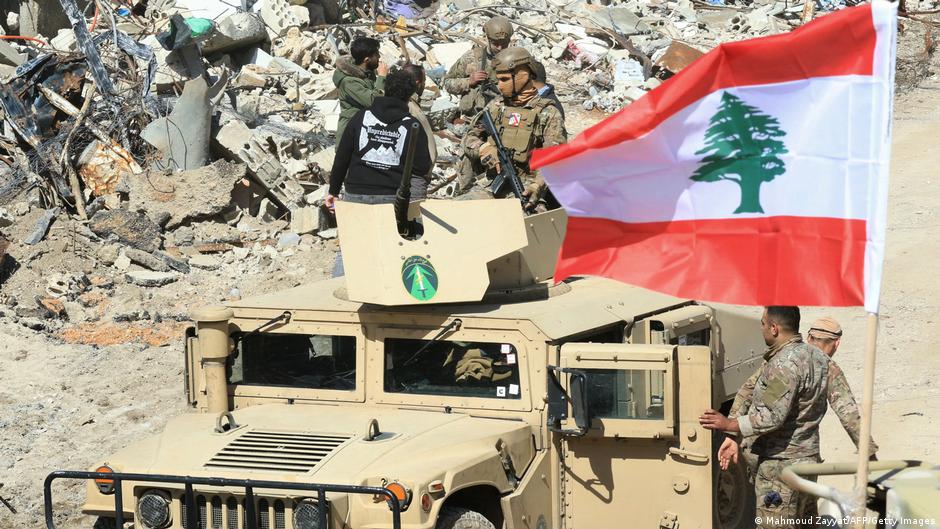
Then something rather unusual happened. The Lebanese army requested that, instead of an Israeli air strike, it should be allowed to inspect the premises for weapons itself. In what Israeli media would later describe as a “rare” and “unprecedented” event, the Israelis agreed and called the air strike on Yanouh off.
It was a positive moment in what is becoming an extremely difficult situation for Lebanon, as a November 2024 ceasefire between Israel and Lebanon looks in danger of collapsing.
After the ceasefire came into effect, Israeli soldiers mostly withdrew and Lebanese civilians were able to return homeImage: Hussein Malla/AP Photo/picture alliance
Why was a ceasefire necessary?
Almost immediately after the attack on Israel by the Gaza-based militant group Hamas on October 7, 2023, the Israeli military began to strike at Hezbollah in Lebanon too.
Hezbollah is part of a group of pro-Iranian militias that have long opposed Israel and the US, from inside Yemen, Iraq, Syria and Lebanon. Hezbollah is not just a militia, though; it is also an important political and social force in Lebanon, often described as a “state within a state,” with a social welfare network and military to rival actual Lebanese institutions.
Between October 2023 and November 2024, the Israeli military attacked Hezbollah and Lebanon by land and air. In November, a ceasefire was brokered by France and the US, with one of the conditions being that Lebanon disarm Hezbollah by December 31. In return, Israel would stop attacking Lebanon and withdraw its troops.
As that deadline draws closer, Lebanese authorities are under pressure to prove they’re disarming Hezbollah. They say they’ve achieved a lot. The Lebanese Armed Forces, or LAF, say they have detonated so many arms caches that they ran out of explosives. But, as observers regularly point out, it’s hard to prove this. There’s also ongoing disagreement as to whether the disarmament only happens in the south, nearer the Israeli border, or throughout the whole country.
Additionally, despite the ceasefire, Israel has been bombing Lebanon almost daily since November, with over 120 Lebanese civilians killed as a result, and has not fully withdrawn its troops.
Israel says a side letter to the ceasefire allows it to respond to alleged violations as long as it informs the US firstImage: Ramiz Dallah/Anadolu Agency/IMAGO
Intractable stalemate
“Both sides allege that the other is not complying with the ceasefire, so they won’t comply with it either,” David Wood, the senior Lebanon analyst at the think tank, Crisis Group, told DW. “So the question is who will blink first.”
For example, Israel says it will only withdraw all of its soldiers from Lebanon when Hezbollah is disarmed. Hezbollah says it will only do that when Israeli soldiers have left and Israel stops bombing the country — that is despite the fact Israel has clear military superiority, Wood points out.
The Lebanese state is caught in the middle and, over the past few weeks, has come under increasing pressure from Israel and the US.
Lebanon has been mired in an economic crisis for around seven years now and the Lebanese army is dependent on foreign aid. The US has said that if the LAF doesn’t hurry up and disarm Hezbollah, it will cut LAF funding. But if the LAF was defunded, they would obviously no longer be able to do this.
Israel is also pressuring Lebanon, with Defense Minister Israel Katz recently warning that if disarmament didn’t progress faster, Israel would escalate its military operations in Lebanon again.
But in fact, Israel’s bombing may be hindering that process, Nicholas Blanford, a senior fellow with the Atlantic Council’s Middle East programs, argues.
“The belligerent actions of Israel, ironically, are undermining the process of achieving Hezbollah’s disarmament,” he wrote in an October briefing. “If Israel were to withdraw from Lebanese territory and significantly reduce its kinetic actions, it would place Hezbollah under far greater pressure to relinquish its arms.”
Hezbollah claims the Lebanese government isn’t doing anything to stop Israel and argues it is defending the country because the actual government can’t or won’t.
“The result of all this is a potential stalemate,” Blanford explains. “Even if Hezbollah remains obstinate and refuses to hand over its weapons, the Lebanese government cannot, will not, and should not deploy the LAF against the party, as that would almost certainly lead to the collapse of the army and potentially spark a civil war.”
Even if the LAF could fight Hezbollah, it wouldn’t be able to for fear of upsetting the country’s delicate political balance, he explained.
Most of Hezbollah’s supporters are Lebanese Shiite Muslims who live in the south of the country Image: Fadel Itani/NurPhoto/IMAGO
“Lebanon is trapped between a set of impossible demands,” journalist and commentator Hala Jaber argued in the online media outlet Middle East Eye last week. “Disarm its only deterrent, but expect protection; rely on the army but deny it weapons; trust diplomacy but accept bombs the next morning; believe in mediation, while mediators propose mass-casualty strikes.”
An untenable situation
The late November Israeli strike on Beirut in which a Hezbollah commander was killed shows that “the status quo that has taken shape since the November ceasefire is unravelling,” Fadi Nicholas Nassar, a political science professor at the Lebanese American University in Beirut, wrote for the Italian Institute for International Political Studies last month.
So is there anything that could break the stalemate before the upcoming deadline?
In November, Israel struck Lebanon’s crodwed capital Beirut in order to kill Hezbollah’s chief of staff; five locals were also killed in the attackImage: Adri Salido/Getty Images
In an October analysis for the Washington-based Middle East Institute, Nassar suggested that gradual steps, with “tangible milestones,” should be taken to build trust. For example, he argues that if the Lebanese state disarmed Hezbollah outside of areas where it has already done so, that could help.
This week, Lebanese Foreign Minister Youssef Raggi criticized Iran for its negative role in Lebanon, although Hezbollah’s main international backer is unlikely to change course with regard to the organization anytime soon. Hezbollah has also argued that the more Lebanon concedes, the more Israel will demand.
Crisis Group analyst Wood believes tensions will ratchet up further toward the end-of-year deadline. “Based on Israel’s conduct for over a year now, it seems very unlikely that Israel’s leaders would decide to cease military operations [in Lebanon] for as long as they see some sort of security advantage in continuing them,” he told DW.
“But,” he concludes, “that would be exactly the moment where the US, as the main broker of the ceasefire, can step in and say, ‘why don’t we focus on what the Lebanese army has achieved, rather than what they haven’t,’ and to lean on Israel not to overreact and to work constructively rather than continuing to erode public confidence in the [Lebanese] state.”
Edited by: Andreas Illmer
Tensions high between Lebanon and Israel despite ceasefire
To view this video please enable JavaScript, and consider upgrading to a web browser that supports HTML5 video