
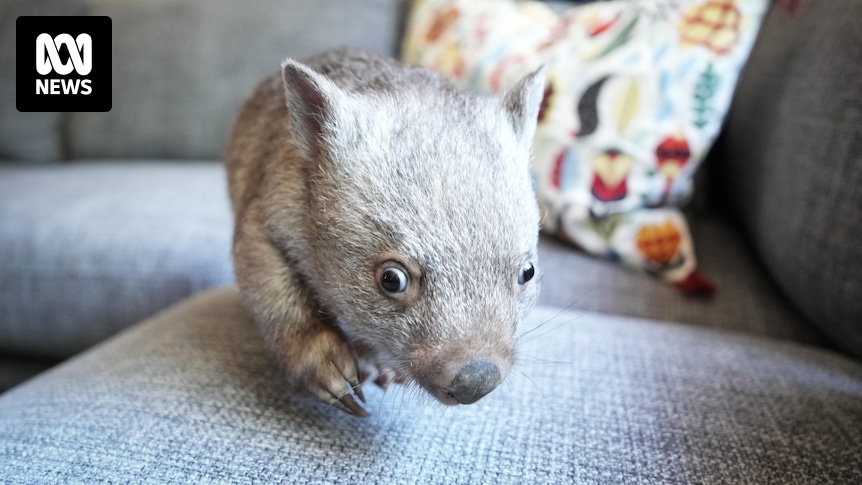
The ACT government is considering how to better manage and care for the territory’s wombat population amid challenges being experienced by farmers and the prevalence of mange.
A draft technical report has made several recommendations, the first being to “support non-lethal methods for wombat control by land managers to mitigate damage”.
The report said the ACT did not currently allow “specific provisions for the control of wombats nor provide guidance on non-lethal conflict mitigation”, which had led to frustration among leaseholders.
It also proposed allowing people on rural land to humanely euthanise wombats afflicted with severe mange.
A long-term option also being considered by the government is the introduction of a controlled native species management plan, similar to the one used to manage eastern grey kangaroos in the ACT.
The risks of burrows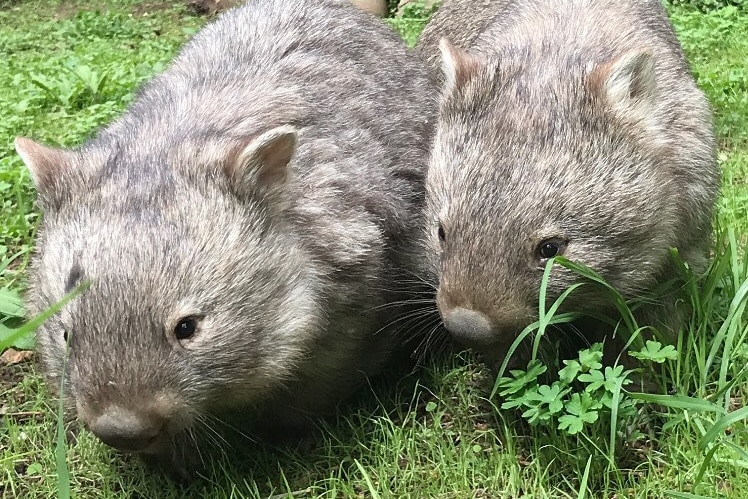
Wombats are beloved by some but can cause damage for landholders. (Supplied: Rocklily Wombats)
The ACT Rural Landholders’ Association of Farmers said in a statement that overabundant populations of wombats had become a major problem over a substantial portion of rural ACT.
The association said the risk of falling in burrows meant that in some places land could not be managed because it could not be safely accessed by vehicle or foot.
It said land became pockmarked with surface holes and tunnels, causing erosion and waterway degradation.
“The overabundance of wombats has direct impacts on farm businesses with costs associated with loss of arable land, plus an ever-present risk of accidents causing serious human injury, vehicles getting ‘bogged’ in holes, and livestock injury requiring euthanasia,” the statement said.
“The proposed approach … will take years, and neither the research nor the Plan is funded in the current budget, nor is work substantially underway.
“Therefore, ACT Farmers call for an interim measure until the research is done and an ACT Plan is introduced, for farmers to be allowed to euthanise sick animals and cull for clearly obvious overabundance in waterways.”
ACT Conservator for Flora and Fauna Bren Burkevics said a significant amount of scientific research went into the report to find an approach to wombat control that balanced their conservation needs against the protection of infrastructure and other development across the ACT.
“The review that’s been conducted by some of the ACT’s best scientists recognises that there might be five ways forward and, as per the consultation of the draft technical paper, may provide a holistic way to better manage wombats for the ACT,” Mr Burkevics said.
“This includes encouraging non-lethal control and management of wombats in rural areas, looking at exploring the opportunity for the humane euthanasia of wombats in rural areas, further research, and ensuring that wombats that are released into the wild are done so in recognised approved locations.”
Unclear how many wombats in ACT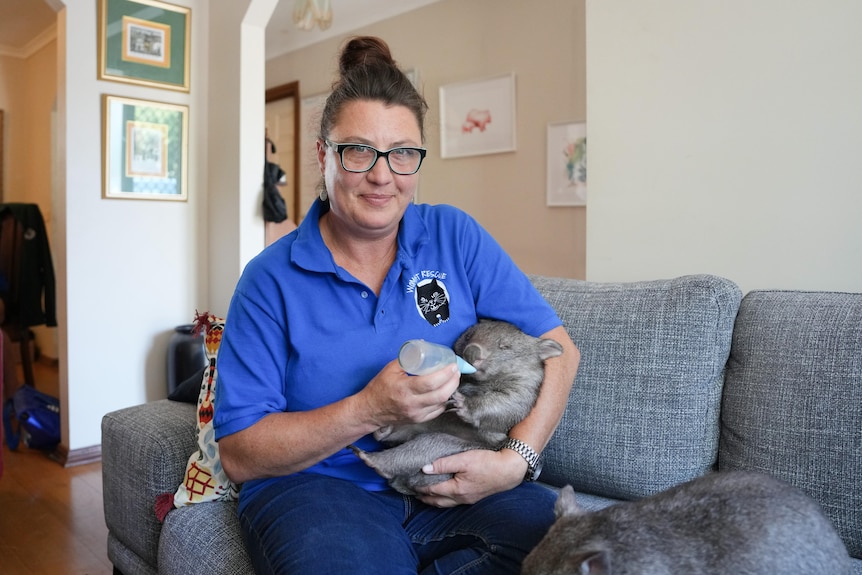
Yolandi Vermaak has concerns about the proposal. (ABC News: Matt Roberts)
But founder and president of Wombat Rescue, Yolandi Vermaak, said the report “seems to be based largely on perception” and anecdotal evidence rather than facts.
“It’s very concerning when they talk about significant policy change from how the ACT has managed wombats, and they base that on the anecdotal evidence of three farmers,” Ms Vermaak said.
“The report itself in multiple instances admits [there is] very limited knowledge, there’s gaps, we don’t have a good understanding, we have no idea how many wombats are in the ACT.
“I fail to see how we can talk at all about lethal control if we can’t even say how many wombats there are, because what we will face is a potential population collapse.”
Ms Vermaak is also concerned that the potential controlled native species management plan would mean bare-nosed wombats could be shot.
“They’ve been pushing the conservator quite hard on wanting to be able to shoot wombats, so I knew for a few years now that this was coming, it just was a matter of time,” she said.
Some farmers in the ACT say wombats are causing damage to their properties. (ABC News: David Sciasci)
In the case of wombats with severe mange, Ms Vermaak said there was already an established pathway to handling such cases and her organisation had been solely managing it for years.
“[When we get called out] it’s not only to see if a wombat has mange or not, you also have to look at comorbidities, you have to look at the season, if there’s flystrike, for example, happening,” Ms Vermaak said.
“There’s a lot of factors that we have to take into consideration, and that takes experience and skill, and it takes training. Landholders don’t necessarily have this training.
“I don’t dispute that they may be able to wield a firearm, but they are not trained in the proper assessment of mange and whether [the wombats] are at their end where they need to be euthanised, or whether they can be saved.”
Ms Vermaak said for the mange cases treated at the site where the sick wombat was first found, about nine out of 10 could be nursed back to health.
‘The work simply hasn’t been done’: Greens MLA
ACT Greens Deputy Leader Jo Clay expressed similar concerns to Ms Vermaak, particularly about the apparent lack of knowledge around the number of wombats in the territory.

Jo Clay says she wants to see more evidence to support the plan. (ABC News: Callum Flinn)
“There is no ecological evidence base set out in this report for why wombats need lethal management,” she said.
“It is based on the complaints of three of 381 farmers [in the ACT].
“The work simply hasn’t been done, and I think the timing of this means that the community and others who have views and expertise may not even find out.”
Ms Clay said she believed the community would be extremely concerned about the possible introduction of a native species management plan for wombats.
“We have strict animal welfare standards in the ACT, and our community expect strict animal welfare standards here in the ACT,” she said.
“We need to be really careful before we start looking at who, and in what circumstances, people can kill wildlife.
“This is an extremely serious decision, and government needs to have a lot of evidence about why that needs to be done, and who should be doing it, and what animal welfare standards will apply.”
A spokesperson for the ACT government said they were seeking “to adopt a holistic and informed approach to managing wombats, balancing species conservation and population health with the protection of infrastructure and rural landholders’ assets, in line with the community values”.
“Any suggestion that these changes would authorise the indiscriminate shooting of wombats is unequivocally false, the protected native species status of Wombats under the Nature Conservation Act would remain in place and all relevant offences under this Act would continue to apply to it,” they said.